You can’t fully appreciate Riva’s stunning new Aquariva until you dive into the past.
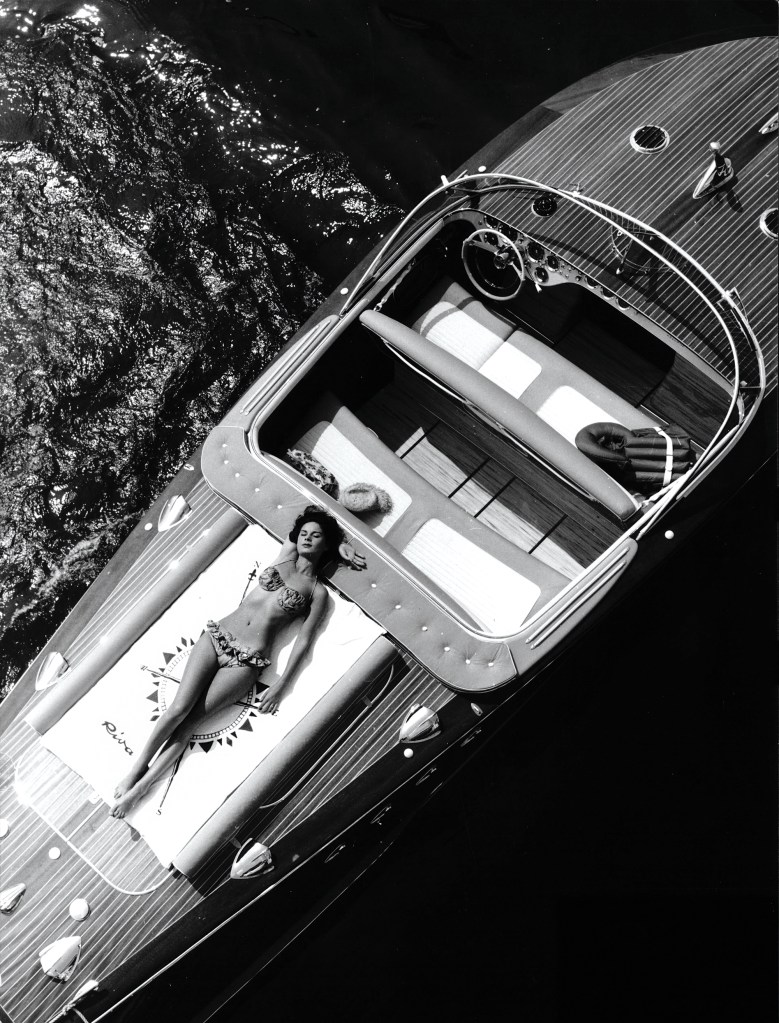
Vintage Rivas attract attention wherever they appear internationally. The style, craftsmanship, performance, and elegance have made Riva the choice of movie stars, celebrities, and captains of industry for generations. Their recently released Aquariva Special pays homage to the great Rivas of the past, especially the illustrious twin-engine Aquarama, with a modern but still elegant flair.
To understand what makes Rivas so alluring and so coveted, we must look into the past.
In 1842 in Northern Italy, on Lake Iseo, a powerful storm struck the small fishing village of Sarnico, devastating the local fishing fleet. A new shipwright who had recently relocated put to work repairing the boats. His name was Pietro Riva. Soon after helping the local fishermen, he went on to build a small shipyard and launched his first boats in the waters of Lake Iseo. Soon Riva became known as a craftsman and builder of high-quality boats. Pietro’s son, Ernesto, developed the company further by introducing new boats powered with internal-combustion engines.
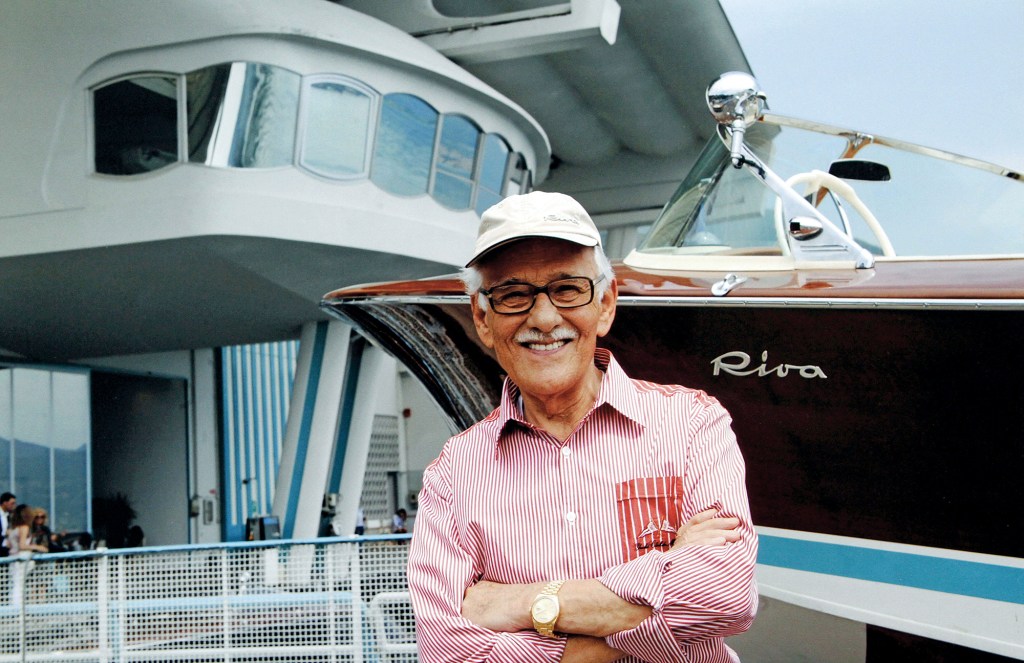
In the 1920s, Ernesto’s third-born son, Serafino, decided to focus more on powerboats and started promoting Riva products at speedboat races, to solidify the brand. Production shifted from transport vessels to motorboats, still a burgeoning market at the time. In the late ’20s and early ’30s, Riva’s racing boats dominated the sport in Europe, claiming countless wins and setting records in national and international competitions.
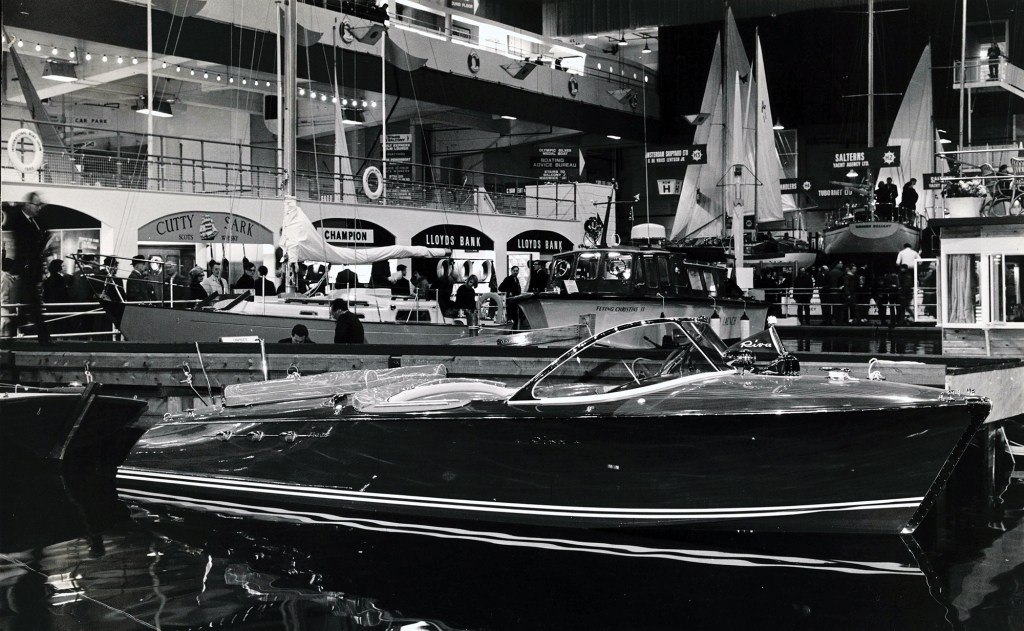
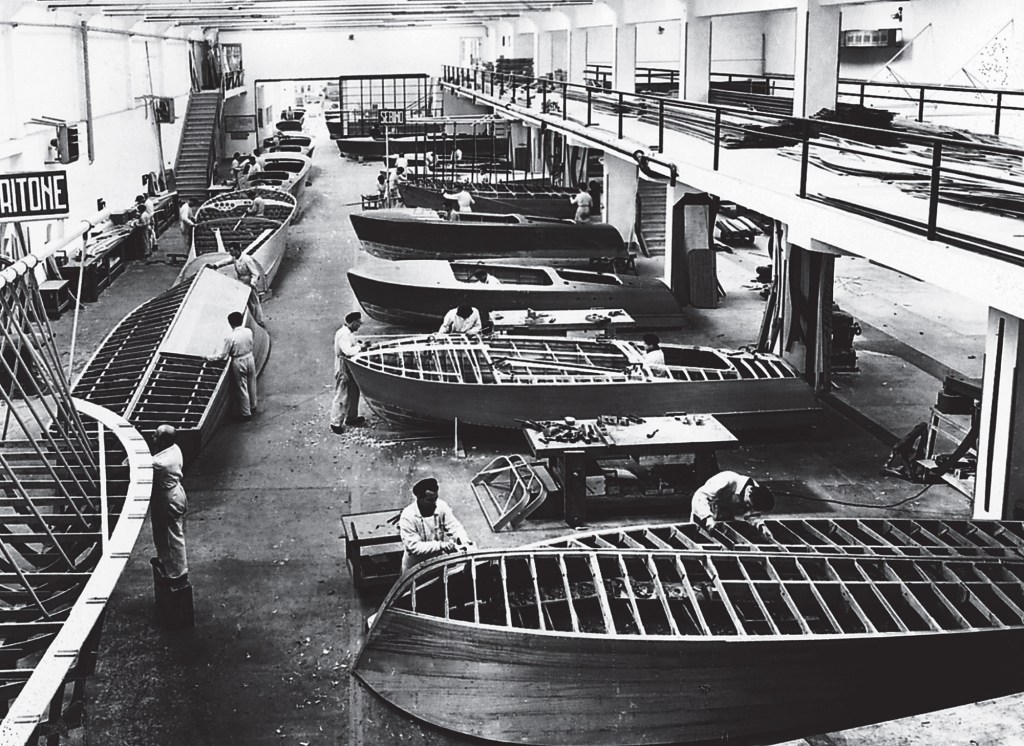
In the fourth generation of Riva builders, Serafino’s son, Carlo, realized the importance of paying attention to even the smallest of details. His goal was for Riva boats to be carefully designed and crafted beyond anything the company had done up to that point. The times were quickly changing, and Carlo wanted the Riva brand to stay ahead in the race for speed boats and yachts. In 1956, he began working with the architect and designer, Giorgio Barilani. This collaboration soon ushered in a whole new generation of Riva yachts that were praised for their beautiful design and features—the Ariston, the Florida, and the Sebino, as well as the first twin-engine speedboat, the Tritone. These boats were exceptional in every way; however, they were all eclipsed by the introduction of the most glamorous and famous Riva of them all, the legendary Aquarama.
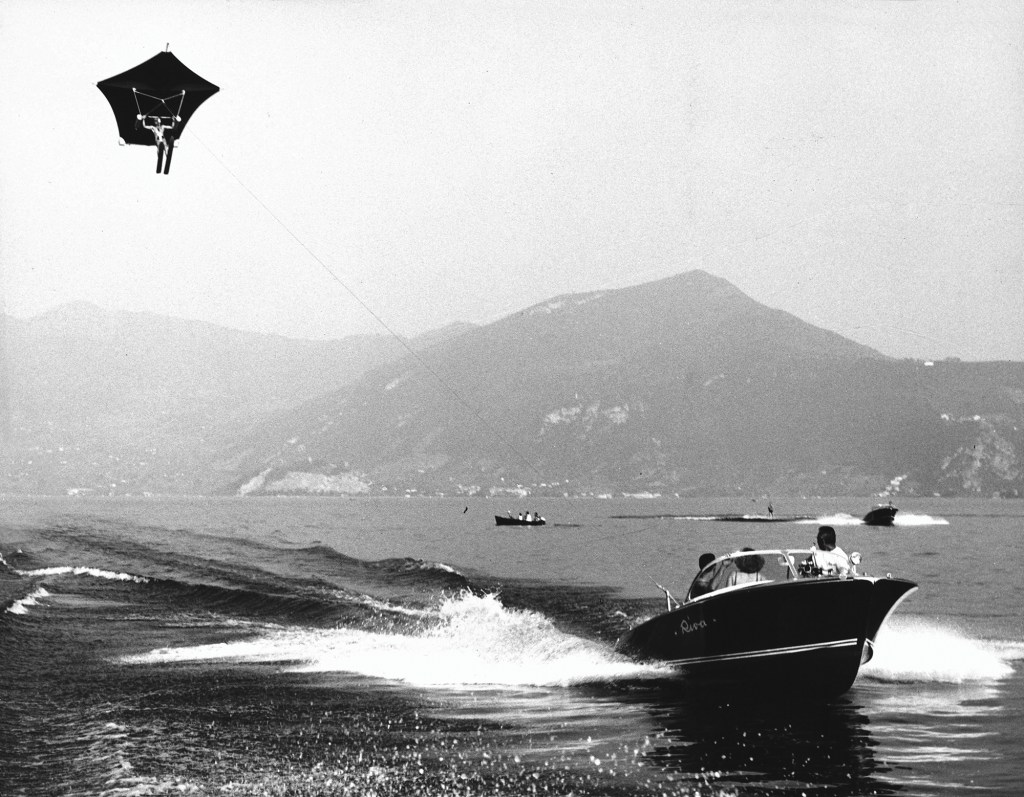
After stringent testing of the 1962 prototype, the LIPICAR, named after Carlo Riva’s three daughters, the twin-engine Aquarama quickly entered production in 1963. The hull was identical to that of the Tritone, but with a host of technical and functional improvements. The new Aquarama featured an anchor housing in the bow enclosed beneath a hatch, a raised edge to the foredeck, and varnished Honduran-wood dashboard, and rim with new VDO gauges. The front seats were now separated, with a pocket on the rear of the driver’s backrest and a folding shelf on the back of the other.
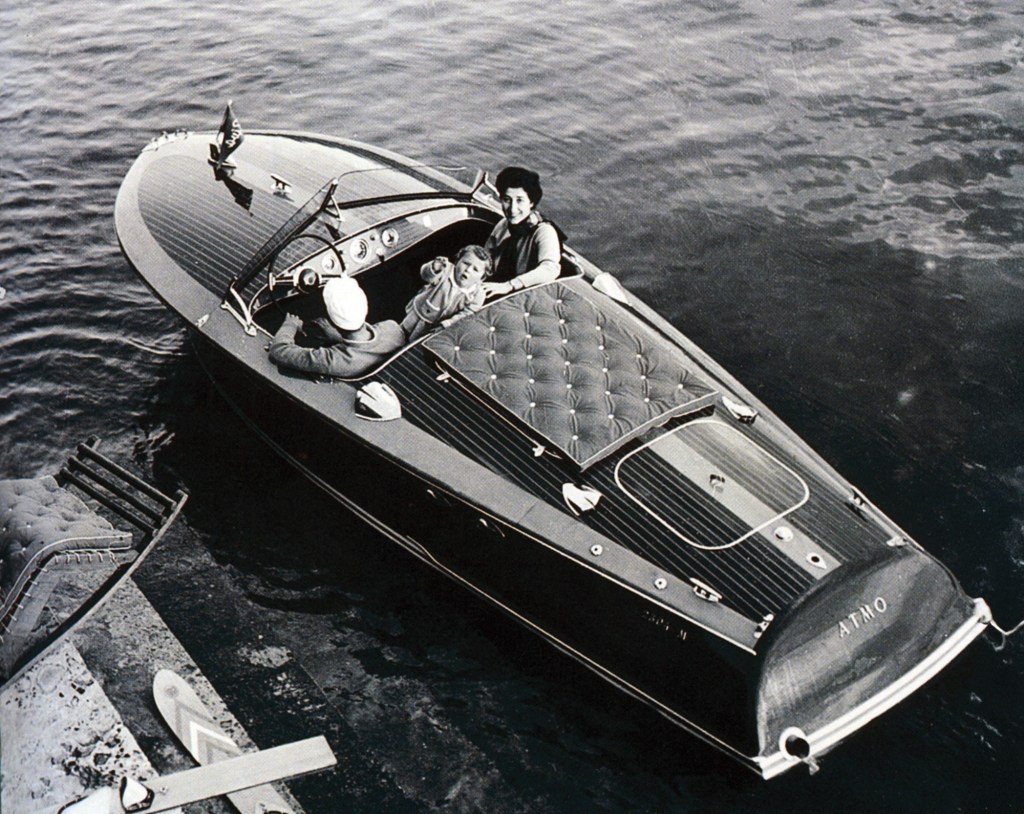
The recessed sunbathing area (affectionately called the “Playpen” by many of its owners) in the stern was tapered, unlike that of the Tritone, and was easier to reach from the bathing ladder thanks to a non-slip area set into the stern deck. Considerable research was done to improve noise and cruising comfort. The sides were initially still of carvel design, but laminated sides were fitted starting with hull number four. A handful of hull-design revisions would be made in following years. The upholstery of the first models was white ribs with black borders, and orange trim. The Super Aquarama, featuring larger big-block engines became available in late 1963.
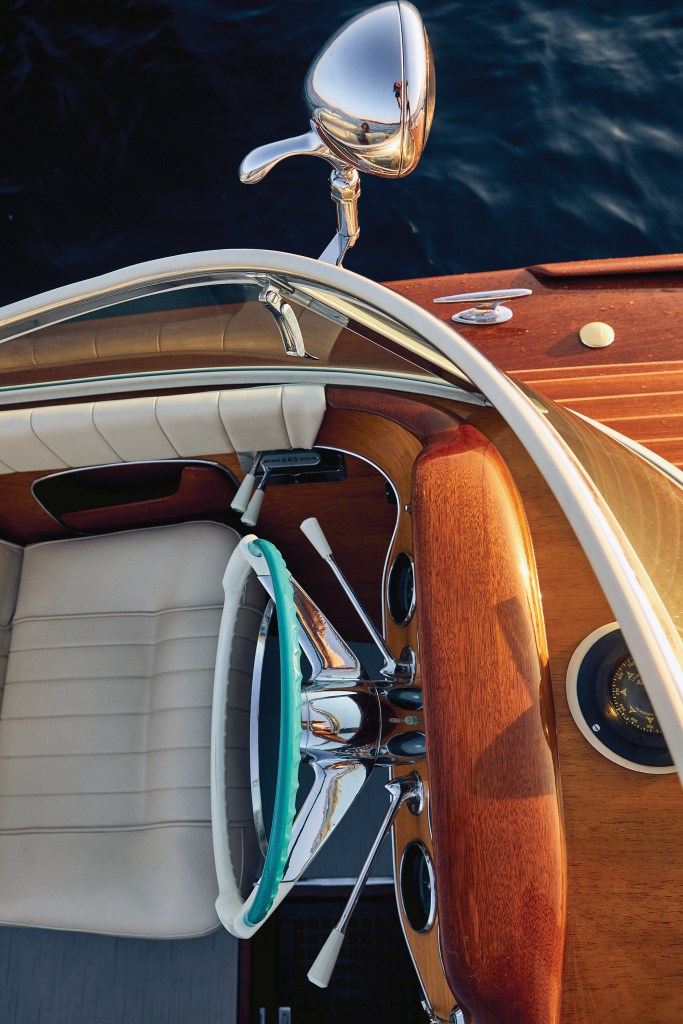
In the mid-1960s the Aquarama featured distinctive turquoise- and ivory-colored upholstery, while lobster-orange and ivory signified the Super Aquarama color scheme. Most Aquaramas were powered by twin small-block V8 Chevrolet engines. Big-block Chevrolet V8s went into the Super Aquarama.
The most desirable and valuable vintage wooden speedboat today is unquestionably the Riva Aquarama, especially those created under the supervision of Carlo Riva. The company’s commitment to its customers, legacy, and preservation of Riva boats is admirable. In 1957 Carlo Riva opened RAM (Revisione Assitienza Motoscafi) to service and refurbish Riva boats. Riva was the first boatyard in Europe to open such a facility.
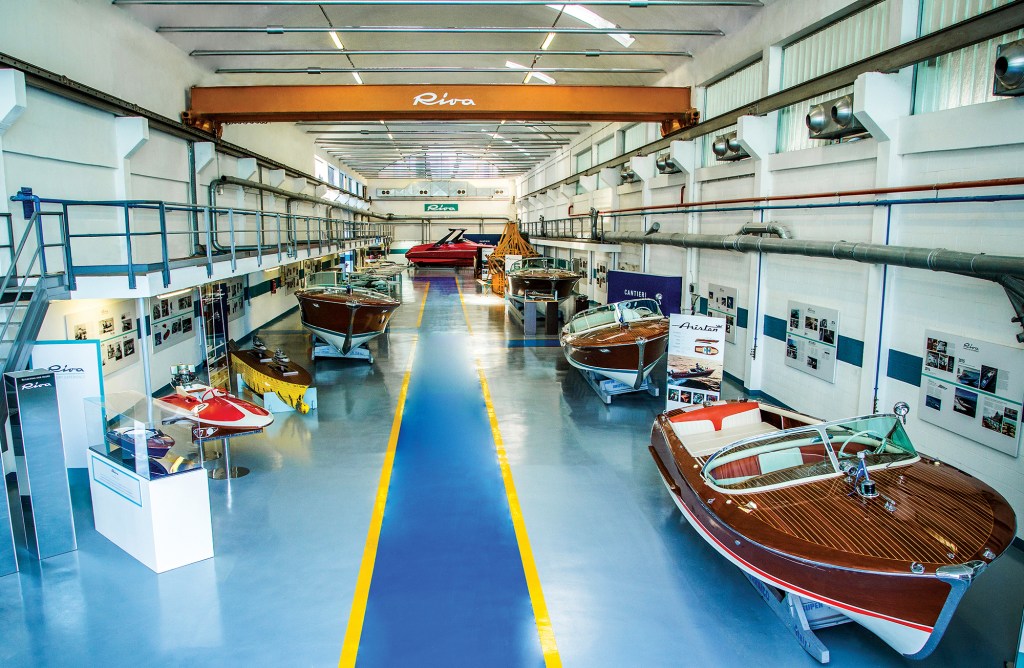
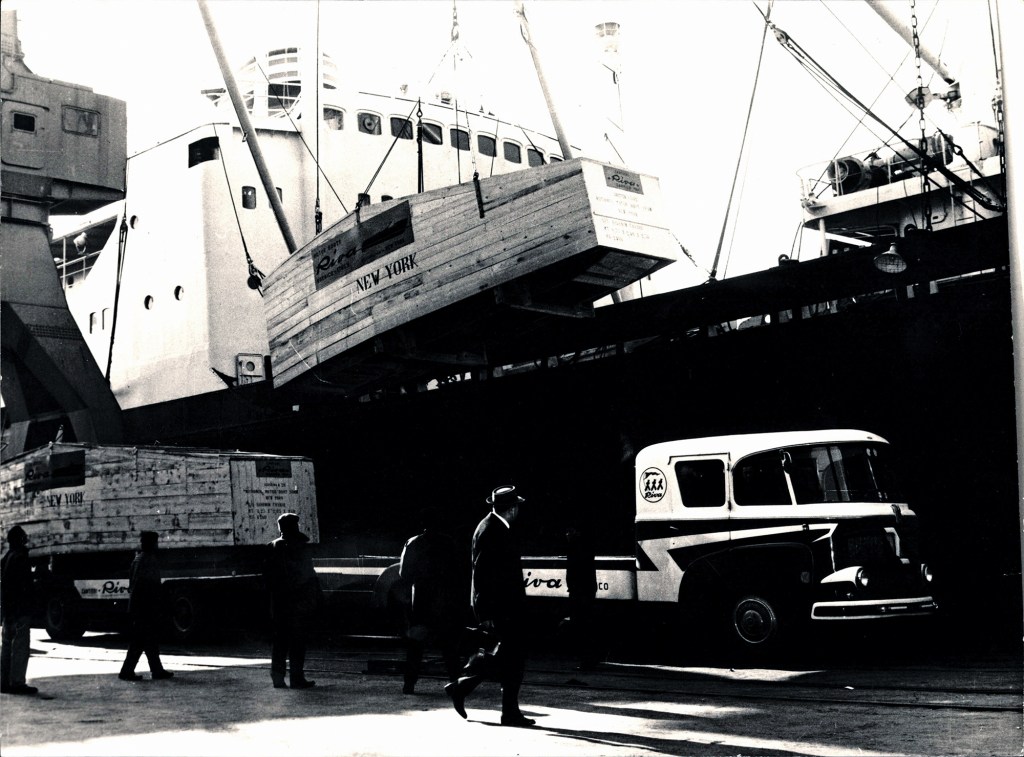
Riva started producing some fiberglass boats in 1969, after Carlo Riva sold the shipyard in September of that year, however they continued to make the wooden Aquarama until 1996, when the final Aquarama Special, hull number 784, was built, bringing an era to an end. Carlo stayed on as Chairman and General Manager, but handed over the reins in 1971 to his brother-in-law Gino Gervasoni, his partner since 1950. In 1981 Marina Riva was launched by the company to distribute parts to vintage Riva owners. Today both these services, as well as an archive of factory records and literature—called Riva Classiche—are available to Riva owners, restorers, and historians.
In 1989, a year after the Riva company was fully bought out by the British group Vickers, Gervasoni’s 41-year association with the yard came to an end, closing the curtain on the Riva family era. In May 2000, Riva became part of Ferretti Group.
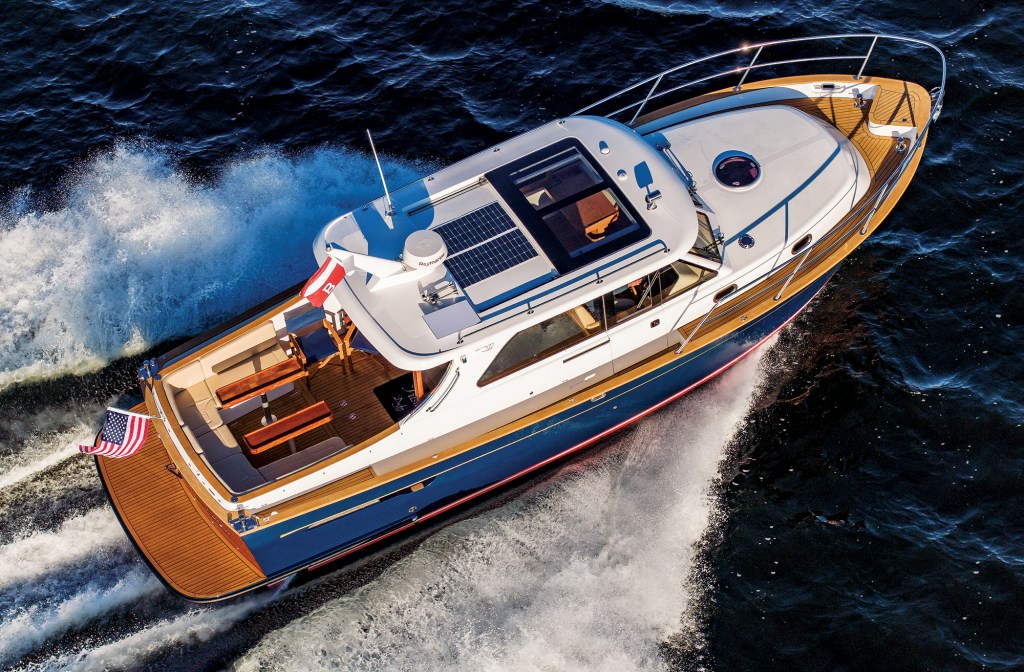
The latest iteration of the retro but modern Riva is the Aquariva. It was unveiled at the Cannes Yachting Festival in 2025, marking the rebirth of a legend that has defined timeless Italian style and elegance on water. The successor to the Aquarama, this new interpretation of Riva’s most famous model celebrates over two decades of heritage with a refined contemporary sensitivity, bridging the brand’s illustrious past with a modern design philosophy. Retaining the perfect proportions that makes it such a symbol of grace and balance, the Aquariva Special edition measures 33 feet with a beam of 9.19 feet. Its sleek silhouette, immediately recognizable yet subtly evolved, carries the signature of Mauro Micheli and Sergio Beretta of Officina Italiana Design. In collaboration with Ferretti Group’s Strategic Product Committee, led by Piero Ferrari and the Engineering Division, the designers have reimagined the Aquariva’s elegance through discreet yet meaningful touches.
A completely redesigned windshield is among the most notable refinements, creating a sleeker and more aerodynamic profile. The extended aft platform was updated with a more ergonomic layout, allowing easier access to the sea and greater comfort for passengers.
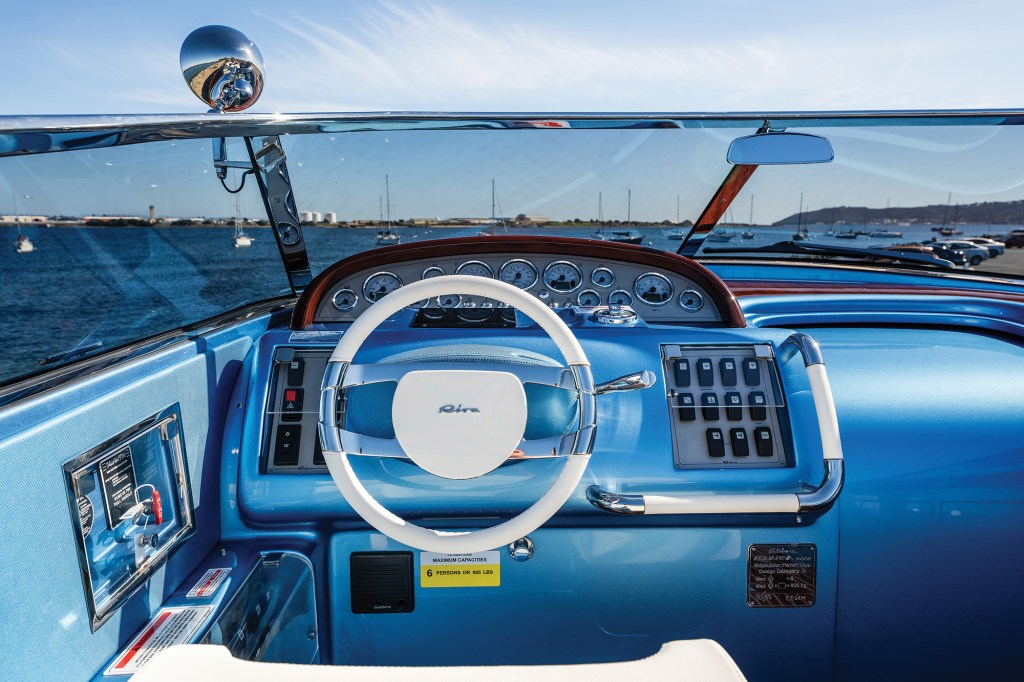
The handrails and cleats give a nod to the Aquarama Super. At the bow, the navigation lights and light casing, shared with the limited-edition Riva Anniversario, add an air of sophistication. The deck is free of traditional skylights, embracing a purer and more contemporary aesthetic.
The luxurious cockpit has the look of a refined salon on water, designed for both relaxation and sociable interactions. A U-shaped sofa upholstered in Sky fabric mirrors the hull color, encircling a central table that can be lowered to convert the space into a large sunbathing area. A useful feature is the electro-hydraulic Bimini canopy that retracts seamlessly into the sofa’s backrest, providing shade at the touch of a button. Forward, the helm station sits to port, opposite a service cabinet equipped with a sink, refrigerator, and countertop—perfect for preparing an Aperol Spritz or al fresco snacks. Honoring Riva’s heritage, the dashboard retains its analogue charm, though a digital setup is available. Mechanical features on the Aquariva Special include an optional Seakeeper NG6 stabilizer—an impressive feature for a boat of this size. The Seakeeper option was made possible by switching from a manual to vacuum-infused hull lamination that significantly reduces weight without compromising rigidity. The helm can feature up to two displays and an integrated navigation system. Buyers may also opt for a joystick control and Humphree interceptors. Power provided by twin YANMAR 8LV 370-horsepower engines allows the Aquariva Special to top out at 40.5 knots and cruise effortlessly at 36 knots
So, what do the owners of classic Aquarama boats think of the new Aquariva? Jeff Peterson, Chapter President in the United States Riva Historical Society explains, “As true to form, Riva has been able to capture the form, function and beauty of the original Aquaramas of the ‘60s and deliver an amazing boat with the Aquariva that blends the essence of the brand and glamor of an era long gone”
Jeff Brown of Jeff Brown Yachts, is a yacht broker and the North American West Coast dealer for Riva Boats, and an enthusiastic fan of the brand: “What I admire most about the Aquariva is how seamlessly it blends Riva’s storied past with modern engineering. The craftsmanship and detailing pay tribute to the classics, yet its performance is thoroughly contemporary—solid, agile, and incredibly smooth at speed. When you’re at the helm, you feel connected to the brand’s history but also to the precision of today’s technology. It’s that duality that makes the Aquariva truly exceptional.”
At the most recent Lake Tahoe Concours d’Elegance, Brown was invited to display a new Aquariva with all the wooden classics, including a few vintage Aquaramas. The boat was finished spectacularly in a blue color called “Carta da Zucchero”. A spectator at the Concours show fell in love with the boat and purchased it. “I wasn’t really looking to buy a boat, but after seeing the Aquariva in this amazing color, I knew I had to own it,” he said. The buyer joined the Riva Historical Society right away.
The rich history of the Riva brand and the passion of the owners for these very special boats continues. In early August of 2026, the Lake Tahoe Concours d’Elegance will host its world-class boat show once again, this year, no doubt, will be special, with Riva as the Marquee Class.
This article originally appeared in the August/September 2026 issue of Power & Motoryacht magazine.