The social media trend of the moment is to post a photo or video of yourself from 2016, the idea being that it’s hard to believe how quickly a decade has flown by—and how drastically life has changed for many of us. For yours truly, 2016 was a memorable year, as it marked a leap of faith and a relocation to Connecticut to become senior editor of Power & Motoryacht. Young, well-rested, and ready to take on the world, in some ways it feels like just yesterday—though the gray hairs sneaking onto my scalp suggest otherwise.
Following that Instagram trend, I logged into the endlessly entertaining Wayback Machine (archive.org) to revisit the Cruisers Yachts website from that year. It quickly became clear that the past decade has been one of change for both of us. Back then bowriders made up a large portion of the builder’s portfolio, alongside the Cantius line and Sports Coupes. Hullside windows were just beginning to replace dessert-plate-sized portholes, and salon windows didn’t exactly scream visibility. Entry-level models like the 259 and 279 Sport Cuddy and the 238 Bowrider looked as though they’d been built by an entirely different company, sharing little DNA with their larger siblings.
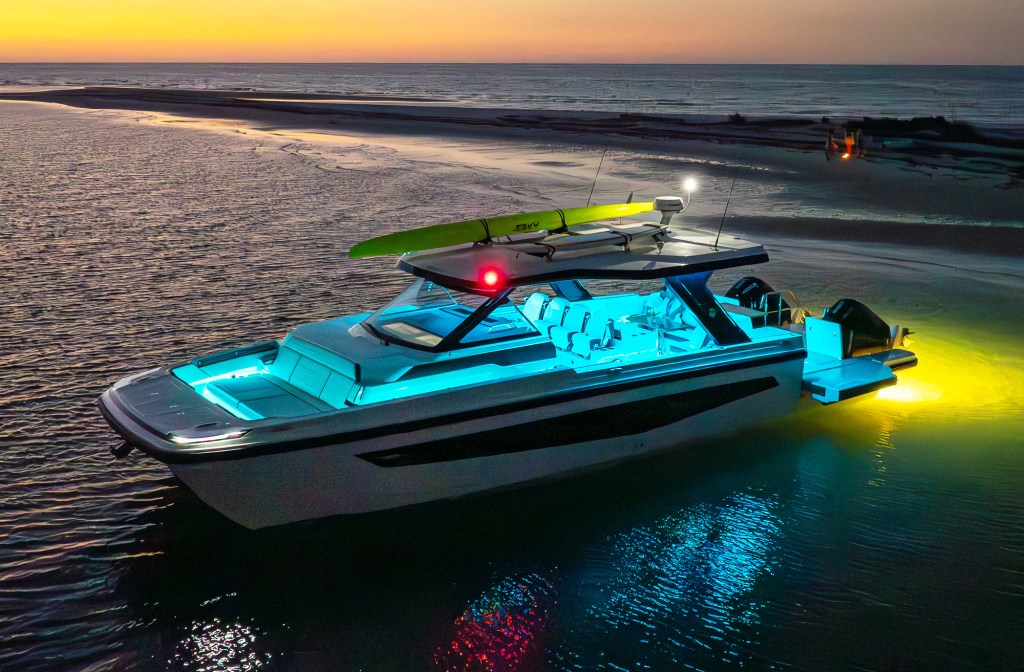
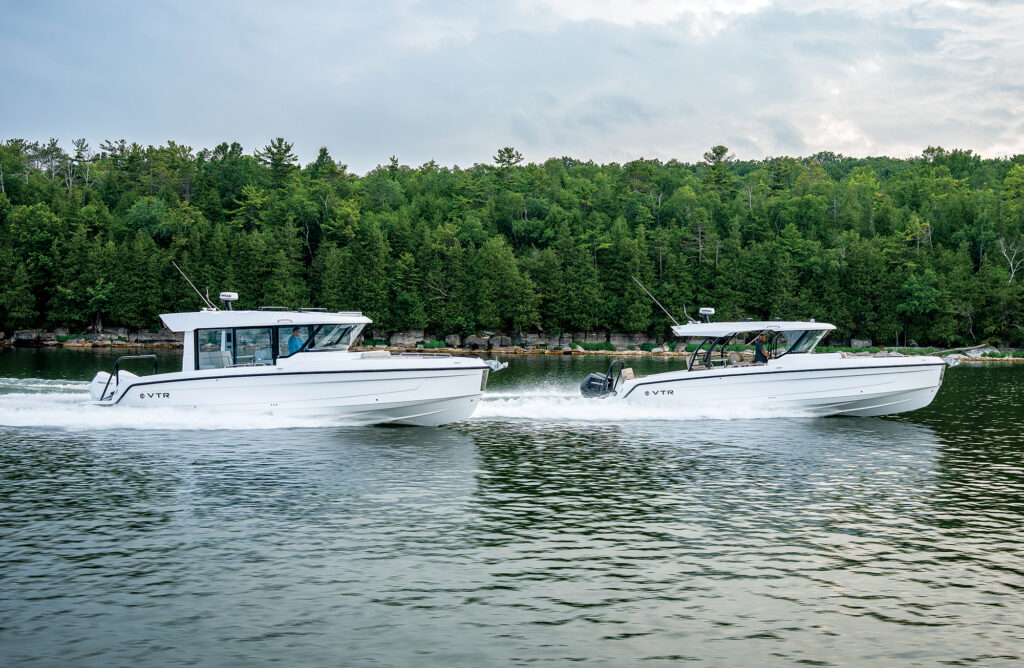
Today, the Cruisers lineup looks dramatically different, with sleek and sporty GLS models, a thoroughly modern Cantius range, and a flybridge line that has seen significant investment to stand out in a highly competitive global market. And as of the Fort Lauderdale boat show, Cruisers has re-entered the dayboat market with a lineup that reflects evolving customer demands. Eschewing the traditional bowrider, the VTR—an acronym for Venture. Trek. Roam.—comes in both open and enclosed versions and appears poised to compete squarely in the Axopar/Saxdor/Wellcraft/etc. space.
My first encounter with the VTR line came ahead of the Fort Lauderdale show, an event that saw no fewer than six VTRs sold before closing day. At the docks, Cruisers smartly positioned the 38 VTR alongside the 38 VTR EC, allowing prospective buyers to easily compare and contrast the two models and sample the extensive options available within this fledgling range.
The greatest variety of choices lies in the cockpit configuration, depending on how you plan to cruise. Options include an aft bench, an open cockpit for fishing, or my personal favorite: an aft sun lounge that lifts to reveal a compact stateroom below, also accessible from inside the cabin. Even when not used for guests or kids, the sun lounge access provides an easy way to stow bags and gear belowdecks.
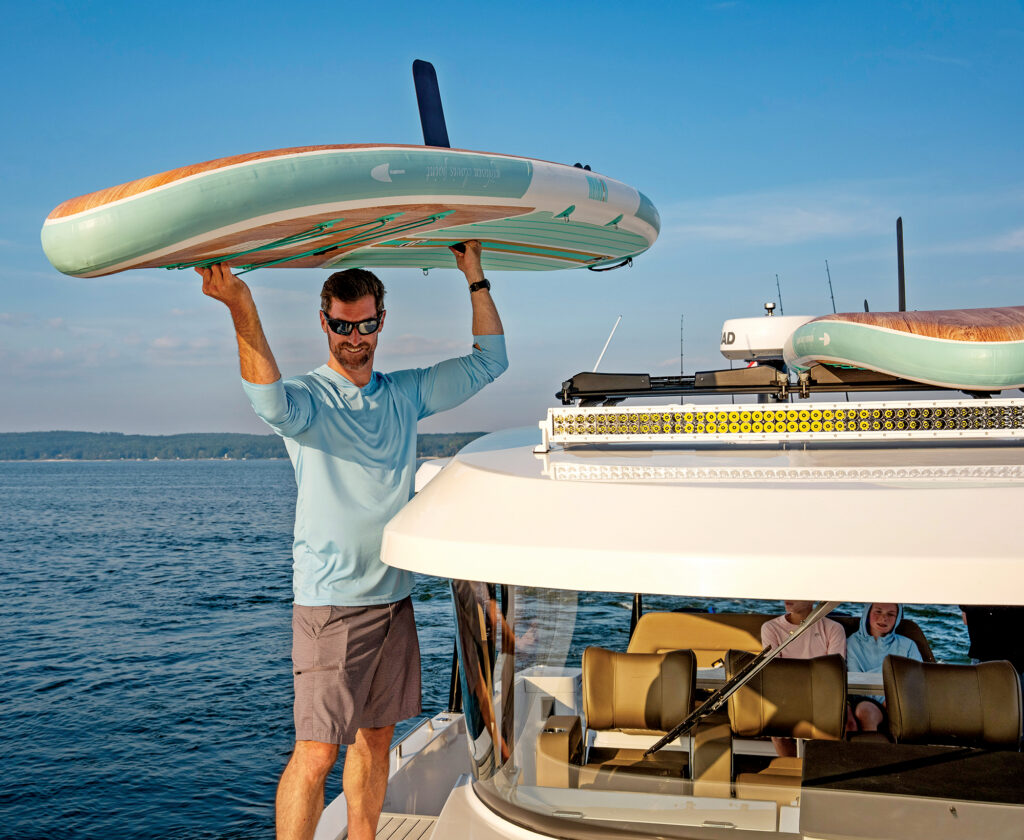
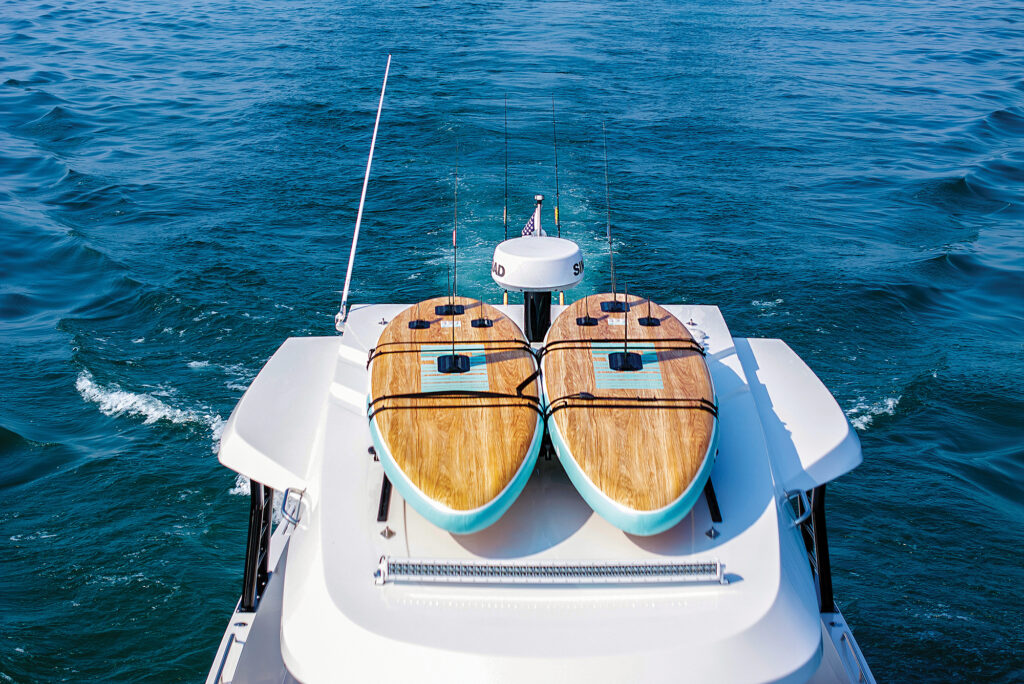
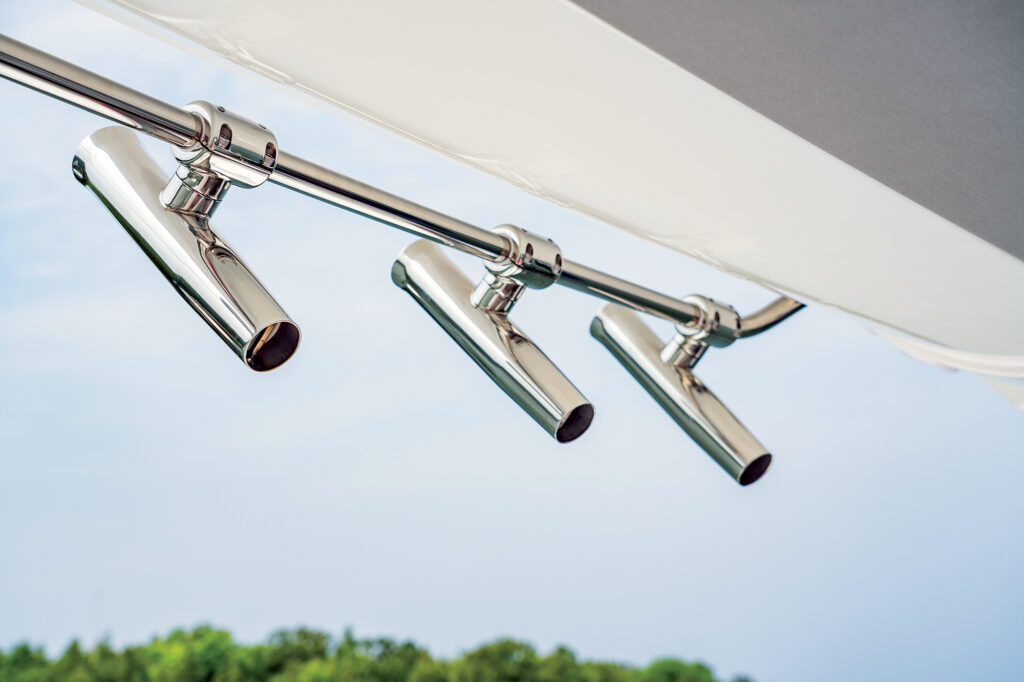
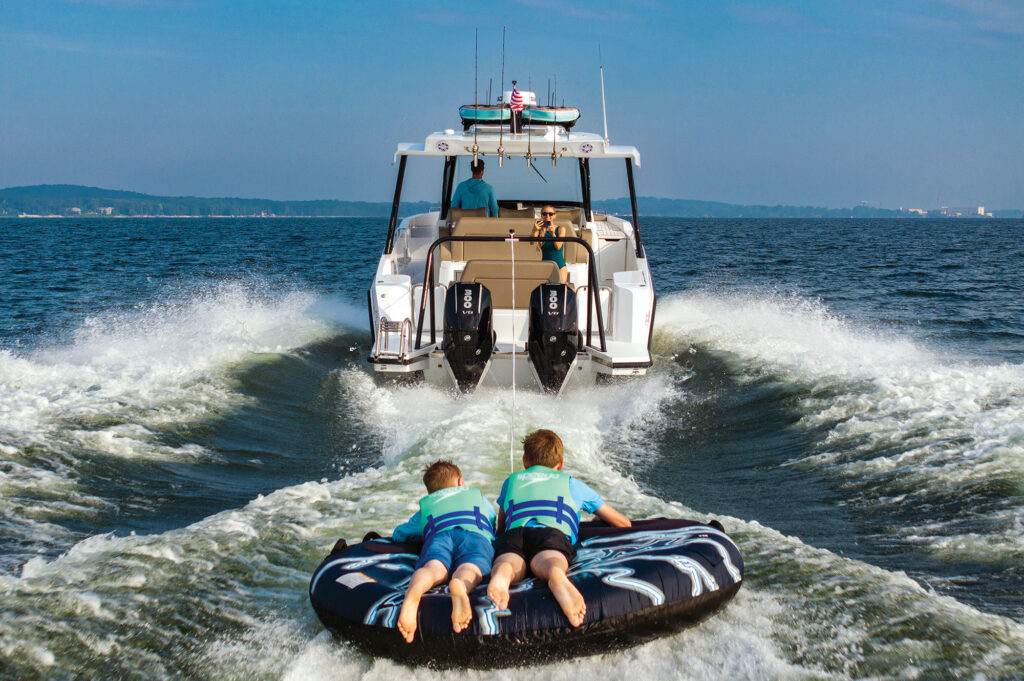
Aboard the VTR line, Cruisers manages to create a clean and striking layout but with all the options and accessories necessary aboard the ultimate dayboat. Rod holders, a roof rack for bikes or SUPs and space below deck for a giant tube, this thing is a memory making machine.
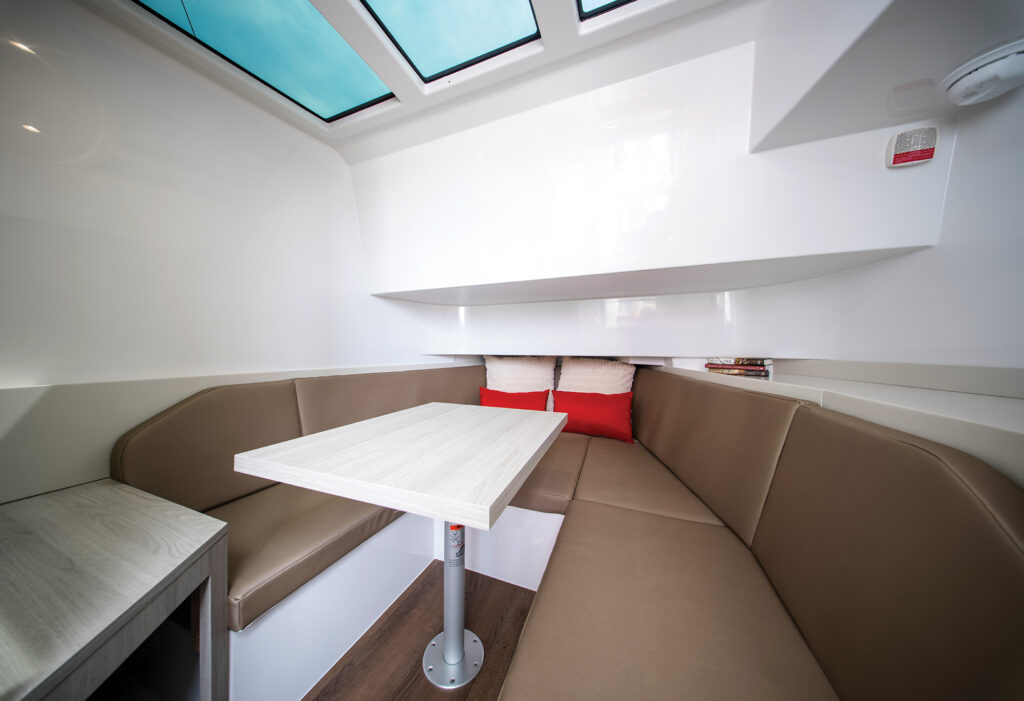
On many boats in this size and category, the forward cabin can feel like a coffin, but that’s not the case aboard the 38 VTR. Thanks to excellent headroom, it’s a genuinely pleasant space for a small family to share a meal, then convert, via filler cushions, into a proper stateroom complete with a head. While clearly aimed at the dayboat market, I wouldn’t hesitate to load up my family and head out for a long weekend.
Enhancing that weekend appeal is the optional Thule roof rack—an attention-grabber at the show—which can carry paddleboards, kayaks, or bikes. Rod holders and a tow bar put the “active” in active boater. I found myself daydreaming about blasting off to Block Island with a couple of bikes, and maybe a stroller, secured overhead.
The day scheduled for my test of the 38 VTR EC out of Fort Lauderdale’s Pier 66 Marina was not what you’d call ideal boating weather, but it was perfect for testing. The sky hung low and gray, with winds well over 20 knots. Aside from the occasional cruise ship, anyone with good sense was keeping their boat snug in its slip. Surely our outing would be short, but a proper venture nonetheless.
As we barreled out the inlet and into a stacked 2- to 4-foot chop, a small pit formed in my stomach. I wrapped my hand around a grab rail, hoping no one noticed my white knuckles. Launching off our first wave, I instinctively braced for a hard landing that never came. The stepped hull touched down surprisingly softly, wave after wave.
You can also find this video–and hundreds of our other reviews–here ▶
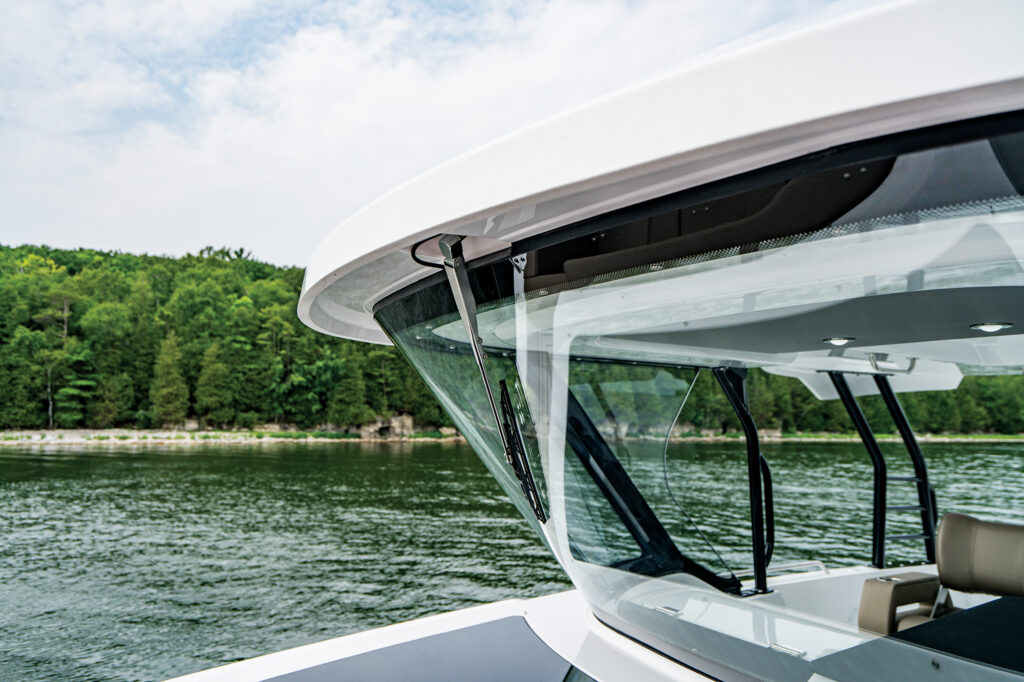
Running near the boat’s 40-knot top end thanks to twin 300-horsepower Mercurys (400s are optional), a speed no one in their right mind would attempt outside of a test, we did occasionally confirm that the laws of gravity still apply, managing the odd slam. Pulling back into the mid-20-knot range, however, the 38 VTR EC was exceptionally comfortable and impressively quiet through turns and at every angle to the sea. Visibility is excellent, and the boat remained notably dry, with only a touch of windborne spray reaching the reverse-raked windshield. As a general rule, I avoid going out during small-craft advisories, but I would have been completely at ease with my family aboard the VTR with me that day.
Reflecting on Cruisers’ evolution over the past decade is a reminder that it’s only by looking back in our wake that we truly see how far we’ve come. Ten years from now, when we look back on this chapter of the brand’s history, I’m confident we’ll see continued evolution in bold and exciting ways and that the VTR will have grown into a full-fledged model line, still steering a confident course toward the future.
Specifications:
LOA: 40’
Beam: 11’ 10”
Draft: 3’
Displ.: 15,446 lb.
Fuel: 223 gal.
Water: 50 gal.
Power: 2/300 or 400-hp Mercury
This article originally appeared in the April 2026 issue of Power & Motoryacht magazine.