Story and Photos by Owen Burke
Picture this: You have a long weekend playing golf out on Fishers Island, spouse and offspring in tow, and a sudden afternoon thunderstorm grounds your Blade flight out of Boston or Manhattan. Your tee time is at 0800, and there’s no missing it. Or maybe you need a weekend of fishing, sailing, or nothing at all, whatever it takes to unwind. You had booked a ferry from New London, Connecticut, but service is suspended. Perhaps, and there’s no shame in this, the conditions are beyond your or your own vessel’s ability, and you’d rather have someone else chauffeur you on their licensed, passenger-carrying vessel instead. Or let’s say that on a whim you decide you’d like to head out to Block Island to visit friends or family for a precious few days and you already happen to be in Sag Harbor with no clear, direct mode of transportation to get you there because the local charter outfits are already booked. With so many islands, islets, and remote ports of call between Long Island, Connecticut, Rhode Island, and Massachusetts, you wonder why, when there are too many land-based and now aerial ride-share services, you can’t simply hail a water taxi to deliver you between the points A and B.
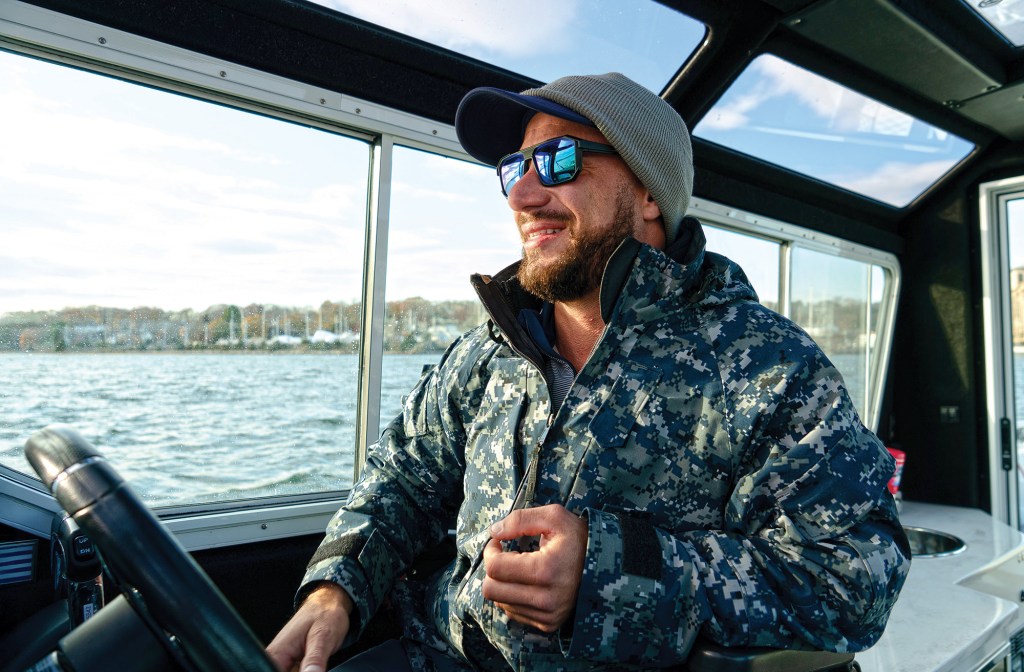
Enter Capt. Marshall Chiaraluce. Young, fit, spritely, and personable, he is the very antithesis of the character conjured by most when imagining a stereotypical charter boat captain. You could suggest that his age might have something to do with his cheery disposition, but then he’s been a boat owner since around the time he learned to read, and began working aboard boats—hauling traps, working around boatyards, you name it—shortly thereafter. He also made enough of a living on terra firma to learn that life ashore was not quite for him.
Chiaraluce, who goes by “Capt. Mac,” is an eastern Connecticut native and successful restaurant owner who was tiring of the hospitality industry and wanted to find a way to make a living on the water. An observant creature by nature, Capt. Mac also recognized that conventional livelihoods at sea are fewer and farther between these days.
If Chiaraluce wanted to make it on the water, he figured he’d have to drum up something new, and maybe a bespoke water-taxi service was just the ticket. From his home waters of Groton, he reckoned he could deliver guests to any number of the East Coast’s preeminent playgrounds: the Hamptons, Sag Harbor, Shelter Island, and Montauk to the south, Fishers Island, Block Island, the Elizabeth Islands, and Martha’s Vineyard and Nantucket to the East. He’d have to choose his days for the more exposed islands, sure. But above all else, he’d need the right boat for the job.
Amidst the fleets of spick-and-span, painstakingly varnished brightwork, and immaculate fiberglass boats still desperately doing their best wooden-boat impressions in the harbors that line New England’s rocky, temperamental coast, there are few if any metal watercraft. The aluminum and steel vessels that do weasel their way into the marinas and yacht clubs of these hallowed waters tend to be in government service—i.e., U.S. Coast Guard, NOAA, and naval research vessels—or local work boats, ferries, or chase boats for sailing or crew teams.
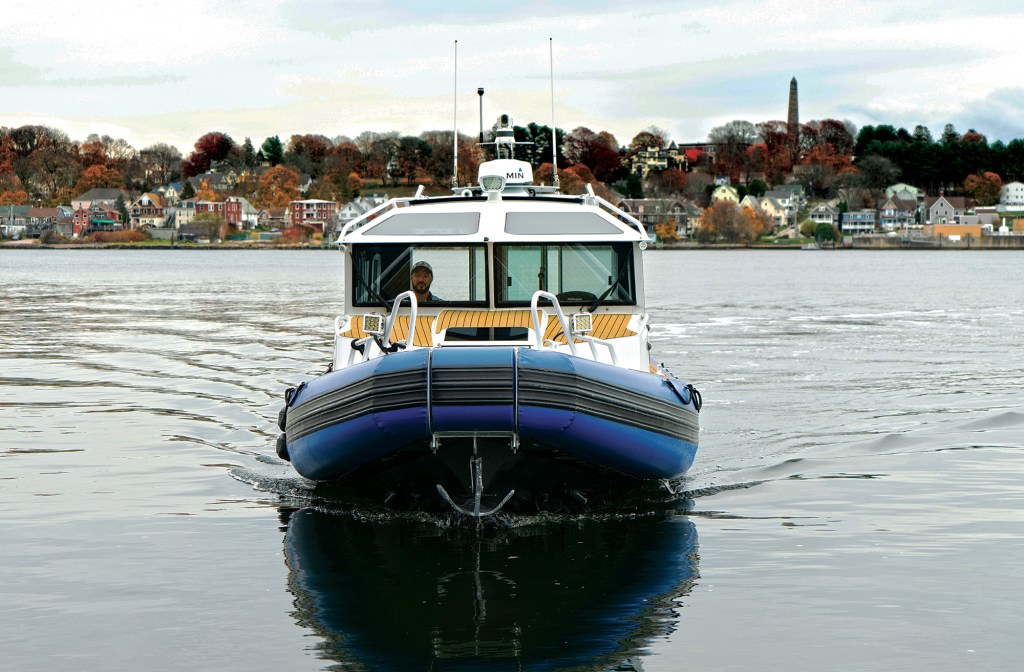
Chiaraluce’s mind turned to the expedition or adventure RIB designs that lend themselves to the world’s most rugged coasts and rawest climes. Take a spin through any harbor along the West Coast, Scandinavia, Oceania, or South Africa and you will find them as common as picnic boats along Connecticut’s Gold Coast. Resilient, dry-riding, lightweight, and rough and ready for contact with piers, pylons, boulders, and, well, just about anything, the expedition RIB makes practical sense wherever things get hairy.
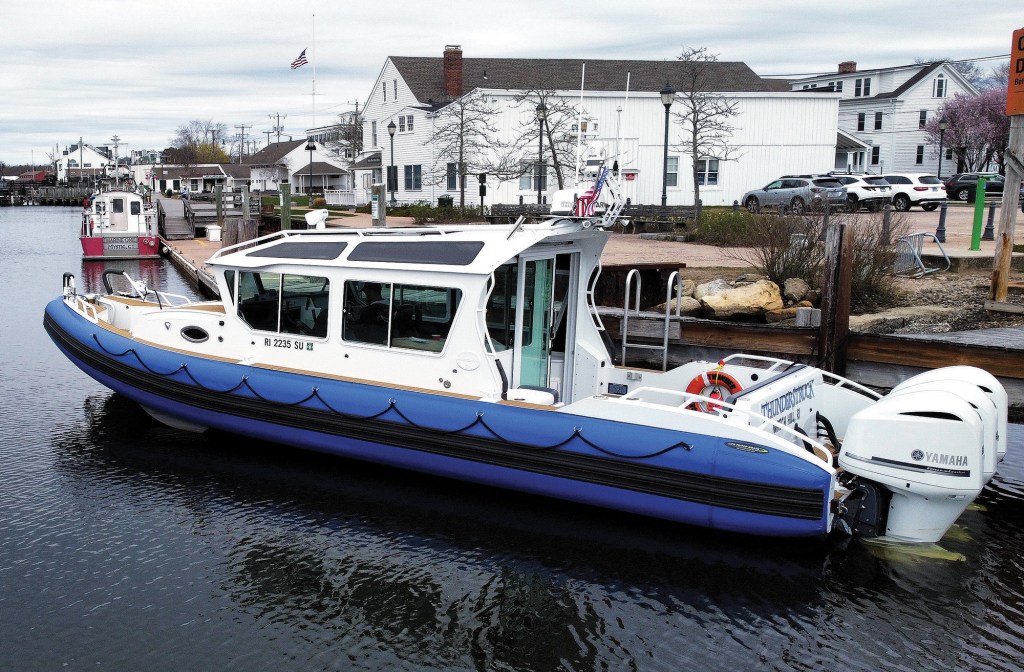
And yet, considering the temperament of New England’s waterways, it’s a wonder that more boaters don’t turn to the rugged resilience of an aluminum- or steel-hulled, foam-collared RIB. And that’s exactly why Chiaraluce chose a Washington State-built Life Proof 33 Full Cabin Pro. Sure, it doesn’t bear the starched-collar refinement of the Down Easts that are the ubiquitous choice among casual boaters in this pocket of the world, but it has its charm. And, if we’re getting fussy, today’s Down Easts are more or less (if not entirely) composed of fiberglass and epoxy anyhow. Classic lines, fine finishings, and teak decking aside, the materials that comprise today’s hulls—whether resin or aluminum—had yet to even be imagined by yacht-clubbing and commuter-boat traveling titans of industry heading to and fro Wall Street.
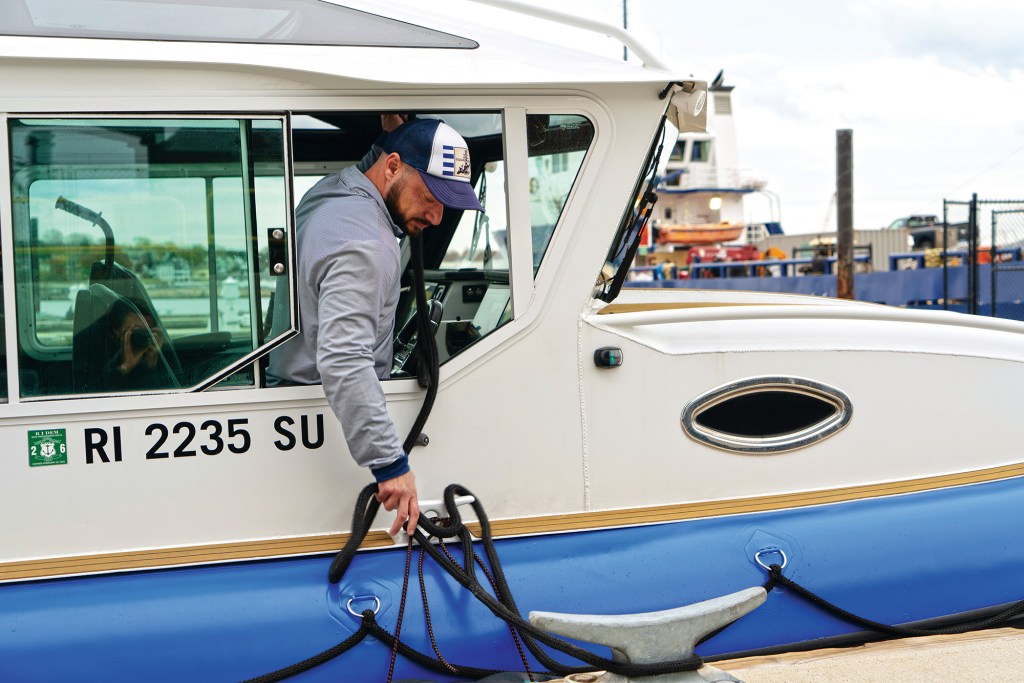
You might get a closer replica of those classic wooden people haulers with the fiberglass, but consider the foot and luggage traffic aboard a water taxi, and it’s hard to choose fiberglass over quality aluminum. And then there’s the peace of mind: Try striking one rock in a contemporary Down East, and then hit the very same one with a Life Proof, or any military-grade aluminum-alloy hull, and, well, go ahead. I’ll wait.
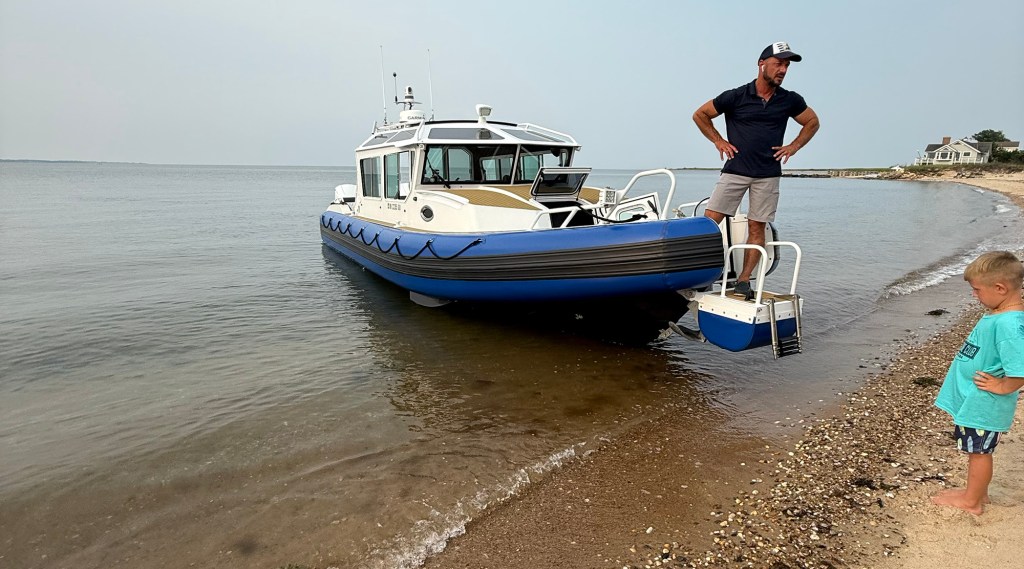
So, when I pulled into Groton’s Pine Island Marina on a brisk November morning and ambled up to Thunderstruck, Chiaraluce’s gleaming, military-grade aluminum and royal-blue, foam-collared RIB, I didn’t need to see a nameboard to confirm that this was my ride. Even in her slip on a working dock beside a blaring, fire-engine red Tow BoatUS inflatable, she’s tough to miss.
I also had no doubt that Capt. Mac had chosen his steed wisely. A boat that would average three cross-Sound trips a day for roughly 8 months out of the year—charter trips with tumbling golf clubs, suitcases, stilettos, and guests (often in a festive mood)—would see most weather and sea states Poseidon himself could dream up.
Indeed, for a 6-pack commercial passenger vessel to safely provide the most uninterrupted service possible, it would need to be built and equipped to withstand the likes of precisely what National Weather Service marine forecasted this day: a steady 20-knot southwesterly gusting to nearly 40 knots. Having grown up on Long Island Sound myself, I’m well aware that a good blow from that direction takes full advantage of the 110-mile extent of Long Island Sound, which creates enough fetch to precipitate short-interval 5- to 7-foot seas. But these small-craft-advisory conditions were precisely why I was there, and they were just what we needed to put the 33-foot Life Proof and her trio of 300-horsepower Yamahas through their paces.
I had to stop and count my lucky stars right there on the gangway for a moment. Within this line of work, especially on a quick-strike assignment, getting the conditions you pray for is a distinct rarity. Whenever I schedule an offshore tuna-fishing excursion in a woefully undersized center console, I’m sure to have howling wind against tide in the pouring rain with impossible visibility. When I line up an outing in notoriously hostile waters for the express purpose of testing a new hull shape or stabilization equipment, it’s usually flat as a pancake with hardly a breath of air. Most of the time, that’s just how it goes. But not today.
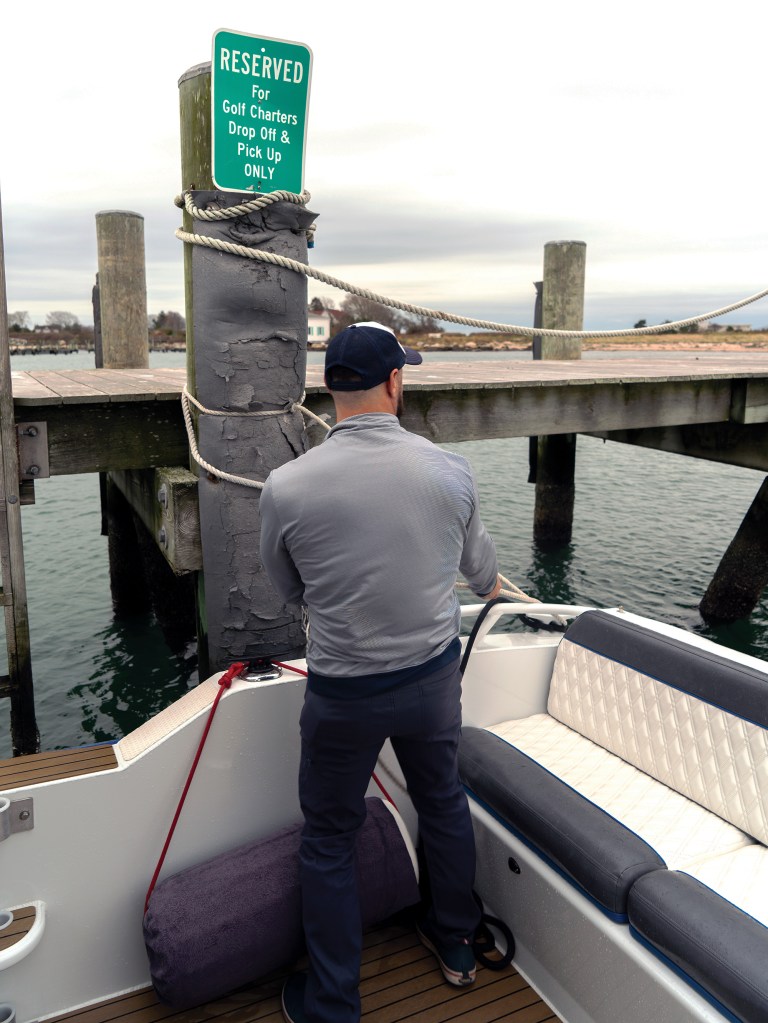
Our first stop was a quick run to New London, across the Thames River from the military-industrial zone of Groton, “the submarine capital of the world” and home to Pfizer Pharmaceuticals. Capt. Mac picks up many, if not most of his charter clients at New London’s Amtrak station. It’s an incredibly convenient location: You could cast a diamond jig from the station’s doors and land it on Thunderstruck’s deck, and, more aptly, roll a suitcase (or a wheelchair) directly to the dock where she ties up. It’s also a funny juxtaposition—knowing that from there, passengers set foot on some of the most prized real estate on earth within about 12 minutes, give or take—when the weather’s right, Thunderstruck will push 40 knots with passengers and baggage. (She tops out at nearly 50 knots with a light load.)
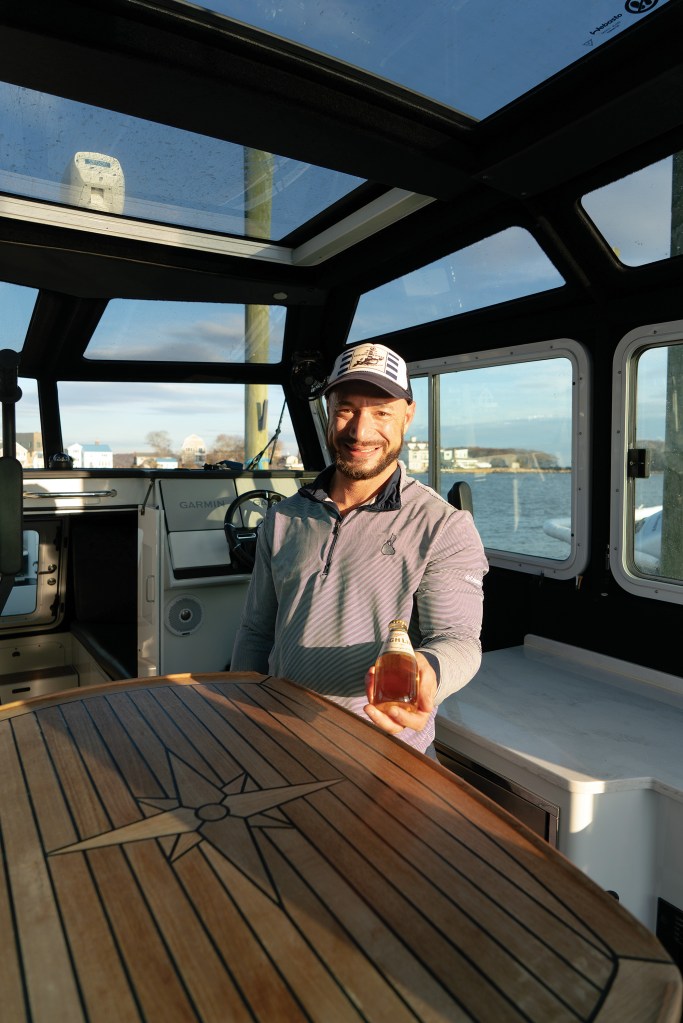
Capt. Mac and Thunderstruck have exclusive docking privileges at Fishers Island Club. Celebrating its centennial this year, the country club’s Seth Raynor-designed golf course was frequented by such notables as the Roosevelts, the Rockefellers, and Du Ponts. It’s arguably as storied as any on earth.
Alternatively, the Fishers Island Ferry, whose terminal is opposite the dock Capt. Mac uses, takes 25 (passengers-only) or 45 (car) minutes and docks at the 9-mile-long island’s public side (though it’s worth noting that there are famously no accommodations on island, so make sure your return trip is squared away or you’ll find yourself in a tight spot). In the off-season, Capt. Mac shuttles hunting parties from an elite gun club on the mainland—the names of whose notable members Chiaraluce was not at liberty to share. Hunting on the island is otherwise prohibited.
Next, we shot back across Fishers Island Sound and up Mystic River, where we lunched dockside at Mystic’s increasingly hopping waterfront, even on a Wednesday in mid-November. Capt. Mac doesn’t tend to work here, but rather stalls, kills time, and grabs a bite to eat on precious days when he has enough time between pickups to sit down and eat.
A 10-mile downwind cruise in the welcome midday sun took us to another frequent pickup and drop-off point at Watch Hill, Rhode Island, where I may or may not have caught a glimpse of Taylor Swift and her all-American beefcake of a fiancé reveling at her oceanfront mansion. There’s that kind of money in Watch Hill, and while it’s by and large a sleepy little Ocean State village by the sea, Capt. Mac is at your service to deliver you to the buzzier Hamptons, or Fishers Island and back for that illustrious round of golf.
With full bellies and the rare apricity offered by all-around windows (and excellent sightlines) giving way to clouds, we punched up the heat as the wind began to whip up a frenzy during our passage back from Watch Hill to Groton. We took it in the teeth pounding upwind through Fishers Island Sound and into Long Island Sound, but maintained a steady speed over ground of about 35 knots. Were it not for the Shockwave suspension seats taking the impacts as we launched off one 5- to 7-footer after another, we’d have been beaten a bit. But I have to give credit everywhere it’s due: While the seats helped, the Life Proof itself knifed through unrelenting slop that was probably the worst I’ve ever encountered on Long Island Sound. The windshield wipers came in handy, but the rear deck stayed nearly dry. Upon mentioning my observation to Capt. Mac, he shared that most of his clients, probably craving fresh air after having just alighted from a plane, train, or automobile, tend to stay outside in the cockpit.
Back at the dock, despite a thorough salt spraying, the faux teak decking—which from broken Champagne bottles to spilled golf clubs, spiky footwear, and merciless rollerbags, has seen it all and shows no discernible wear—the rails, bow, and all, require little more than a quick hosing and some Rain-X. Chiaraluce has the boat put to bed and is heading back up the gangway right beside me in no time at all.
Taking in all this and recognizing the day we’d just had, I’m struck with the age-old question of form versus function. When you peruse the docks of Connecticut or Long Island, it’s easy to see where the average East Coast boater falls within the debate. But is it time for an open mind in New England? If Capt. Mac and his quite literally Life Proof boat are any indication, we’d be all the wiser if we considered putting a little more aluminum in the water.
This article originally appeared in the April 2026 issue of Power & Motoryacht magazine.
Info: lifeproofboats.com