Most have no idea that Coeur d’Alene, Idaho is home to some of America’s most beautiful wooden boats. Meet the master craftsmen that you’ve never heard of.
The eastward drive from Seattle, Washington to Coeur d’Alene, Idaho has a reverse Oregon Trail feel. One cruises over the snowcapped mountain vistas of the Cascades, up and down the rusty-orange-colored canyon of the Columbia River Gorge, and across the dust devil and tumbleweed accented plains to Spokane. Just a bit further east is beautiful Lake Coeur d’Alene where you encounter a Tahoe-like environment. The cool, alpine waters and fresh country air make this a favorite haunt of America’s well-to-do, from famous actors to professional athletes.
Most people, especially those not from ‘round these parts, have no idea that this region also boasts a long, storied wooden-boatbuilding heritage that continues to this day. Among the notable builders is Coeur Customs, owned under a local hospitality and marine empire called the Hagadone Corporation. I enter the shop for a date with their master craftsmen and the good old boats—and one very new one—in their care.
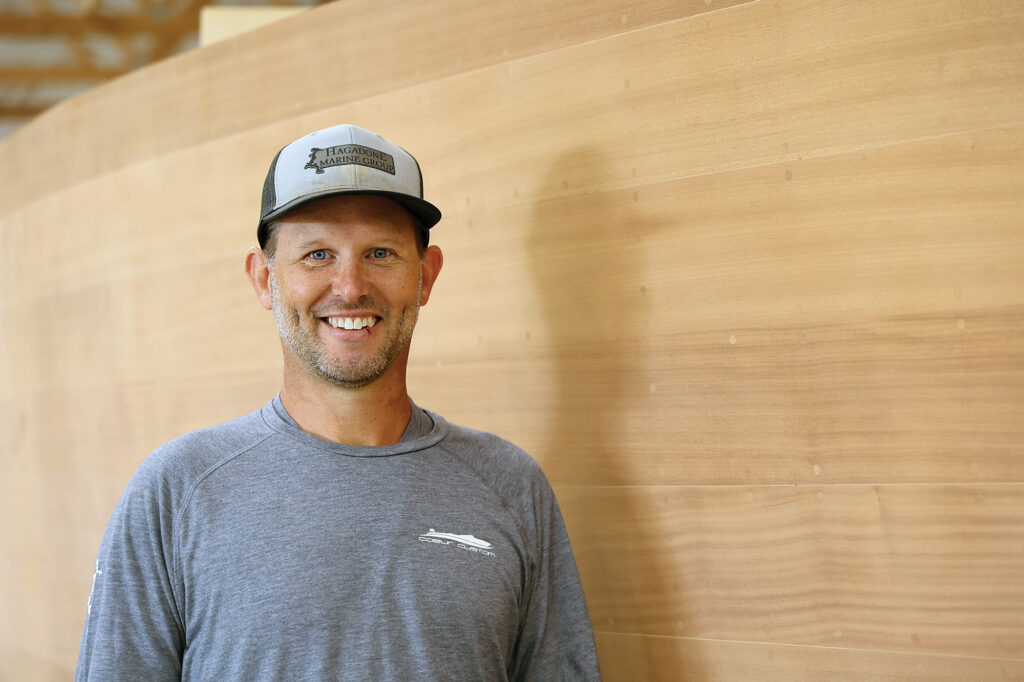
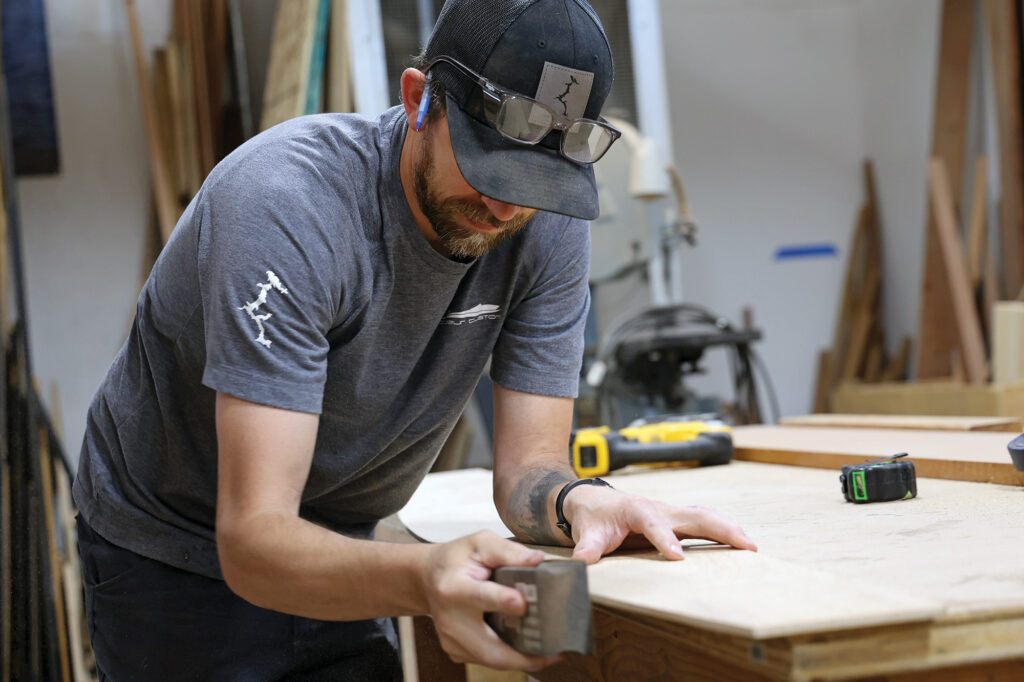
“I’ve worked with and built wood boats for 15 years,” says Josh Smith, master builder and manager of Hagadone Marine Group. “I came into this shop as a builder and helped build the first Steinway, that’s how I got started.” The former shop manager was Jim Brown, who retired as something of a legend last year. Smith was promoted and has lately been overseeing the construction of hull number three of Coeur Customs’ flagship 340 Steinway HT and the various restoration projects that are the company’s bread and butter. Eight other craftspeople are currently working at the shop.
“Woodworking has always been something I loved to do,” says Smith. “The wood-boat side of it came kind of on a whim. My wife was pregnant, we found out, with twins. She said I needed to find something more stable.” He chuckles. “Somehow I got into the wood-boat business, thinking that would be stable. I don’t know how, but here we are 15 years later. It’s definitely a passion. Taking something, a pile of wood, and turning it into an artform that’s usable is pretty special.”
He gives me a tour of the shop. The Steinway hull sits proudly near a far corner, but first we take in the dozen or so other vessels populating the space, pausing by the wooden powerboats, and one Cheoy Lee sailboat cabin-top restoration, to hear their tales.
“I think that is one of the unique things about us … we’re kind of bringing the past and the future together in one shop,” Smith says. “Bringing the stories and helping put those stories on the new build and figuring out what has worked for many a year—and what we can try to improve on.”
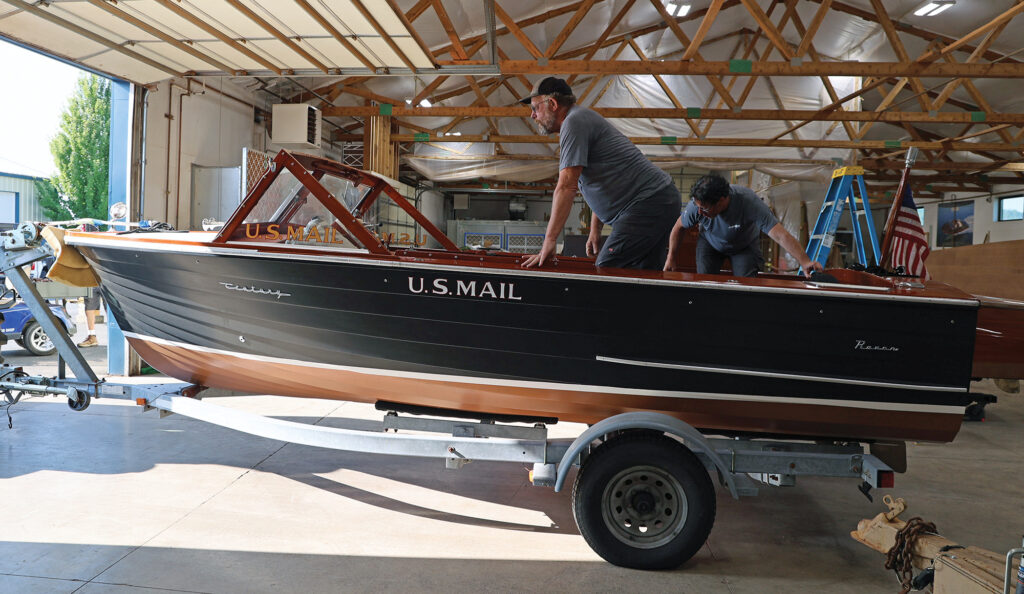
Two of the boats here starred in the 1981 Oscar-winning movie On Golden Pond featuring Henry Fonda and Katharine Hepburn. One of them, the 19-foot Century Raven Mariah, was the film’s iconic mailboat. The other, the 1950 Chris-Craft Sportsman Thayer IV, is the same that Doug McKeon’s character Billy Ray tears across the lake with in a euphoric instrumental sequence that is boating joy incarnate.
We approach a small, pretty 1946 Gar Wood runabout that turns out to be a rare find. Among the restoration efforts are new topsides and modern power. “This is a barn find,” says Smith. “Turns out that Gar Wood only made 12 of these, ever. As we know it, this is one of five left. As the story goes, the owner was ready to take a chainsaw to it and his neighbor stopped him, then got a hold of the right guy who wanted it.”
We peek at a similar boat sitting outside.
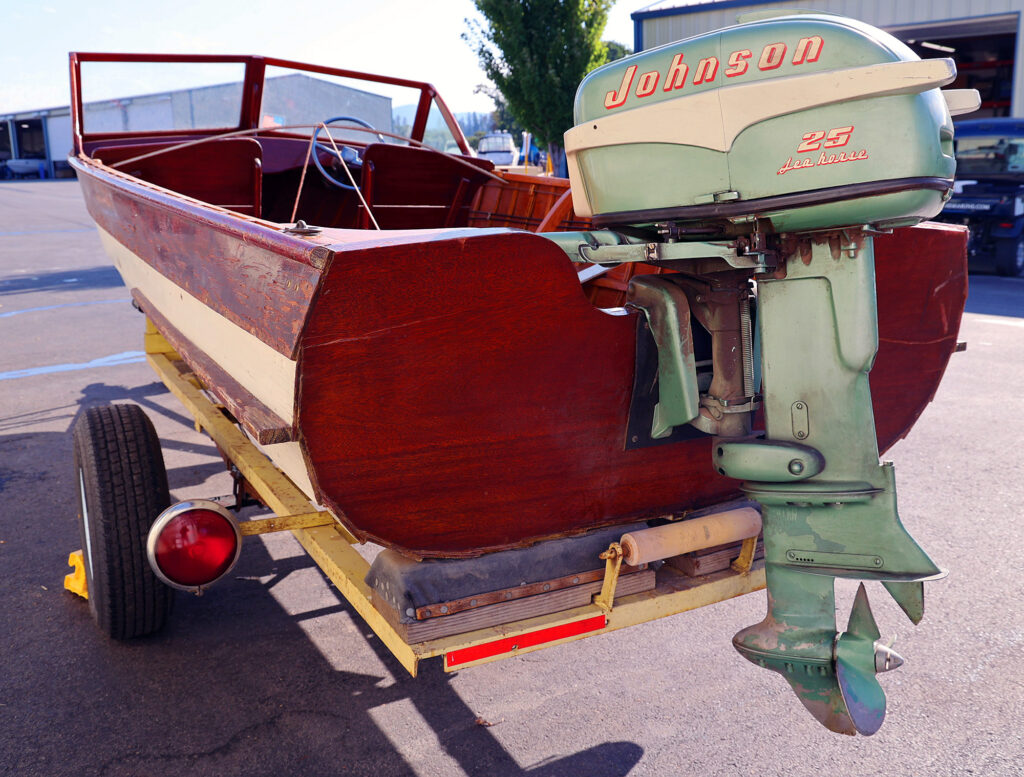
“This little beauty was dropped off and the gentleman who dropped it off, his father built it in the ‘50s,” says Smith. “It was last registered in 1975, so she sat in a barn for the last 50 years and still looks incredible. And now the son, third generation, wants to get it back up and running. I don’t want to do much to the inside because the beauty of it is that it’s grandpa’s patina! You don’t want to change any of that; you want to keep that. So we’ll do some new paint on the hull side, make sure she’s watertight as much as a wooden boat can be watertight. Get the old Johnson 25 running.”
That grandfather’s original wooden water skis lie at the bottom of the boat, the very same the owner and his father played with back in the day. When Coeur Customs is finished, both boat and skis will be back in action.
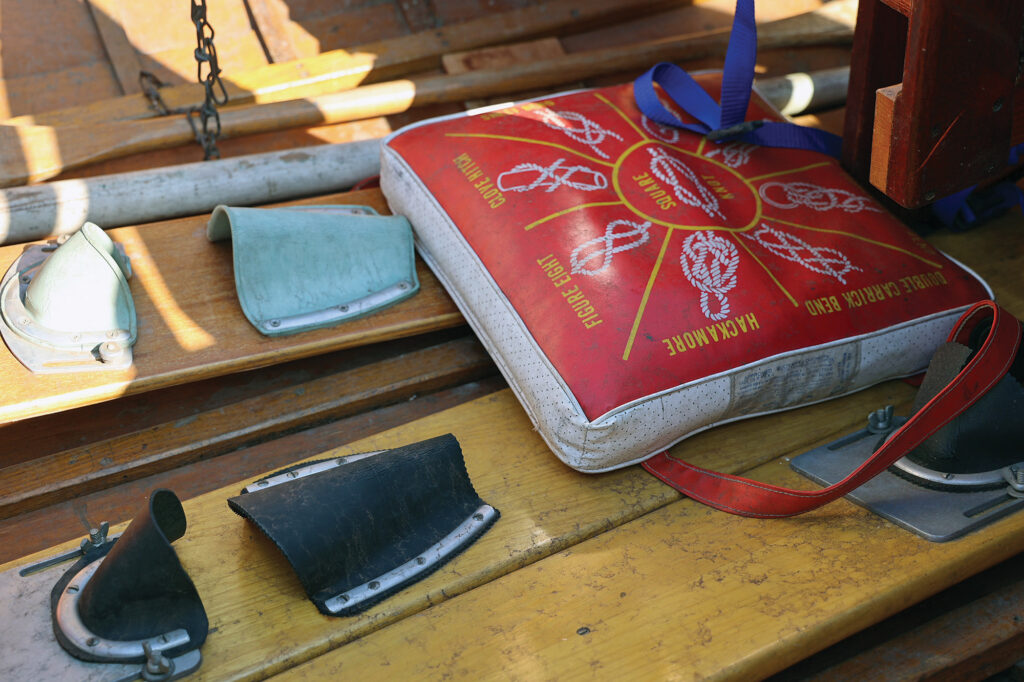
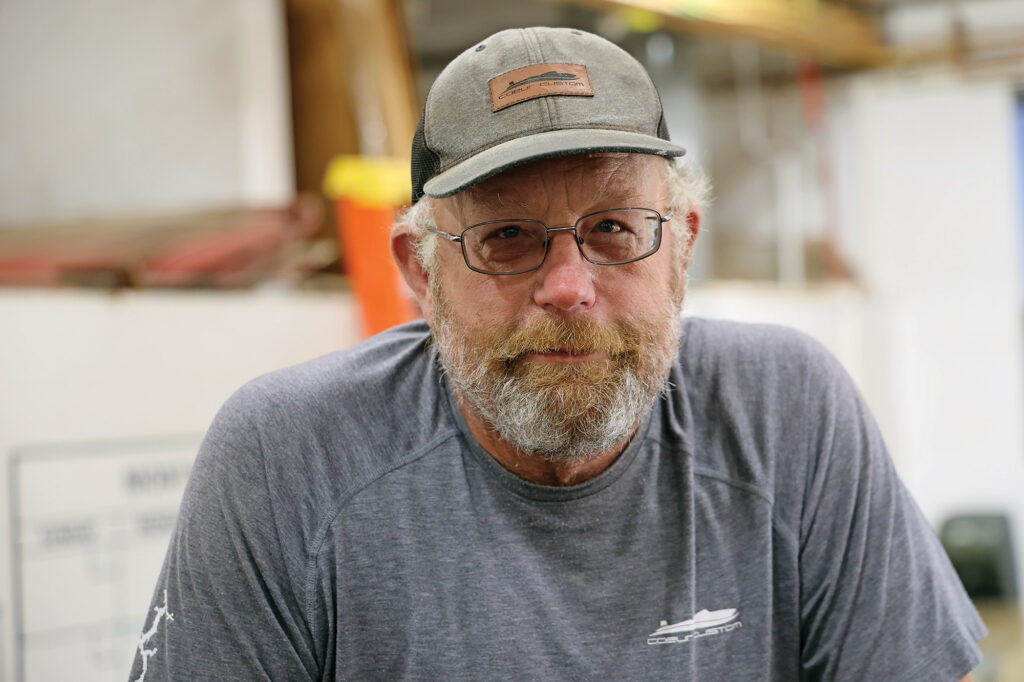
Reentering the shop, we’re joined by Coeur Customs’ Master Builder David Kaschmitter. He’s been working at this shop for decades and carries elder statesman status. Kaschmitter shows us another iconic vessel—the oldest production model Chris-Craft that still endures. She was launched in 1924 and still has her original engine—likely a Curtis OX2, a marinized airplane engine. “It’s a Curtis, not a Curtis-Wright, so it was built before they absorbed Wright,” explains Kaschmitter. Yes, Wright is the company of the original Wright Brothers of Kitty Hawk fame. “This stuff is cool. Curtis absorbed the Wrights, so this is a Curtis and its World War I biplane motor.”
To Kaschmitter, a big part of the master boatbuilder job is “geeking out” and doing research to learn the full story of what you’re working with. “You’re still learning,” he says. Another notable powerplant he’s been working with is a rare Chris-Craft engine. “Chris-Craft made their own motors for about one year,” he says. “We don’t know if we’ll ever find parts for that one either. It’s the third-oldest one, 1924. It’s 101. It’s in very good shape, obviously had a lot of work done.”
For Kaschmitter, knowing your history is a vital component of a craftsman’s success. “You’re never doing the same thing twice in a day,” he says. “You look at stuff that was done 100 years ago with this boat and you think, OK, that worked. It’s still here. And you see things that didn’t work, so you reap the benefits of everyone else’s mistakes. I’ve learned more from everything I saw that didn’t work than everything that went right.”
“I believe this is the original bottom from 1924,” he says of the venerable Chris-Craft hull. “This is … I’m guessing, Honduras mahogany.” The wood in these boats helps tell their own unique stories, and if Kaschmitter were to ever write a book called War and Wood about the untold geopolitical history of where the wood for boatbuilding comes from, I’d be the first to preorder.
“Chris-Craft bopped around,” he says. “Most of the prewar stuff was Honduras and then after the war a lot of it was fir. A lot of painted hulls, because nobody was getting mahogany. They were [sourcing] Philippine [mahogany] for a while. But the war—WWII—shut that down. So [they were] kind of [left with] whatever the geopolitical events would allow.”
Of Philippine mahogany, he says: “You can’t get it anymore, not the good stuff. When Marcos was in power back in the ‘80s, we were getting some absolutely gorgeous Philippine mahogany. It was unfortunate because he was just pillaging the country. But it was the most beautiful Philippine mahogany I’ve ever seen in my life. They booted him out and the good Philippine dried up.”
Then there’s teak. “For a while you couldn’t get teak because of Myanmar/Burma, where a lot of teak comes from, that got taken over,” says Kaschmitter. “We imposed trade sanctions on them, now you can’t get teak anymore. That’s been reversed, because now you’re starting to see teak show up. So, I’m guessing somebody schmoozed something out there … got things ironed out, so we can get teak now.”
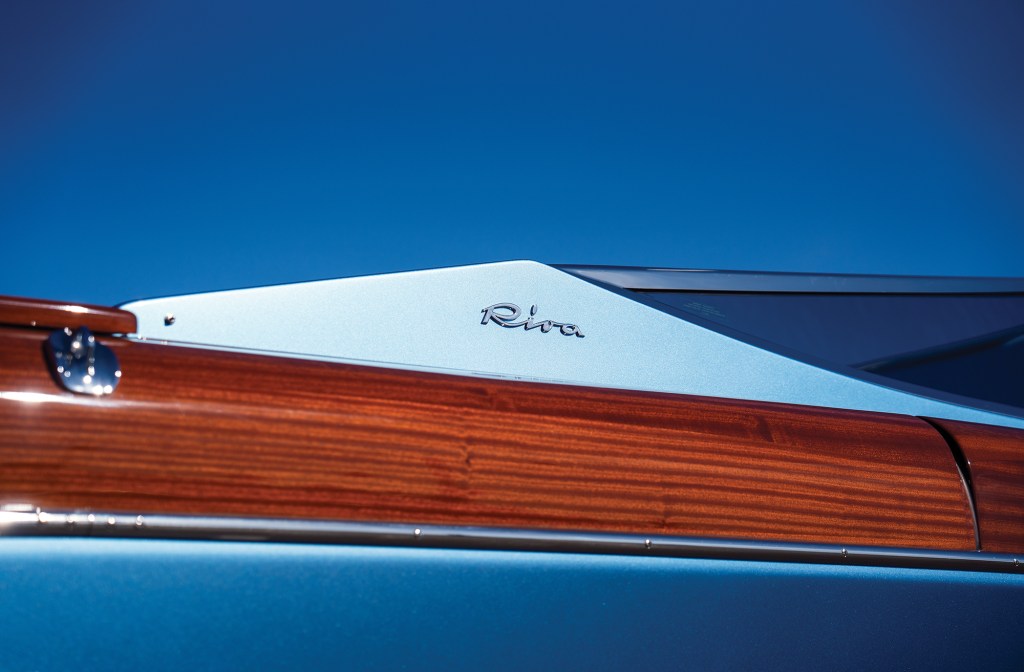
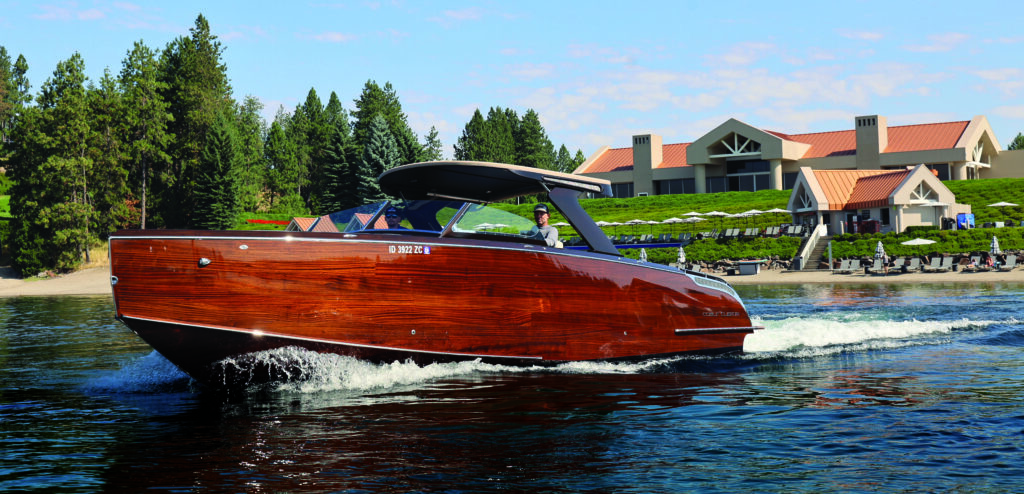
Finally, we stand before hull number three of Coeur Customs’ stunning 340 Steinway HT. When compared to the builder’s smaller models, the Steinway is significantly beamier with more freeboard at the foredeck and bow. While less arrow-like than her sisters, a similar elegant sheerline starts high forward and draws the eyes down and aft to the transom and open deck. On a finished Steinway, the bow starts plumb topside but then sweeps back stylishly for the water entry with a dark accent that helps pop a deeply glossy hull, double-planked with sapele mahogany.
“This is our third Steinway we’ve built,” says Smith of this family entertaining oriented boat. “The first one was purchased by Wayne Gretzky. The hull is the same, but we try to do the interior different in each one.”
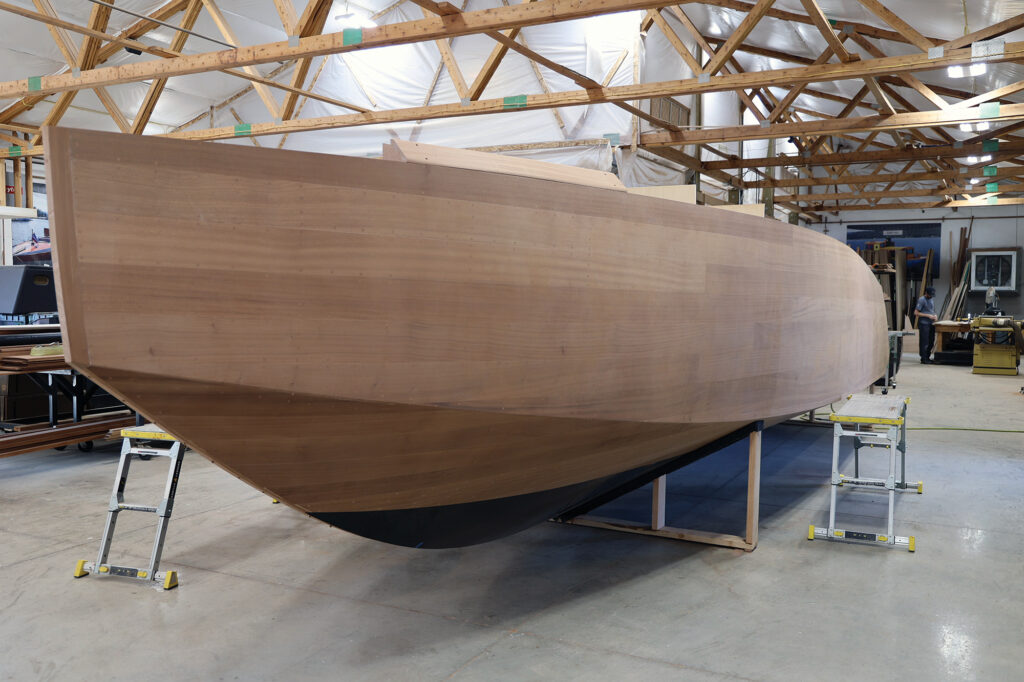
A few unique tweaks to this hull include inset port lights on each side. They are also changing the side profile a bit, with the transom and wings on the back. The time it takes for all this work, and detail, is immense. “This is really a labor of love,” says Smith. “All said and done, there will be about 6,500 man hours involved in this thing. It’ll be seven guys that are basically on it from start to finish. The whole design was done here in-house by my predecessor Jim Brown. Him and Dave Kaschmitter worked together. Designed the whole shape, and I think they did a fantastic job.”
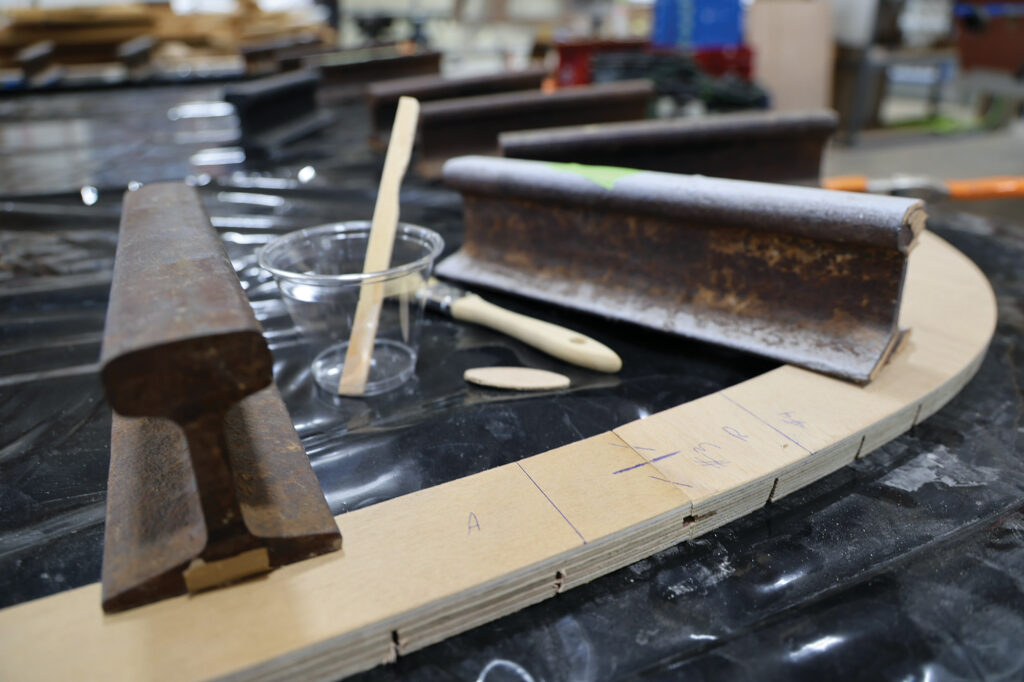
“Something a little bit different than some of the other new boats nowadays is that we use solid quarter-inch sapele mahogany as the first layer instead of quarter-inch plywood,” explains Smith. The second outer layer is solid 9/16-inch-thick sapele mahogany planking. The layers of wood are bonded with bombproof DuPont 5200 glue and stainless-steel screws. These two solid-wood layers are present throughout the bottom, hull side, and deck planking. “We’ve found that it’s a better product and just judging by our taxi boats that are on the water—that have been around for 30-some years and never had the bottoms replaced—and that’s how they were built. That’s a pretty good representation that it works pretty well.”
As soon as the covering boards and the like are complete, the “real fun” starts with the hand sander and fairing. Then 14 coats of stain varnish will be applied.
Ultimately Steinway guests will gain the benefit of shade via the hardtop and deployable SureShade cover aft. Like everything else on the Steinway, the composite hardtop is a simple concept executed with no compromises.
“You got a layer of six-mil., two layers of polyiso, another layer of six-mil., and then we embed aluminum in it,” says Kaschmitter. The team will drill and tap to attach the SureShade and hardtop to the boat. That hardtop will then be coated with 209 bonding hardener and the whole thing will be vacuum-bagged. “It’s a bulletproof hardtop,” says Kaschmitter.
A power swim deck beneath the regular swim deck will expand the rear space as a key entertainment feature and the boat will be powered by two 8.2-liter, 430-horsepower Mercury inboard engines with Axios stern-drive control. Power, grace, and speed.
To Smith, having one new boat project like the 340 Steinway HT per year is the dream. “The benefit to that [one new project] is that we can put an appropriate amount of time into that project,” he says. “We don’t rush; when it leaves we are confident that we made it as absolutely perfect as possible. You’re always going to pick something apart on it—that’s just human nature—but this way we can spend the appropriate time and feel confident it’s the best we can do.”
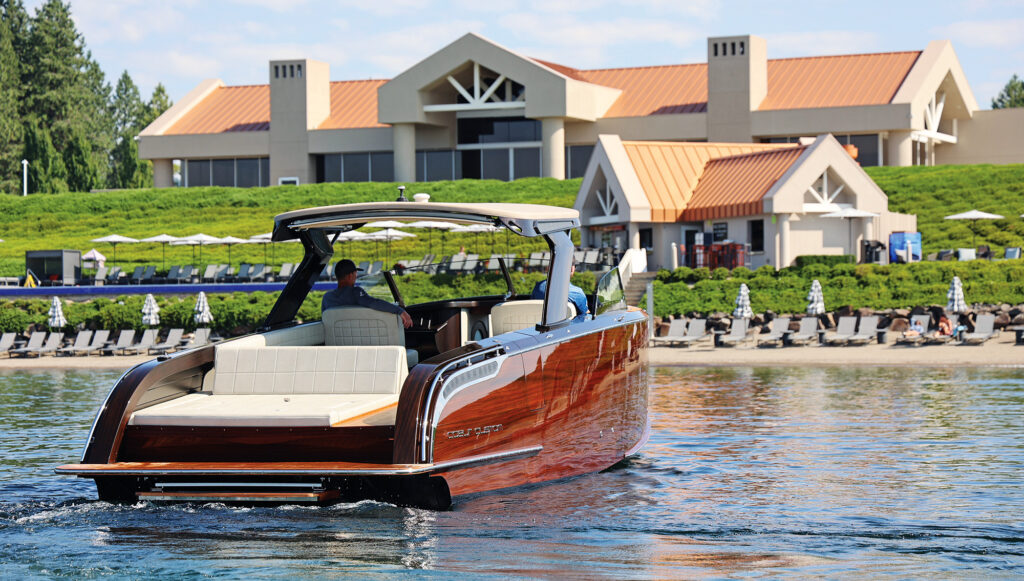
Fortunately for me, hull number two of the 340 Steinway HT is waiting for us outside in the marina for a cruise. We’re off the dock with minimal effort, quickly reaching a spirited 27-knot cruising speed. The ride is magic-carpet smooth through a light breeze. The sun is out and the fellow boaters on the lake offer friendly waves. You can feel Billy Ray’s uninhibited happiness during his On Golden Pond flight on Thayer IV.
I do a walkthrough while underway. A stairway-walkway leads from the aft cockpit to the padded seating on the foredeck. Between the cockpit and foredeck, an enclosed head sits to port in the passageway and a storage closet to starboard. There’s plenty of room to enjoy life in the large open deck space between the helm and swim step along with beautifully stitched, padded bench-style seating a few steps from an al fresco galley that includes an icemaker, refrigerator, and sink. The hardtop is a solid addition that shelters some of this space. The large swim step and giant aft sunlounge are ideal for watersports, swimming, or just hanging out with a cocktail.
To me, there is a welcome minimalism to the 340 Steinway HT experience. Nothing terribly complex or overdesigned—it’s a family’s forever lake boat taken to the apex of craftsmanship. It’s impossible for someone with a soul not to gush over the glistening wooden hull as it zips past. It’s tough to imagine a more beautiful hull and I’m in awe of the lines that make that wood pop. Her moniker is certainly proper too. It’s hard not to draw her comparison as a boater’s version of a priceless Steinway piano.
As we cruise along without a care in our heads, I’m struck by the size of the lake. Two rivers, the Coeur d’Alene and St. Joe, flow into Lake Coeur d’Alene and create a waterway network that includes several other lakes and miles of river. Some stretches of shoreline here are pine-studded rock bluffs, others are populated with swanky resorts including the Coeur d’Alene Resort Golf Course with its famous Floating Green. We head back to shore and I can’t shake the feeling that in a way, we were just getting started. A hundred years from now, will the owners of this 340 Steinway HT bring her to the Coeur Customs shop for a fix-up after decades in a local barn? What stories will the boat tell of Hollywood movies, arboreal geopolitics, or master craftsman ambitions then? Whatever grandpa’s patina will one day mean in the context of this new boat, it will stand immortal here in Idaho.
340 Steinway HT Specifications:
LOA: 33’ 6”
Beam: 9’ 6”
Draft: 2’6”
Displ.: 12,000 lb.
Fuel: 100 gal.
Water: 25 gal.
Power: 2/430-hp Mercury HO
This article originally appeared in the November 2025 issue of Power & Motoryacht magazine.