There’s a sort of story that a reporter simply can’t get from behind a desk. In our case, keeping open to chance encounters while on assignment—spending that extra hour wandering the docks opens up a world of potential that someone shackled to an office chair or holed up in their ivory tower simply can’t drum up. It might be the start of an investigation, or it might simply reveal the love story of two strangers inextricably linked beyond the realm of anyone’s imagination.
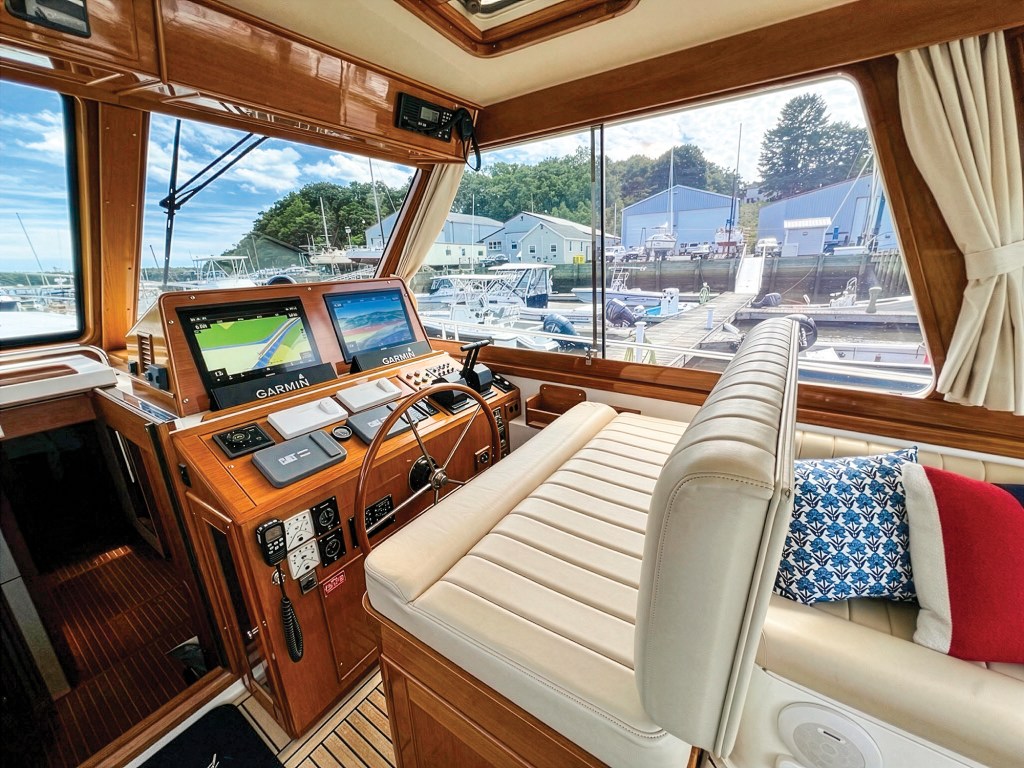
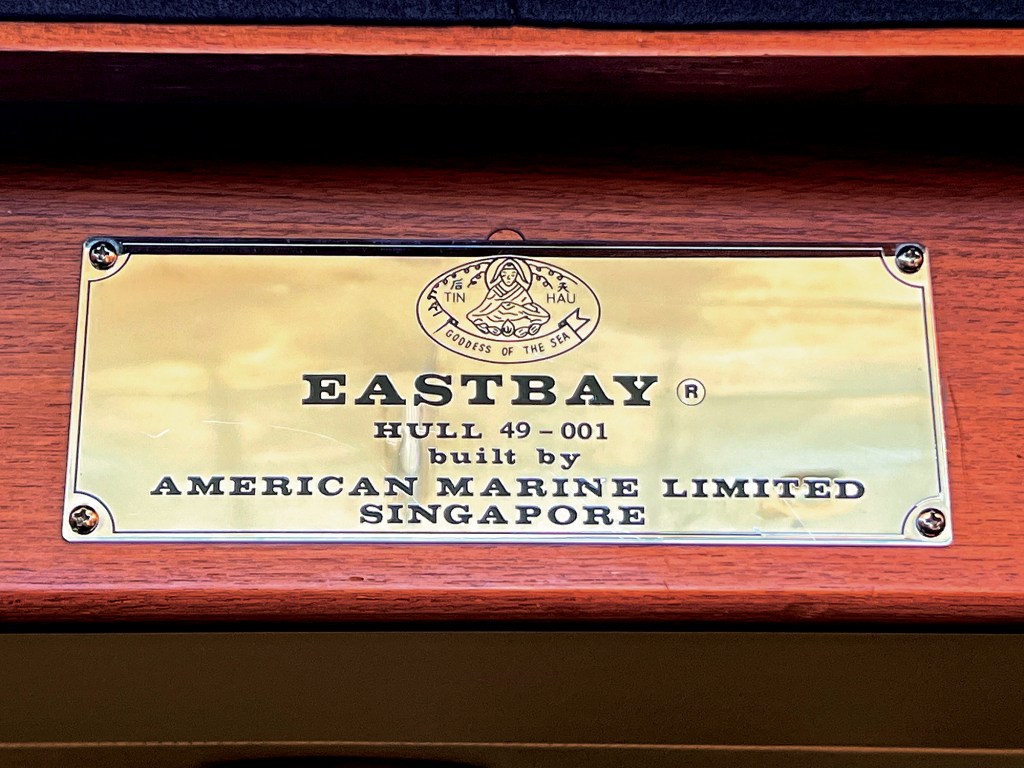
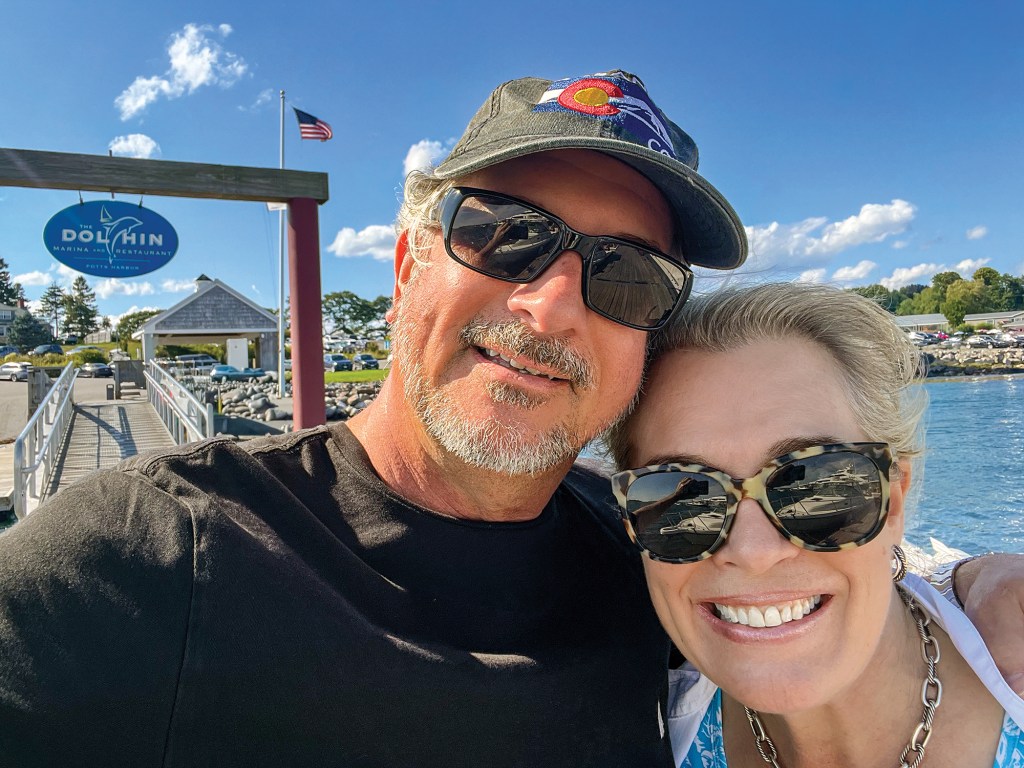
Steven Kovich walked up to me as I wrapped up a test of an MJM in North Carolina and the next thing I knew I was interviewing him and his wife, Leah, in a Beaufort watering hole, where they were waylaid and making nothing but light of it. “I mean, if you’re going to be stranded somewhere,” Steven said, casting a gaze at the setting sun, “it’s gorgeous. Charming, beautiful architecture, wonderful restaurants—” “We’ve been eating our way through town,” Leah interjected, explaining that they were having a few repairs handled as they made their way south aboard their new-to-them Grand Banks Eastbay 49—hull number one of their dream boat—Priceless. Using the word fate feels trite, but shared interests and dedications to certain ways of life have a way of connecting people—as Steven and Leah Kovich first noticed from across the water.
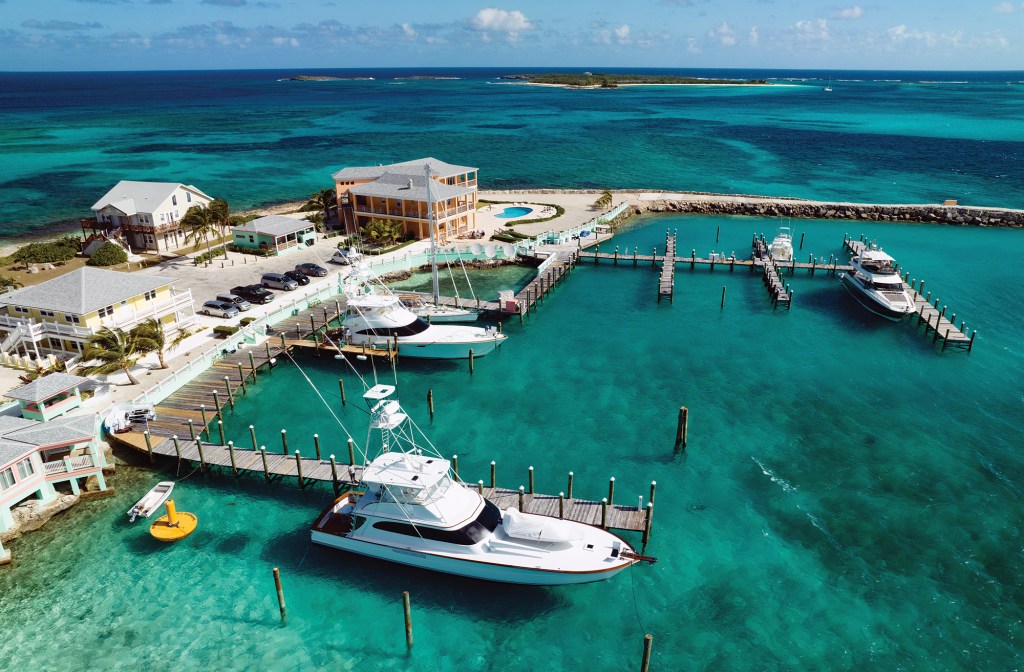
It was a Florida afternoon at St. Pete’s Isla Del Sol Yacht & Country Club, the light already starting to go honeyed, when Leah saw a Hatteras easing into the docks. Not muscle-memory docking, not tentative corrections—just calm, deliberate control. The boat slid stern-to as if it had always belonged there. Leah, already a Hatteras owner herself, clocked it immediately. The lines. The confidence. The fact that someone young enough to still surprise a Florida yacht club was handling a serious boat the right way.
“I was one of the younger members—and there weren’t that many younger members,” Leah recounted as the three of us sat beside a much-welcomed fire during an early-season nor’easter. “So I saw him pulling in and I’m like, number one, yay. A younger member, and number two, wow. Look at how he drives that boat. So that was cool,” she said.
Kovich, meanwhile, was just coming home.
Within minutes, Leah was jogging down the dock as part of the unofficial welcoming committee, clapping, smiling, calling out an invitation that would change both of their lives: “Welcome to Isla—come have a cocktail once you’re tied up.”
This, as it turned out, was not a coincidence. It was an alignment.
At the time, both Steven and Leah owned classic Hatteras yachts—remarkably, both from 1972. His was a 43-foot Double Cabin; hers, a 58-foot Yacht Fisherman. Same vintage. Same era of unapologetic American boatbuilding, when solid fiberglass, real teak, and a stubborn dignity defined the brand. Both boats still wore their original wood interiors, lovingly preserved and restored.
Leah’s relationship with boats began early and never loosened its grip. She grew up along Elkhart Lake, Wisconsin, eventually attending Northwestern University’s Kellogg School of Management, where she earned her MBA. By her early twenties, she was already deep into a corporate career—sales, national accounts, supply chain management—the kinds of roles that reward discipline and long-term thinking.
But Leah was building something else on the side. Before “house flipping” became a television genre, she was quietly doing exactly that, buying and renovating properties with an eye for structure, flow, and enduring value. By the time she was 30, she had amassed a portfolio of apartments, eventually moving to Florida. In 2012, just before St. Petersburg exploded into a luxury real estate hotspot, Leah saw opportunity in a still-sleepy coastal town. She relocated, gradually transitioning away from corporate life to focus full-time on real estate and design. The water was never optional—it was the point.
Design was never incidental for her, either. She possesses an intuitive understanding of proportion and material—how spaces should feel as much as how they should function, and that sensibility followed her onto the water. When she found her 1972 Hatteras 58 Yacht Fisherman, she didn’t see an old boat; she saw a canvas. The refit was meticulous, personal, and deeply informed by respect for original craftsmanship. Real wood mattered. So did light, balance, and livability.
By the time she walked the docks at Isla Del Sol, Leah had already built a life defined by independence, competence, and an insistence on quality.
Steven’s path to that same dock was less linear, but no less intentional.
Also raised in the Midwest—in the Detroit area—Steven came of age on the water between Lake Huron, Lake St. Clair, and Lake Michigan—places where weather, fetch, and shallow depths teach lessons quickly. His early boats ranged from Hobie Cats raced hard and fast to sailboats rebuilt by hand, including a Catalina 27 that arrived as little more than a pile of parts. He put it back together piece by piece, learning systems not from manuals but necessity.
At the same time, Steven was building a formidable career as a professional photographer. He became the official team photographer for the Detroit Red Wings, Tigers, and Lions, gaining rare behind-the-scenes access and documenting professional sports from locker rooms to charter flights. He produced major commercial work for automotive clients, shot national advertising campaigns, and created intimate, comprehensive photo essays—most notably a 48 Hours–style chronicle of life inside an NHL team, capturing moments fans were never meant to see.
Photography took him everywhere, but boats remained constant companions—places of refuge, challenge, and recalibration. Even as his professional life placed him amidst celebrities and high-pressure environments, Steven kept returning to the water, often disappearing for weeks at a time to go sailing.
Eventually, Florida called. Work opportunities converged with weather and water access, and Steven found himself searching for a boat that could keep pace with both his ambition and his standards. He bought a 1972 Hatteras 43 Double Cabin—a serious boat with honest bones—and refit it extensively. Like Leah, he gravitated toward craftsmanship over convenience, solidity over trend. By the time he eased that Hatteras into Isla Del Sol, Steven was fluent in both worlds: the precision of a professional eye and the quiet authority of a seasoned boat handler.
When Steven and Leah met, neither was looking to be impressed, but they recognized one another’s work. That first cocktail on the dock turned into many more—shared evenings with a close-knit group of boating friends who cruised together, swapped stories, and built the kind of maritime camaraderie that lasts decades. Florida’s waterways became both a setting and a proving ground for a relationship built on shared values: competence, curiosity, and a love of boats that were meant to be used. The conversations came easily. So did the trust. They married seven years later, the foundation laid on cleats and dock lines, in engine rooms, and at helm stations. It felt less like a beginning than a formal acknowledgment of something already underway.
Both Hatterases were eventually sold, each having reached that bittersweet point where the work is done, the boat is beautiful, and it’s time to let someone else take the next watch. They had owned enough boats to know the market, the compromises, the tradeoffs. Then they found The One.
Hull Number One.
To boat people, a hull number one is never just a serial number. It’s a statement. A prototype refined by vision rather than cost-cutting, built when designers, engineers, and owners are still arguing passionately over details because the idea itself is new.
The original owner was deeply involved with Grand Banks, commissioning the 1999 49-footer as a committee boat, demanding speed and authority alongside refinement. The result was a boat that would quietly redefine expectations for the brand—and for a segment.
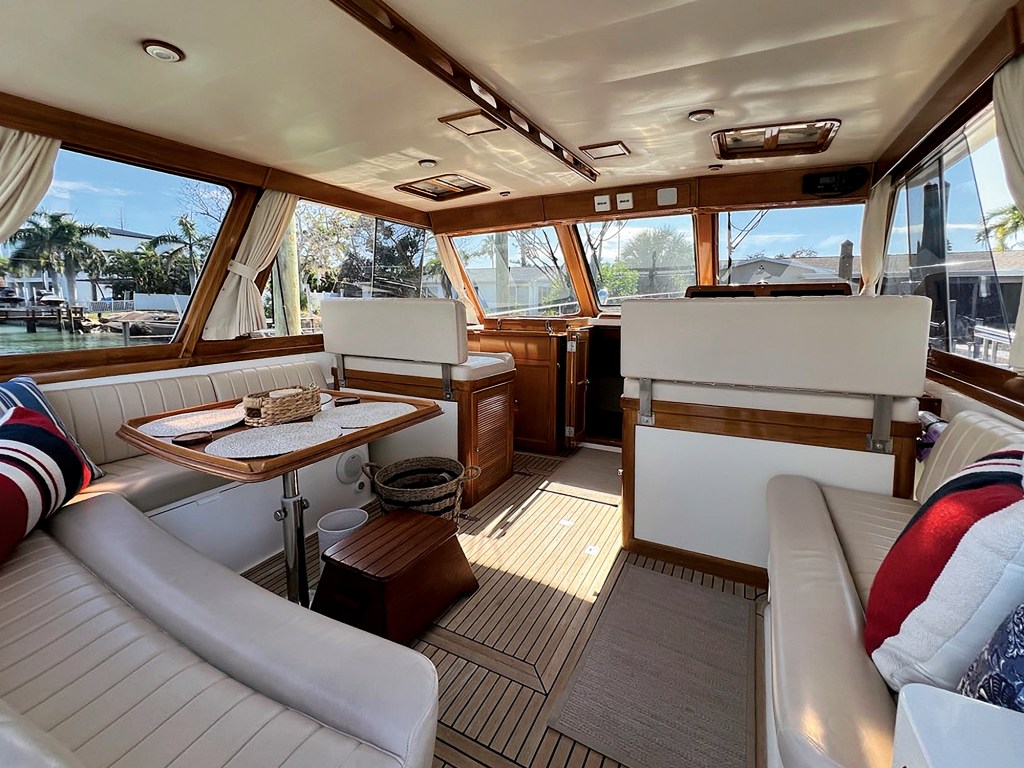
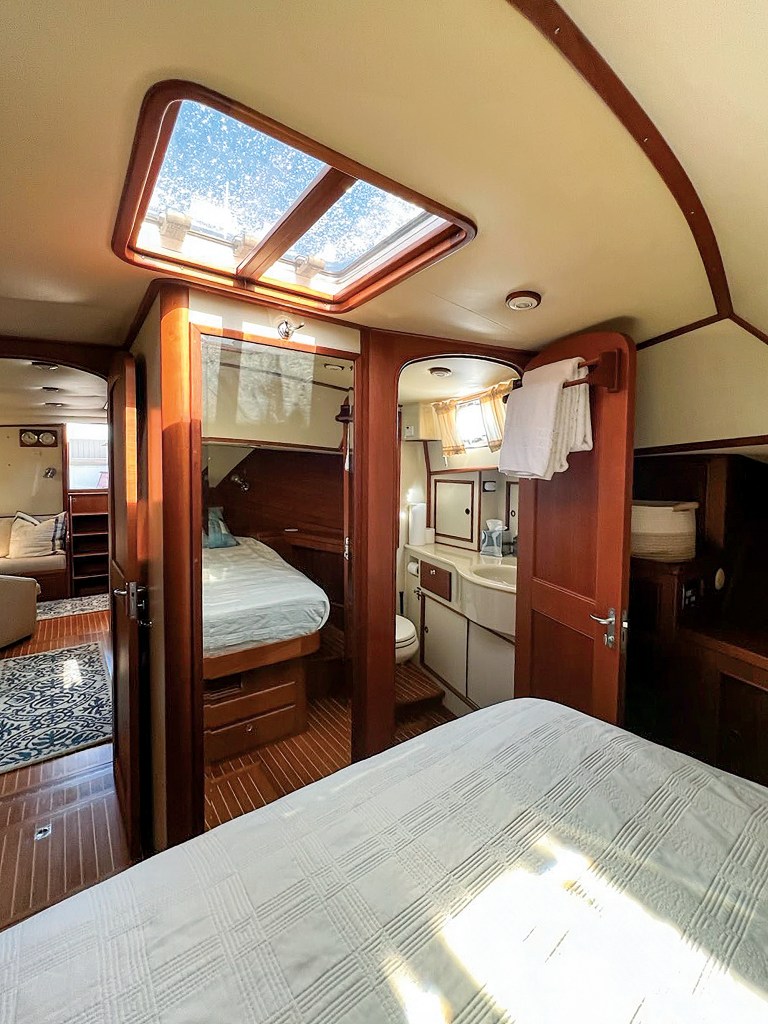
When Steven and Leah stepped aboard, it wasn’t just nostalgia that spoke to them. It was continuity. The Eastbay is not flashy. It doesn’t shout. It doesn’t chase trends. Like their Hatterases before it, the yacht, christened Priceless, favors proportion, balance, and materials that reward time spent aboard. Real wood. Thoughtful layouts. A hull that feels planted at speed and reassuring when conditions deteriorate. Those things mattered more than novelty ever could.
They run the boat the way it was meant to be run. They cruise with purpose, entertain with ease, and take genuine pleasure in knowing the provenance of what they own. That this particular Eastbay happens to be the first of her kind only adds another layer to the story—a sense of stewardship rather than possession.
Today, the boat rests at their dock like it belongs there.
There’s a temptation in boating stories to over-romanticize the water, to turn every meeting into fate and every purchase into destiny. But the truth of Steven and Leah Kovich’s story is more grounded—and more compelling—than that. They met because they recognized skill. They connected because they shared standards.
They chose their boats the same way they chose each other: carefully, deliberately, with an eye toward longevity.
From twin 1972 Hatterases to hull number one of a modern classic, their journey traces a clean, elegant wake through decades of American yacht design—and through a life built around water, work, and shared horizons.
Some people meet on a dance floor. Some meet online. Steven and Leah met at idle speed, on a dock in Florida—exactly, you might say, how and where they were supposed to.
This article originally appeared in the April 2026 issue of Power & Motoryacht magazine.