
On my last day at this year’s Miami boat show, I was walking the docks of the superyacht marina on Watson Island, having completed the week’s client meetings, design discussions, and people watching. That’s when I stumbled upon the first yacht design I ever worked on after graduating from engineering school 29 years ago. My, how time flies.
It was 1997 and I had just joined Michael Peters Yacht Design in Sarasota. I had done some freelance design work in college, sure. But this was the major leagues. For those of you new to this fine publication, Michael was the prior design columnist in this space until seven years ago when I stepped up to the plate in Power & Motoryacht.
Mike’s yacht design office had a lot going on back then. UIM offshore race boat designs for Dubai, hull designs for the biggest American production builders, and complete custom yachts. My first assignment there was to develop certain aspects of a 95-foot raised-pilothouse motoryacht. What I learned in my first week in the majors is that this particular project was not a clean-sheet design from Mike, but rather a rescue mission. I was the new guy, the rookie, so I got the at-bat. The 95-footer at hand had been sketched by some minor league “designer” and sold to a client by a now-defunct North American shipyard who will remain nameless for the next 500 words.
Contract signed, deposit made. This all happened while I was still cruising through my senior year in college, I learned. Trouble was, the initial “designer” drew a rather pretty picture but no one at the yard had done any serious turns around the design spiral to see if the boat would really work as presented.
Well, I’m here to tell you it didn’t. At some point during my “senior slacker” college semester it was discovered by the shipyard that the sleek, low profile which helped sell the multi-million dollar build did not allow sufficient height for superfluous details like deck structure, plumbing runs, HVAC, or the necessary final 10 percent of fuel capacity. Curveball.
So the builder hired Mike, and his all-star crew of five naval architects received the rescue mission. By the time I graduated from college and Mike hired me, the hull structure had been fleshed out. Now I had the task of starting with an otherwise attractive profile drawing from the original stylist and adding 17 inches in height to make it all buildable.
Seventeen inches doesn’t sound like a lot to you? I mean, the boat is 95 feet long. How bad could it be? Bottom of the ninth, full count, bad. For example, imagine adding a half inch between Sydney Sweeney’s upper lip and her nose. Strikeout.
But it had to be done. My job felt like plastic surgery in reverse, forming pretty but unrealistic curves into buildable reality. Allowing for proper headroom in the salon instead of the 5 feet and 10 inches proposed by that first sketch artist (presumably a slight Italian fratello whose cigarette habit from age 12 had stunted his growth). And providing for basic deck structure to keep the boat together while creating space for lighting, plumbing, and the thousands of miles of wiring in a 95-footer. And myriad superfluous details like (still more) space for freeing ports and other international regulatory requirements.
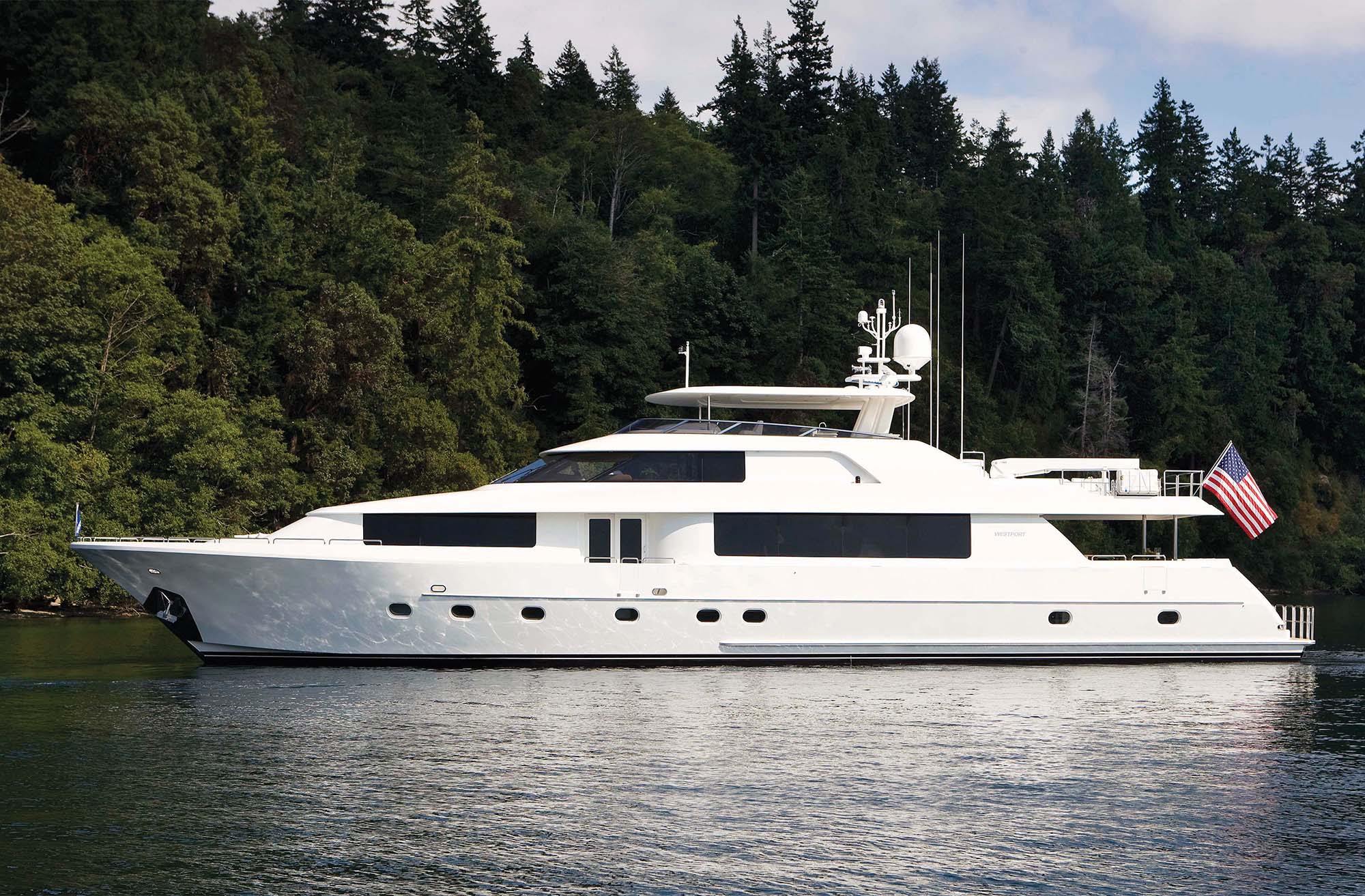
We did it by slicing those 17 inches into layers from the weather deck to the flybridge, avoiding the awkward “extra half inch above the upper lip” look as best we could. Four inches below the salon windows. Base hit. Three inches in the windows. A double. Three inches added to the sides of the flybridge. We stole third with that play. And a couple other surfacing tweaks. The resulting boat which I was reunited with in Miami 29 years later still looks great. You’d never know what we had to do if Power & Motoryacht hadn’t printed this and put it online.
That experience nearly thirty years ago sticks with me every time I step up to the plate and design a new yacht. Because we hit it out of the park.
This article originally appeared in the May 2026 issue of Power & Motoryacht magazine.