Tried & True
By Daniel Harding Jr., Photography by Billy Black
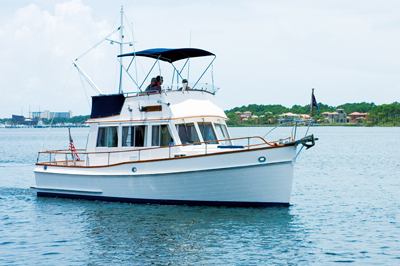
When one thinks of the Ft. Lauderdale International Boat Show, visions of gleaming yachts and acres of fiberglass likely come to mind. But look a bit closer and you’ll find a plethora of new products that can improve your time on the water. We hit the docks and rounded up the newest products from FLIBS 2015, then tested them aboard Arawak, our Grand Banks 42 project boat, so you wouldn’t have to. Whether you’re looking to replace worn-out equipment or add onboard functionality for comfort or safety’s sake, our 2016 Gear Guide has something for everyone.
Weems & Plath Binoculars
($190, www.weems-plath.com)
What you see is what you get with the Weems & Plath 7 x 50 binoculars; the seven times zoom allows you to see great distances while the 50-millimeter lenses allow for crisp visibility in low-light situations. One nice feature with this pair is that the lens caps are affixed to the binoculars meaning they won’t get lost behind your helm. Also, the rugged construction provides faith that they can handle a fair amount of abuse.
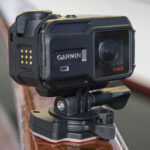
Garmin Virb XE
($400, www.garmin.com)
In years past the best place to tell an epic sea story was a dimly lit bar; today the Internet is the preferred place to share boating memories. This rugged, waterproof (to 164 feet) action camera from Garmin meets the industry standard for optics thanks to its ability to shoot high-def 12-megapixel photos at 30 frames per second, meaning you can snag crisp still shots from your video. What makes this camera stand out even more is that it can talk with your Garmin GPS and add water depth, wind speed, boat speed, etc. to your videos. Built-in Wi-Fi lets you view and edit your footage on a smartphone or tablet the Virb app (free), which we found to be very user-friendly.
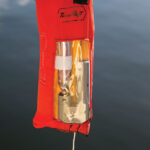
Throw Raft TD 2401
($130, www.throwraft.com)
Throwable flotation devices are essential components of an onboard safety arsenal but on small tenders life rings may be too bulky. Enter the U.S. Coast Guard approved TD 2401 from Ft. Lauderdale-based Throw Raft. Weighing just 2 pounds 4 ounces, and measuring 11 by 4 inches it fits nicely in the lockers of most smaller center consoles. After hitting the water it inflates into a bright yellow 22- by 21-inch flotation device (similar in shape to a throwable seat cushion) that you can loop your arms through and hold until help arrives.
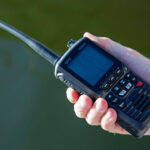
Standard Horizon HX870
($250, www.standardhorizon.com)
This GPS-enabled handheld VHF comes loaded with features such as an MOB function, DSC calling, group channel monitoring, a compass page that allows you to navigate to a waypoint, and a feature that directs you to a nearby DSC call. It floats, is submersible to 5 feet for 30 minutes and sports a water-activated strobe light. But the feature we like most on the HX870 is the large, easy-to-read screen. After all, what’s the point of all that functionality if you can’t see how to access it?
Most people never get the full potential out of a VHF because that requires digging into the fine print of their owner’s manual. With this model, all it takes is a little practice. Even with all its functionality we figured out how to use most of the functions during the time it took to enjoy two cups of coffee.
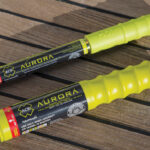
Aurora Flare
($30 each, www.acrartex.com)
Flares are included in most onboard safety arsenals because they work. ACR electronics, however, has taken this life-saving technology to the next level with its waterproof Aurora Red Hand Flare. Unlike traditional striker flares, you unscrew the brown top and yank a pull-wire starter. This seems much easier and safer to use, especially if your hands are cold. What’s especially beneficial about this flare is that it produces a light output of 15,000 candela (most flares burn at 700 candela) and an easy-to-hold hand grip allows you to keep the flare away from your body as it burns for 60 seconds.
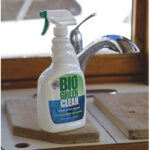
Bio Green Clean
($25, www.biogreenclean.com)
Who among us doesn’t appreciate a clean and tidy ship? That’s probably why most of us carry a small shopping aisle’s worth of cleaners on board, some for wood, some for windows, some for carpets, etc., etc. We snagged a bottle of Bio Green, which claims to “clean anything,” and put it to the test. We were originally skeptical but the nontoxic cleaner performed admirably on windows, countertops, and wood. It removed light carpet staining but struggled with deep stains so be careful with that red wine.
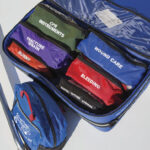
Marine 2000
($600, www.adventuremedicalkits.com)
When it comes to your onboard med kit, having the equipment to address various emergencies is important but being able to find the product you’re looking for quickly, (be it a tourniquet or a CPR mask), despite the fog of panic, is even more crucial. That’s why we like the Marine 2000 from Adventure Medical Kits; not only does it come with all the requisite bandages, medications, and splints, everything is packaged in pouches that coincide with the type of emergency at hand. Some other things we like that other med kits don’t always offer are a blood-pressure cuff, a stethoscope, and a thermometer, items that let boaters relay important medical information to first responders. When help is far away, we’d be glad to have a kit like this aboard.
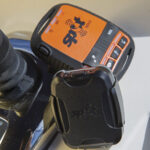
Spot Trace and Gen3
($100 and $150 respectively, www.findmespot.com)
Spot satellite locators like the Gen3 are widely used by delivery captains and long-distance cruisers as a tool to keep friends and family informed of their locations sans cell service. The Gen3’s S.O.S. button also provides peace of mind. Now joining the Gen3 and the rest of the Spot family is the new Spot Trace, which is designed to be permanently affixed to your vessel (or car or anything else you want to keep tabs on) so you can hop online and check its location in real time. Finally you can see if your boat’s been hauled without calling the yard!
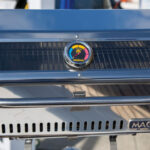
Magma Newport II
($400, www.magmaproducts.com)
When it comes to portable marine grills, it’s tough to compete with Magma, especially its line of Newport Gourmet grills. An array of mounts let you assemble the grill a multitude of ways, from free-standing to latched onto a side railing. With 162 square inches of grill space, one can easily cook up the catch of the day for a family of six. Some nice features on this model are its locking lid, variable temperature control valve, electric ignition, tempered glass viewing window, and 11,200-Btu heat output. Fresh fish not included.
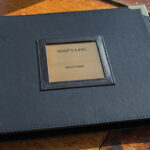
Leather Log Book
($52, www.weems-plath.com)
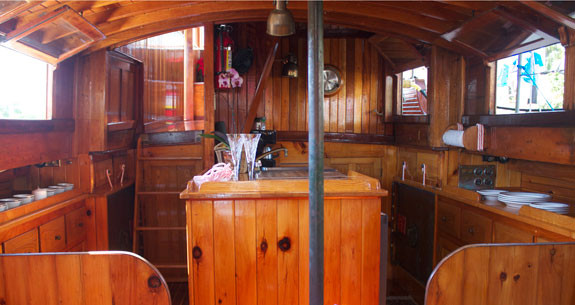
Any boater worth his salt knows the importance of keeping a log. From tracking routine maintenance and running hours, to helping recall great memories, its uses are many. This decorative (and protective) case from Weems & Plath allows you to replace that old spiral notebook you’ve been keeping and transforms your entries into a coffee table book you’ll be proud to display. Note: Arawak’s counter surfaces are being replaced with new veneer.
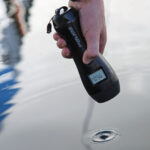
H22PX Sonar System
($80, www.norcrossmarine.com)
Now here is a product that is as fun as it is useful; the H22PX sonar system from Norcross Marine, like the name implies, takes depth and temperature readings at the push of a button. Leaning over the side of Arawak, the sonar readings matched perfectly the depths Navionics said we should have expected in our Ft. Lauderdale slip. Its manufacturers claim the device can shoot through the hull of a boat but we found that trying to do so yielded some false readings. However, when aimed at the water, like it will be used 99 percent of the time, it never failed to yield accurate depths and air temperature. This capability could be very helpful for going ashore in a tender in the Bahamas where it’s hard to tell if you have 5 or 55 feet underneath you.
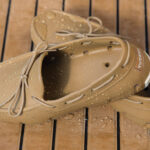
Tucket Giller Shoes
($60, www.tucketfootwear.com)
The first thing to surprise us about Giller shoes from Tucket Footwear is that, for plastic shoes, they were actually pretty comfortable. The insole is padded and provides plenty of arch support. But the claim to fame for these shoes is the pattern of 24 holes in the outsole that allows water to drain, keeping your feet dry. And it works. After dunking the shoes in water and then walking down the dock, nearly all the water was squished away after a dozen paces. But what’s most impressive is the grip the shoes provide on slippery surfaces; they were exceptionally grippy, which leads us to think they’re a smart choice for washing down, taking the dinghy ashore, or just walking to town in the rain.
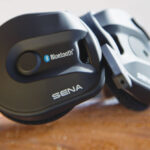
Sena Expand Headset
($170, www.sena.com)
Comfortable, waterproof, with clear audio, the Sena headsets we tested had a lot going for them. Sena claims the Expand line allows for clear communication between users up to 980 yards apart. We can attest that while climbing around a 42-foot Grand Banks we could communicate clearly. And while doing this it was hard not to think of other ways to use the sets, like during docking or when calling a tender operator and other crew while on a charter. And, of course, there’s always that one project that requires one person to scream from the helm to someone in the engine room. Also, being bluetooth enabled, the headsets allow you to take calls or even listen to tunes when connected to your phone.