Good seamanship demands there always be a lookout, keeping their eyes peeled for whatever lies ahead. Even at anchor, there should be someone on watch. But these requirements are often ignored: Few pleasure boats, and not even all commercial boats, designate a crewman as lookout, but leave the job to the person steering—who is often occupied with electronics, the VHF, phone, tablet, whatever. Or he’s in the galley getting coffee while the boat runs on autopilot. In short, he’s doing anything but looking out. And that’s normal—it’s what people do.
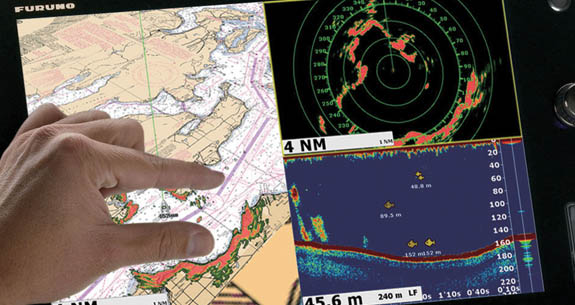
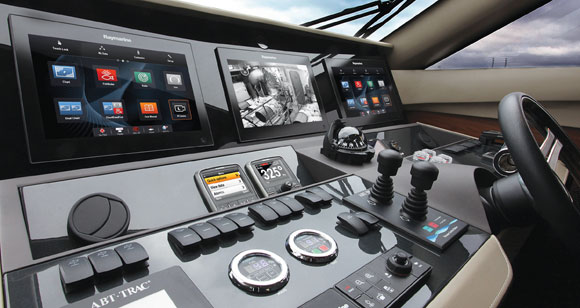
It’s not what artificial intelligence does, though; AI never needs caffeine, never needs the head, never nods off on watch. And it can see in the dark. AI often gets a bad rap. Like it’s going to take over our jobs, our society, and our lives. Maybe it will, but for some things you can’t beat it, and one of those things is serving as an always-alert lookout. Connect a camera—daylight or thermal, most AI systems have both—to an AI brain, connect the brain to a multifunction screen, and you’ll see an annotated version of what the camera sees: AI will highlight whatever isn’t water, and if there’s enough info in its database to identify the object, it labels it on the MFD—boat, floating debris, swimmer, whale, etc. At night, a thermal camera will pick out objects that otherwise you might not see in time to avoid them. Layer AIS data over the AI image and it’ll tell you what vessel you’re looking at up ahead (assuming that vessel has AIS). If an object is near enough, or close enough to ship’s heading that it poses a collision risk, an alarm sounds. It’s like having a dedicated lookout. But there are a few caveats.
First, the AI system isn’t a helmsman, and its brain doesn’t make decisions (at least not yet); it only imparts information. Someone has to be on hand to act on that information—steer around an obstacle, throttle back to let a privileged vessel cross ahead, etc. Not all systems can look aft, so they won’t see overtaking vessels, yahoos on jetskis jumping your wake, and so forth. And while typically the AI system has a thermal camera that can detect objects in the dark that the human eye might miss, performance is compromised in fog or heavy rain. You’re better off relying on radar, especially if the fog is a pea-souper. But understand the AI lookout’s limitations, and it becomes a valuable crew member.
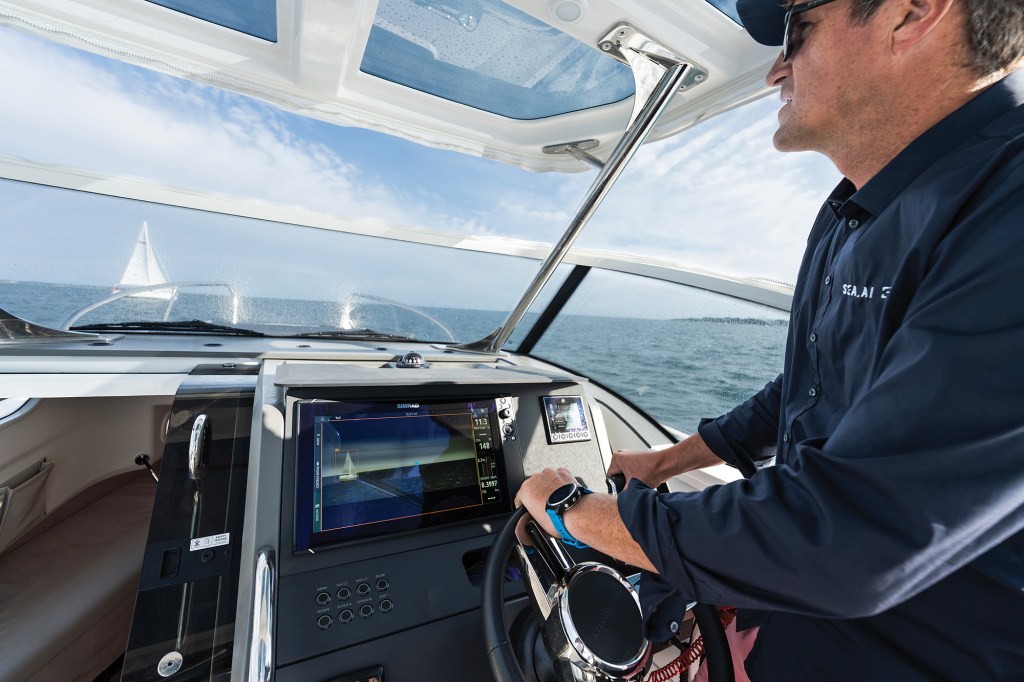
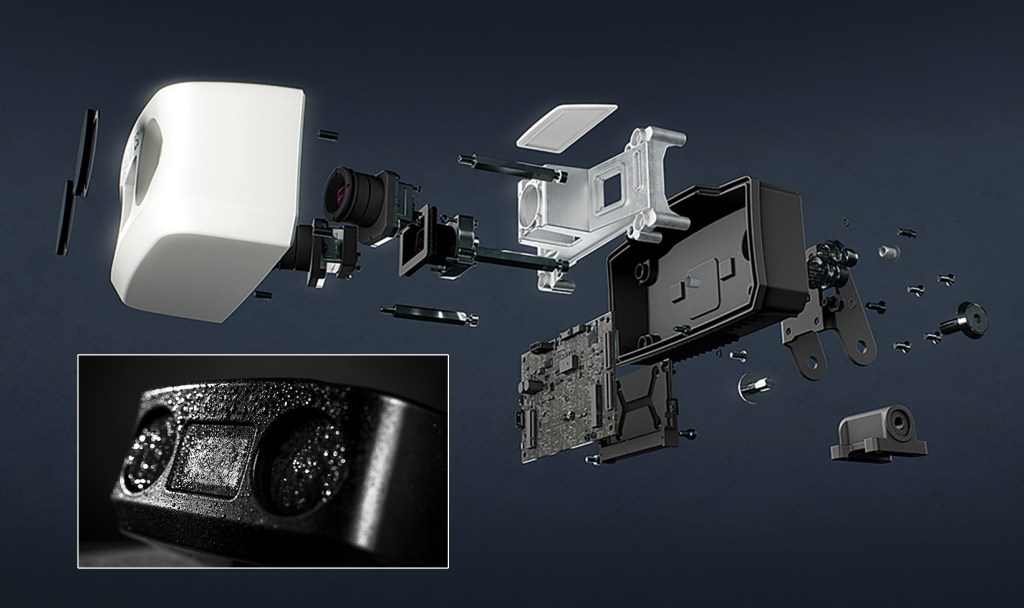
There are several AI-based camera systems, and any one of them will pay more attention to what’s around you than a preoccupied crewman. One of them is the Watchkeeper from SEA.AI. Designed for pleasure boats up to about 90 feet, the Watchkeeper is composed of a fiberglass housing (comes in black or white) that can hold one daylight color camera, or a daylight camera and one or two high-resolution thermal cameras. SEA.AI uses its own cameras, which are compact and lightweight.
Watchkeeper’s three-camera setup provides the sharpest image during both day and night, and the widest thermal field of view (48 degrees horizontal; the daylight camera’s FOV is 130 degrees). Gyrostabilization compensates for the boat’s motion. SEA.AI recommends mounting the unit as high as possible—the higher the camera, the more accurately it can estimate target range. Cameras mounted lower than 15 feet above the waterline won’t provide distance information. The housing with three cameras weighs about two pounds, so even when mounted very high, the Watchkeeper won’t affect the stability of even the smallest vessel. The cost ranges from about $5,000 for the basic one daylight camera setup to $27,000 for the high-res, three-camera, daylight/thermal arrangement.
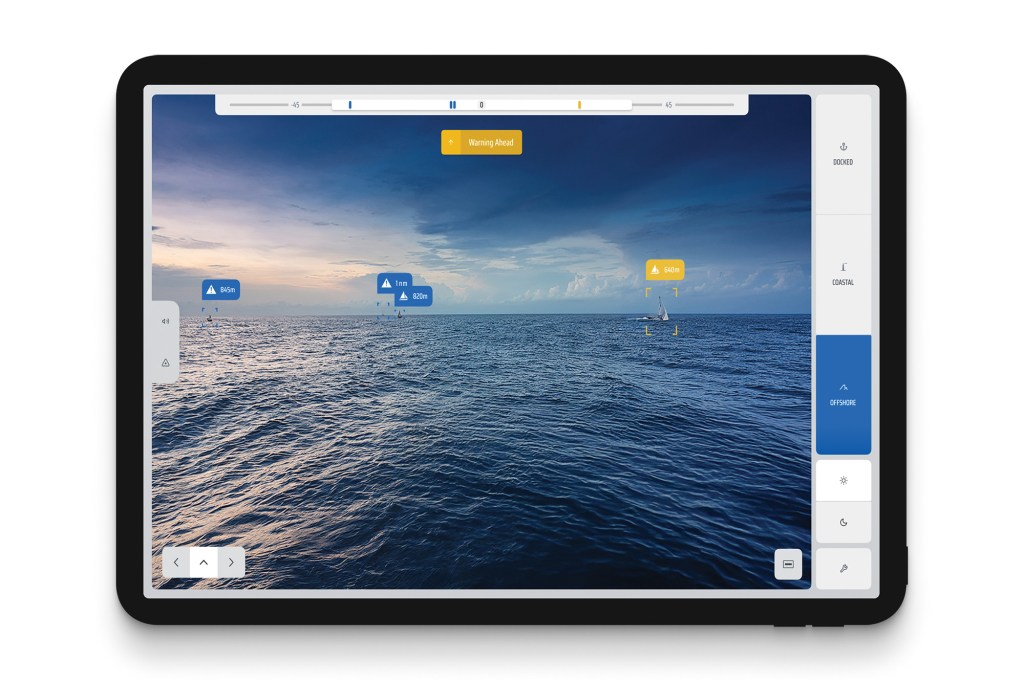
Installing the Watchkeeper is straightforward, but it doesn’t tie into the boat’s NMEA 2000 backbone, other than to connect alarms. Instead, there’s a dedicated cable from the camera unit to the system’s AI brain, and another connecting the brain to the vessel’s multifunction display. It will play well with MFDs from most major manufacturers, but check the SEA.AI website to make sure it’s copacetic with yours. All software and data is contained in the unit; no connection to the cloud is required. Software updates are published every quarter, and can be accessed and uploaded by tablet or smartphone. Once installed, the Watchkeeper needs calibration to ensure the camera image is aligned with the horizon when the vessel’s at rest, and to adjust for seeing the bow of the vessel on the display, a common issue with powerboats if the camera isn’t mounted high enough. (SEA.AI recommends that the system be installed by one of their technicians.)
Using the Watchkeeper is simple: Turn it on, bring it up on the MFD, and see what’s ahead of you. The system does almost all the work for you. It looks ahead and identifies anything within its FOV that’s not water. The AI brain compares the shape of a non-aqueous object with its database; there are millions of images in its memory, and SEA.AI is adding more all the time. (AI is only as good as its data.) If the Watchkeeper is sufficiently confident of an object’s identification, it will label it on-screen; otherwise it will just warn you there’s something there. If the object is too close, based on a pre-set distance, an alarm will sound. The top-level unit, with the three cameras, can detect a person in the water at up to 220 meters range, and larger objects at greater distances.
The operator can overlay the image from the thermal cameras onto the image from the daylight camera to make it easier to correlate what’s on the MFD with the real world ahead. The relative bearings of objects are displayed on a bar on the display, so the human lookout can see graphically what targets are moving toward or away from his heading. The Watchkeeper image can also be sent to a phone or tablet, so the user can augment his lookout skills from anywhere on the vessel. Or from the galley if he’s busy making coffee.
Watchkeeper isn’t the only AI-based camera system. SEA.AI builds a more complex, more capable and more expensive model, Sentry, that has all Watchkeeper’s capability, increased range of target detection plus target tracking, and 360-degree perimeter surveillance, ideal for anchor watch. It’s designed for commercial and government vessels and large yachts whose owners want the ultimate in security.
FLIR’s M460 and M560 models are engineered for the most demanding applications on large vessels. They both have 3-axis gyro stabilization, target tracking, pan and tilt controls, laser spotlights and optional laser rangefinders. Both have daylight and thermal/infrared cameras; the M460 uses long-wave IR, has a 5x thermal zoom and is optimized for closer range. Long-wave IR is said to be better in heavy fog and when there’s lots of reflection off the water, e.g., at sunrise and sunset. The M560 uses a mid-wave IR camera with 14x thermal zoom, better long-range detection, and improved thermal contrast with lower noise. FLIR says it can detect a human at almost 4 nm in range, under ideal conditions. But it also requires a cooling system. Both the M460 and M560 weigh almost 80 lbs., so they’re intended for large vessels. Cost? If you have to ask….
Folks who don’t own megayachts might like the 3-camera Lookout Pro system, an IBEX 2025 Innovation Award winner. Its enclosure (comes in black or white) contains a forward-facing daylight camera with an HD zoom sensor; a thermal camera for night vision; and a 360-degree daylight panorama camera that gives a fish-eye view all around the boat. Put the system in scanning mode, and the panorama camera will show what’s around you, not just ahead of you. There’s also a docking mode—the on-screen image resembles the one from the back-up camera in your car.
The Lookout Pro works with Garmin, Raymarine, and Simrad MFDs. The cost is around $14,000, including camera and AI brain, or $10,000 for the brain alone. It can connect with FLIR cameras (and some cameras from other manufacturers) to provide enhanced functionality vs. the standard Lookout Pro cameras.
This article originally appeared in the April 2026 issue of Power & Motoryacht magazine.