Want to Go?
I speak with a lot of anglers who have heard of the canyon and want to fish it but always ask, “How big of a boat do I need? What should I bring? Is it dangerous?”
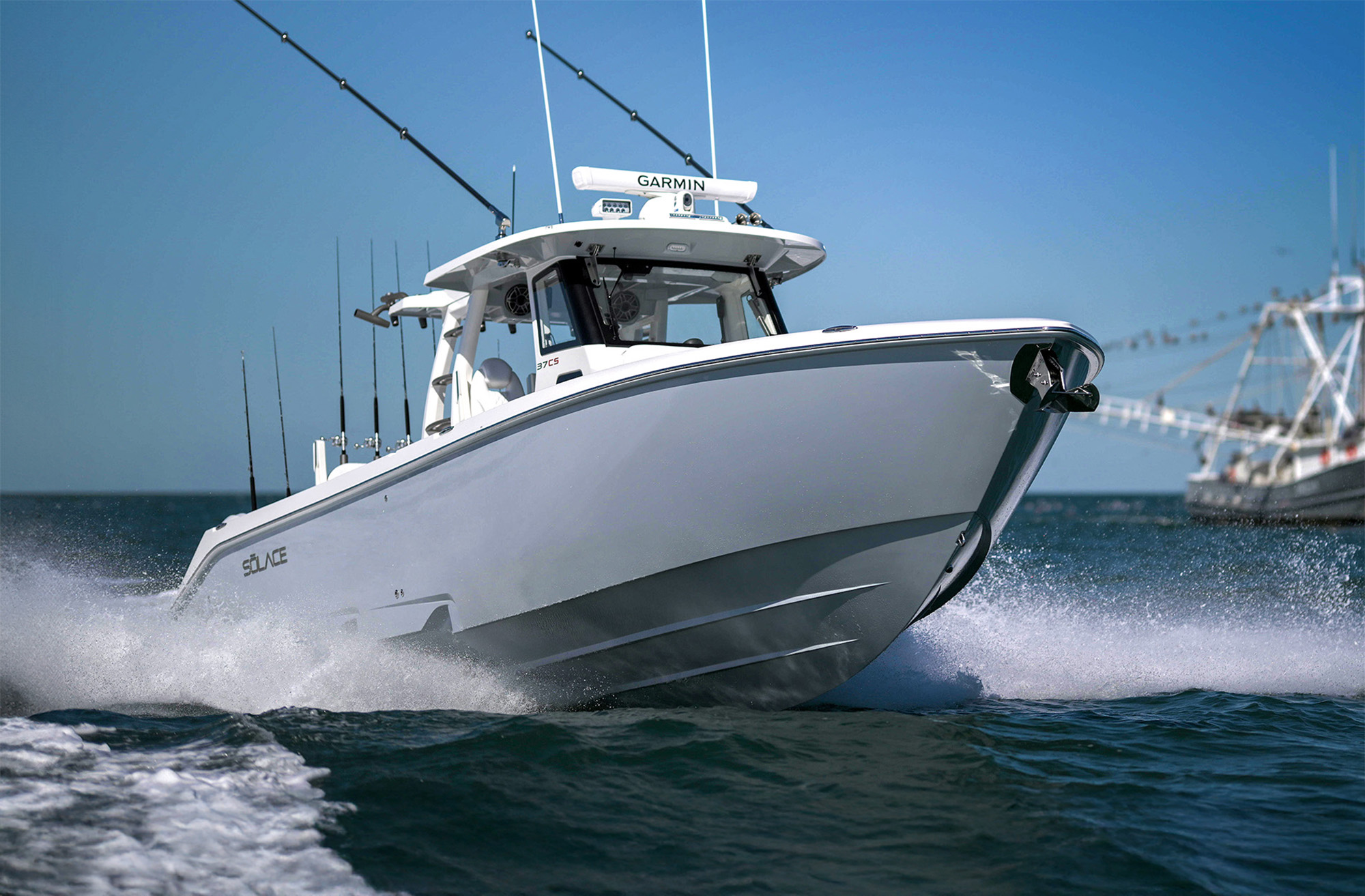
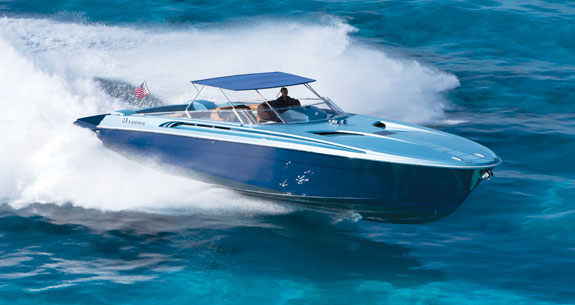
A big boat is great, but with the right weather window, I easily zip out and back in my 31-footer. I know of people who have taken vessels much smaller, although I don’t recommend it. Regardless, your boat must be highly maintained. One hundred miles out is not the place to find out you don’t have spare fuel filters.
Regarding the last two questions, I suggest starting off with an experienced offshore canyon charter-fishing service. After you take several trips and see how the pros maintain their vessel for this kind of work and how they fish at different times of the year, you’ll get a better understanding of what it takes to do this on a regular basis.
That said, I encourage anglers of all levels who’ve ever wondered about what’s out there to try this fishery. One thing’s for sure, once you see that first family of whales pass by, hear that 50-wide screaming while a tuna strips it, or watch a marlin slash at a teaser, you’ll see that landless horizons don’t mean lifeless ones. All you have to do is look down.
Canyon Cost
Here are some real-world costs from Blinky III, a Viking 43 Express on which I regularly crew. They’re based on our typical 200-mile, two-day overnight trip to the Hudson Canyon and exclude maintenance, insurance, and initial tackle outlay (rod, reels, lures, etc), which can run several thousand dollars.
fuel—400 to 425 gallons @ 3.39 per gallon: $1,356 to $1,440
ten flats of butterfish bait, at $25 to $28 per flat: $250 to $280
one flat of sardines: $25
ten to 12 totes of crushed ice: $50 to $100
food and drinks for six: $150 to $200
total for a two-day canyon trip: $1,831 to $2,045
This article originally appeared in the March 2007 issue of Power & Motoryacht magazine.
Where the seabed meets infinity, a plethora of pelagic opportunities awaits big-game anglers.
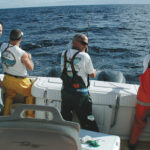
A triple longfin tuna bite has this crew quite happy.
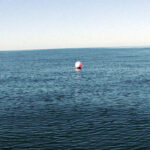
Lobster pots are spread throughout the canyons and are worth trolling by, as tasty mahi-mahi are often swimming around them and a catch of a dozen or so is quite common.
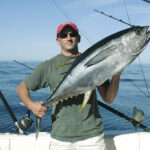
The author on a slick-calm day at the edge, with a made-for-dinner yellowfin tuna.
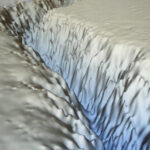
Thanks to 3-D contour maps from companies like Maptech, captains can really pinpoint the drop offs and rises they want to target while trolling or chunking.
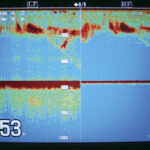
Squid and tuna show prominently under the boat at night. Final tally: We boated an impressive 20 yellowfin tuna by sunrise.
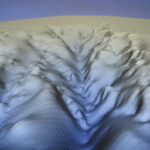
This contour map shows just how dramatically the shelf drops off. That deep water can mean big fish.
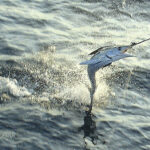
A Hudson Canyon white marlin takes to the air.
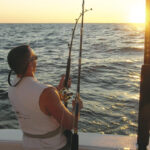
The author tangles with a trolled-up, 65-pound-class yellowfin tuna just before sunset at the Hudson Canyon.
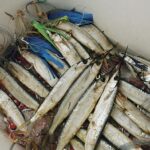
Trolling artificial lures works well at the edge, but a rigged dead bait can be an equally and sometimes more effective way of targeting a wide variety of canyon-dwelling fish.
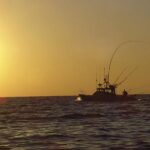
This is the commercially rigged 31-foot Bertram, Cormorant Princess, which is seen here working the fathom curves of the Hudson Canyon.
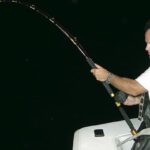
Night chunking is quite an effective fishing tactic.
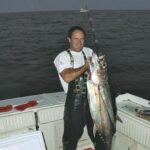
Angler Dave Nockler bested this 50-pound-class longfin tuna (a.k.a. penguin or albie).
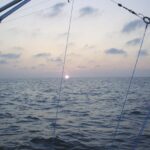
A view like this is just one more reason to call the crew, fuel the boat, get some ice, and make a beeline for the 100-fathom curve.
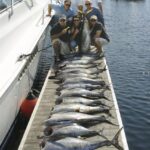
This two-day trip to the edge made for a very happy (and tired) crew onboard Blinky III. Juast as many tuna were released.