
Interpreting the Data
Due to the unique
power system installed in our test boat, the performance numbers we recorded
in Newport Beach need explaining. The RPM column that appears in
a typical PMY boat test has been cut—fuel cells and Hydrogen-on-Demand
systems have no crankshafts or other moving parts. Moreover, the GPH
column has been replaced by one for amperage, or AMPS. In a sense,
amperage can be considered a measure of a vessel’s energy usage or,
more specifically, the rate at which electrical current flows from a fuel-cell
powerplant, like the one on our test boat.
Note
the presence of both the RANGE and EXTRA RANGE columns.
The operating characteristics of hybrid-type powerplants are complex,
whether they feature internal-combustion engines or fuel cells. Up to
and including the transitional speed of 6 mph, our test boat’s fuel
cells charged her batteries at or above the rate our electric motor discharged
them. Thus RANGE figures at these speeds reflect not only the distance
achieved via the “burn rate” of the sodium borohydride onboard
(our plastic tank held 45 gallons when topped off), but also the distance
achievable on battery power alone, after the borohydride is used up.
EXTRA
RANGE? Operating the boat above the 6 mph transitional speed puts
the battery bank into discharge mode, which significantly reduces range
because you end up having to stop the boat to totally recharge the batteries
at some point (for example, 63 miles from where you started if traveling
at 7 mph), with a significant amount of borohydride remaining in the tank.
There’s
a logical way to address this problem, however. Should a skipper choose
to periodically recharge the batteries for an hour or so—say, during
a lunch break or swim stop—he or she can take advantage of all the
borohydride onboard without enduring major-league downtime and thereby
get the EXTRA RANGE figures listed.
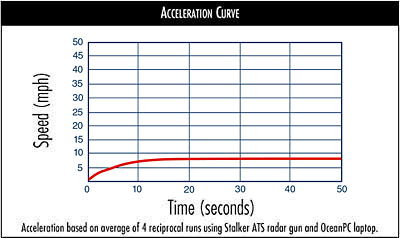
Acceleration Curve