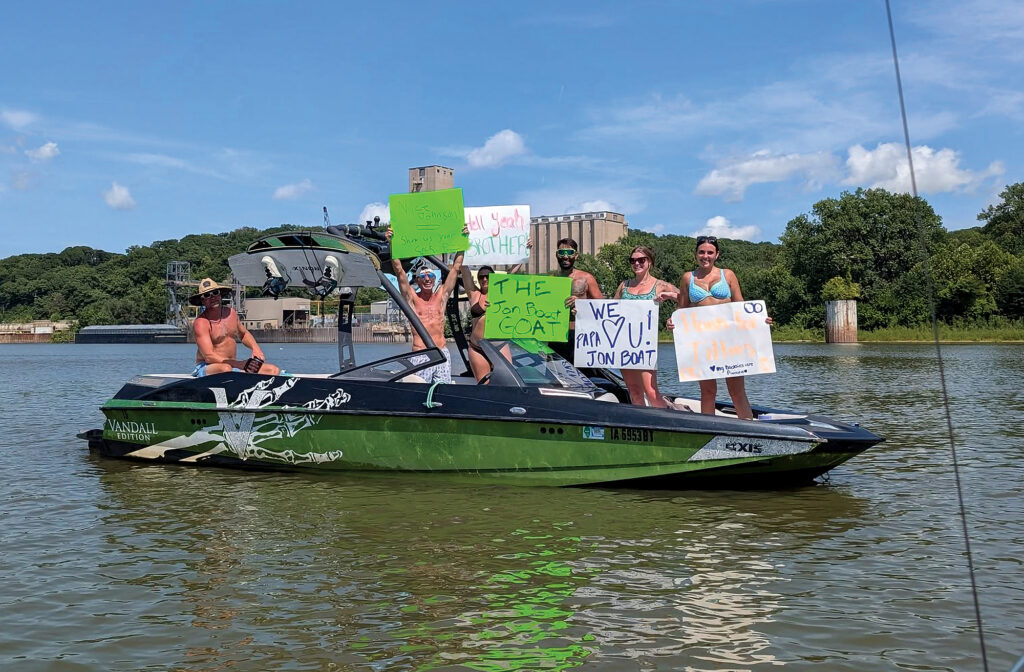
Back in early July 2025, I joined thousands of Facebookers in following the exploits of Robert Youens, the 71-year-old who had just crossed the Gulf from Pensacola enroute to Lake Okeechobee on a tiny Weldbilt jon boat and hoped to set a world record on the Great Loop. On the 16th, I noticed that he was about to pass within a few miles of my house in Charleston, South Carolina. So, I sent him a note. A couple hours later, I was blasting across Charleston Harbor with the grinning, grizzled mariner enroute to a fuel-up at the Isle of Palms. When Robert stopped to pick me up at the Wappoo Cut, South Carolina, DNR officers were there to wish him well. As we cruised up the Intracoastal, boaters followed along and pulled up to shout encouragement. Plenty hollered greetings from their docks. It was clear that this cancer-surviving adventurer had tapped into an enormous well of national goodwill. In the days after my short ride, Youens did, in fact, complete a record-setting 4,800-mile journey—and had time to sit down for a proper interview. This version is edited a bit for space, but you can tune into the entire conversation on thePower & Motoryacht podcast. We hope you’ll find it as fascinating and inspiring as we did.
So how did this whole thing come about?
I was just kind of sitting back, preparing to go drink margaritas out in the Bahamas for a month, and came upon a Red Flowers record of 19 days, 19 hours, 50 minutes. [Editor’s note: Captain Scott “Red” Flowers had just set a speed record for completing the Great Loop in July, 2024, during “The Great Loop Challenge,” a fundraiser for the National Pediatric Cancer Foundation.] And I looked at it and I said, Man, this thing’s doable in my jon boat. So, it kind of switched my focus, probably around February, [from margaritas in the Bahamas] to focusing on possibly breaking the Great Loop overall record in a jon boat. So, that’s when I drew upon my history.
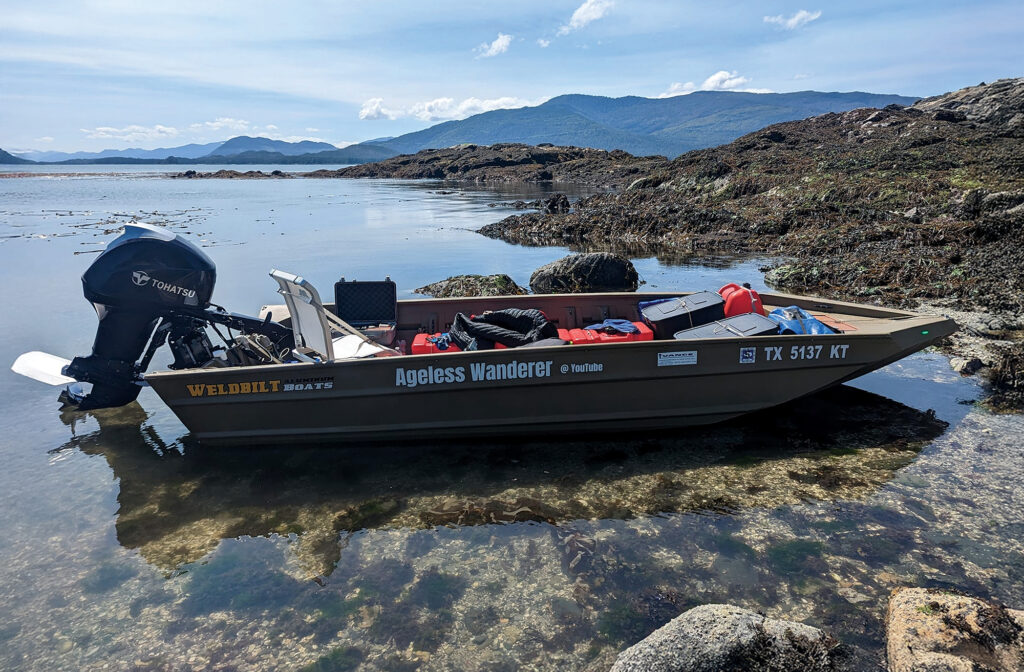
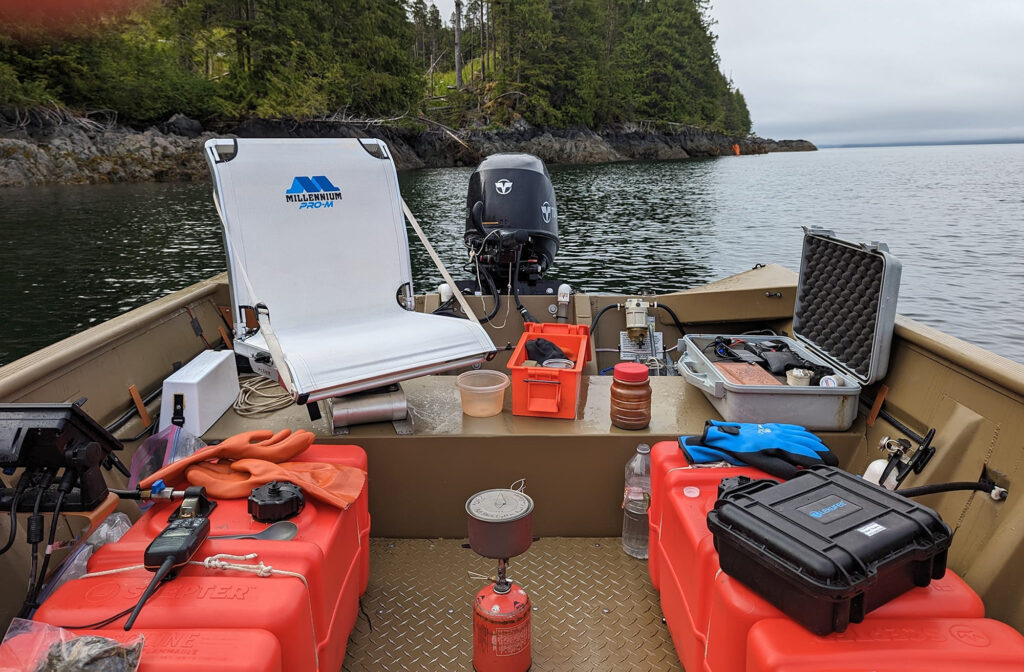
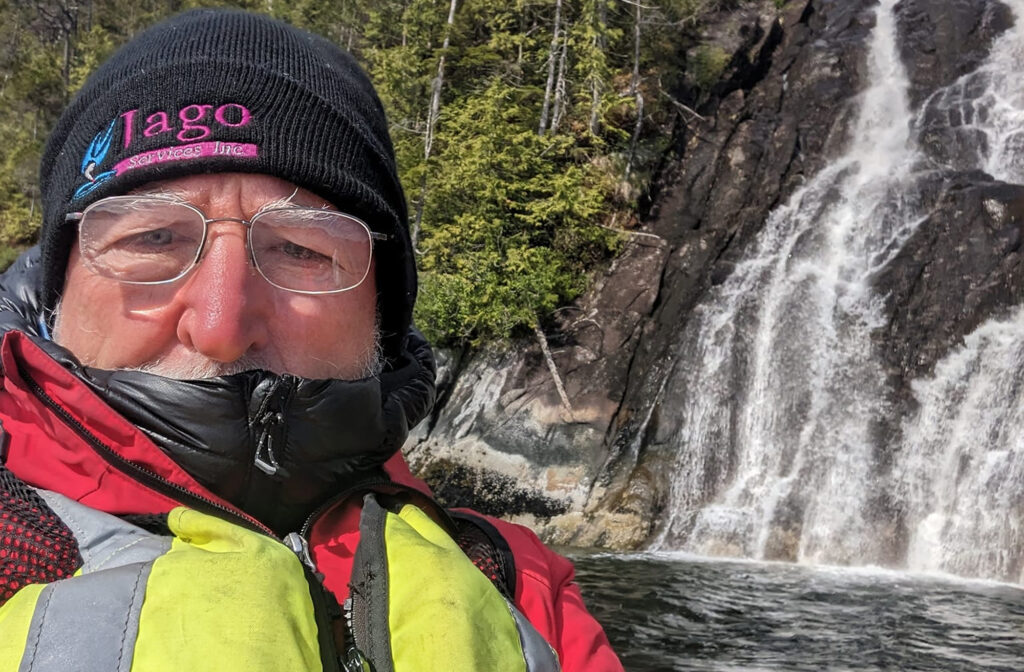
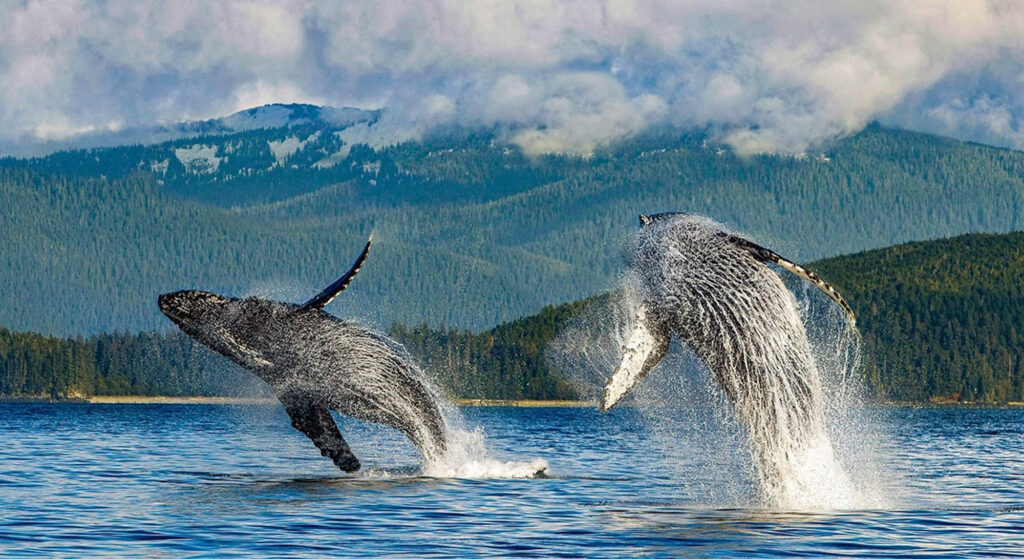
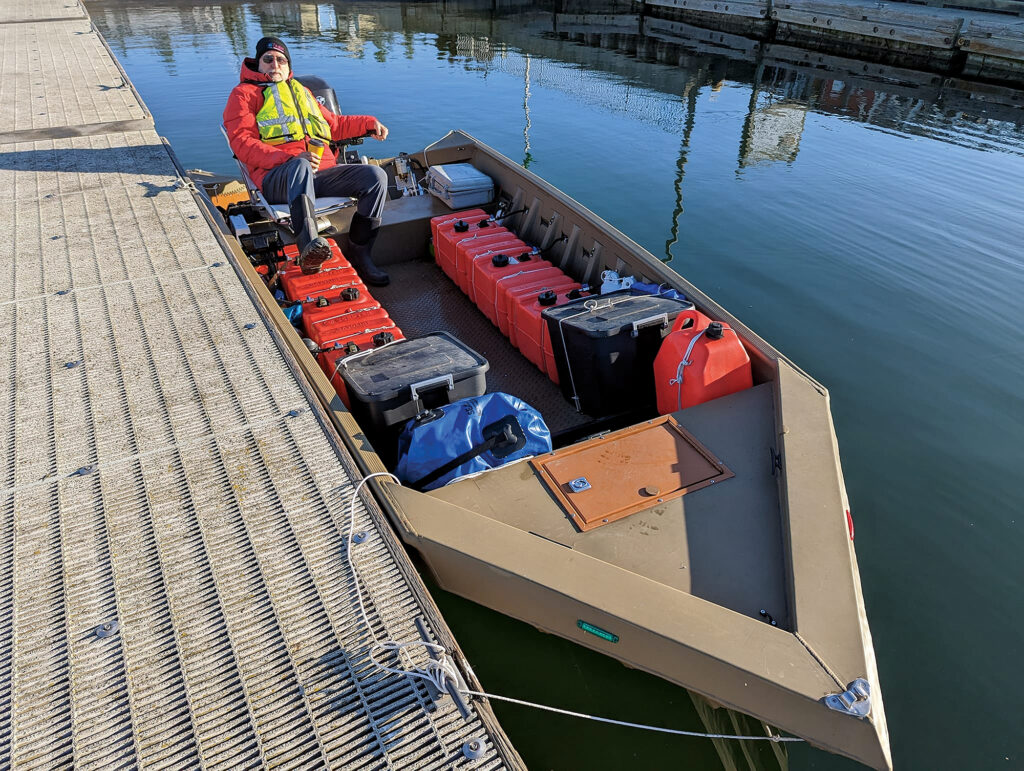
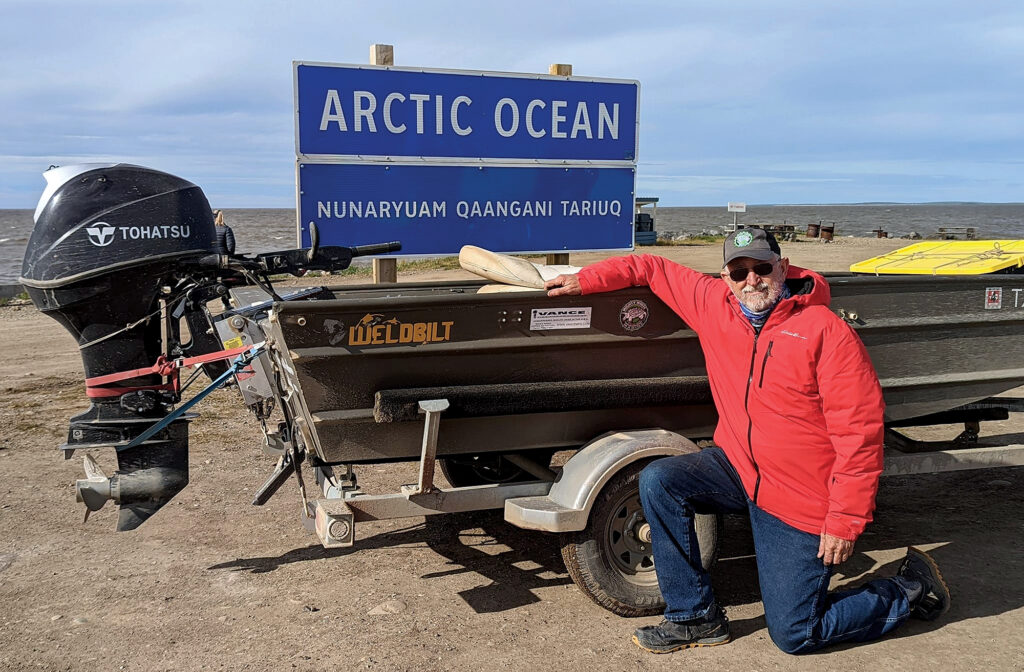
Youens has undertaken three serious solo journeys with his Weldbilt jon boats. These were captured during his trek up the Inside Passage to Alaska.
Did you boat as a kid?
Growing up, I got my first jon boat when I was like 9 years old. My mom bought a Scott-Atwater 3.9 at a garage sale and it didn’t run. But, you know, between my dad and I, we got it running. And the passion was there immediately. At like 12 years old, Mom would drop me off at the Bay on Friday night and pick me up Sunday afternoon. I just love being on the water, not as much as a fisherman, but as an explorer. I like to go check things out that people can’t see any other way than by boat. I was the third child. I was the ‘oops.’ My brother was 17 years older than me and my sister 10, so by the time I came around, they were pretty comfortable with letting me loose. I had a great childhood down on the coast, running the bays and bayous. As a kid, I also worked at the local boat dealer as a mechanic. Now, this was down south of Houston, Lake Jackson, and I worked for Bartlett Motor Company. When my friends were making 25 cents an hour, I was making $9 an hour—and that served me well.
Talk a little bit just about your career path.
I went to Texas A&M to pursue Olympic archery. The ‘72 Olympic gold medalist John Williams was at Texas A&M, and my goal was to make the 1980 Olympic team. I took some engineering, but I was focused on archery. So, I shot with John Williams for a couple of years, and he moved off. I ended up at the University of Texas.
As I went to college, I worked for a company called Billy Disch Marine as a mechanic and that’s when my career changed. I went to a boat show and begged to be a salesman. And I sold 27 boats on a Friday afternoon. My boss said, “you’re going to be my new salesman.” I said, “Oh, no, no, I might be your new factory rep, because my purpose is higher. I need to show people the joy of boating.”
I stretched it out, graduated, and hired a headhunter. He set up my first interview, but wouldn’t tell me who I was meeting. It was Bill Gaston, the founder of Glastron. I said, “Hey, Mr. Gaston, I can’t believe I’m getting to meet you.” He said, “Well, Robert, I heard about that boat show you did, and the sales you did with Billy Disch.” I said, “Man, I’m just a kid out of college.” Well, I got hired on and I blew their sales up. Bill eventually sold the company to Larson, and I went to work for Outboard Marine Corporation—in their power equipment side, and that’s what I ended up doing the rest of my career. I retired at 52 from Briggs and Stratton as a regional manager, selling lawn mowers. It allowed me to save money and retire at age 52 and hop in a canoe and paddle the length of the Mississippi River solo. So that was my retirement gift to myself.
Retiring so early was a little bit scary for my wife, but we talked to our financial people, and they said, “You’re tight as a fiddle string, Robert, you’re going to do okay.” And so, I was out adventuring. Hiking the Grand Canyon, doing the John Muir Trail, and stuff like that. I probably have hiked the Grand Canyon maybe close to 20-25 times, rim to rim. I would guide trips through the Grand Canyon. I particularly enjoyed bringing people that hadn’t been there before. I like getting out and being one with the land and just doing that kind of stuff.
Then I started up an imaging company called Camera Wings, aerial photography—before drones. We were flying remote control helicopters, carrying cameras around. My first movie was with Harry Connick Jr., and I was supposed to teach him how to fly a remote control airplane. Man, Harry’s a blast.
That grew into a huge business—14 pilots. I did the series Beachfront Bargain Hunters. I mapped the Exumas and the Bahamas for the University of Miami. I was one of the early guys that was doing three dimensional mapping with drones.
How did the idea for the record passages evolve from that?
I had the wild idea of setting a Guinness World Record in a jon boat after reading that the “longest continuous journey by jon boat” was only, like, 600 miles. I checked the Guinness records, and it was just too stupid-easy to do. A lot of people ask why I steer my boat with a tiller. Well, I got with Guinness to certify my boat as a flat boat—what Guinness thinks a flat-bottom boat is that it has to be mostly flat, has to have a bench seat, and you got to steer it with a tiller. Well, I’m just more connected with a tiller too. I eliminate all the weight of the cables and the console. So, it took me about a year to get it all set up. I went up to the Monongahela River in West Virginia, launched at the headwaters. Went the full length to Pittsburgh, made it down the Ohio River in a hurry. Got to Cairo, took a left turn on the Mississippi, went down the Mississippi…I went all the way down to the Gulf of Mexico, took a right turn across the Gulf of Mexico—in a 14-foot Tracker with a 25 on it—and crossed the Gulf. I went up the Atchafalaya River, up to Morgan City. By then I’d covered 2,244 miles in 12 days. So that’s what got me started in this stuff. There was no ceremony. There wasn’t anyone waiting for me or nothing. It was just, I just want to go do it.
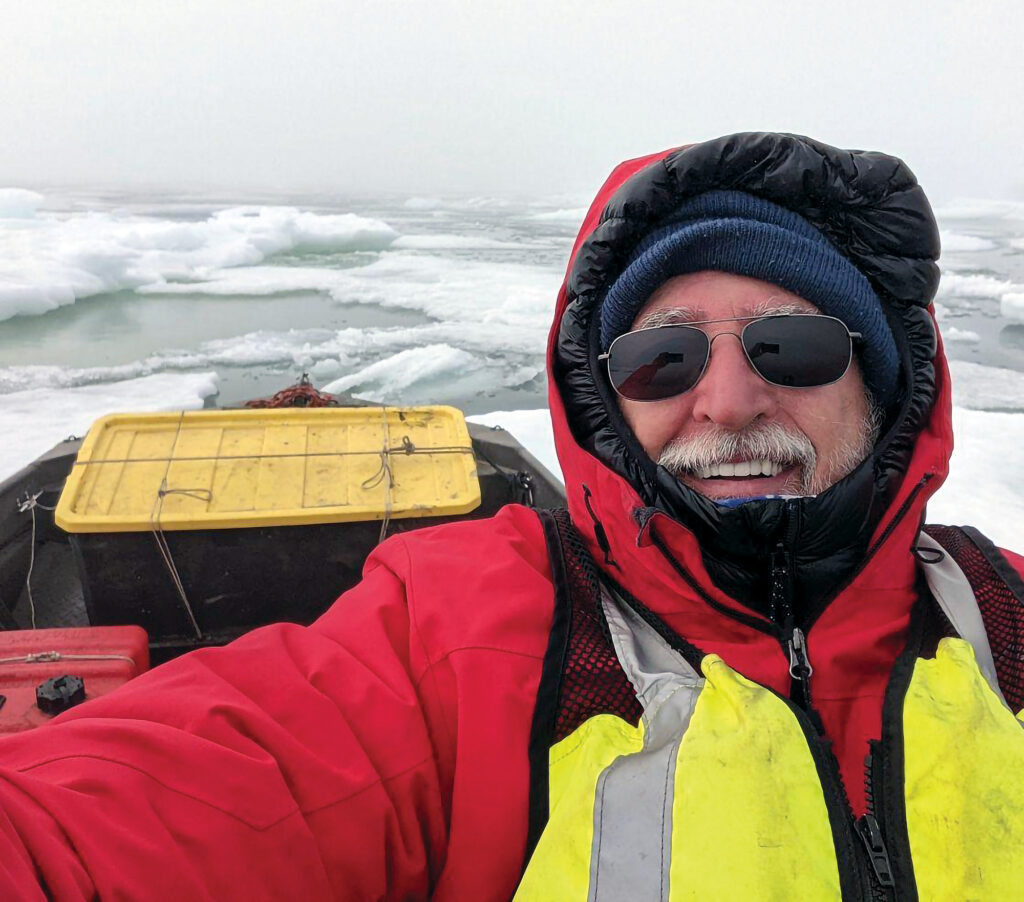
And then I guess the next big venture was, a friend was going to go try to paddle across the Arctic. And I said, well, I think it’d be fun to come up there and come from the other side. I don’t know anything about the Arctic. And then there were months of the process of working with the Canadian government, and, you know, filling out forms that said, like: “What’s the tonnage of your vessel?” Less than one. I filled out my qualifications. So, they said, “Mr. Youens, you are highly qualified. You know, you should be doing the Arctic and crossing the Northwest Passage, but we cannot recommend that you do it in that boat”—my Weldbilt, 16-foot. I said, “Are you going to stop me if I try?” They said, “No, but we’re going to have some requests.” They wanted to follow my tracker. They requested that I contact them every day with the weather I experienced, and what my intended route was. That was in ’22. On the second day, I encountered a piece of the polar ice cap that had broken off, and Amundsen Gulf was just covered in sea ice. I didn’t see a way through so I got on my InReach, and I was texting back and forth with the Canadian government, saying, “Can you recommend a route?” They said, “It’s pretty big, but it’s been rocking, so it should be fractured enough to work your way through.” And as I was texting them, I had this vision. It was a blue Suburban coming out of the water right next to my boat, about 4 feet away. And that Suburban just kept coming up. In my mind I was going, ‘Why is there a blue Suburban coming out of the water here?’ It was a bowhead whale— probably a 65-footer. It was maybe 4 feet from my boat. It probably rose about 8, 10 feet in the air before his eyeball exited the water. And it was like 4 feet from my right shoulder. I could have reached over and leaned out and touched its eyeball. And we just had a little commune for about 6 seconds. He was just, the Inuit call it spy hopping—checking it out. He was just saying, you know, what’s this jon boat doing in the Arctic? It was such an amazing experience.
And so they told me, just break your way through the ice, you know, push it, push, put your bow on the ice and push it apart, and it’ll move. And that’s probably how I ended up cracking my boat in the Arctic.
I ended up having to cross the Coronation Gulf with a 41-inch rip in the bottom of my boat and both my bilge pumps running. There was this Inuit fella sitting there on a four-wheeler with a trailer. Those guys, I love them, man, they ripped my boat apart. Local guy that owned the hotel said, If you’ll buy two meals a day, I’ll let you stay in the hotel for free. In five days, they fixed my boat up. Then he says, I can’t let you go without an icebreaker on the front of it. So they went off to the junkyard, and chiseled the keel off of a 20-foot Lund V-bottom boat, and welded it over the top of my keel where my boat had cracked, and turned my boat into an icebreaker. The town came out as I launched for the 600-mile run back to my car through the 300 miles of no man’s land that the Inuit won’t cover just because it’s 300 miles of cliffs. But it was a blast. I was hooked. I wanted more adventure.
Then you did the Inside Passage?
That was the next thing. Weldbilt contacted me, and they were so upset that, you know, I had to kind of shorten my trip in the Arctic. And they said we wish we would have known. We would have built a boat for you that would have held up. We would like to build a boat for you. No charge. Tell us what you want, and then we’ll put on top of that, things that we think you’ll need. We had to test it. So, I chose the Inside Passage. I eventually pulled into Skagway, which was the top of my trip—about 1,300 miles into the trip, at the top of the Inside Passage. Some fishermen were there, and they said, “You want some Alaskan sushi?” We cut up prawns and sat there and talked about our lives. Talking about life with the locals is a really important part of all of my journeys to me.
I ended that trip to no fanfare. And then, you know, I said, I need a leisurely outing. And that’s when the Bahamas trip started coming about, and I was going to go drink, you know, margaritas, rum and cokes in the Bahamas for a month. And then, boom, it hit me, Red Flowers’ record. It was beatable. Daddy always told me, If you want to be an eagle, you gotta go fly with the eagles. So I called up Red Flowers, and the current record holder, Steve Herndon, the previous record holder, Michael Straub, who wrote a really good book about doing the Loop on a jet ski, and I just started meeting the people that I felt were the eagles of the Great Loop. Kim Russo is the coolest. She’s the president of the American Great Loop Association.
Let’s talk a bit about the various parts of your passage.
I had done lots of meteorological research, and I looked at weather windows historically for a 10-year period. Two that most concerned me—Lake Michigan, because it runs north-south, and the prevailing winds tend to always be in those south quadrants. And I had to determine the optimal weather window for that area. People said I got lucky, and I did, but I was lucky in the best weather window of the year for Lake Michigan. And then I had to kind of coincide that with my other biggest jump—the Gulf, and its south-southeast prevailing winds. It was like putting together the pieces of a Tetris puzzle. I had to think about the Erie Canal. It was a big concern that we would start late enough to get past the New York flooding period, and we had to think about the hurricane season. I talked to a lot of locals, and having Steve Herndon, a fishing guide, fireman, past record holder, was really great. We picked a weather window starting July 6 and I think we ended up taking off on the 12th. That was a magic window right there. I was very fortunate to be able to cover over 400 miles offshore. And it wasn’t any drop in the bucket to me. So, I felt comfortable as I left Pensacola on a 170 heading to Fort Myers—
Then through Lake Okeechobee and then out on to the open Atlantic, where you had quite an adventure.
There’s lots of choices on the Great Loop. I took off from St. Lucie and started heading up to the cape. I was running right next to the shoreline because the cape was giving me a little blocking from a north wind. I’d rather run 100 miles offshore than get pinched on a shoreline. They put rip rap out there to hold their beaches. And, man, I clomped into some rip rap. Knocked my motor up, knocked the cover off. But I got that all under control. It did break my Simrad autopilot mount that I had built, and caused some stretching of some wiring and stuff. It was disappointing, but I posted that on the internet, and I don’t remember how it all worked out, but a guy ended up coming up and helping me at Cape Canaveral. And I came into Cape Canaveral real late. In the middle of the night, this officer says, ”You can’t camp here.” I said, “Yeah, I know it’s no camping, but I had hardly any sleep, and it’d be really dangerous for me to leave this harbor in this state.” So, it was an emergency thing. And he goes, “Oh, man, you’re that Facebook guy! You stay right here. I’m going to make sure no one bothers you.”
Can you talk about how your boat was reinforced?
So, yeah. Weldbilt—my boat has internal keelsons, triple keelsons in the front area in the impact zone, which probably kept my boat from collapsing. They took note from the Inuit, and three of my keels have over a quarter-inch angled aluminum overlays welded over them. So, you know, I can hit a log or hit ice, and it spreads the energy through my hull. They added 80 pounds of tough to my boat. My boat weighs about 539 pounds in its current configuration. Then the panga front—in the Arctic, I dipped my bow a couple of times, loaded 100 gallons of water in the boat. I saw the panga boats that are used around the world for launching off beaches, and they have a really tall, blunt front that allows them to slow at the wave and then raise up above the wave. And I was with Quenton Clark, my strategist. He said, “You mock it up in cardboard—this panga front for your jon boat—and I’ll build it.” I used the old cardboard CAD—did all the measurements. He made it happen sight unseen. It was perfect. It probably saved my life.
Then offshore from Canaveral…
Mistakes were made. But you hope all that training and preparation helps you survive the mistakes. Well, my mistake is I took off without checking the last minute weather, and I headed into a low pressure system that became like, a tropical storm. I was over 100 miles offshore, and I was rocking with the Gulf Stream, you know, I had a 4-mile-an-hour current pushing me north. So I was really excited, and then I saw some kind of weather system up in front of me, and I didn’t know if it was a pop-up thunderstorm—I expected to encounter those. No, this wasn’t going away. Any person that’s been in the Gulf Stream knows you don’t want north wind. It stacks the waves up and puts some vertical—it gets them breaking. It was really fast as it came—2-footers, 3-footers, 4-footers, and next thing I knew, I was fighting 6-footers, 8-footers. Now 10-footers. Because they’re so steep, I’d surf the front of them, and then I’d get some courage, and I’d get up at the top, and I would peek over and look at a couple of wave sets and see if I could ride over one and/or needed to stay in the trough. And the whole time, I’m looking for options. I’m following my training. No time to panic. In fact, my cheeks were hurting because I was laughing so much. But I was going to have a struggle back to the Florida coast. I pull up to the marina in Jacksonville. There’s a line of people waiting to help me. One guy came and I said, “I busted through my seat.” And he goes, “I’ll go pull it off. And another guy says, well, let’s go get you a new seat—and found the exact replacement.” And if it hadn’t been for that, I wouldn’t have met you, Chris. It was that wreck that put me on the ditch to come through South Carolina and have an editor for a magazine give me a call.
Man, I was honored that you took me along for an interview! To see how you had the boat set up. It was obvious that you put a ton of thought into it. One of the points that people are now aware of, too, is, not long after you dropped me off, you had your incident on the waterway outside of Georgetown.
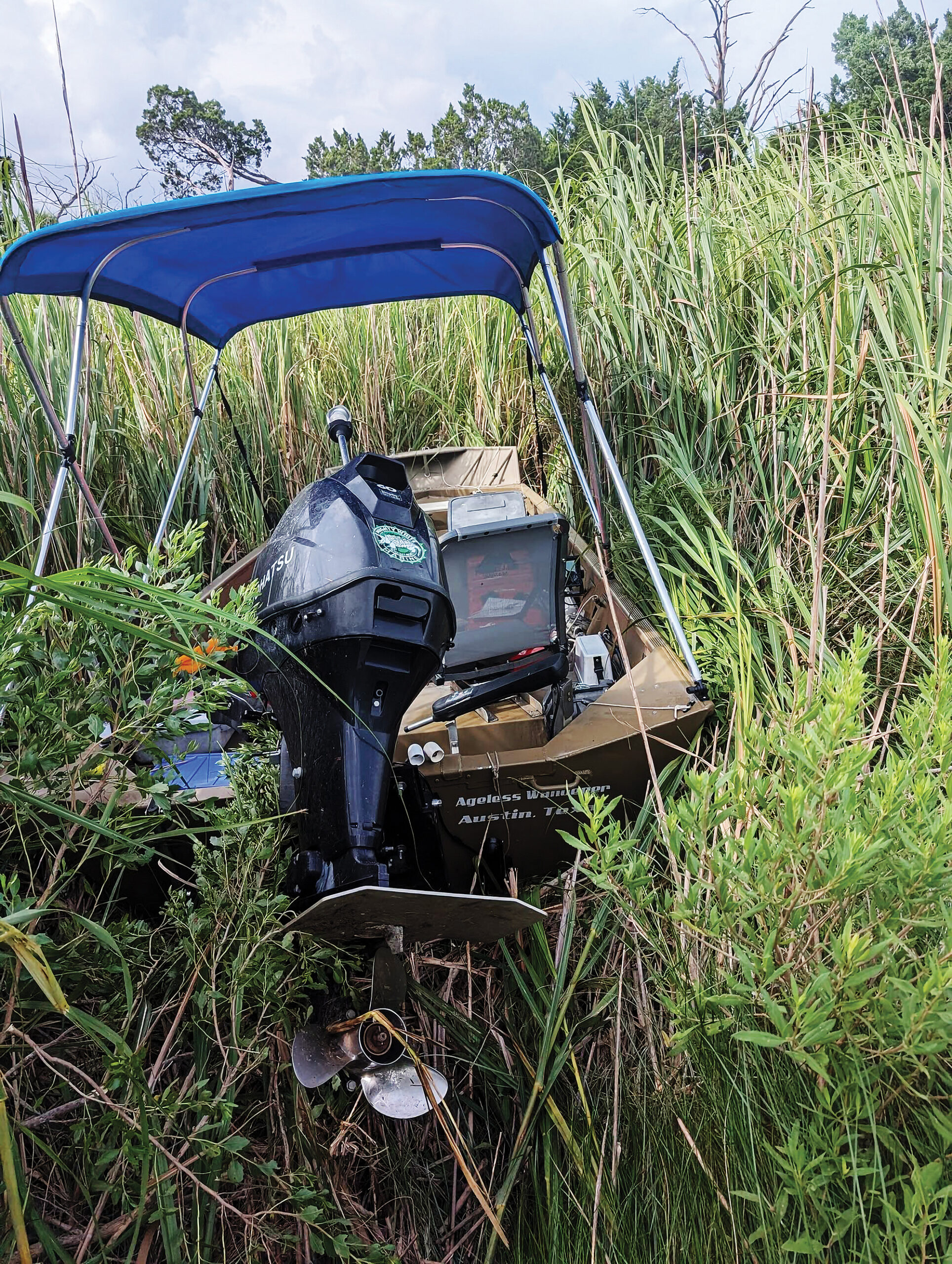
Running aground, yeah, man, I was pushing it. I was being a dummy. People were so gracious. Had me a great big sandwich given to me there at the dock. I ate that big sandwich, and I had a sleepy afternoon, and I ran that boat up in the brush.
Let’s talk about a few more highlights of the trip.
Ocean City, hundreds of people out on the seawall, lots of boats, and I got invited to stay on this 105-foot fishing yacht owned by some unnamed real estate guy in New York. And, man, it was fabulous. It rained hard that night, so I didn’t have to set up my tent in the rain.
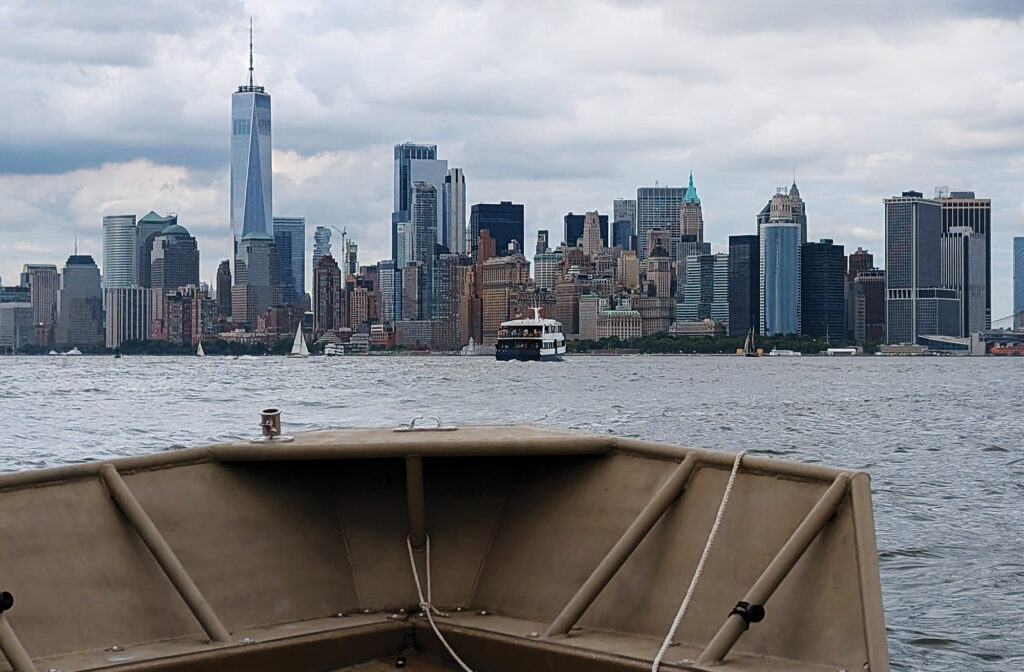
So, getting on up to New York, I pull into New York Harbor in a jon boat, man. It was so cool. It was unbelievable, seeing all the ferries cutting across and coming up to the Statue of Liberty. I kind of watered my eyes as I entered the harbor. There’s New York, there’s where the Twin Towers used to be, there’s the Freedom Tower, there’s the Statue of Liberty. Made it in the Erie Canal. Jack, my American Great Loop Angel, talked to everyone. Had a crowd there as I entered the Erie Canal. It was so much fun. The 200th anniversary. So much history here, I could spend days talking about the Erie Canal and the beauty and the people and the history and the museums and the bike paths.
You met Peter Frank, the guy who is canoeing the whole Great Loop.
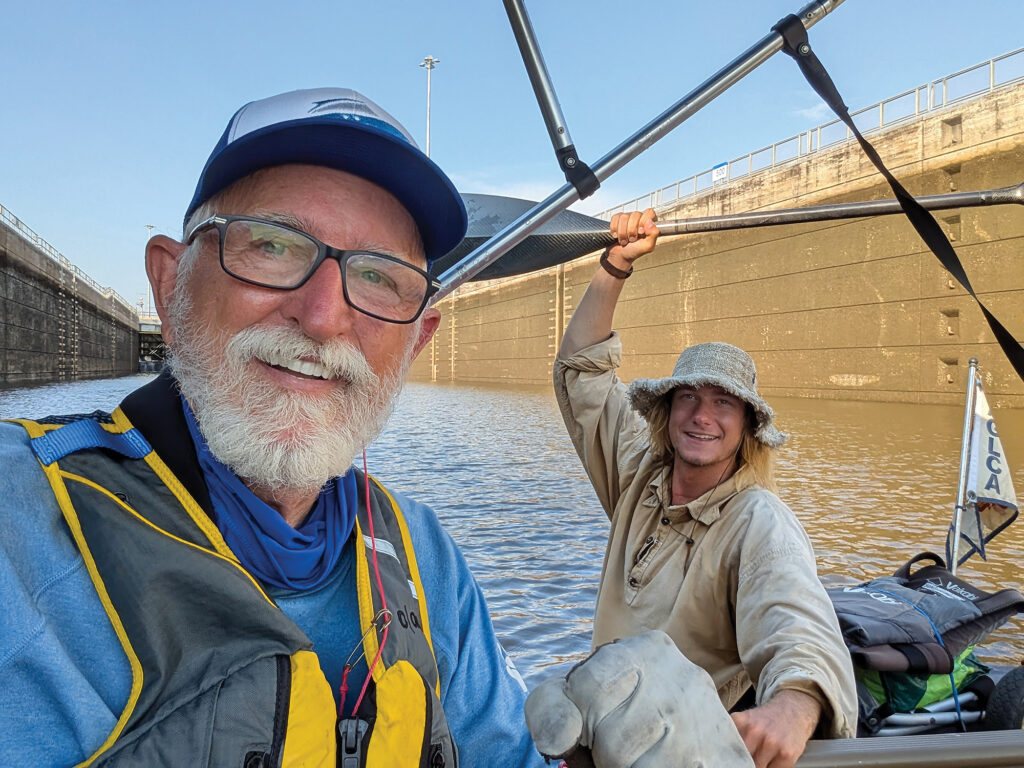
Met Peter Frank on the Tenn-Tom. I said, “Hey, Peter, that’s a pretty nice Kruger boat.” He goes, ”You know my boat?” I said, “No, I know Verlen Kruger.” He’s passed now, but I got to know lots of great canoe racers during my 25-year racing career. It was monumental, all the way. Wrapped up in Pensacola in a crowd.
Not many humans would attempt to cross the Canadian Arctic in a jon boat. But then again, Robert Youens is not your average human.
Why did your trip and your story resonate with so many people?
Oh, everyday guy, everyday boat, old geezer, cancer. I told one guy in an interview, ”What’s not to like about a guy in a jon boat, right?” So, I think that might have been the magic in the corn, you know, a 71-year-old cancer survivor in a jon boat. But the magic was the people. We loved each other. And I just really appreciated it. It was a give and take. They gave and I took.
The final outcome was, you know, the people at Pensacola lined up this big yacht. They took out the executives from Tohatsu and my wife and family and others on this big yacht. And my wife goes, “Man, that thing was really comfortable. You know, I think I could handle something like that.” So, a trawler might be in our future; maybe sauntering through the Great Loop is a possibility with my bride. Sometimes there are magical outcomes.
This article originally appeared in the December 2025 issue of Power & Motoryacht magazine.