Finding yourself smack dab in the middle of a tropical storm as it’s forming offshore is, well, interesting. It’s even more interesting when it’s a moonless night, lightning is snapping all around you, rain obscures the horizon, and the radar blinks out aboard the 90-year-old vessel on which you’re sharing watch. But that’s precisely the situation I found myself in about 30 miles east of Frying Pan Shoals Tower on an August night. I’d been invited aboard the Research Vessel Robert Gray for a shakedown cruise from Charleston, SC, to Wrightsville Beach, NC. If all went well, we’d return southward after a couple of days and then Gray and her crew would make for a Nova Scotia shipyard. Up to this moment, our journey had been going according to plan. But as engineer Philip Henry would point out, “It’s something different every day. I mean, she’s 90 years old.”
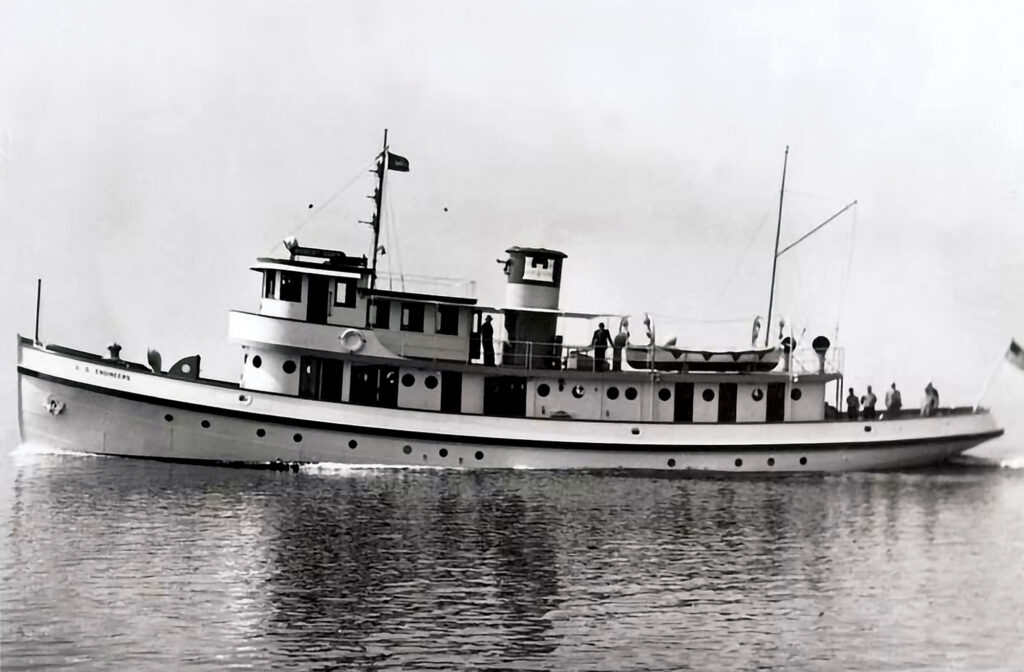
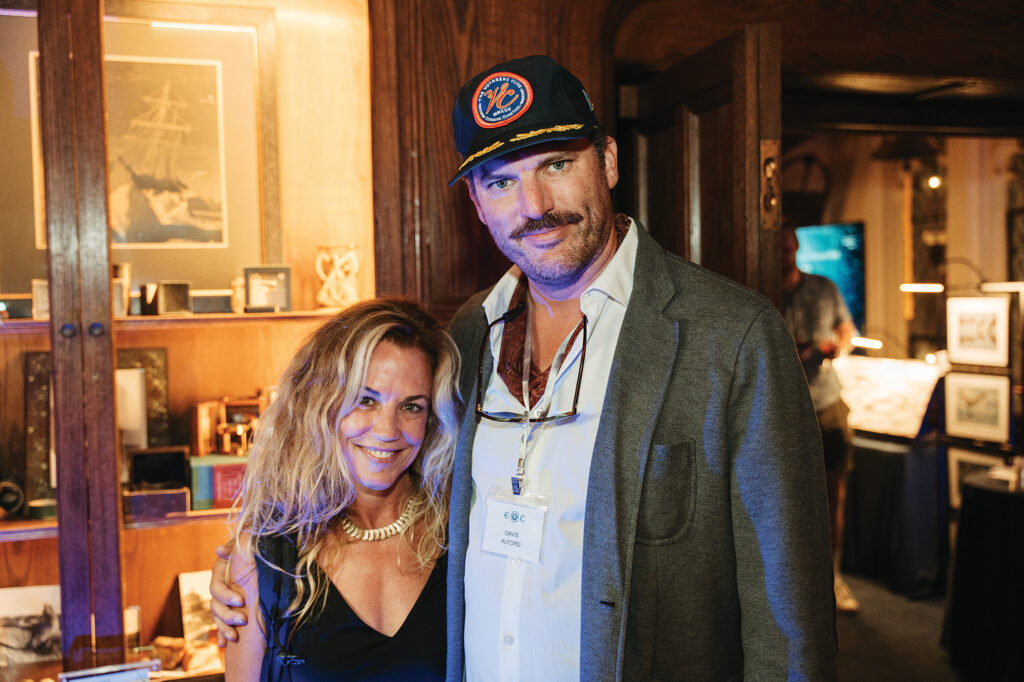
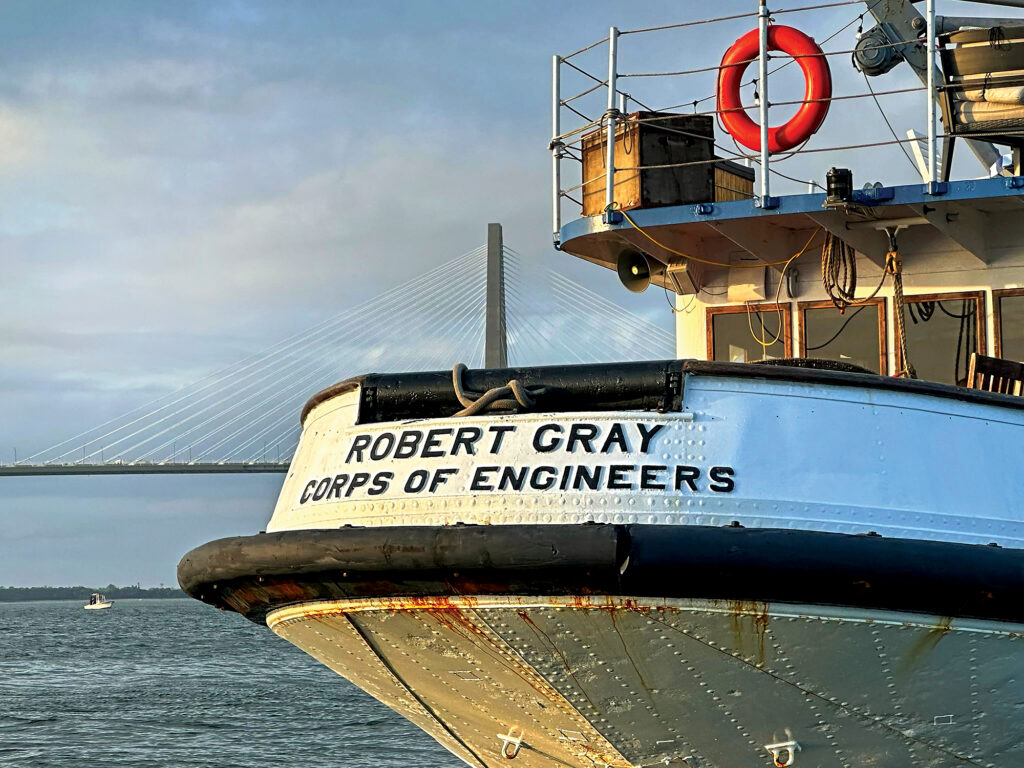
Even in a historic port city like Charleston, it’s not every day that a fully functional 125-foot, 400,000-pound ship from 1936 ties off at the downtown marina. Nautical news travels fast here, though, and when a friend alerted me to the Gray’s presence right after she arrived from San Francisco, I was instantly intrigued. It turned out that owner and “Chief Visionary Officer” Leila Davenport Ross and Captain S. Davis Alford and I share several friends. A few days later, they welcomed me aboard a real-life time machine.
The Robert Gray was commissioned by the U.S. Army Corps of Engineers during the depths of the Great Depression. “Really storied naval architects Nickum & Sons were the builders and conceptualizers and she was built at the Lake Washington Shipyard in Seattle,” Alford said. “Her first mission was charting and plotting the Columbia River—which is why she got her name, Robert Gray, because Gray was the first Anglo to discover the Columbia River. He named it after the vessel he was captaining, Columbia Rediviva, which was also the vessel that he circumnavigated the world on. So, he’s also the first American to circumnavigate the world.”
A Revolutionary War veteran, Robert Gray is a true unsung hero of American exploration. He was also among the first Anglos to not only trade with Hawaiians, but he sailed with a pair of them, Attoo and O’pai, clear around the world, even introducing them to Boston society. And then in a tragically ironic twist, Gray left a wife and four young daughters penniless back in Boston when he died in 1806—likely of yellow fever—aboard a ship right here in Charleston.
Built 130 years after his death, Nickum & Sons designed Gray’s 400,000-pound namesake to handle rough Pacific Northwest conditions. Her classic, high-bowed tug-meets-trawler hull was built of high-iron, heavy-plate American steel. It’s so tough that it took Alford and three crew 3 hours with a heavy-duty circular saw to cut a single 6-inch hole in a cabin wall for an A/C duct. “That wasn’t even a stabilized bulkhead,” said Alford. “Just a wall.”
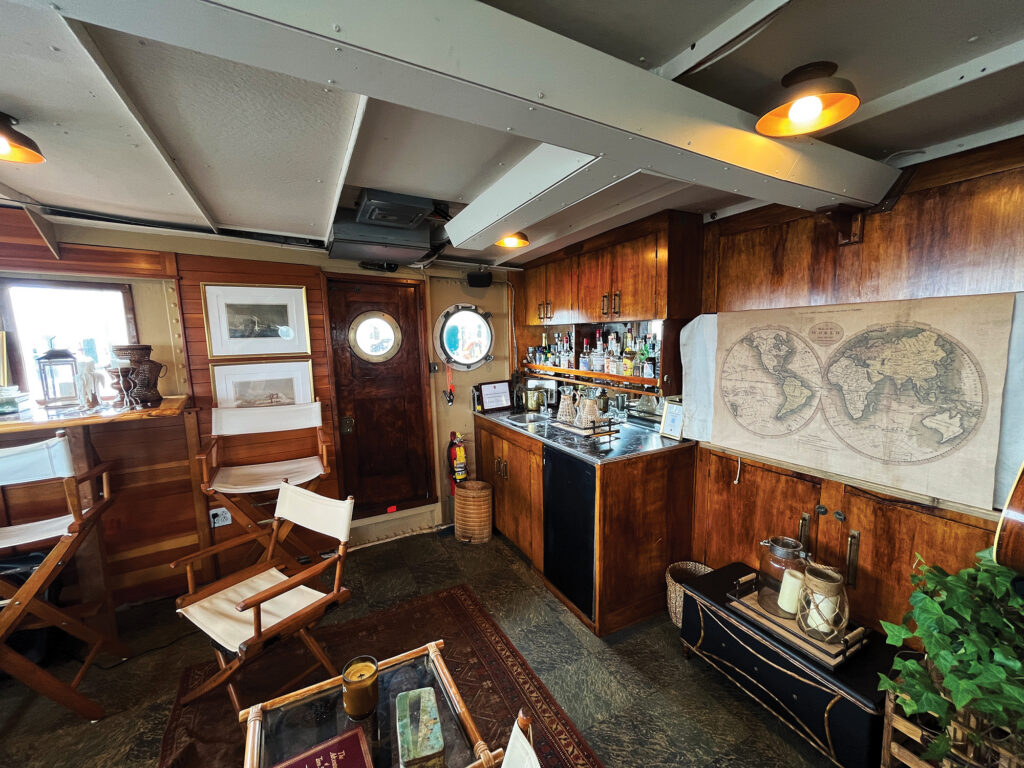
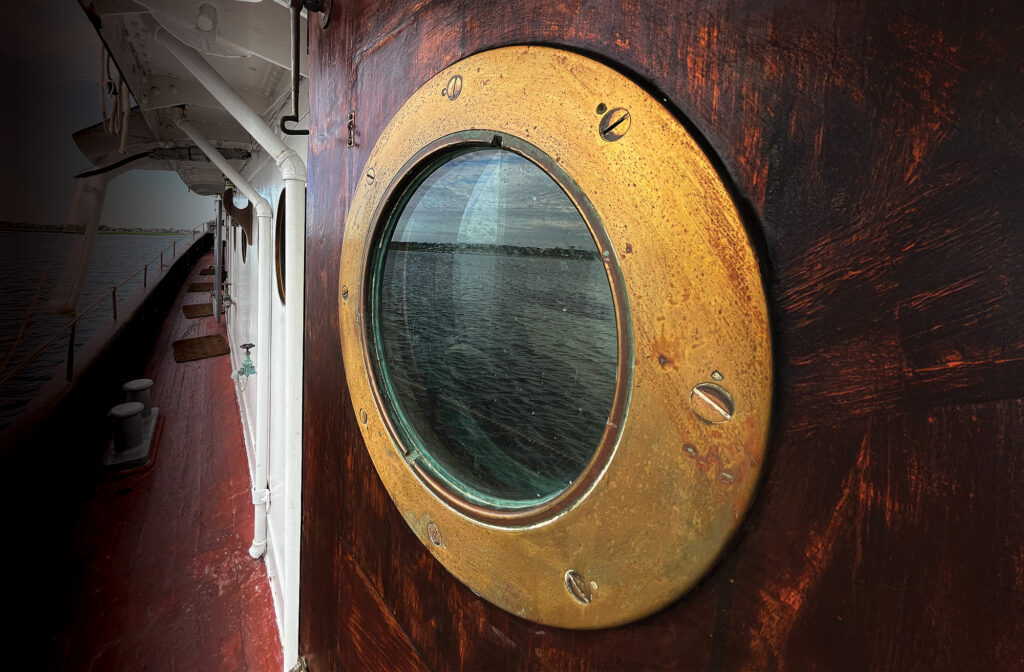
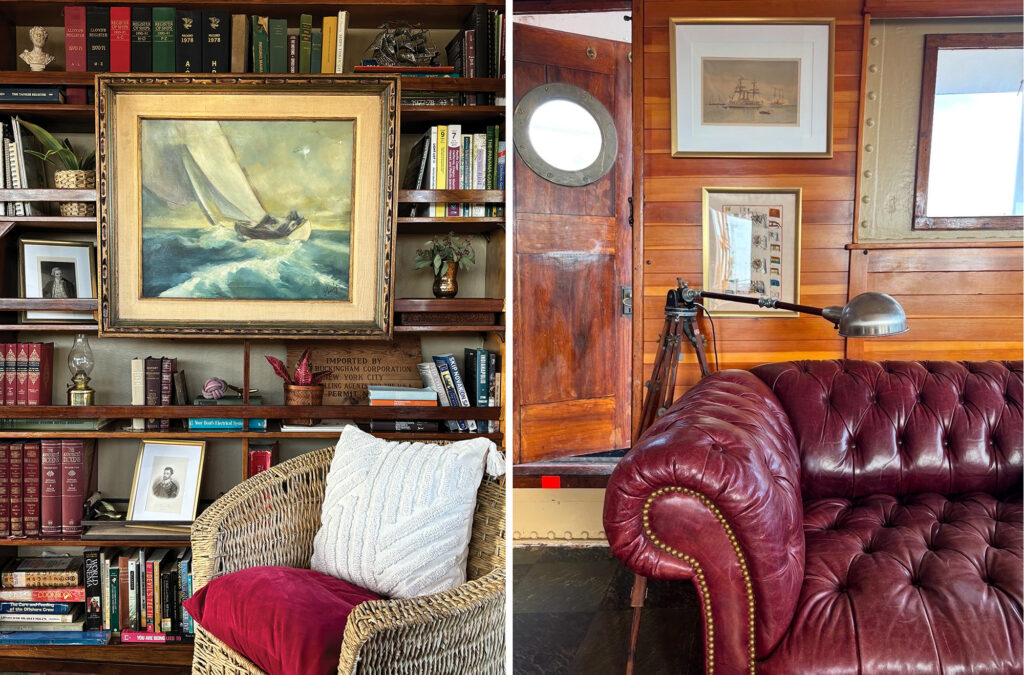
The historic details aboard the R/V Robert Gray—from salon bronzework to staterooms—are nothing short of amazing.
All that steel was stitched together with 200,000 burly rivets. “Riveting is this lost art,” Davenport adds. “It’s there in the historic registry, but it takes four humans to put each rivet in.” Most interesting of all though, the Gray’s architects designed her single propeller (still on the boat today) to be spun by a Westinghouse electric motor whose generator power came from dual six-cylinder, 360-horsepower diesel engines. Originally developed by Enterprise Engine of San Francisco, a similar setup is used for diesel-electric trains today. The electric motor allowed super low-speed, fine-point operation for surveying while giving full, instant torque as needed. This made her the first diesel-electric hybrid ship ever built.
Through the decades, that electron-driven screw would propel the Gray on charting missions all along the Inside Passage. During World War II, she did duty escorting and hunting submarines around the Aleutians and after that, she went to work for the U.S. Geologic Survey, exploring for oil and minerals from San Francisco Bay north up to Alaska. In 1970, her trusty old drivetrain was finally replaced with a single-screw, twin-turbocharged 48-liter Caterpillar D-398 V12. The stout, 850-horsepower motor’s compression is still within factory spec today and tops the ship out at 10 knots. It’s remarkably efficient, too. At an 8-knot cruise, the Gray consumes under 10 gallons of diesel an hour, giving her a range of over 6,000 miles with her 8,000-gallon diesel tanks. Carrying 5,800 gallons of fresh water, her original hot and cold running water heads are good for any number of shaves and showers during a crossing.
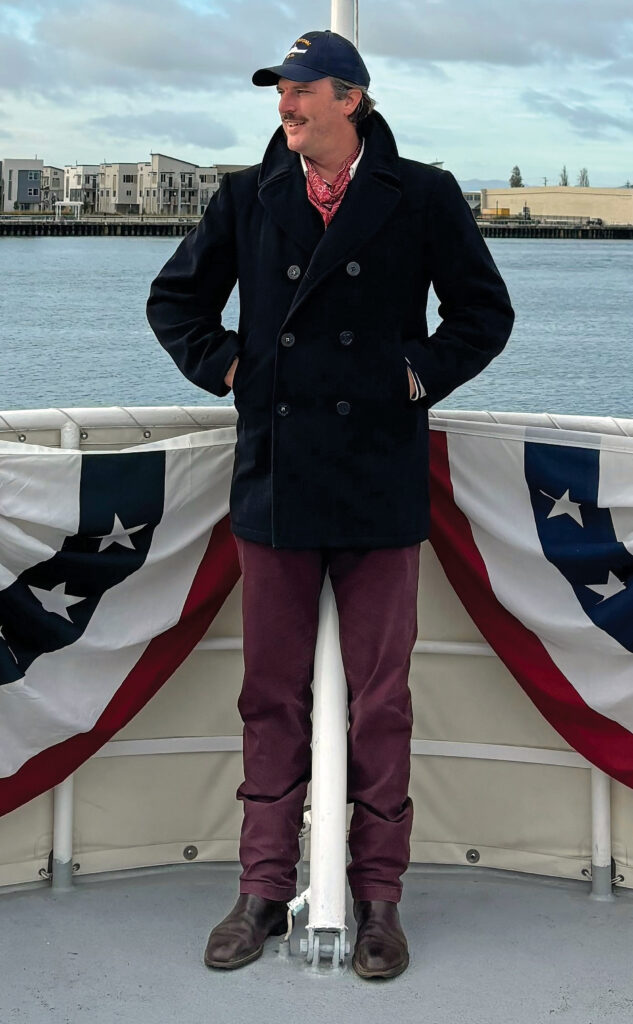
Over a decade back, the Carolina-raised Davis Alford had a career in medical device sales while also occasionally piloting vacation sailing charters out of the Caribbean. “It was a way to go on paid vacation, three, four times a year,” he said. “It was stimulating, it was engaging. But then, if I’m being honest, I drank myself out of that position, got sober, and then started taking captaining seriously.”
It was enjoyable work, but it irked Alford that he was essentially babysitting guests who’d paid $80,000 for a week aboard a sailing cat, yet had no clue about the boat, boating, or much, if any appreciation for what they were experiencing. Nor was it the best environment for someone who had decided to live soberly. With the passengers, “it was always, where’s the next bar?” he recalled.
After a stint captaining for Barton & Gray in 2022, an offer came up to take the helm of a 140-foot-long tall ship called Spirit of South Carolina. Launched in 2007, the schooner is a local icon, hand-built by the Lowcountry’s deep well of shipwrights. “That was a great honor and a great privilege,” said Alford. “I hadn’t captained a tall ship before. My crew went from two individuals, maybe three, to 14 very quickly, because you need 12 men or women just to hoist the main sail.”
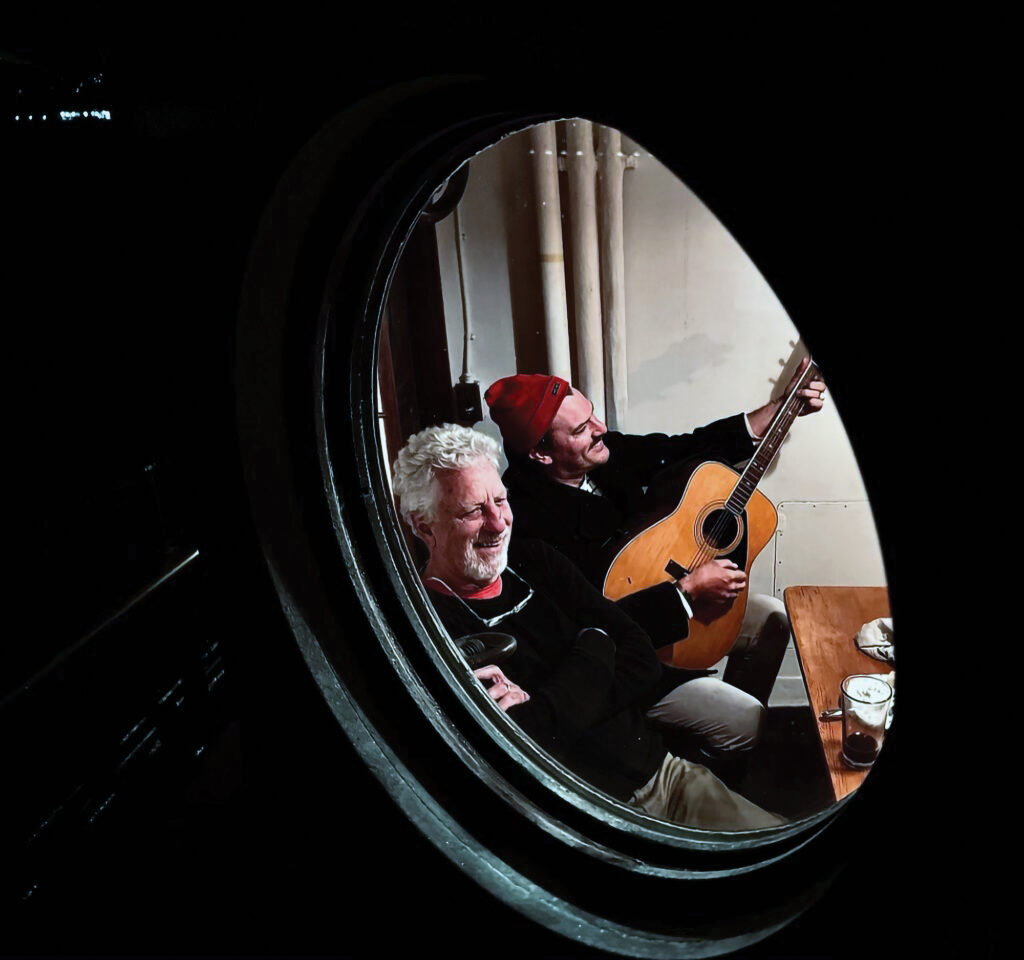
Captaining Spirit was a visceral experience far removed from an amenities-laden yacht, and Alford loved it. While still working charters, he’d begun to mentally map out an organization he tentatively called The Voyagers Club. Spirit further evolved the idea. “My initial vision in a box was a sober sailing adventure between Charleston and Bermuda,” Alford said. “Offshore adventure sailing. Hopefully detaching from society, maybe even centered around a twelve-step program.”
Alford considered the added aspect of rehabbing an old vessel. “And then at the end of that, they get to take that gal out; a jaunt to Bermuda and back, whatever, right? And then maybe they get to sell the vessel and get some walking around money to start their life again. So, the idea was always to have a community, on vessels, on the water.”
Alford met Leila Davenport Ross at an art show at her home on Sullivan’s Island. Davenport Ross grew up on a multi-generational farm in Louisiana and would later become a Title IX elementary school teacher. Working amongst underprivileged kids and raising kids on a minimal salary, Ross’s social consciousness was sharpened. Then a decade ago, she came into a “decent inheritance.” Suddenly, she could afford to put some money into projects that did some good.
In 2024, Ross went to an event aboard Spirit. Now divorced and with a pair of sons 16 and 20, she was captivated by the teaching and adventuring possibilities a ship like Spirit presented. “I’ve been in the Lowcountry for 20 years,” she said. “I have a lot of friends with boats. I’ll never forget walking on that ship, and being like, ‘Oh, my God, I want more of this.’”
Alford approached her about going into business, laying out his rough outline for The Voyagers Club. “At first I was like, absolutely not,” Ross recalled. “I have no idea about the marine industry. I have no business being in that business. But then I really started thinking. I just turned 50. I’m at a perfect point in my life. Our planet is on fire and I want to do something meaningful. Something with a purpose.”
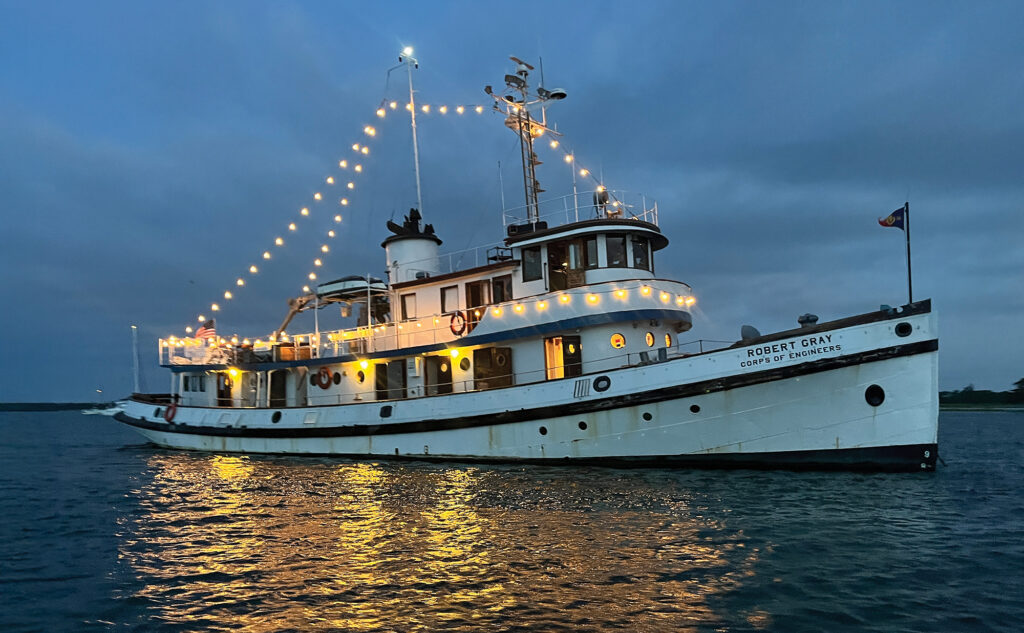
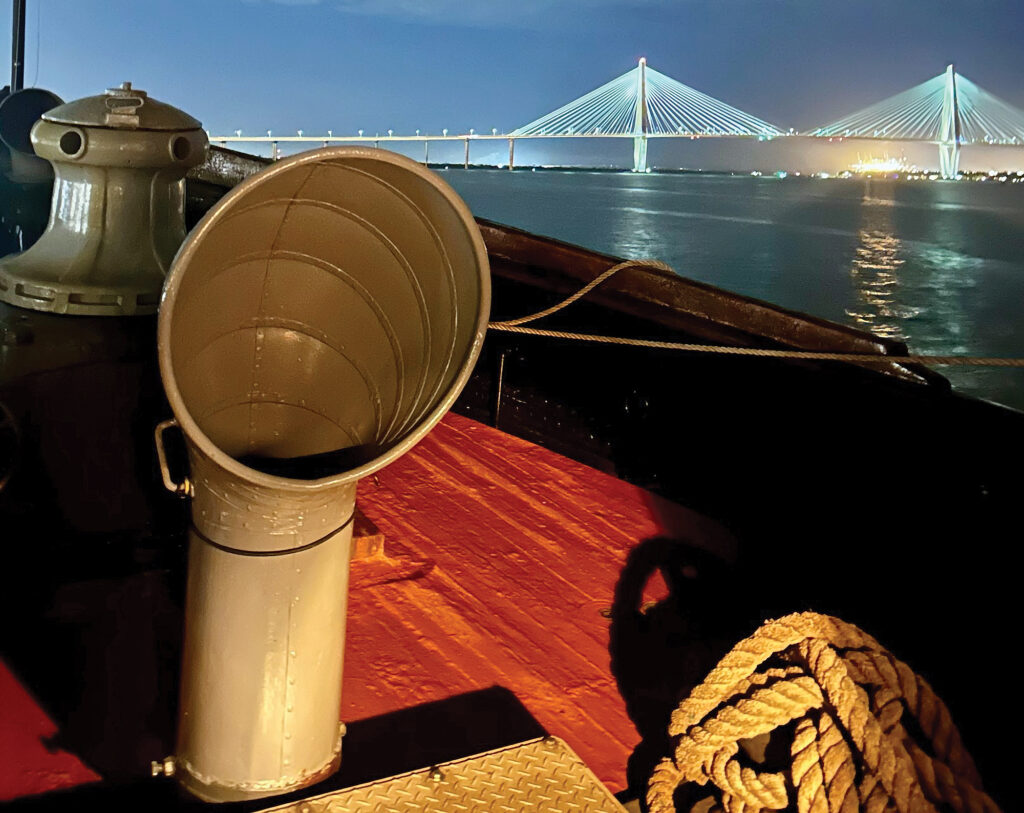
Alford found his dream ship last year in San Francisco. Listed on the National Register of Historic Places in 2022, Robert Gray had been rechristened Sacajawea and was serving as a sturdy Bay Area private charter yacht. When the duo flew to check her out, it was instantly clear that while a bit rough around the edges, she was a time capsule straight out of an Indiana Jones movie. Her six staterooms and railings were trimmed in gorgeous Northwestern fir—with luxurious main deck staterooms still boasting their original dual faucet porcelain sinks and tiled en suite heads. Her bronzework was still in good shape—from hatches to skeleton key doorknobs to the hook latches that kept her original screen doors in place against wind and sea. Her majestic Portuguese pilot house was a stunning mix of old and new. The vintage magnetic autopilot and one-knob electric steering still functioned perfectly, along with her 1980s-era Furuno depth finder. Should that steering fail, her massive 90-turn lock-to-lock ship’s wheel would still bring her about. She had modern radar, AIS and Starlink. When Alford saw the gleaming varnish of the captain’s quarters right behind the pilothouse, he nearly fell over. The vast rear upper deck behind the pilothouse held a tender and a 7-ton crane—and had been reinforced to hold a helicopter. Her forward galley held ample seating, refrigeration and cooking for an honest-to-God crew of 16. The main rear fantail deck offered a perfect entertainment space—and it backed up to an aft salon outfitted with a full bar, copious shelving for a library of nautical books, and coffee table built around her mammoth towing binnacle. Out front, a 90-year-old windlass effortlessly reeled in 300-plus feet of anchor chain. She ran beautifully too—with gobs of excess electricity provided by three Detroit generators.
The boat was remarkable, the sellers were eager, the price was very right and there was nothing, anywhere, quite like her. Ross wrote a check. She chuckled: “I’m privileged enough to be able to make crazy decisions, like to go into business with a friend and buy a historic military vessel from 1936.”
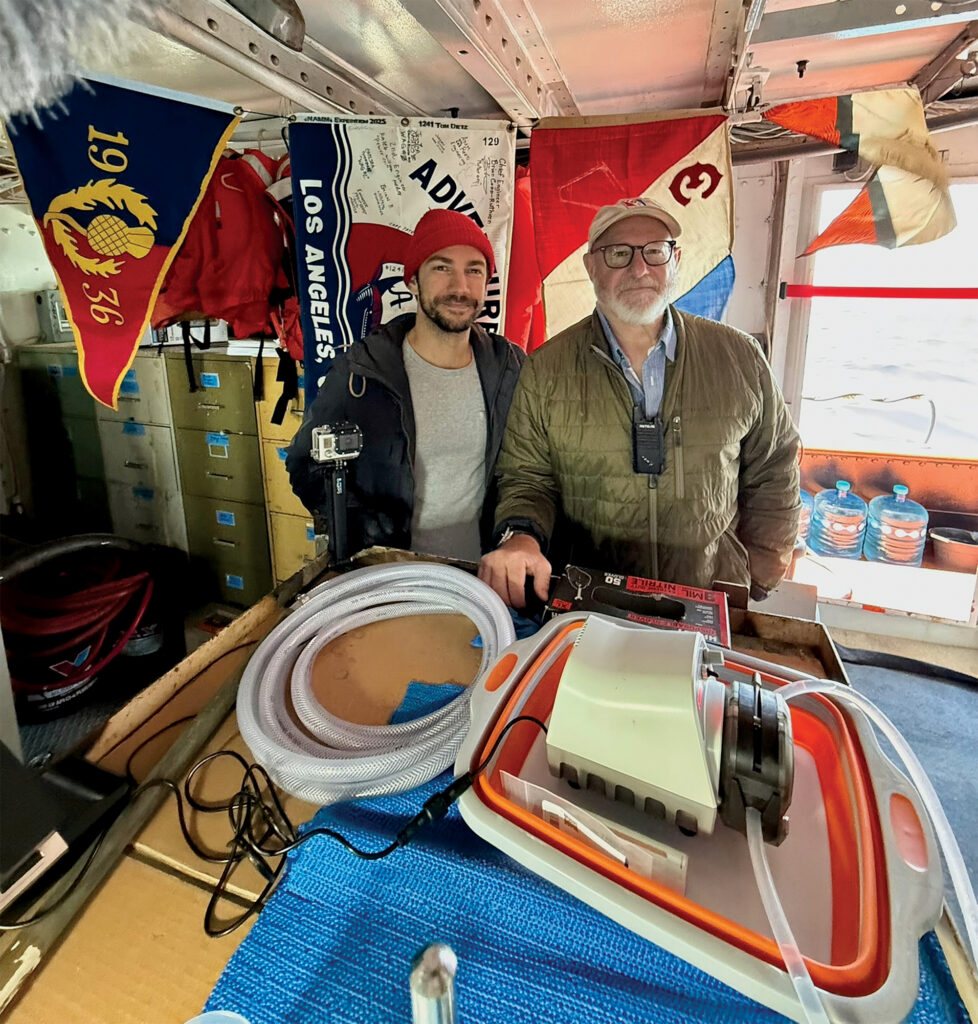
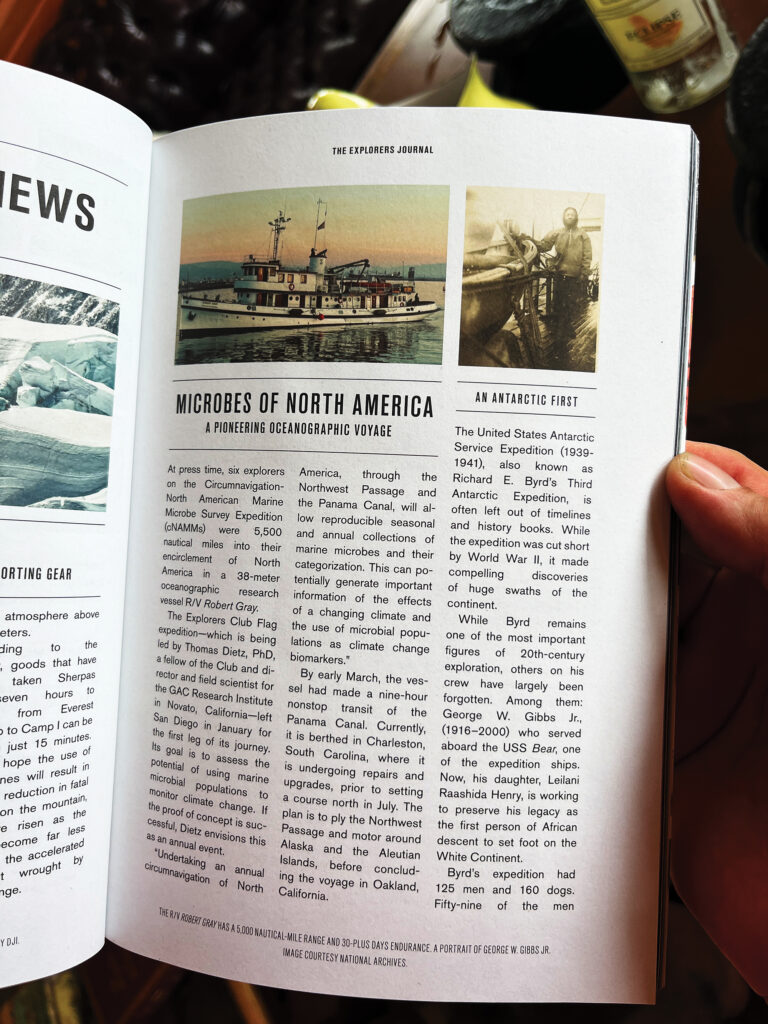
With Sacajawea secured, the vision evolved. Ross and Alford re-christened the ship Robert Gray and established The Voyagers Club LLC, which operates the vessel and will offer private expeditions pretty much anywhere in the Western Hemisphere. A 501(c)(3) called VC Expeditions adds a science and educational component—offering the Gray for species population samples, shark tagging, dive and submersible work, or bringing on students to learn about the science being done, and the ship’s own unique place in history. Before making for Charleston, Alford reached out to the scientific community, particularly through contacts at the venerable Explorers Club. She is currently undertaking a 20,000-nautical mile-expedition called circumnavigation North American Marine Microbe survey (cNAMMs) carrying an official Explorers Club flag. It’s led by biochemist Dr. Tom Dietz of The GAC Research Institute. (While I was aboard with Dietz, the University of Delaware even commissioned Gray for a shark-tagging study.)
The ship’s first stop was a dry dock in Ensenada for a refresh. Though she hadn’t been hauled out in 30 years, Alford was relieved to learn that her old hull plates were still solid. Davenport Ross was once featured in a Garden & Gun magazine story about the retro update she undertook on the 100-year-old cottage where her ex-husband grew up on Sullivan’s Island. On the Gray, she added period-correct furniture along with antique books and nautical paintings to the stateroom and salon walls, and touches like a jute line-secured fold-down salon table. Staterooms were named after explorers including Jacques Cousteau, Sylvia Earle, and Ernest Shackleton.
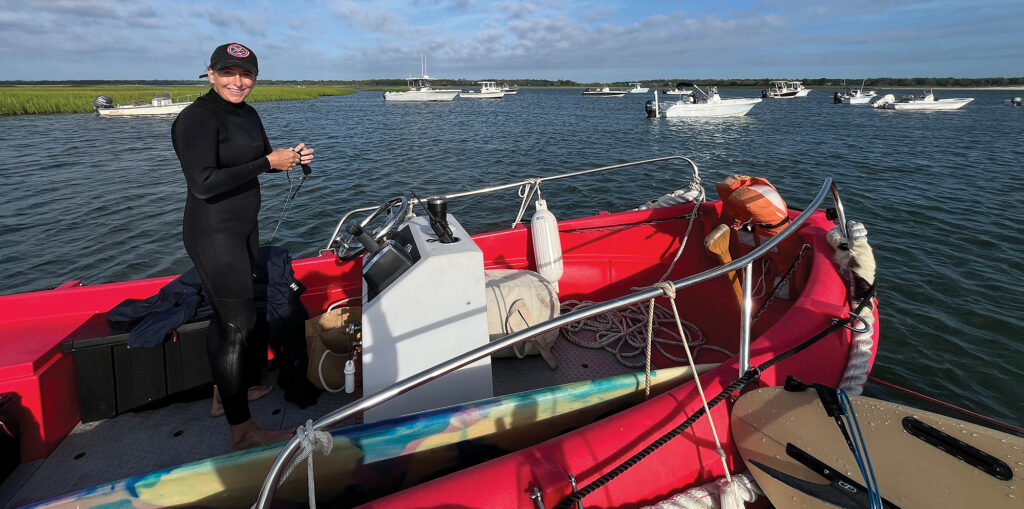
When an invite came to stay in the Earle suite for a passage to Wrightsville Beach, I leapt at the chance. Loading up a surfboard, Alford’s San Diego captain Vicki Carson and I hoped to surf a shoal well off the coast along our route, and maybe at Wrightsville Beach. With a salvo from her mighty horn, the old ship smoothly passed through the Charleston Harbor jetties. The weather charts showed a low forming right along the North Carolina coast, but it didn’t look strong enough to scuttle the trip. Cruising with a 2-foot groundswell on our stern was, in a word, sublime. Pods of dolphins cavorted with us, surfing the pressure wave off the Gray’s bow. Alford dexterously nudged the old ship up to Cape Romain shoal, but the swell wasn’t strong enough to produce breaking waves, so we continued north, setting a course well outside of Frying Pan Shoal. With the ship making 8 knots, weather radar showed storm clouds basically forming in a halo around us as we passed the shoal. We were in the relatively calm center of what would become tropical storm Dexter.
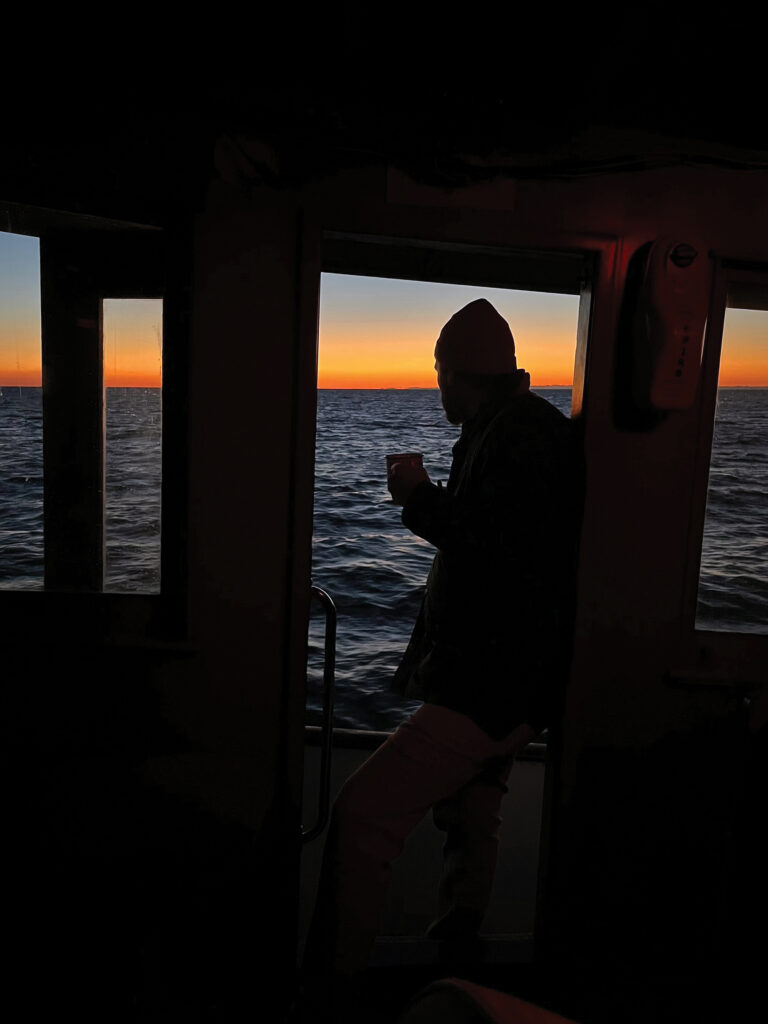
After a radical fireglow sunset, the sky became flat-out wild. Lightning crackled all around and dense squalls encircled us—though our sky remained relatively rain-free. At around 11 p.m., one brief, powerful gust ripped a banner flag from the pilot house wall and with that, the radar blinked out. Carson and I attempted several reboots and climbed up top to eyeball the antenna. Seeing nothing obvious and not wanting to wake Alford, who had just gotten off watch, we summoned Henry to the bridge. A longtime friend of Alford’s from his Colorado ski instructor days, Henry has run maintenance on a western ranch—fixing electrical, plumbing and diesel systems, served as service director of a marine repair shop, and ran a successful car and motorcycle restoration business. His skillset is varied and vast. We traced the wiring for the radar and found a small bus bar obscured by the flag that was blown down. The red power wire into the bar pulled out with the flag. Though most of the wiring on the ship is in good order, Henry noted this section looked like it was done as an afterthought. “Everybody has done different repairs on this ship, whether it’s by the book or not,” he said. “You’re finding systems overlaid on top of systems overlaid on top of systems. You definitely have to have a critical-thinking mindset and be up on your diagnostic skills to work on this ship.”
We spent the next day anchored up just off Masonboro Inlet behind Wrightsville Beach. Dennis had lifted offshore and the weather was blustery, with low clouds but no rain. We fielded queries from curious boaters, and after I took a deep dive into the Gray’s systems with Henry, our troupe took the Gray’s very cool rotomolded Whaly tender for sunset margaritas and dinner at a famous fish camp restaurant called Dockside. There, an old Wilmington friend named Will Hardrove had alerted Vicki and me to the fact that the waves were probably looking good the next morning.
Will pulled up before dawn in his old Scout skiff and Vicki followed us in the Whaly a mile and a half south to a little sandy anchorage behind Masonboro Island. “Mase” is a crazy jewel for Wilmingtonians. An undeveloped 8-mile barrier island, its beaches are stunning, its fishing is excellent, and thanks to the long jetty at Masonboro Inlet, its waves are protected from the sort of chop-inducing northerly winds we had this morning. A short walk over the dunes revealed a dreamscape, and we feasted on perfect, head-high waves for a couple of hours.
Afterwards, Vicki and I marveled at what a perfect surf or even fishing exploration vessel the Gray really is when you combine her with the Whaly, and what a great gig Vicki’s going to have captaining alongside Alford. “I want us to take her back through the Canal,” she said. “Can you imagine all the empty waves you could get along the Central American coast with this boat?”
“From when I conceptualized 5 years ago to what The Voyagers Club is now, they really don’t look the same, right?” Alford would say when we returned. “But the idea is to get people out on the water and experience it in the way that I would prefer them to experience it, which is not beach-hopping from party to party. It’s enjoying the vessel that you’re on, and it’s enjoying the surroundings that you are in, and hopefully giving back to Mother Ocean and Mother Nature in the process.”
“And giving people a really meaningful travel experience,” added Davenport Ross. “One they’ll never forget.”
If my few days aboard are any indication, I’d say that mission’s already accomplished.
Take a video tour of the Robert Gray with us here >>
This article originally appeared in the January 2026 issue of Power & Motoryacht magazine.