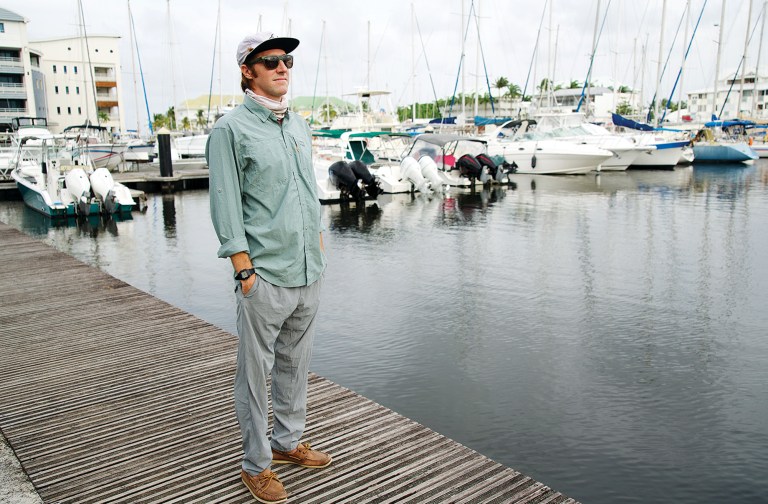
By the time he was a senior in college at UNC-Wilmington in 2011, Jason Ruegg was making hundreds of thousands of dollars a year flipping boats. While that may seem like a recipe for disaster, bacchanalia, and perhaps, legend, it’s a testament to Ruegg’s character that he managed to keep things pretty even keeled. “Don’t get me wrong,” he says, “we had a great time. I paid for everything, big dinners, stuff like that. I was on top of the world. But I didn’t do anything too crazy. By the end of college, I was selling 30 or 40 boats a year, and so my focus was always on the next deal. I hired my friends and let them use my capital, and they started working for me.”
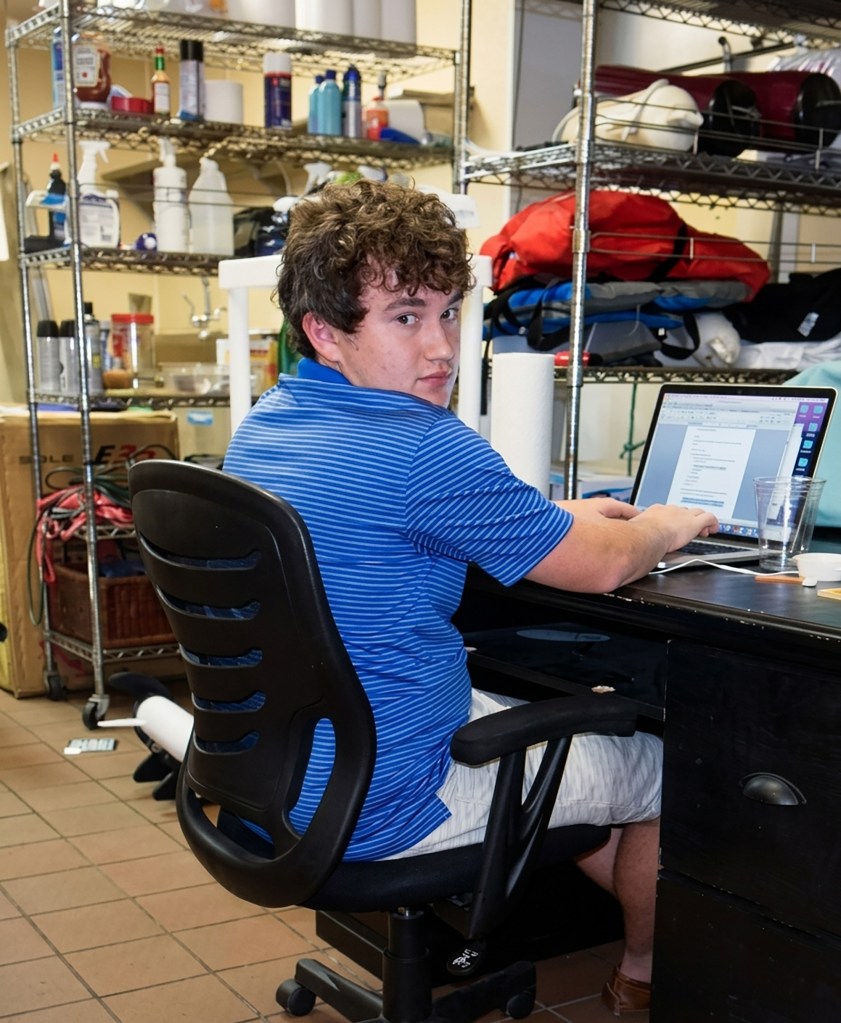
It was this precocious entrepreneurial spirit that came to a head last November when Ruegg, just 37 at the time, took his company Off the Hook Yacht Sales public on the New York Stock Exchange. Officially, Off the Hook touts itself as a major partner for dealers across America looking to trade in used boats. The company leverages artificial intelligence to find and evaluate potential deals with a staff growing at near breakneck speed. “We are hiring two to five brokers every week,” says Ruegg, “and we want to get to thousands. We want to get so big that no one else in America can compete, and then we’ll start taking a closer look at the European markets.”
Where did this ambition, and idea, come from? It turns out it started nearly in the crib. Ruegg grew up in the boat-crazed town of Annapolis, Maryland. His earliest boating memories are from age five or six, and he says it has always been nothing short of an obsession. “My dad used to flip boats—he’d always be buying a boat and fixing it up—and he got me into it and showed me the ropes,” says Ruegg. “Even before high school started I was flipping boats, if you can believe it. And I just rolled that into a pretty successful little business model through college.”
Ruegg was an accounting major, and had always thought he’d end up doing something a bit more vanilla with his life. But with the success he saw in college, he recognized a path not only toward riches, but also toward doing something he loved.
By the time he graduated he had set his sights on growing his profitable hobby into a proper business. But first, he needed money. “I knew I’d need capital to achieve my dreams,” he remembers, “and I approached literally 100 banks around the country and kept being told no. After that I was basically dealing with loan sharks. I was taking high interest loans with lots of points. It was very stressful. But then I approached Next Gear Capital—they owned Autotrader at the time—and within a week I was offered a million-dollar credit facility. I was blown away.”
With the good times rolling, Ruegg, age 25 at this point, got to work fast growing his business. He expanded his credit facility first to $2 million, then $3 million, then $4 million. His goal was to get to $7 million, and when he walked into his next meeting with Next Gear he felt confident he would get it. Then the floor dropped out from under him.
“When I asked for the $7 million, not only did they say no, but they told me they were doing away with their marine division, and they wanted me to liquidate my inventory and shut down my account.”
Without his credit line, Ruegg admits he felt like the world had ended. But he didn’t give up. He quickly reached out to Atlanta’s Northpoint Capital and convinced them to meet with him. He hopped a flight to Georgia two weeks after his initial investors folded on him, and there he secured a $12 million credit line. “I couldn’t believe it. I still can’t believe it,” he says. “One minute it seemed like the ride was over and the next minute I had more money than was in my wildest dreams.”
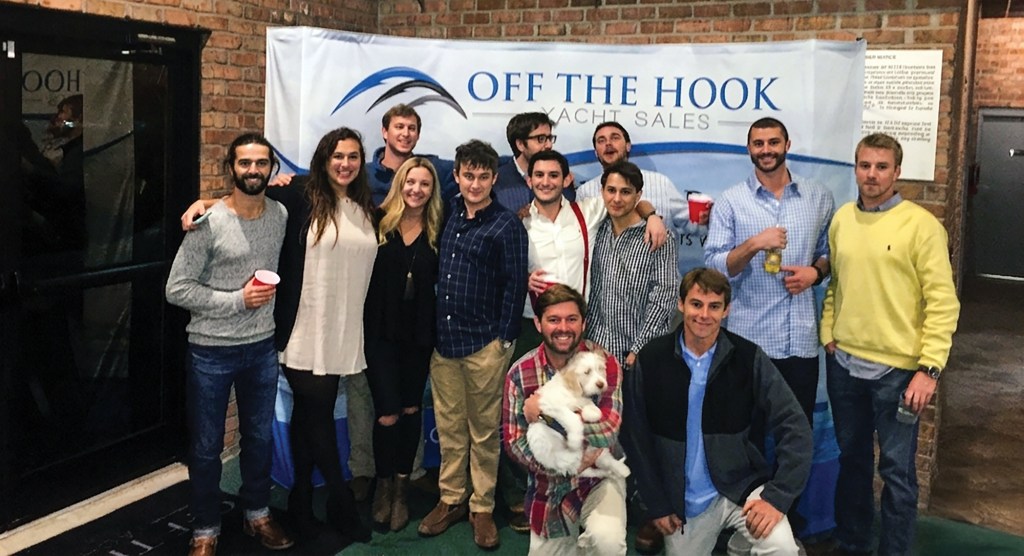
It’s that addictive rush that Ruegg’s friends say makes him tick. “The guy just loves making deals,” says Boomer Jousma, a broker and sales director at Fort Lauderdale’s The Italian Yacht Group. Jousma, who has known Ruegg for 15 years, says they are often texting at 6 a.m. and 10 p.m. working out the intricacies of existing deals and sniffing out new ones. “I think a lot of the brokers and dealers like working with him because we see ourselves in him. We can easily relate to one another,” continues Jousma. “Plus Off the Hook is reliable. That’s what really sets them apart. If I come to him with a boat and he says it’s $3 million, not only does he mean that’s the real price, but he’ll usually have the deal done in a few days.”

It’s that rare and potent mix of consistency and a gambler’s panache that has made Ruegg such a dynamo in the industry. He says his company gets 400 inquiries a week fielded by 120 employees. And they’ll take anything from Zodiacs to Sanlorenzos. Margins vary according to size—a sweet spot is about a $700,000 boat, but Off the Hook will buy and liquidate most anything. “You could have a boat in a marina in Michigan call us and we’ll have it closed by the weekend,” he says. “We’ll rent the boat slip, sell the boat, liquidate it, and then we’ll cancel the slip. It’s as simple as that. And pricing will just reflect the desirability of the boat, so we are able to take in a wide range of vessels.”
The decision to go public was a natural extension of Off the Hook’s more, more, more ethos, as well as a reflection of Ruegg’s love for the game. “I hit a ceiling where I wanted to inject more capital into the business. So I could have been absorbed into a larger company or sold to private equity, but neither of those was appealing to me. I figured if I went public, I could retain a big chunk of the company for myself, and also offer my employees a real chance to work for themselves by offering stock.”
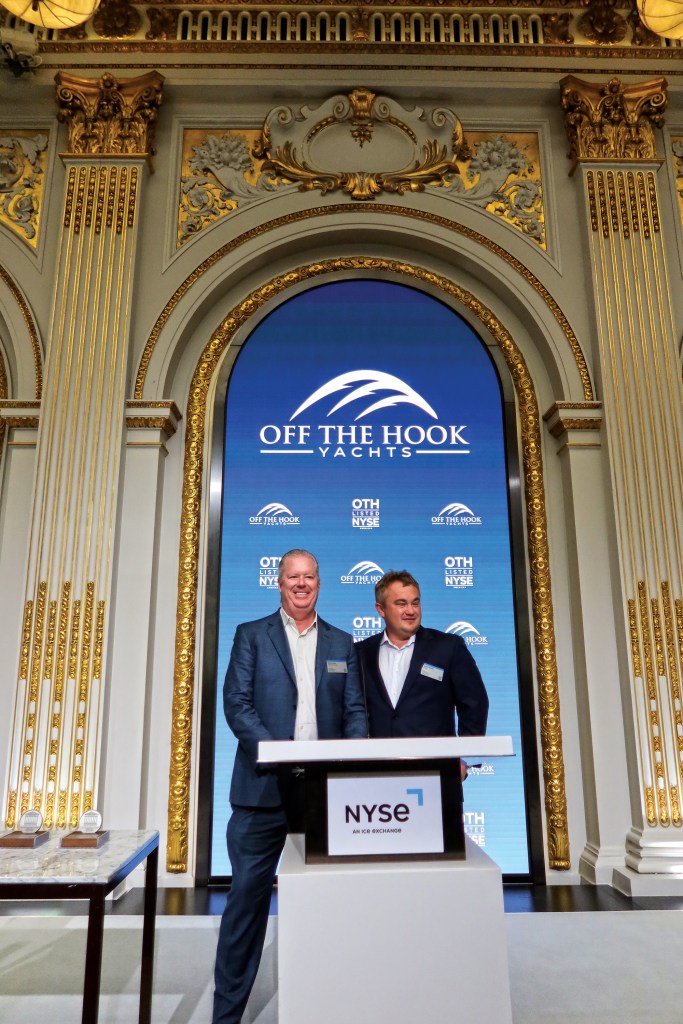
Off the Hook went public on November 13, 2025. Though Ruegg says the day still feels surreal, and that it was one of the best days of his life, it had very tough competition. Just one week before the IPO he and his wife had their first child, a little boy. How is the early fatherhood/37-year-old, president-of-a-public-company juggling act going? “Let’s just say I’m happy he’s too young to remember how much time I’m working,” says Ruegg, who takes close to 100 calls a day. “The plan is to get the business to a point where I can be a little more hands off in the future so I can spend more time being a dad.”
But he also makes that wish with a particularly Ruegg-ian caveat. “The future of Off the Hook is to grow and grow and grow and become a billion-dollar business. I think we’ll get there.”
He’s off to a flippin’ good start.
This article originally appeared in the June/July 2026 issue of Power & Motoryacht magazine.