In 2012, the 102-foot Vripack-designed yacht, Beothuk, became the third Doggersbank and the 163rd vessel to successfully navigate the hostile Northwest Passage. Connecting the Atlantic and Pacific oceans and less than 1,200 miles from the North Pole, the frigid body of water remains one of the greatest nautical encounters on the planet.
Captained by Liam Devlin, the journey was a long-held ambition for Beothuk’s owner, Ivor Karan, founder of the largest beef producer in Africa. He acquired the 2008 Kuipers-built yacht in 2011 for the purpose of doing the trip.
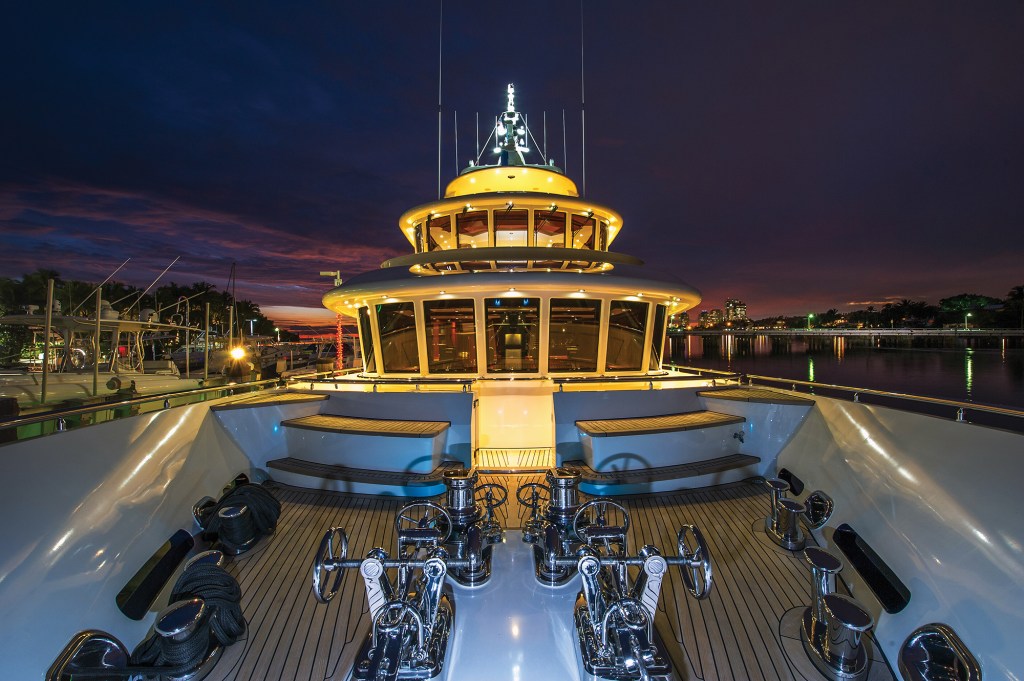
Photo: Andrew Down
“In the previous years, I had done around five winter expeditions to the Arctic hunting on Ski-Doos with the Inuit on the frozen sea,” he says. “I developed a real interest for the area and people, and I wanted to experience it by boat.”
Those earlier visits gave him an invaluable appreciation for the unpredictability of the region. During his first trip to Baffin Island, in the Canadian territory of Nunavut, he spent two weeks traveling by dogsled on the icy tundra. At one point, he and three Inuit men—a father, his son, and their friend—were cast adrift in Arctic Bay on a block of ice that unexpectedly broke away. “We went drifting off west into the ocean where we stayed for four days until the wind direction turned and blew us back in,” he says, laughing. “It was alarming, I can’t say I was calm about it, but my companions said they felt very comfortable with the situation which put it into perspective. They were in constant radio contact with their hamlet, and there were helicopters on standby, so I knew I was in safe hands.”
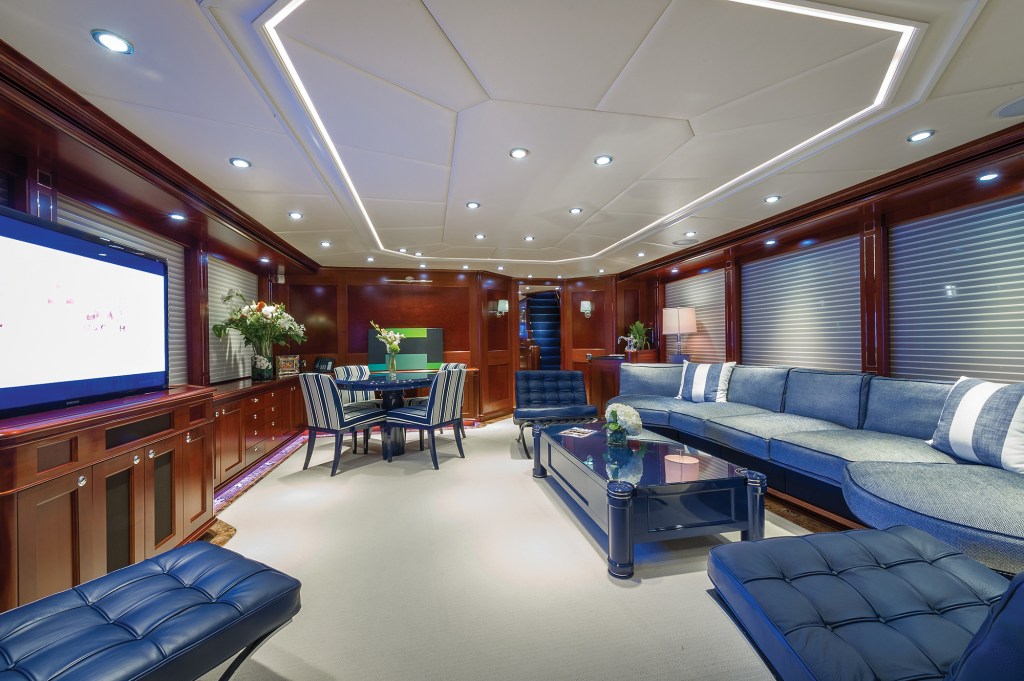
Forming part of the Doggersbank Offshore series, Beothuk (named after the indigenous people who once lived on the island of Newfoundland) is a 4,000-nautical-mile range yacht with a reinforced steel belt. For the seasoned sailor and his wife, Denise, who had spent three years on a world circumnavigation aboard their 92-foot sailing catamaran, the boat was just what they were looking for to tackle the Northwest Passage.
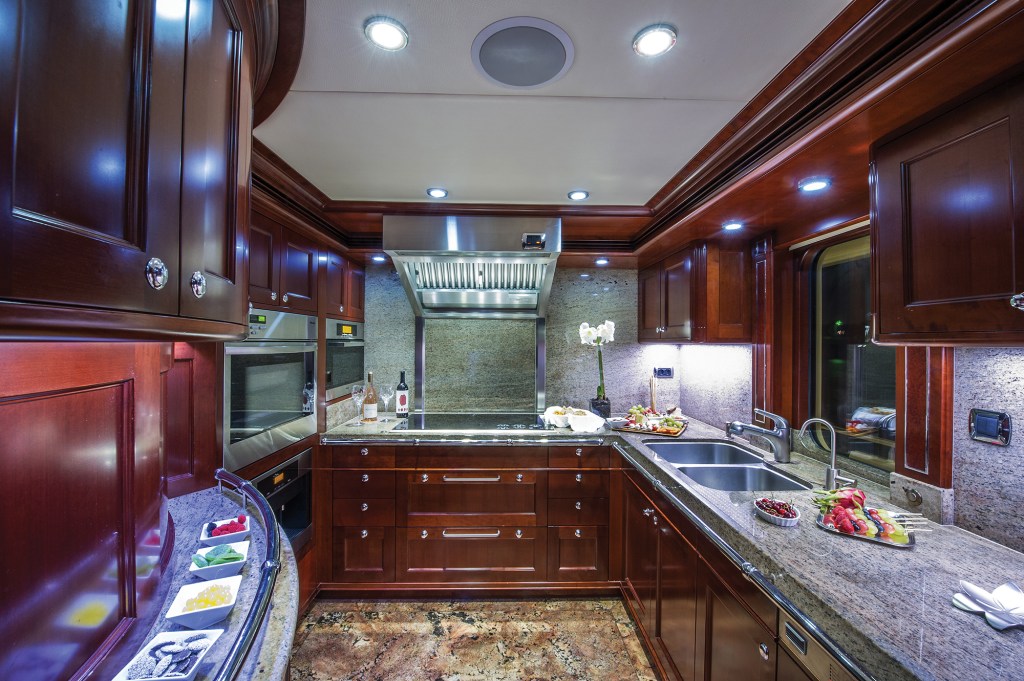
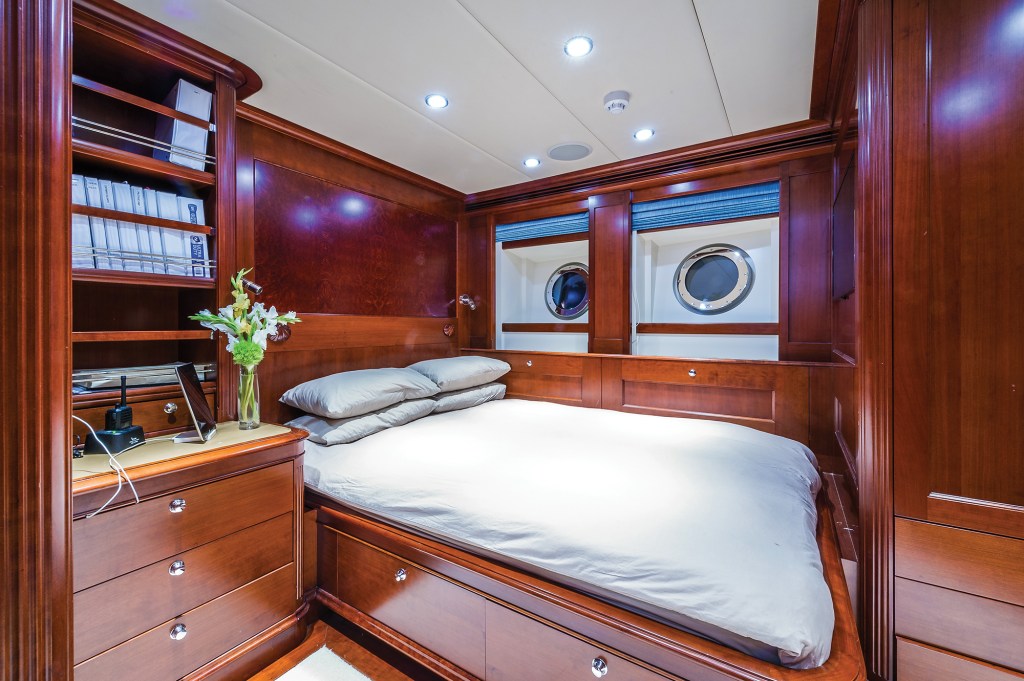
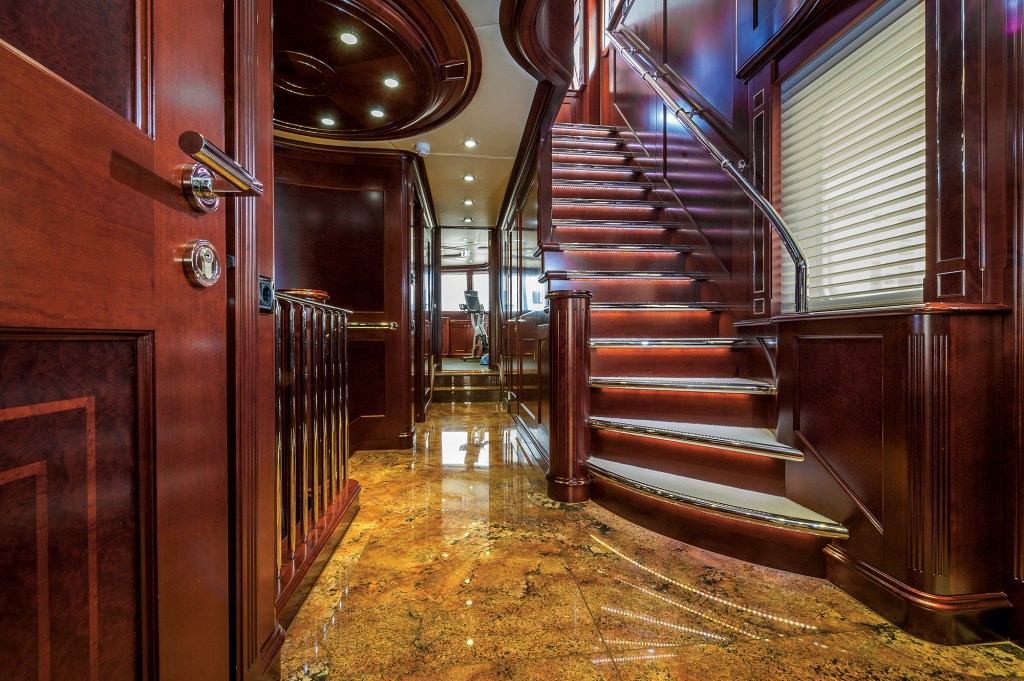
“The yacht was well heated, extremely well built, and beautifully designed for colder-weather living,” Karan says. “It was also very maneuverable and the perfect size to tuck into small bays, with large interiors and room to store a Zodiac tender on deck.”
As part of their pre-trip planning, the couple flew to Scotland where they completed a course in Arctic travel. “We spent a couple of days learning, which helped us to feel and be prepared,” he explains. “The attraction for me was to follow in the footsteps of prior generations. I was transfixed on doing that. And that’s the difference between goals and dreams. Lots of people dream, but I prefer to set goals.”
They set off in July, heading north from Fort Lauderdale up to Boston and into Portland, Maine. They crossed the Bay of Fundy, known for having the highest tidal range in the world—“It went up 70 feet when we were there”—passed through the Canso Canal in Nova Scotia, across St. Lawrence Bay, and into St John’s, the capital of Newfoundland and Labrador, before reaching Nuuk, Greenland. They sailed through Arctic Bay, past Baffin Island, and across to the Canadian coastline.
“Our research told us that route would follow the direction that the ice moves, which turned out to be right.” The journey was less treacherous than expected, despite “the constant dreary, misty weather” that plagued the trip, and an enormous freak wave that came over the top of the boat in the Gulf of Alaska, between Kodiak and Juneau, that broke the thick steel door that protects the Portuguese bridge. “It was distorted and bent, but that was the only damage we sustained throughout the trip.” They hid out from squalls in small bays and spent a week in Nome waiting for large storms to pass through.
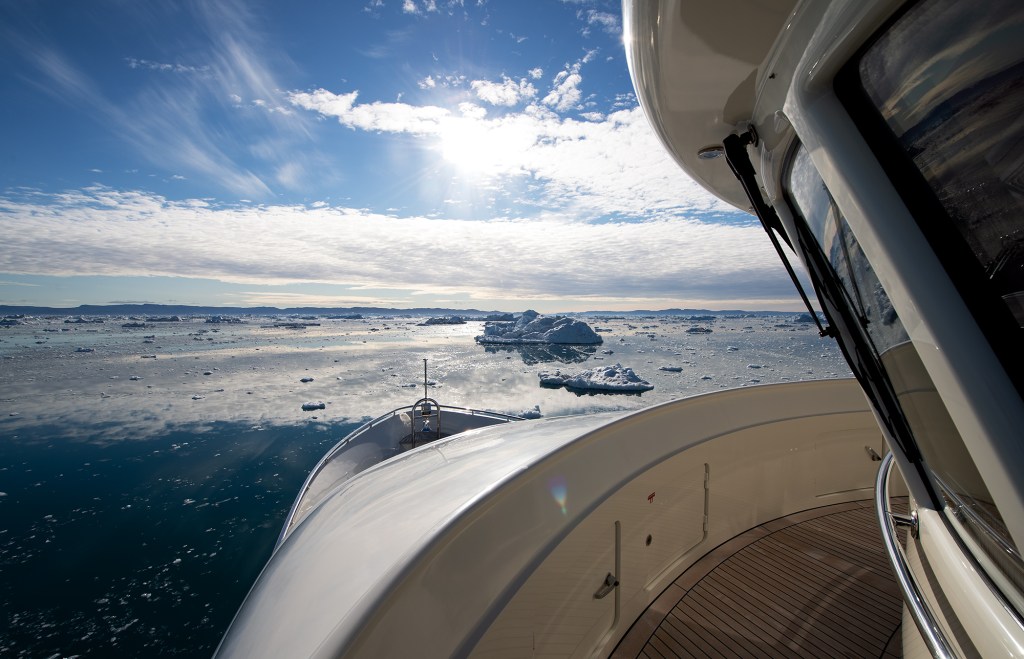
At one point they encountered brash ice—an accumulation of floating ice fragments that they “couldn’t even think of going through”—and were forced to sit and hold off until the path became clear. “The boat was designed to deal with brash ice but in certain places we had to wait,” Karan explains. “That said, I think the thickness and the quantity of ice has reduced over the years, so there’s a lot less today than I imagine there being a hundred years ago.”
They moved with the currents, carving a rough itinerary around the seasonal ice floes. “Beothuk has a reinforced steel belt, but she isn’t an icebreaker, so pushing through pack ice at times led to some seriously scary noises. It wasn’t always comfortable sleeping through the sound of ice screeching down the side of the hull.”
In some places the glaciers were so solid that they could only gently push between cracks. Thanks to the boat’s maneuverability they never became stuck, though they did wake one morning to discover themselves trapped in a bay. “The wind direction had turned and was pushing the ice floes towards us, so we had to remain there for three days before we could continue our journey.”
They fished along the way and set off on plenty of land adventures. The naturalist who joined them on the trip further enriched their sightings with his knowledge of sea birds and marine life. The two South African crew members even braved a polar plunge in the slushy sea just outside of Nuuk in Greenland. “They came out of the water so fast, you’ve never seen anything like it!”
In the light of the summer months, the disappointment of not seeing the aurora borealis—Denise’s dream—was balanced by moments of real beauty, including soaring icebergs and memorable wildlife sightings of orca whales and a mother and baby polar bear.
“We took warning rifles and appropriate caliber when we left the boat should we ever encounter a polar bear on foot,” he says. “You do need to do that because they’re an animal with little fear of humans, something I know to be true from one of my previous trips when I witnessed a polar bear eat a man.”
Having ventured to the region many times before, one familiar sight was the people they encountered, and their time in Greenland delivered genuine highs, including the chance to reconnect with friends in Resolute, Canada. It also allowed for moments of reflection and a deep-felt appreciation for those who have gone before.
“The Beothuk were the first indigenous people that were met by Europeans when they arrived in Newfoundland in the early 16th century. Their faces and bodies were an orangey hue from the red ochre they wore for sun protection and ritual ceremonies, which is where the term “Red Indians” comes from,” he explains. “I felt connected to their heritage being there, and it was really nice to take Beothuk to her namesake destination.”
The inside passage on the Canadian side stood out for its magnificent glacial display, while the Bellot Strait, which separates Somerset Island from the Boothia Peninsula, produced ethereal ice sculptures. It’s also where, in Fort Ross, Karan caught the biggest fish of the trip.
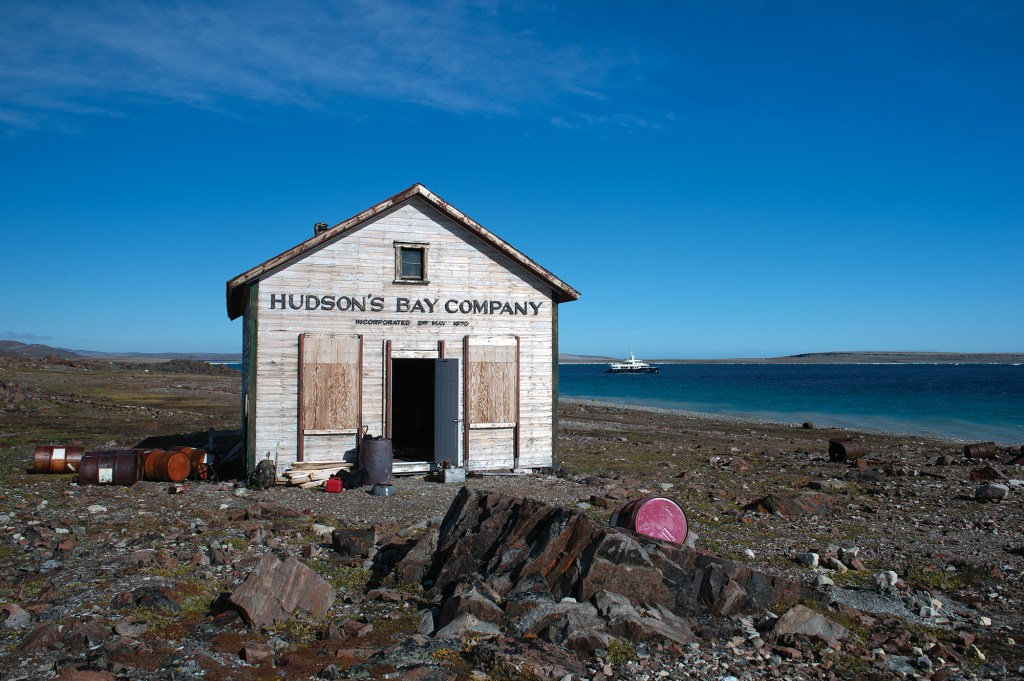
Even encounters with past seafarers came to the fore when they visited an old Hudson Bay Company trading post, which is still kitted out for people who pass through, well stocked with tinned food and supplies. “There’s pots, gas cylinders, and a little stove to cook on, and everyone who goes through writes their name on the side of the bunks,” he enthuses. “We restocked it when we left, for passing sailors but also the Inuit who use it in the winter months.”
After covering 8,800 nautical miles at a dogged four knots, they disembarked in October in Seattle. “A journey of that length requires a lot of oil changes, but Beothuk had sufficient oil in the tanks, sufficient dirty oil storage, and sufficient blackwater storage, too. It’s the little things, like not one drop of condensation on the windows, that is the biggest testament to her impressive Vripack design,” he says. “Most exciting of all, though, was the chance to use the yacht for what she was designed to do.”
In 2013, having achieved his goal, Karan sold Beothuk to her current owner. The dogged trawler would spend the next decade casually cruising open waters with Capt. Jerry Samuelson at the helm, until bolder adventures once again came calling. In 2024, Beothuk became one of a handful of yachts to brave the Northwest Passage for a second time. Unlike Karan, her owner didn’t purchase the yacht exclusively for the higher latitudes, “but he knew he had the right boat for the trip,” says Samuelson.
Due to her owner’s tight window of availability, Beothuk cruised under the midnight sun with few anchorages along the way. One exception was a day spent in Beechey Island located in the Arctic Archipelago of Nunavut. It once served as a wintering station for Sir John Franklin’s ships, Erebus and Terror, in 1845, and later became a main base for search parties. I’m pretty sure Karan would more than approve.
This article originally appeared in the June/July 2026 issue of Power & Motoryacht magazine.