In a confused mix of head, following, and beam seas, I adjusted the throttle on the Back Cove 412, trying to find a sweet spot. As it turned out, in the washing machine-like conditions between Newport, Rhode Island, and our destination at the northern end of Buzzards Bay, that sweet spot was between 19 and 21 knots. At that speed, I, Back Cove’s marketing manager, the boat’s owner, and our captain were able to hold a conversation while the wipers flicked away the occasional wind-strewn salt spray.
Earlier that morning, Back Cove’s Allie Alsup mentioned that of the 106 manufactured Back Cove 41s—the predecessor to the updated 412—many had completed or were in the process of completing the Great Loop. I started to ask myself: Could the 412 be the perfect Great Loop boat? As the hours ticked by and we put more miles under the keel, I couldn’t help but think the answer might just be yes.
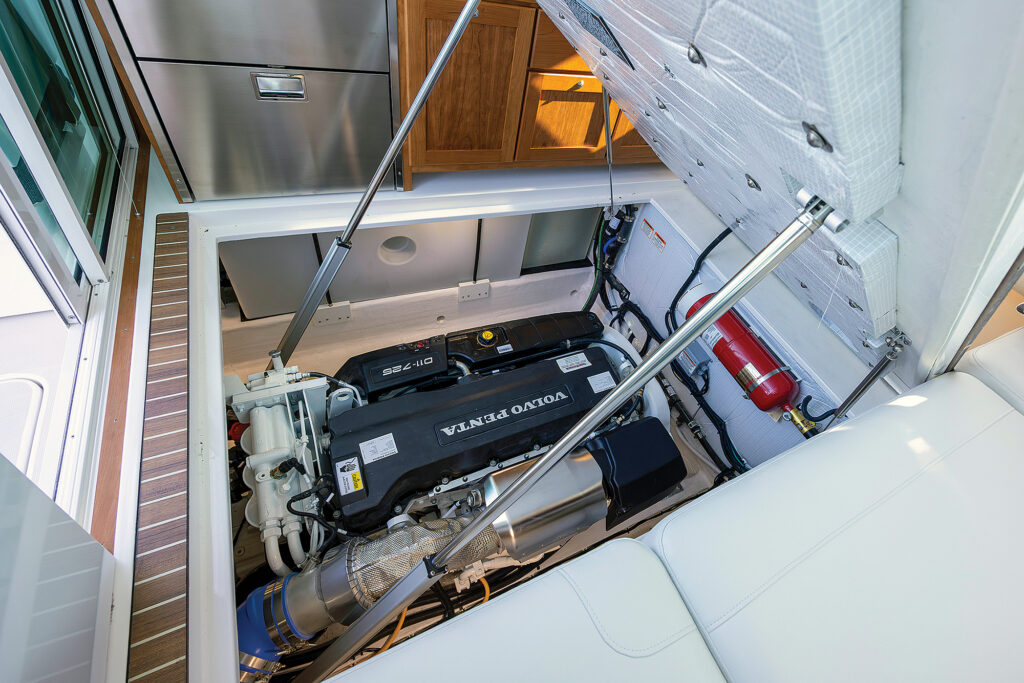
Powered by a single 725-horsepower Volvo Penta D11—or an optional 600-horsepower D8—the 412 is an incredibly versatile vessel. In the calm, early-morning waters of Narragansett Bay, we saw a top end just north of 29 knots and a fuel burn of 35.1 gallons per hour. Pull that back to 13 knots and fuel consumption drops to just 11.4 gph. Combine that speed and efficiency with bow and stern thrusters, plus Zipwake trim control, and you have a boat that can handle everything the Loop throws at you. Add in the appealing simplicity of maintaining a single engine, and the practicality factor only grows.
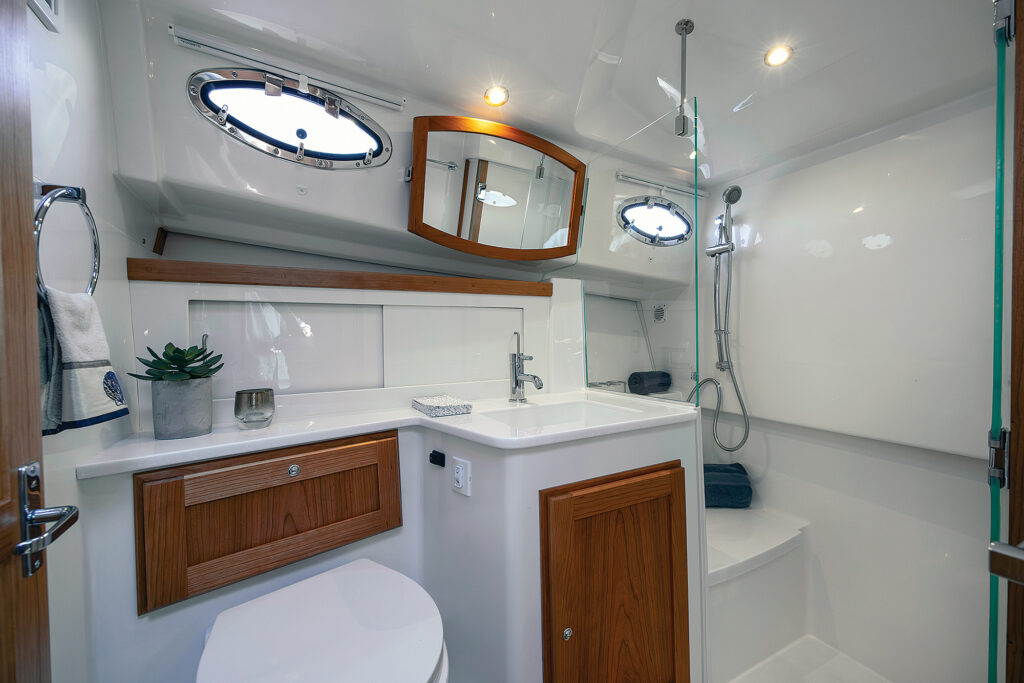
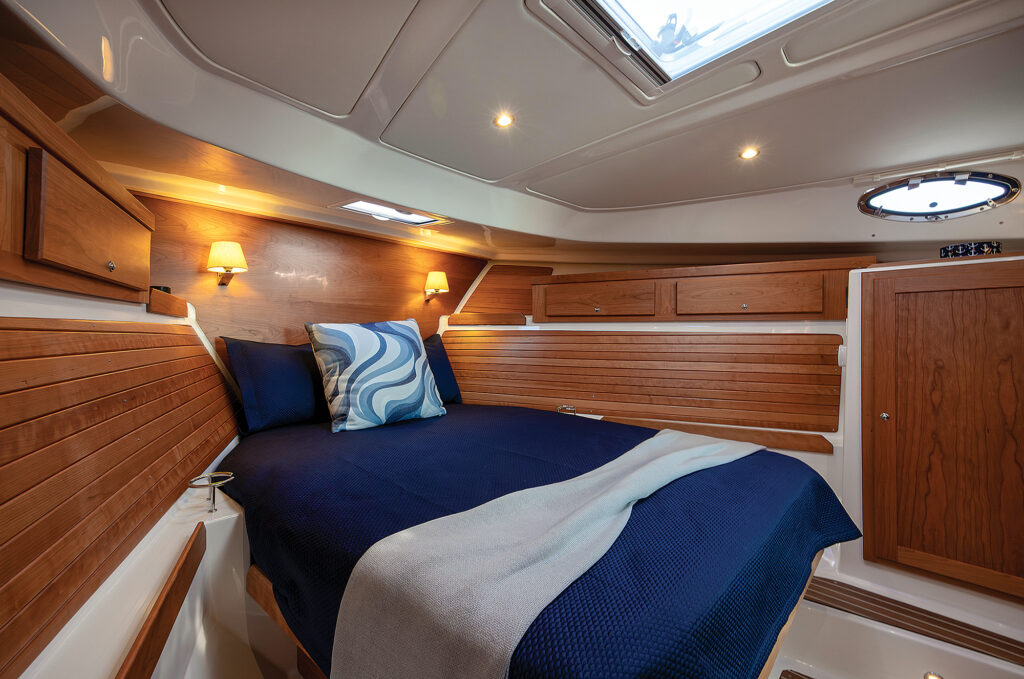
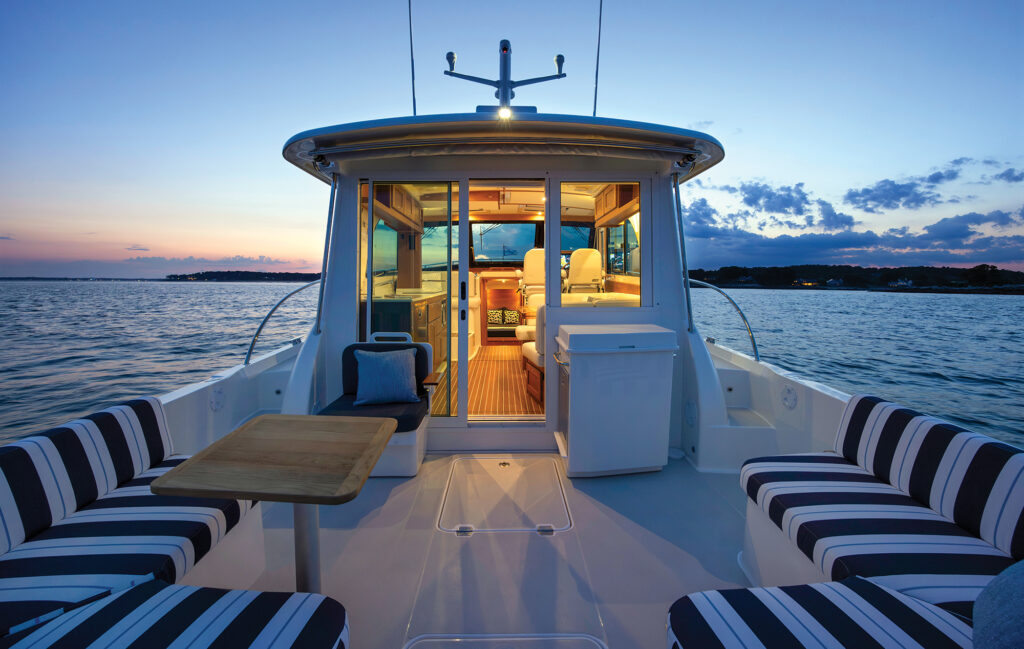
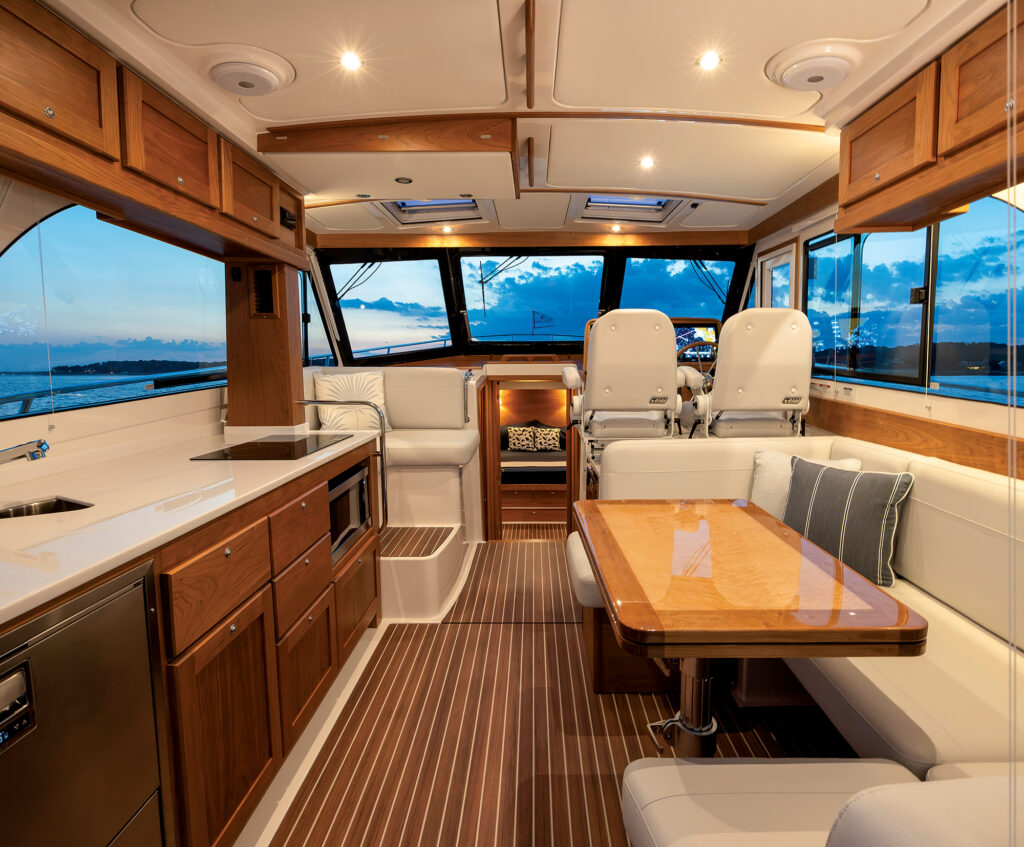
When reviewing any boat, I try to put my personal preferences aside and step into the Sperrys of someone drawn to that specific vessel. In the case of the 412, no shoe changing was needed. She’s a seaworthy, two-stateroom cruiser that’s easy to single-hand and offers social spaces seemingly designed for a family. I could immediately imagine my own family heading up to Maine for weeks at a time aboard this boat. With the windows closed and heat or air-conditioning running, the 412 would easily extend your boating season into the shoulder months. And on perfect summer days, with the doors and windows open, you’d feel completely connected to the water.
The differences between the perennially popular 41 and the updated 412 may not be dramatic when taken individually, but together, they add up to a boat that feels refreshed and ready for the 2030s: a slightly larger drop-down TV, a sleeker helm pod, a bigger salon dining table, and a sliding door replacing the traditional swing-out style. Perhaps the most notable update is in the cockpit, where you can now opt for a pair of aft-facing seats, a single aft seat, and a grill (as was the case on our test boat and my personal preference), or skip both and enjoy a bigger dance floor.
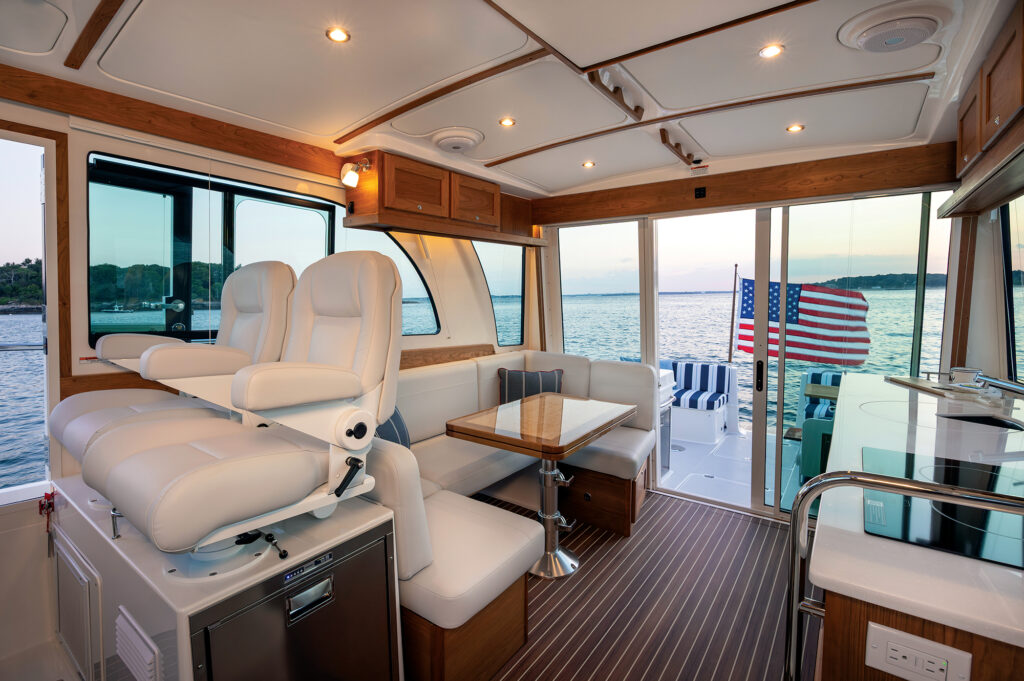
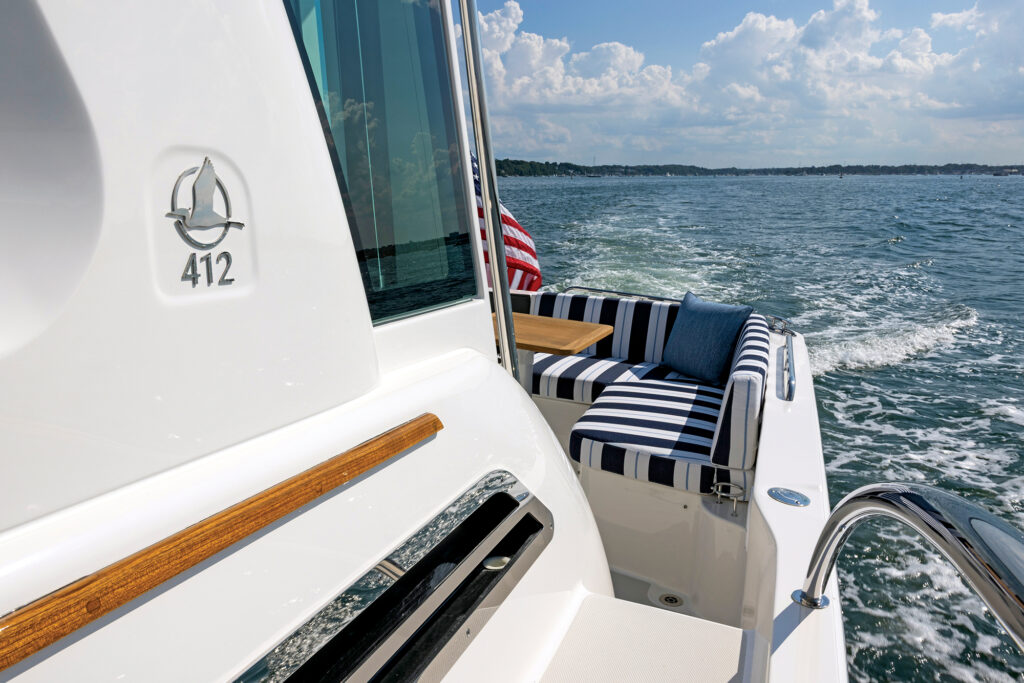
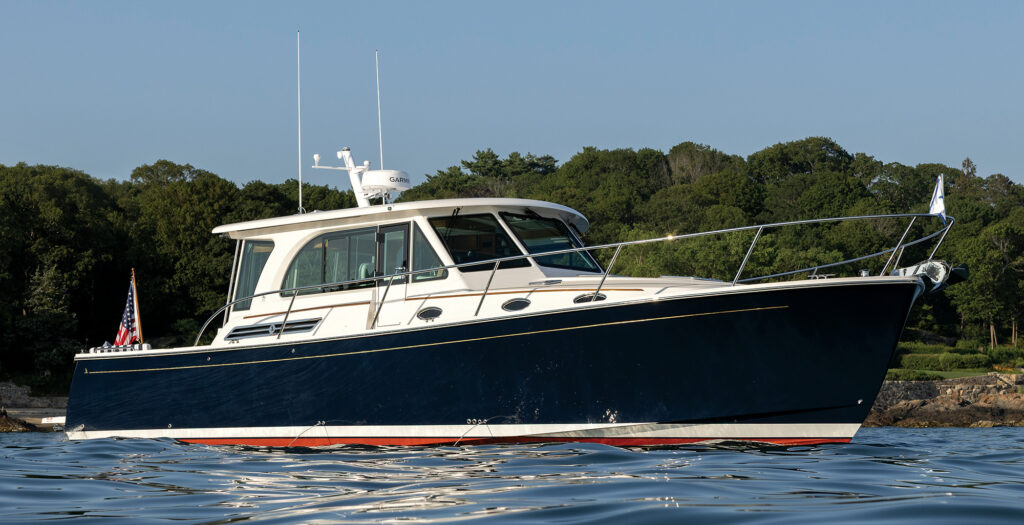
Overall, our jaunt from Newport to Cataumet, Massachusetts, covered about 50 miles—not an ocean crossing, but long enough to test the boat’s mettle in sloppy conditions. After tying up to a mooring, the crew and I climbed into the harbor launch and slowly made our way ashore. This gave me a chance to see the 412 not stern-to and packed into the chaos of the Newport boat show, but in her natural habitat—a quiet New England cove. And I have to say, the boat looked striking. A sister brand to the larger Sabres, you can see the family resemblance, but this is no “little sibling.” At 46 feet LOA and built with the quality craftsmanship the Maine builder is known for, she’s a proper yacht—more than capable of holding her own offshore.
Fifty miles is about 0.8 percent of the Great Loop’s average 6,500-mile distance. All it took was half a day aboard the Back Cove 412 to have me dreaming about knocking off the other 99.2.
You can also find this video–and hundreds of our other reviews–here ▶
Back Cove 412 Test Report:
| RPM | KNOTS | GPH | RANGE | DB(A) |
|---|---|---|---|---|
| 550 | 4 | 1 | 1778 | 67 |
| 1000 | 8 | 4 | 922 | 75 |
| 1500 | 13 | 11 | 463 | 78 |
| 2000 | 21 | 20 | 410 | 78 |
| 2550 | 29 | 34 | 347 | 84 |
Back Cove 412 Specifications:
LOA: 46’1”
Beam: 14’
Draft: 3’9”
Displ.: 29.500 lb.
Fuel: 400 gal.
Water: 160 gal.
Power: 1/715-hp Volvo Penta D11; 1/600-hp Volvo Penta D8
Base Price: approx $1.1 million
This article originally appeared in the December 2025 issue of Power & Motoryacht magazine.