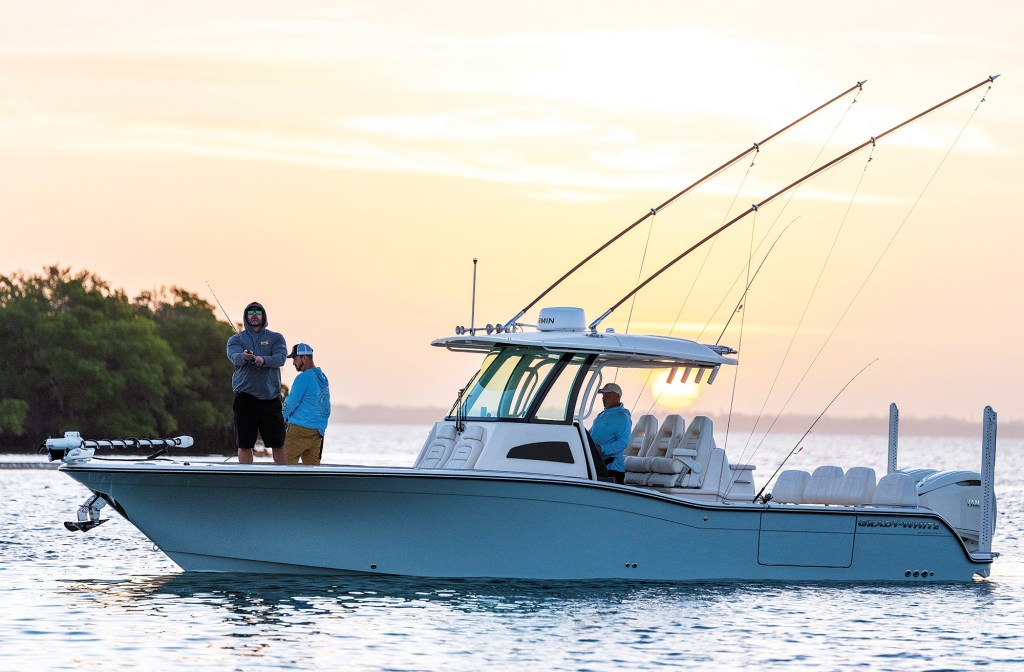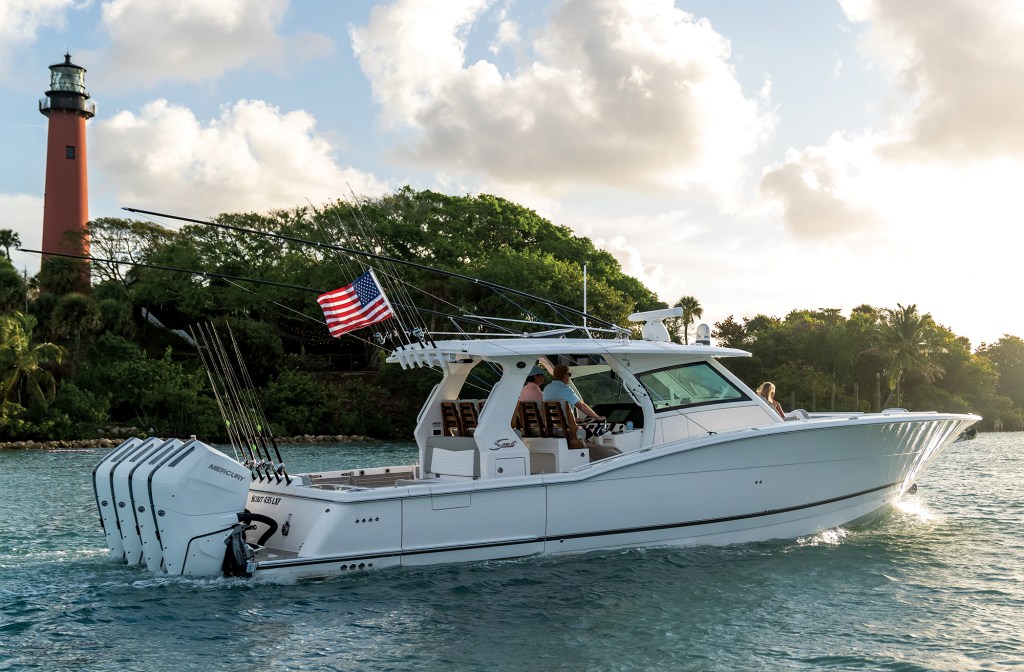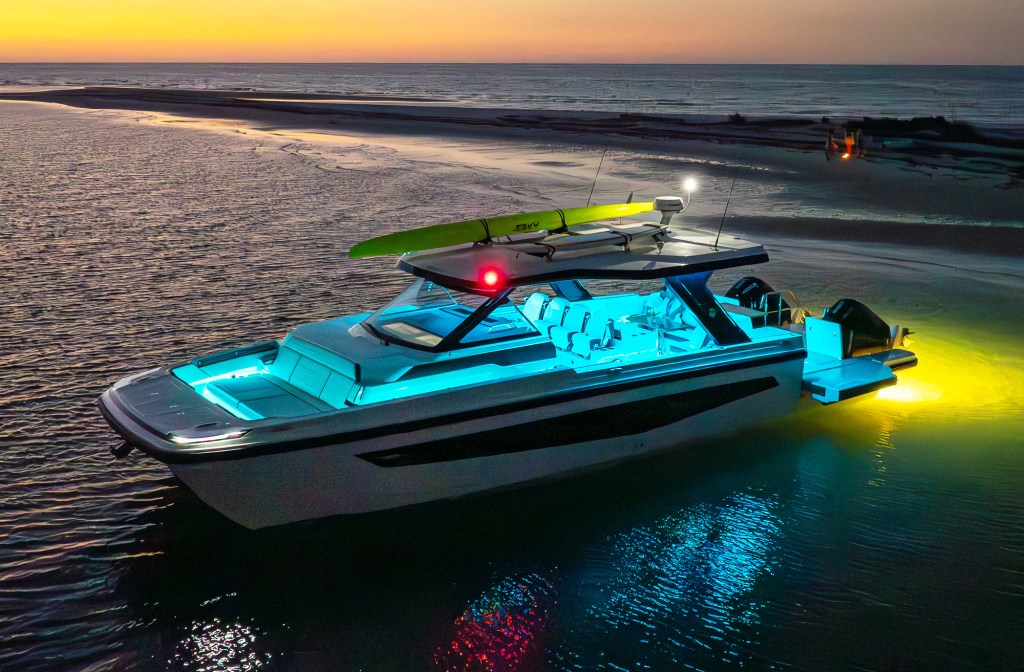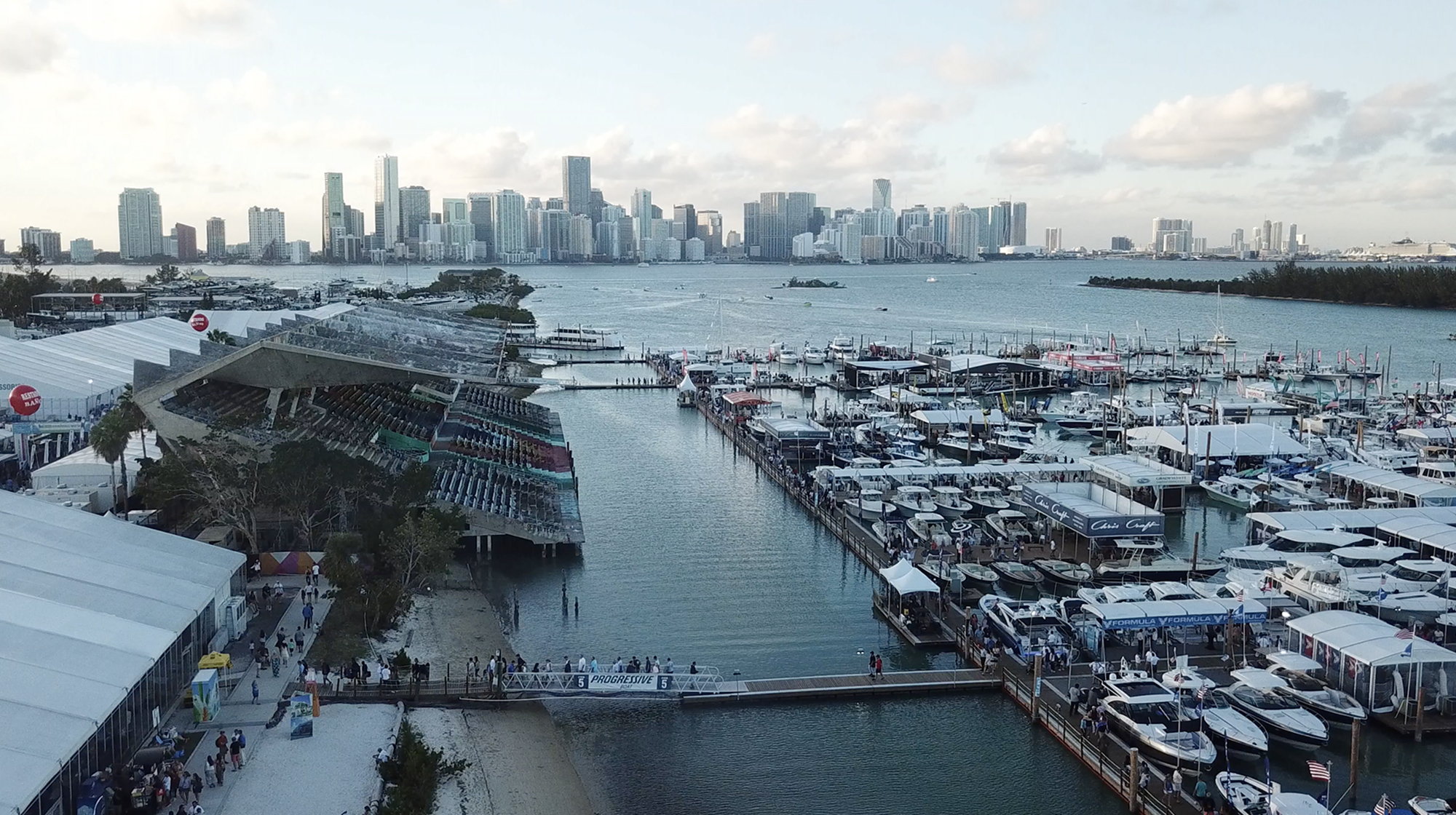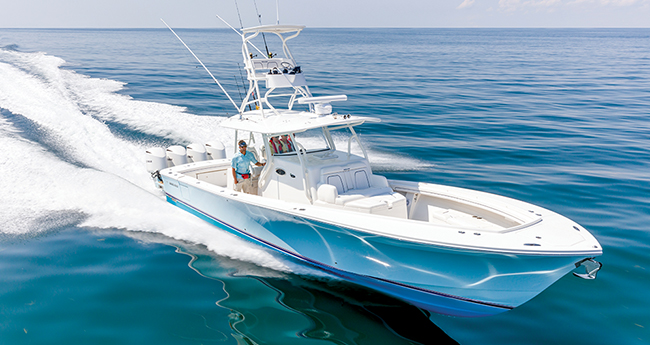
Whether you’re shopping for a passagemaker to travel the world, or hunting for a smaller center-console to fish with the family, odds are you’ll be able to find what you’re looking for at the recently renamed Yachts Miami Beach show. To help you in your search we’ve assembled an advisory board comprised of a designer, broker, builders, and industry experts to provide insider advice on what to look for—and avoid—in the buying process. You won’t want to miss what they have to say.
Down East Boats
If you’re even remotely considering the purchase of a Down East yacht you’re going to want to know about the new design trends in that segment, and who better to explain these shifts than Doug Zurn, founder of Zurn Yacht Design? The firm boasts a long client list that includes such groundbreaking names as MJM Yachts, Marlow Yachts, Shelter Island Runabouts, not to mention his own Zurn yachts. We chased down Zurn to garner the insight below.
What are some new demands you’re seeing from clients?
Today’s boats need to definitely have performance and economy. Those are two things that weren’t required as much on older boats. They need to have a certain amount of function so they can entertain a lot of people, and accommodations for two and maybe the occasional guest. I often hear, “We like having people aboard but we don’t encourage them to stay the night” [laughs].

Access to the water is also important whether that’s via a transom door, swim platform, retractable swim platforms. And I think open concept [layouts] for sure. All our houses are going open concept and our boats are too. We’re returning to the mentality of, “Hey we’re on the water, let’s enjoy it. We don’t need to be encapsulated in a small cabin.”
Also, Seakeeper has done a great job of adding another level of comfort to the powerboat market with their gyros. They offer wonderful stability while at rest.
But I’d say the biggest demand is definitely comfort and performance, those are the two big things that have kept us the most busy the last few years. We’re building boats that are fast, comfortable, and dry in all sea states.
What advice do you have for someone walking the show in search of a Down East boat?
My advice would be to pay attention to the details of the design. Ask how people use the boats. Understand how you’re going to use it. Some people buy boats to live on at the dock, some people want to go places, and those boat types are available in the Down East range.
Also, keep resale in mind. How do the boats do on the resale market? Because eventually you’re going to want something new or better. I find that with a lot of our boats, they initially seem expensive but at the end of the day after you’ve spent the money on fuel and enjoyed your time on the water and the places you’ve gone, and you have all those great memories, you’re going to want to know your return on investment.
And don’t buy a boat without taking it through its paces. If there is no opportunity on a trial to hit waves, then run in a circle until you make your own. Is the boat quiet when running? That’s important to know.
Has the demographic of buyers changed in recent years?
We’ve seen a shift to younger buyers. There are a lot of people in their mid-40s. I think that’s because they outgrow their center consoles and they want a little more protection but they still want the fun of a center console, which is generally known as a good sea boat. Down East boats also have a seaworthy heritage, coming from fishing boats. So while the two types of boats are so different, they share a common ground. That’s why we’re attracting so many center console owners.
Any last buying tips?
When you’re looking at a boat make sure it has some quality to it that’ll help it retain its value. Whether that’s fit and finish or a timeless design.
Passagemaking Boats
“The very nature of extended cruising equates to being aboard for long periods of time. Cruising independence is highly valued.” —Jeff Druek, president and CEO of Outer Reef Yachts

From his experience in the commercial fishing idustry, to his time in the Merchant Marine, Jeff’s expertise is varied and extensive, which makes his advice all the more valuable.
What are today’s must-haves for passagemakers?
The purchasers of passagemaker yachts are in general much more focused on their choices and requirements as it pertains to their long-range cruising lifestyle. The very nature of extended cruising equates to being aboard for long periods of time. Cruising independence is highly valued, as well as the need for more destination anchoring, which requires larger house battery banks with inverters and solar panels for spending time at anchorages. Additionally, other important considerations are fuel capacity and range at hull speeds, along with stability and redundancy of critical equipment built in during construction. Comfortable and spacious accommodations, in conjunction with substantial stowage areas and ease of maintenance, are also key elements.
What advice would you give to someone shopping for a passagemaker at the Miami show?
Before coming to the show, it is important to set your priorities, and study the show’s layout, as the size and logistics of the Miami show can be overwhelming. To create a more convenient experience, several years ago, Show Management made the decision to group a number of long-range cruising yachts together, near the north end of the show on Collins Ave. Therefore, potential purchasers can explore the same class of yachts within one general area. In preparation for the show, it’s helpful to go to the builders’ Web sites to peruse their pre-owned yachts in the size range being considered. A world of information about the quality of the vessels and philosophy of the company can be uncovered in this way. Thereafter, on-site at the show, having the opportunity to spend time in discussion with the current owners of the yacht being considered is extremely helpful. For example, our owners are a very loyal, close-knit group of people, always willing to speak with prospective owners.
What are some considerations boaters should make when looking at a boat to buy?
There may be nothing more critical than the consideration of retention of value, high-quality construction, and after-delivery service and support. Retention of value, or retained equity value after three to five years of cruising, is most often found when builders have limited or no inventory builds, no extra profit dealer networks, calculated, limited, and beneficial styling changes, and quality after-sales service.
Are there any design trends you see coming that readers would like to know about?
The most notable is a significant upgrade in sophistication of yacht-operation systems. With this, owners are purchasing larger vessels that previously required a full-time captain or crew. This evolution has allowed Outer Reef Yachts to be built for the owner-operator. Also, popular and frequent options are hardtops, bow and stern thrusters, remote controls or joystick operation; and it’s important to note that more owners are glad not to have the extra maintenance of exterior teak. All of these improvements in technology and design have created a more enjoyable experience for the yacht owner, who is the best source of ideas for continued build improvements.
Motoryachts
“One trend we’re seeing is our clients are growing into larger boats more rapidly, 40 to 50, 50 to 60, 76 to 112.” —Jack Robertson, HMY broker

When Jack Robertson walks the docks of a show, he carries with him 29 years of experience in the marine industry, 17 of them spent pairing up boaters with the right vessel as a broker for HMY. Through the good years and bad, Robertson has advised clients on how to get boats with strong resale value, which is what he’s doing here now.
What are some of the hot new must-haves in the larger yacht segment?
The buzz on boats 60 feet and up is stabilization. Zero speed stabilization is exploding to a point where people are having gyros retrofitted to their older boats. Previous to that people were looking for the toys and the beach club. We were seeing European-style garages rise in popularity versus having all the toys, such as seabobs, paddleboards, Jet-Skis, etc., on deck.
The full-beam master is also something that’s in demand on boats both less than 100 feet and more than 100 feet. And we’re looking at a rise of the on-deck master. So on larger boats what’s popular is stabilization, toys and beach clubs, and full-beam masters.

What types of trends are you seeing among your big-boat buyers?
One trend we’re seeing is our clients are growing into larger boats more rapidly, 40 to 50, 50 to 60, 76 to 112. And they’re doing that every couple years! And they’re doing that because they’re enjoying the new features so much. And on larger boats we’re seeing our clients stay on the boats for 10 to 12 days at a time and really enjoying their large staterooms. People are enjoying the extra volume in larger boat accommodations.
What advice would you give to someone shopping for a larger motoryacht at Miami?
It’s much more rewarding if you have a broker of your own to consult about all your boating interests. It’s all in the prep work before the show. We learn how they’re going to use the boat right down to the water toys and the relatives they’re going to be inviting. Then we can represent them in all their inquiries and we can try to get them into the best value. There can be compromises then, based on size, quality, and newness. We need to keep value in mind for them.
And what can really save them time in their search is by having them start at a macro level and working down to the micro level and then getting them on some boats whether that be a Princess motoryacht or a more traditional Hatteras or Westport. Then once you know their styling we can help them understand the history of the brand they’re looking at.
Also, when it comes to purchasing a boat we can help them understand market conditions and exchange rates.
How do you help a new boater find the right boat?
There’s only 52 weekends in a year; I ask them, “How many of those are you going to spend on the boat?” Because what happens is someone comes to a show to see a 50-footer and they finish the day looking at a boat up to 100 feet and then they ask, “Why did I spend the whole day looking at boats we can’t afford?” Understand how you’re going to use a boat. And then start the show by looking at a name-brand boat so you have a basis. So if you wanted a sportfish I would take you to Viking first to set a benchmark and work my way to more affordable options. Then you’ll have a better understanding of costs.
Sportfishing Boats
“Boats on display at the show will have show prices usually with a time constraint. After the show, the price may change.” —Peter Frederiksen, communications director of Viking Yachts
While his official title is Communications Director for Viking Yachts, Peter Frederiksen also holds the honorary title of boat show expert, what with a couple hundred boat shows under his gimbal belt.

What type of homework should a buyer do prior to a show?
When shopping for a new boat, take the time to study the brand. Look at a lot of them and from all ages. It’s a clue to how well the boat holds up, as well as a means to see what changes have evolved.
What advice do you have for someone shopping for a sportfisherman at the Miami show?
Clarify your position; are you looking to see what’s available, or planning to buy at the show? Boats on display will have show prices usually with a time constraint. After the show, the price may change, or if it is a “Boat Show Special” it may be specially equipped with accessories or optional equipment and be one of a kind. Once that boat goes away, a similar replacement may cost more because of raw material increases or price increases in general due to different engines, other accessories, or model-year change.
What considerations should boaters make when walking through a boat they might buy?
When you are looking over a boat know what you are looking at. Take livewells, for instance. A gallon of water weighs 8 pounds. If the well is installed on centerline, it will be less likely to affect the boat’s trim and stability when you’re locked and loaded to go fishing. Look around for safety items including grabrails, nonslip walking areas, and ample freeboard. Rounded corners and coamings prevent bruises. All boats have tackle stowage but you don’t want it to be a haphazard design where hooks and swivels fall out on the deck every time the door swings open because the boat is pounding into waves. Locking hardware is more expensive but worth it!
Also, check the visibility from the helm. Will your electronics be safe or blessed with a saltwater baptism every time the wind blows 10 knots? The single most expensive item on the boat will be its engine(s), and larger engines are usually preferred, especially at resale time. Are they accessible for maintenance and service? Is the boat fully equipped and scheduled to be delivered turnkey ready, or will you have to spend more money and time outfitting it? Factor your time and the value of your time when calculating this number because installing after-market equipment requires disassembling parts of the boat to effect a good job.
What should buyers know about the purchasing process?
When speaking with a dealership salesperson, also seek out a manufacturer’s rep if one is available at the show. He or she will have the ability to answer all of your questions about availability, power suggestions, optional equipment, etc. Availability is key. People who build a new boat typically order them in the fall for delivery in the coming summer. At the winter boat shows the current inventory is on display. Model year generally changes in June. Depending upon the manufacturer’s backlog there may not be a slot available if you delay making a commitment and fail to sign a contract. If you have a trade, be honest about its condition and the engine hours. Some would-be buyers try to bargain for a wholesale price for the new boat yet think their trade is worth retail. It does not work that way. Remember, the dealer has to sell your boat, too! Read your contract completely and pose any questions you may have, or expect to have.