South Sound Solara
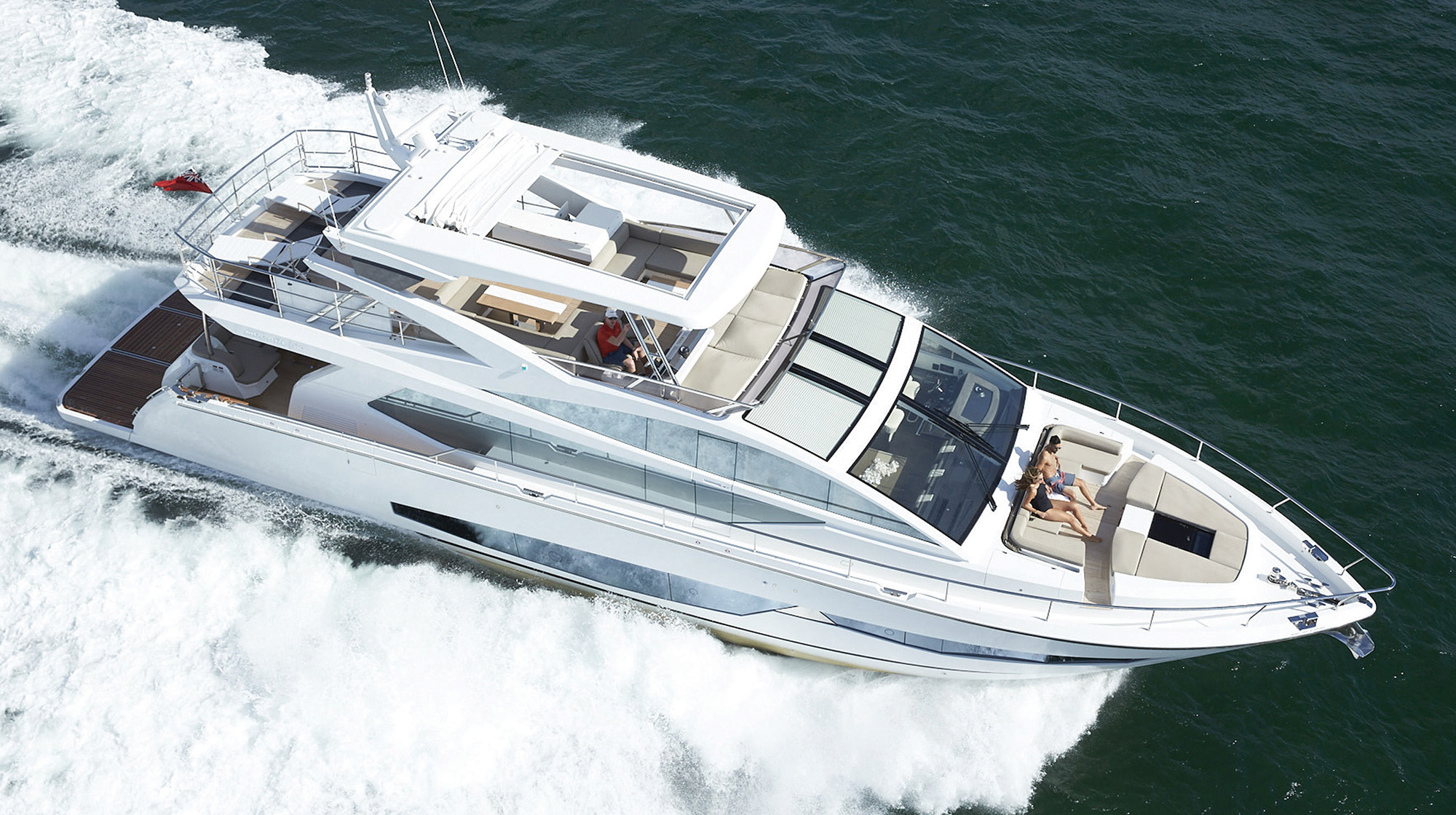
Solara’s trailerable S-310 Sport Bridge is an adventure-ready pocket cruiser decked out with the whole family in mind.
What does it mean to truly experience Puget Sound? When one gazes at a chart, the island-studded Washington state body of water twists like the arms of the giant Pacific octopus that calls these cold waters home. The towering skyline of Seattle sits centrally on the eastern shore and from there a fast boat could opt for the popular San Juan Islands to the north or err south-southwest into South Sound. Often overlooked, the glacially cut tendrils of the South Sound extend for miles past the Tacoma Narrows into a peaceful cruising ground of inlets and coves.
Yes, an afternoon on Seattle’s world-famous waterfront followed with a zip deep into South Sound for a night tucked in somewhere quiet and green is the answer. The next question: What kind of boat fits the bill? Certainly a fast vessel, but also one with comfortable cruising accommodations. Slips in Seattle are becoming rare and expensive (don’t get me started), so if the boat could dodge that nonsense by being trailerable, all the better.
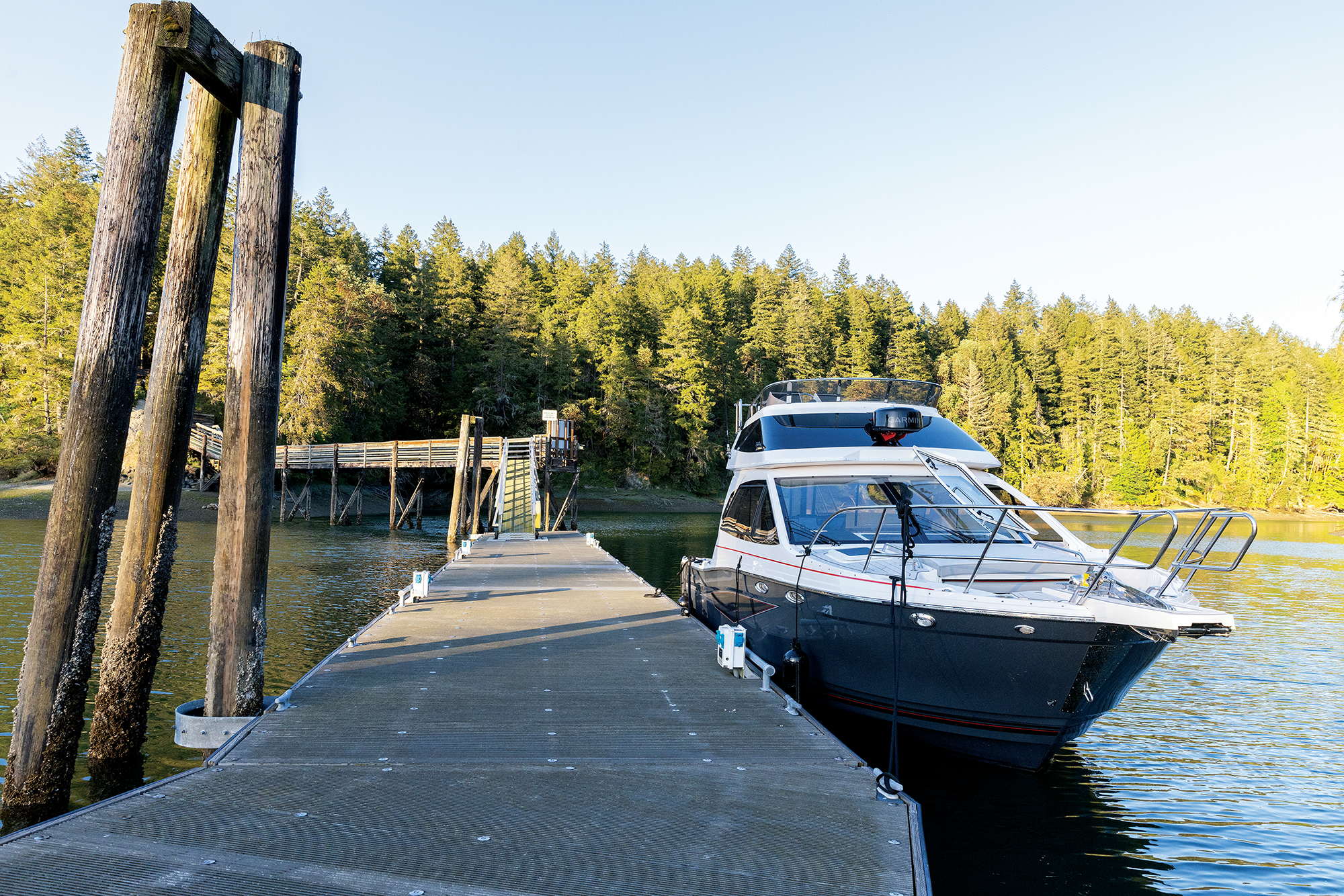
Plans were hatched. Calls were made. In no time flat, I was being scooped up on a brand-new Solara S-310 Sport Bridge—the newest model from Auburn, Washington-based Fluid Motion. Not just any Solara S-310 SB, but hull number one, belonging to company president John Livingston.
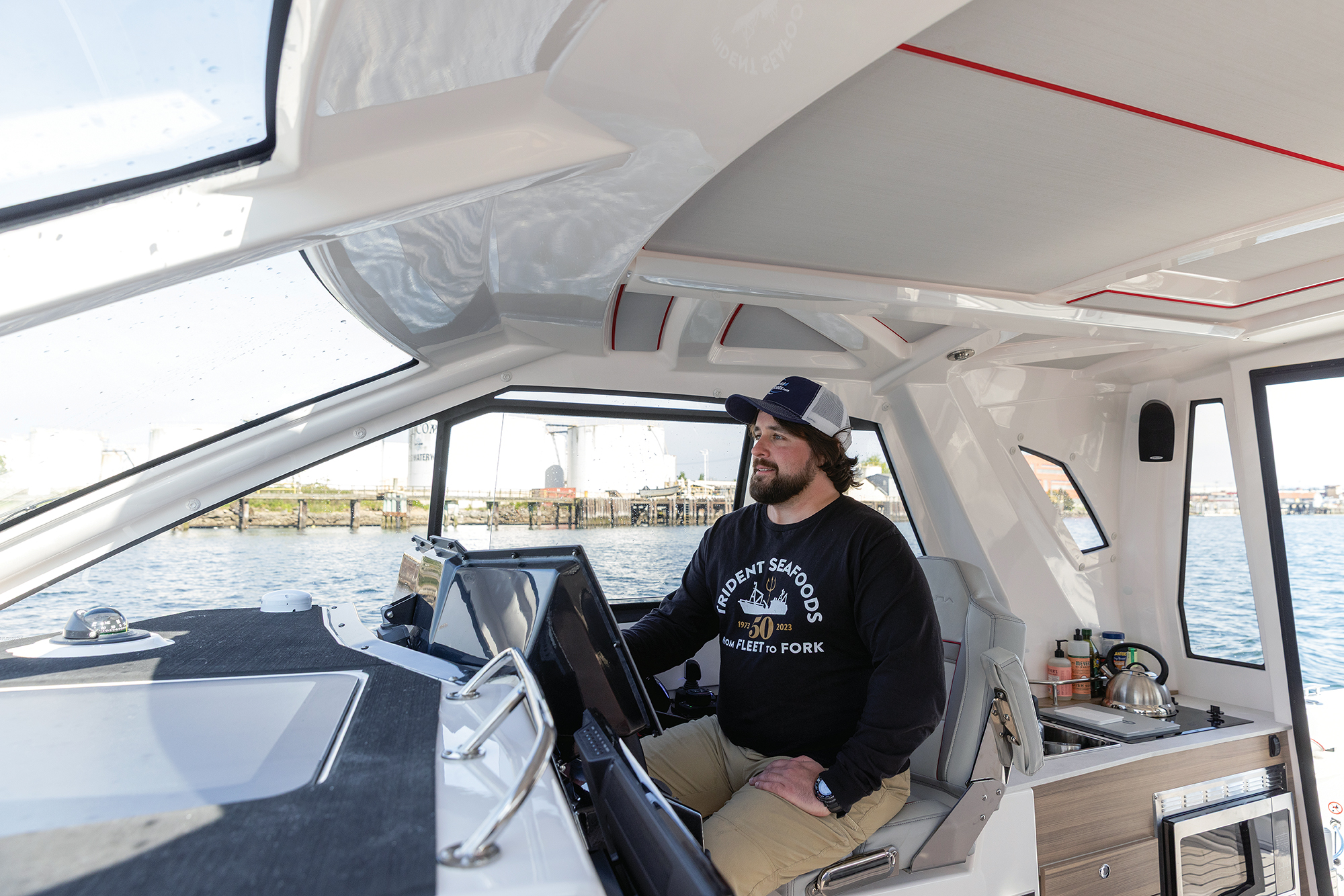
“The Livingston family owns Fluid Motion, which makes these three brands (Ranger Tugs, Cutwater, and Solara),” explained Sam Bisset, vice president of marketing. “Dave Livingston is the one who developed the Livingston dinghy in the ‘50s. Dave would take John and his brother [Dave Jr.] and sister to the San Juans from West Seattle in a Livingston 13 with a camper canvas on it.” Dave Sr. always owned the first hull of every boat model and took it cruising with the family. Current Fluid Motion President John Livingston grew up on these Salish Sea and British Columbia adventures.
“They have some amazing stories of the shenanigans they got into during those years,” said Bisset. John’s 84-year-old father Dave is the head of engineering. “He’s still in the shop every day…when you look at these clever spaces, especially on this boat, this is Dave’s 60 years of experience designing boats and his obsession with always besting what’s out there—and besting himself.” The S-310 SB I hopped onto will be cruised by the Livingstons all summer in a ritual of trial, error, and fun times that goes back generations.
On the production side, all three Fluid Motion brands are built in Washington state. By unit volume, they are among if not the largest producers of fiberglass boats west of the Mississippi. The “buy local” Pacific Northwest ethos isn’t just for hippies and fresh vegetables—Fluid Motion does everything they can in-house.
“We’ve had a big focus on vertical integration of the past eight years, really,” explained Bisset. “We do all our upholstery in house. We do our windows and doors in house. We bring in raw aluminum extrusion and we weld, bend, powder coat, and all that we do in house. That’s all part of the value here.” Solara as a brand was launched just three years ago and already offers six models at the time of this writing. Three of those are on the 31-foot platform: a center walkaround, a sport coupe, and the sport bridge. The S-310 SB debuted at the Palm Beach boat show earlier this year.
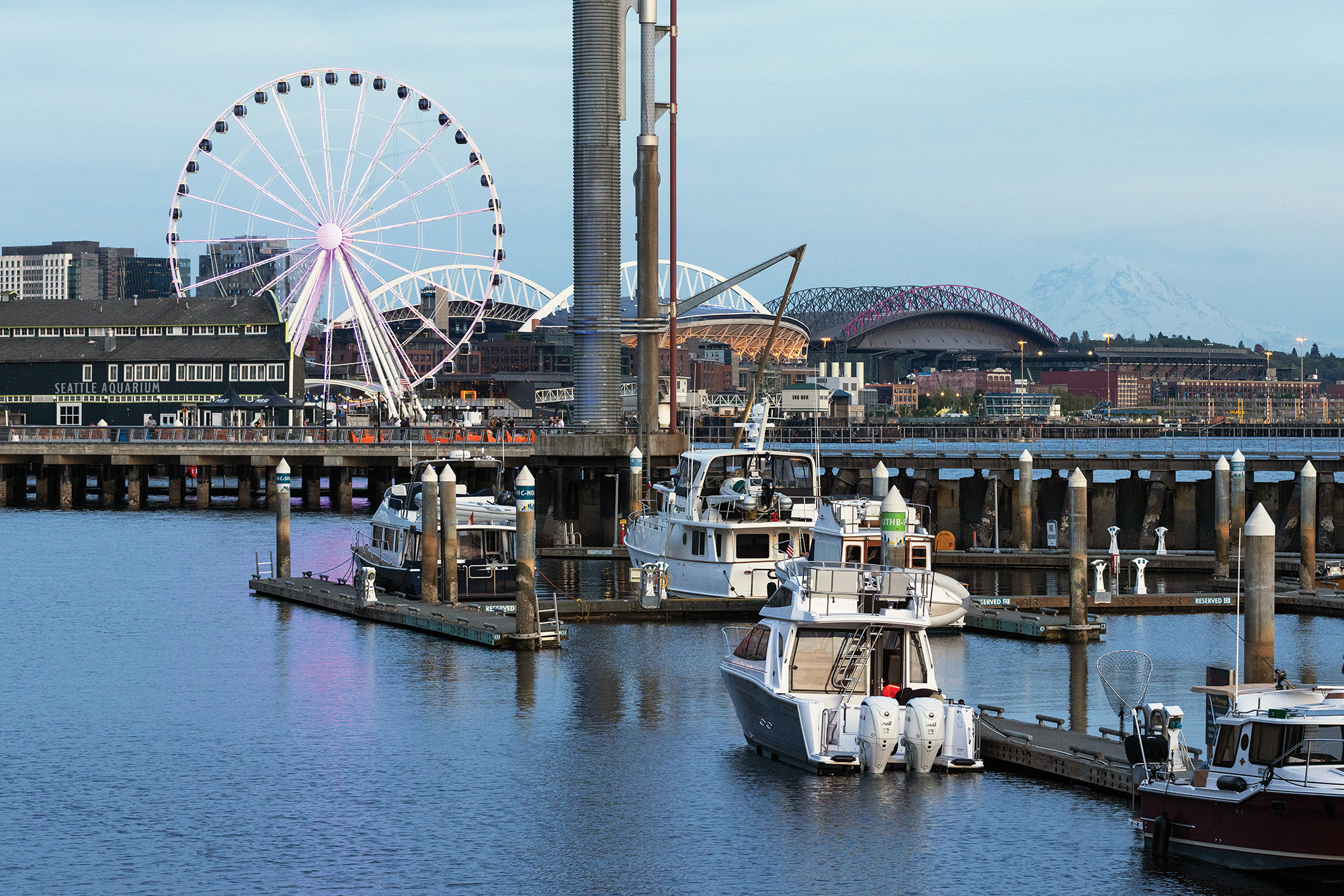
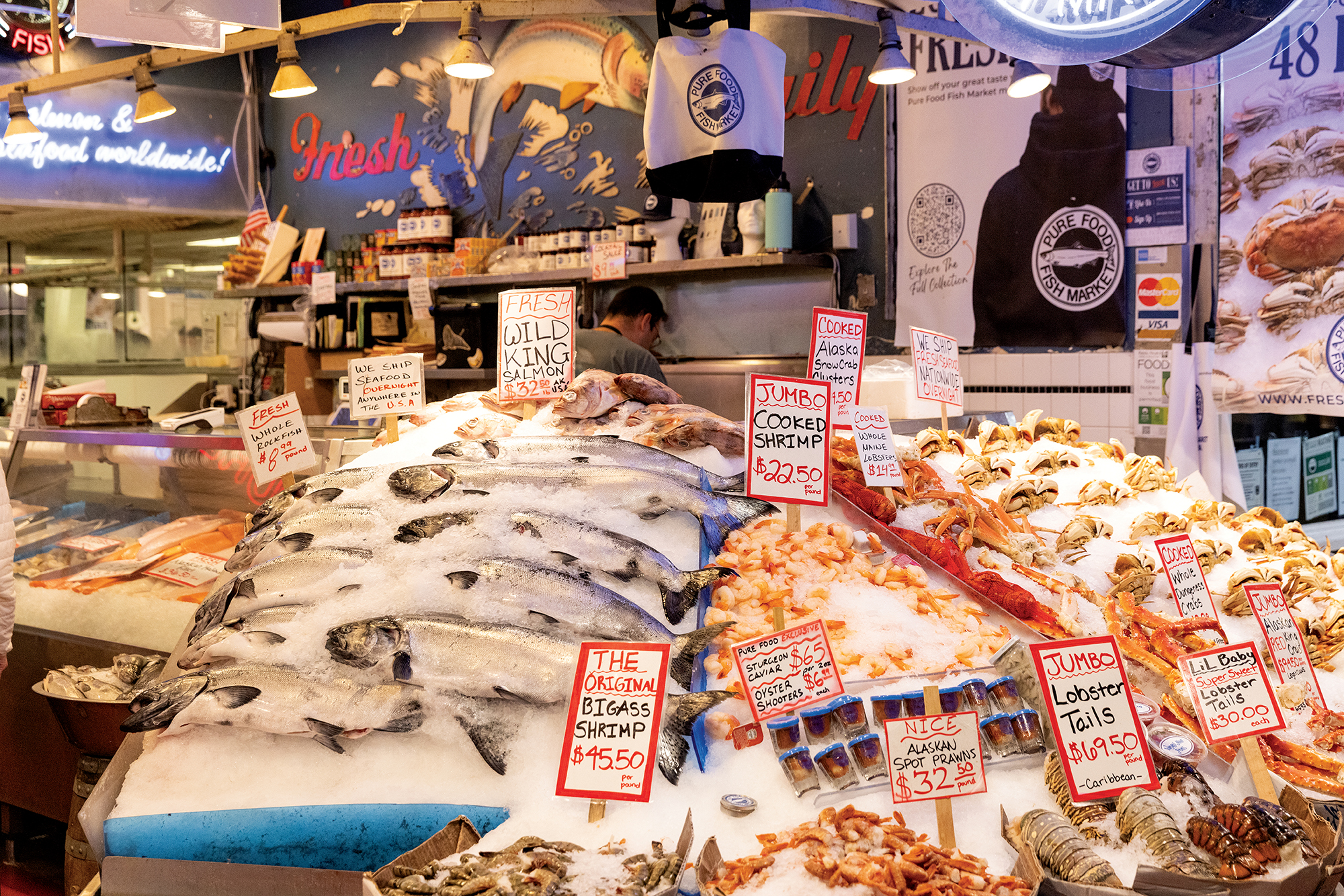
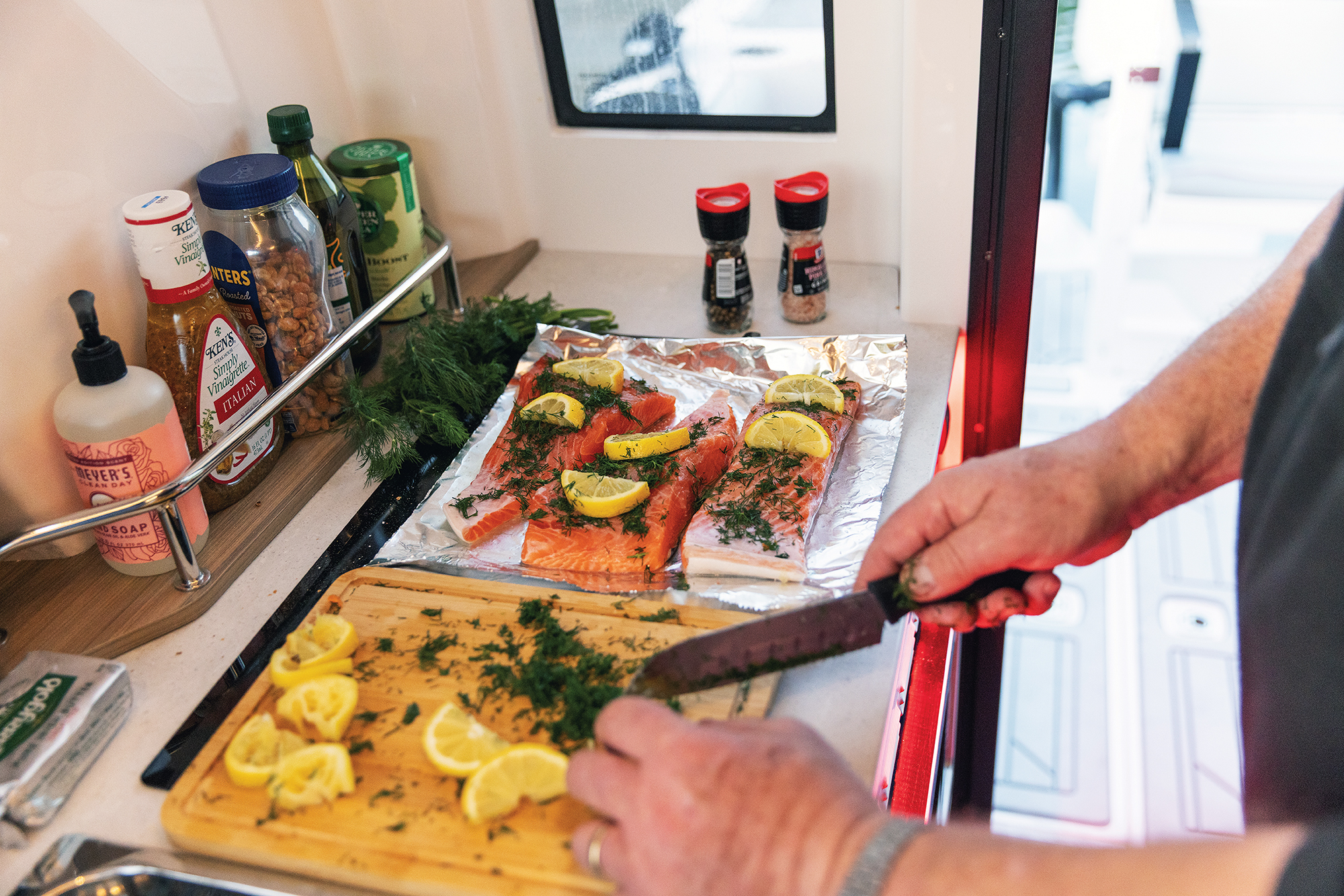
We cruised into downtown Seattle’s Bell Harbor Marina aboard the S-310 SB with a mission to get dinner fixings from Pike’s Place Market. The world-famous waterfront marketplace is known for its seafood and we know what we like: king salmon with a side of greens and a bottle of wine. Our crew walked up the hill from Bell Harbor and into the hustle and bustle. Bouquets of flowers. Chatter in foreign tongues. Pat the bronze pig statue for good fortune. When it comes to the seafood, it’s mouthwatering at first sight: crab, oysters, Penn Cove mussels, lingcod and of course, salmon. Dinner in hand, we scurried back to the boat. We had some miles to cross before dark.
Twin Yamaha 300-horsepower outboards revved as docklines were cast and fenders stowed. It was about 17:30 hours and we had approximately 55 nautical miles to go by water to our destination of Jerrell’s Cove. I recommended the mooring gem nestled in a state park and the guys wanted to check it out. We got up to a zippy cruise between 30 and 35 knots and right off the bat smashed into 15- to 20-knot headwinds as we exited Elliott Bay. While this kind of ride is inevitably a rail grabber, the S-310 SB handled it as well as any other outboard boat of this size could. The massive, comfy pilot house took good care of us through the spray.
“The overall concept of this boat is versatility,” said Bisset. “This is a comfortable cruising boat … you’re taking the whole house with you. You have two staterooms; you have a 10-foot beam; but really, it feels a lot wider than that because the cabin’s extended all the way to the outside beam.”
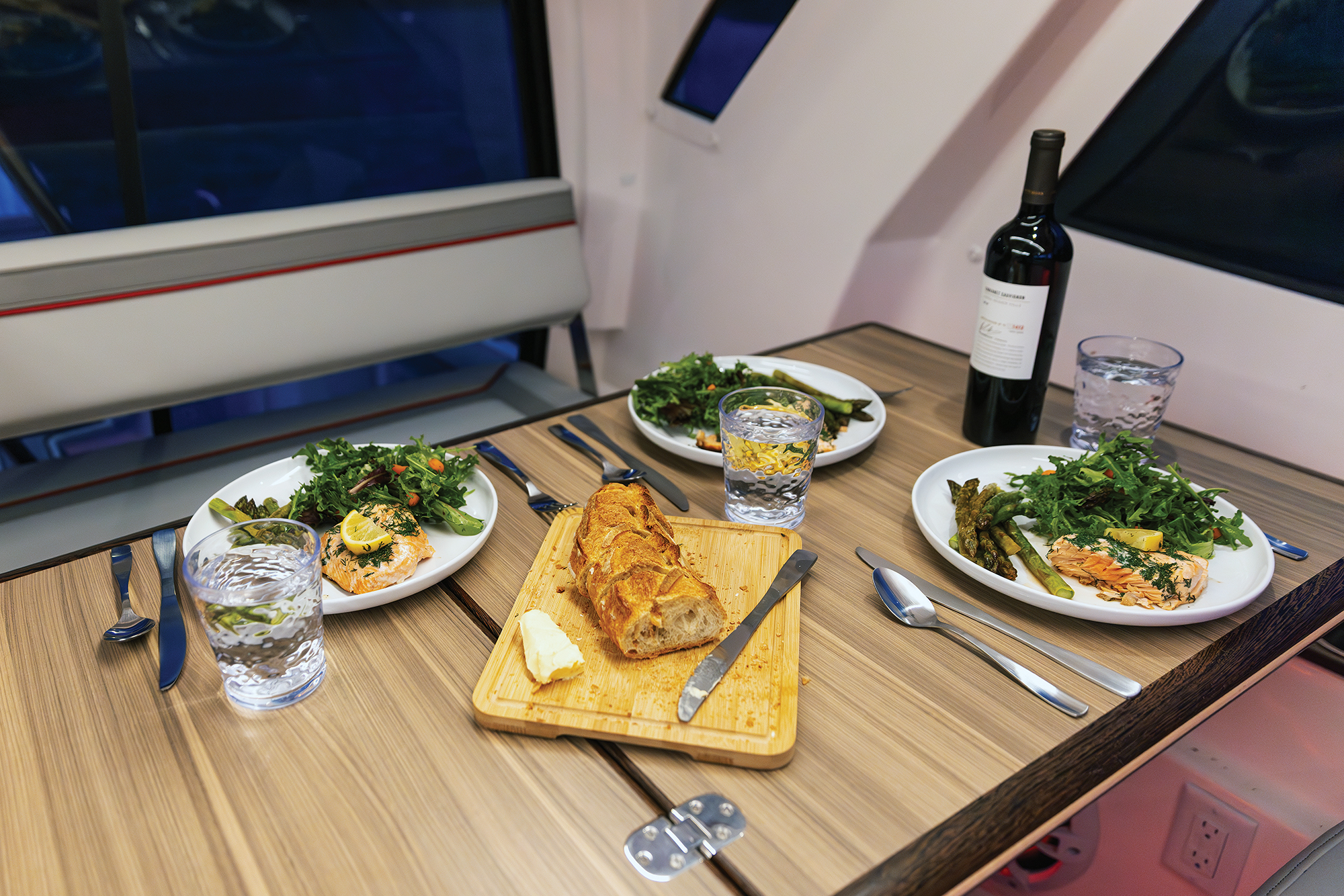
We opted to dodge the chop via the sheltered western side of Vashon Island. The late-afternoon sun cast the Tacoma Narrows Bridge under golden light as we passed underneath. Our progress was thrilling. Here we were passing Tacoma from Seattle in about the same time a car-bound landlubber in rush-hour traffic would take—and actually having a good time of it. We later ran a full set of numbers that put us at a 33-knot cruising speed with a 1.2-mile-per-gallon burn, to yield a hypothetical 216 nautical miles of range. The S-310 SB really carved it up as we turned from south to west, passing McNeil and Anderson islands. Finally, Harstine Island and Jarrell Cove. We tucked in for the night and enjoyed the salmon—the best I’ve had in a good while.
In that moment, the loyal fanbase of fast-planing pocket cruisers like the Solara 310-SB didn’t just make sense—it felt right.
Life finally slowed down a bit in Jarrell Cove and I did a proper walkthrough of the 310-SB. “We put premium everything in Solara—we call it the Solara standard,” said Bisset. Indeed, very little aboard is customizable and a fully-loaded ethos seems to be the guiding principle: Fusion stereo; Garmin electronics with aft and bow cameras; remote control, and dual MFDs; Helm Master trim assist; joystick docking; a big flatscreen TV. You really do have to refer to the manufacturer’s website for all the goodies. “Most places, you see a boat, you see a price, and then you start adding options and it’s like racking up one charge after another.” Bisset added. “We’re trying to avoid that.”
Bisset framed the philosophy of this build in terms of zones.
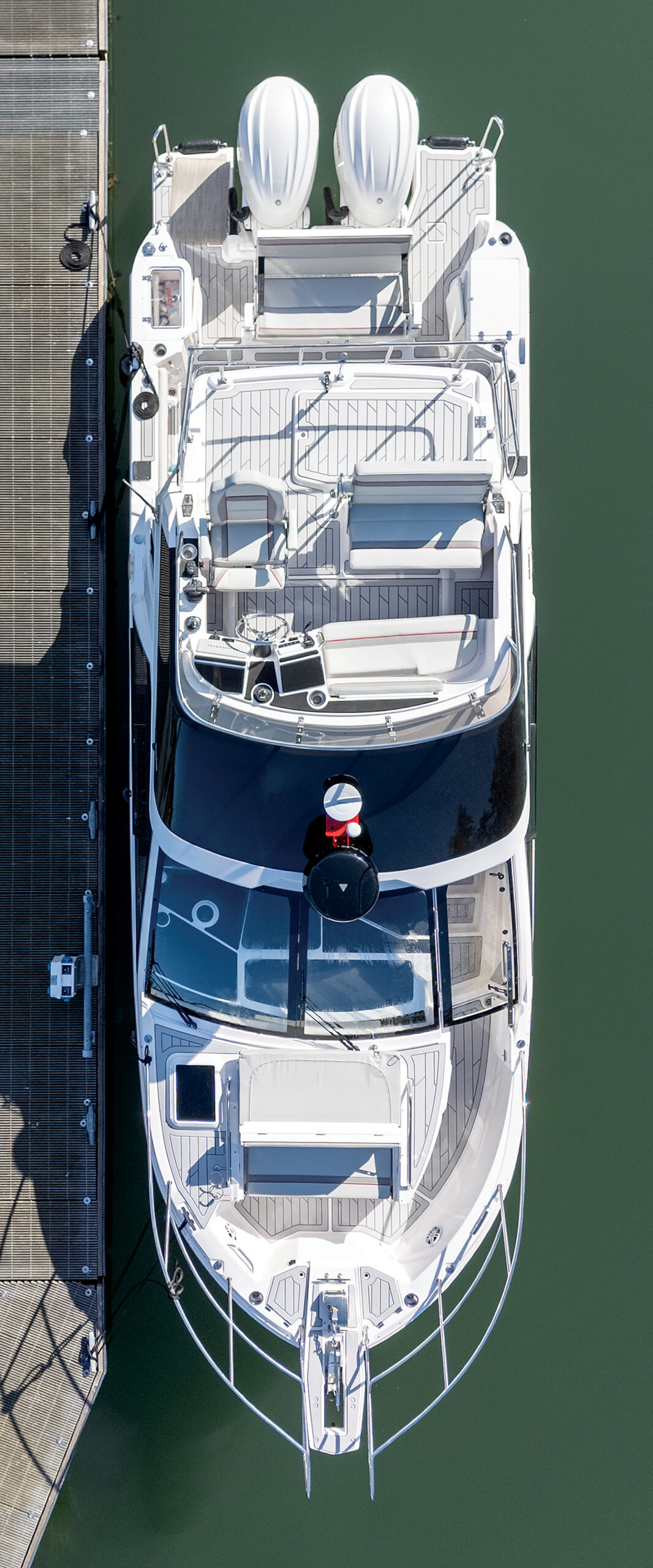
“When I think about this boat, I think about all the different zones,” he said, identifying them as the cockpit with flybridge access, full-beam cabin, and foredeck. It’s easy to imagine anywhere from two to half a dozen friends in any of these areas. “There’s three of us guys. We have been living on this boat and we can pretty much stay out of each other’s way even though it’s a smaller footprint of a boat. Part of that is because of the different zones.”
What ties it all together is the continuous path that gently curves from stern to stem. I’ll dub this walkway “el camino.” It technically starts way aft by the outboards at the compact swim steps on both sides of the engines. These water- and engine-access points are super functional both for recreation and for port and starboard boat access from shore. What initially appears like a sort of bench-high barrier in the cockpit is actually a clever Swiss Army-style seat that can be arranged in a number of configurations. Naturally there is a lot of cruiser-level stowage back here, notably under the cockpit sole. I stored my inflatable paddleboard down there and took it for a spin during the quiet morning hours after our overnight. My light-touring 11-foot Paddle North SUP is a bit cumbersome when you’re inflating in the cockpit, but that’s hardly the boat’s fault. If you want to go paddleboarding like I did, you’ll figure it out and not complain.
Access to the flybridge is up a set of stairs through a hatch. I’m not sure if I’m in love with the hatch as during rough seas, my imagination keeps imagining the thing shutting on my noggin if it’s not locked down. Regardless, the flybridge is an amazing feature for a boat of this size. The three of us were happily perched up there for much of our trip, soaking in the sun. It’s not particularly fancy, but why would it be? One sophisticated and surprising element of the flybridge, though, is that the whole thing actually cants down and forward several inches if needed for clearance when trailering. Making the boat comply with trailering specifications is part of the Solara pitch, after all.
One final note on the aft zone is that the aft wall of the cabin is mostly glass and opens into the salon. The bench seating within can also adjust to face astern, blending the two zones. Add on all the goodies: electric grill, aerated livewell to starboard, hot and cold freshwater shower, and more. According to Bisset, every boat comes with downrigger plugs and pads and they offer an outrigger package that’s popular among East Coast anglers. My verdict is that the cockpit in general maxes out the space in innovative ways and deserves high marks. If I bought this boat, initial use of the cockpit would be filled with “ooh, that’s a clever feature” moments.
Moving forward on el camino into the pilot house, for a trailerable boat in this class, cabins don’t come much nicer. The 310-SB holds the second-biggest mid-cabin in Fluid Motion’s roster behind the Ranger 31. Layout-wise, at first glance, things seem fairly standard with a modest galley to starboard, bench seating around a table to port, and a helm forward near the foredeck access. The full-beam layout jumbo-sizes the space with generous headroom and a ton of windows that light up the space. But more features reveal themselves upon second glance—including the aforementioned mid-cabin. There’s a whole cave-style cabin under the table and seating to port. I slept down there and was quite comfortable. Boat builders might hate it when writers call this style of aft berths “caves,” but it’s a smart use of innately tight space, and I’m a big fan. Long live the cave! A section of the seat can articulate up to open the cave, but not when the table is also serving as a berth (a tried and true innovation).
The real star of the show here may be belowdecks—the master suite, reached through a svelte-looking rounded door integrated into the console by the helm. Some folks probably wouldn’t even realize a stateroom was down there initially. But it is objectively massive with 6’4” of head room and an enclosed head. One can arrange the cushions into a large berth or a small table around which the kids could play cards. That a trailerable boat this size has both a flybridge and a stateroom this substantial is simply impressive.
Finally, there’s the foredeck. This relatively small zone is built around seating for four with a padded sun lounge with multiple configurations. Like the cockpit, clever usage of space is the guiding philosophy with an out of the way anchor with windlass and stowage among other cruise-friendly foredeck features.
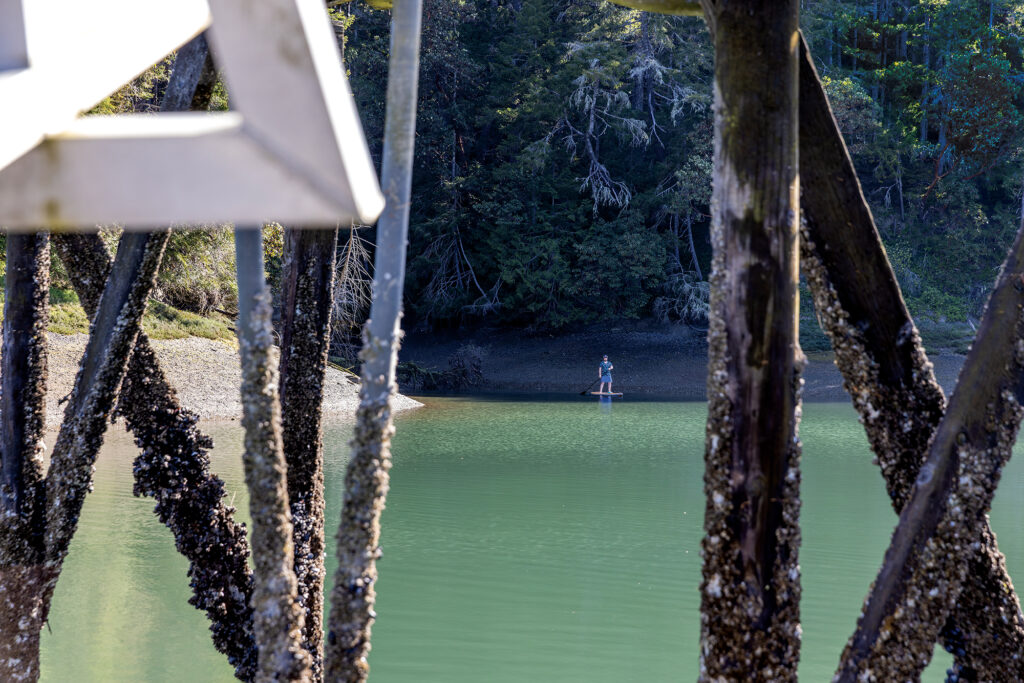
The Jarrell Cove morning was idyllic as I finished a paddle, playing peekaboo with a curious harbor seal. We took our coffees and schemed our return to civilization.
“Our goal is, we say we’re not selling boats, we’re selling fun,” said Bisset. “That’s what we’re doing. We want you to have the most fun using this boat at the best value … and not just versus other boats. You can have more fun with this than an RV, more fun with this than traveling to Europe. You’ll have more fun with this than overlanding. That’s our goal, to have this be the ultimate in recreation.”
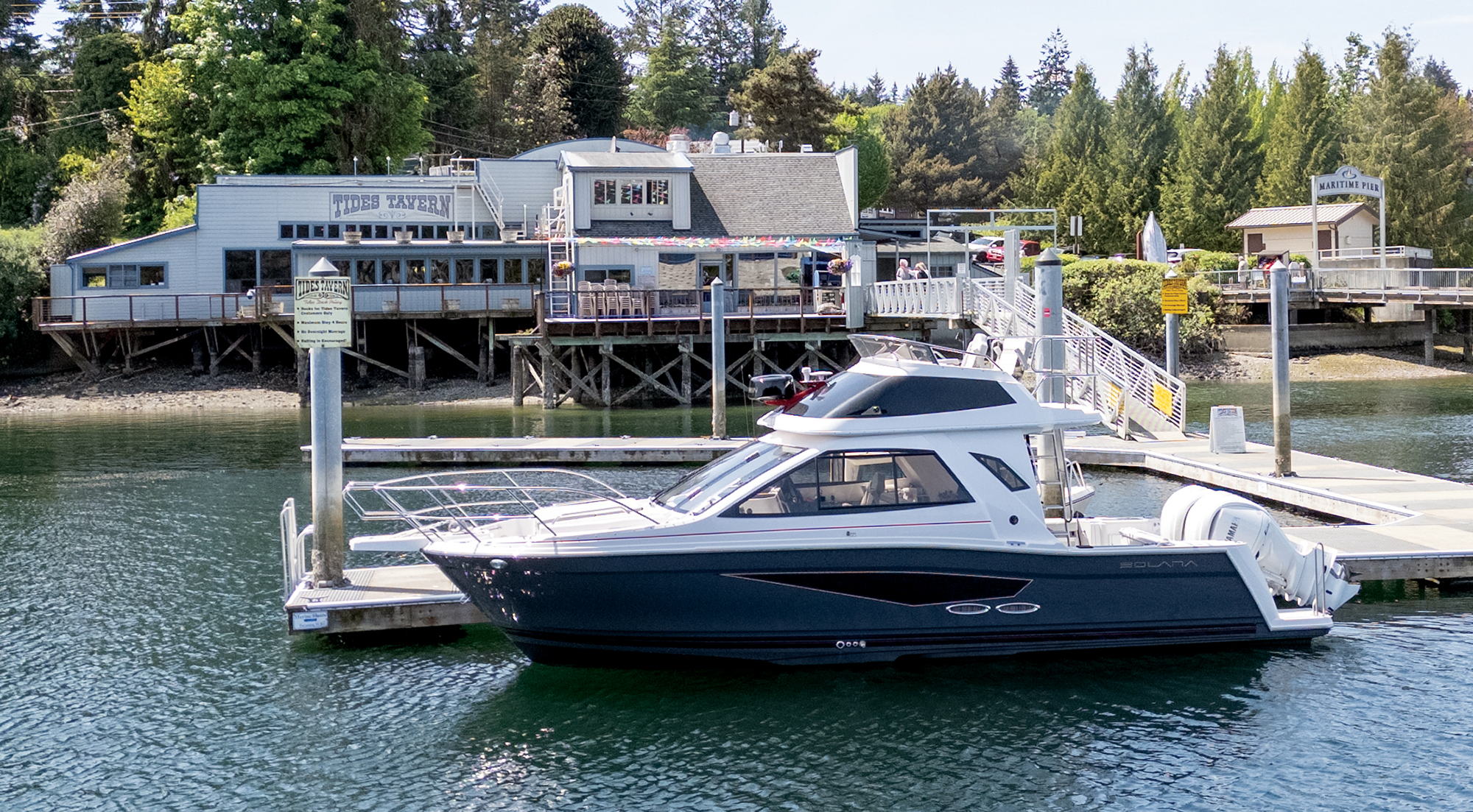
The ultimate testament to the Solara S-310 SB is that we took our sweet time getting back to Seattle, making as many stops as possible. We bopped into charming Gig Harbor and the Tides dockside restaurant for lunch. Tacoma was next, where I played with the joystick steering among the maritime fleet of the Thea Foss Waterway. Just for the hell of it, we zipped up Quartermaster Harbor of Vashon Island dodging crab pots and getting a look at the place. The winds came back up as we approached Seattle and it was a proper slam into 15- to 20-knot wind waves again—all of us laughing and taking it in stride from the cabin, swapping stories.
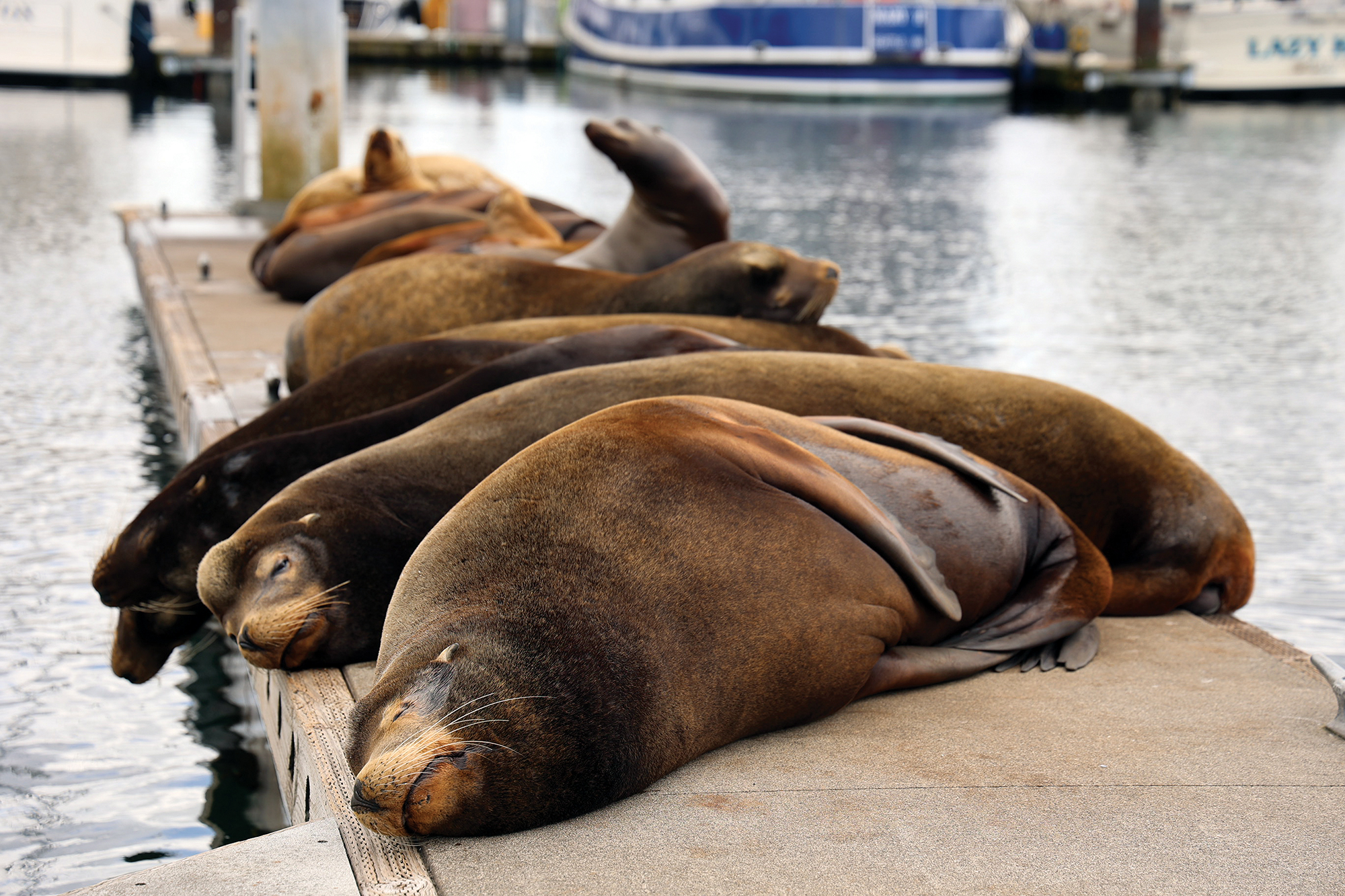
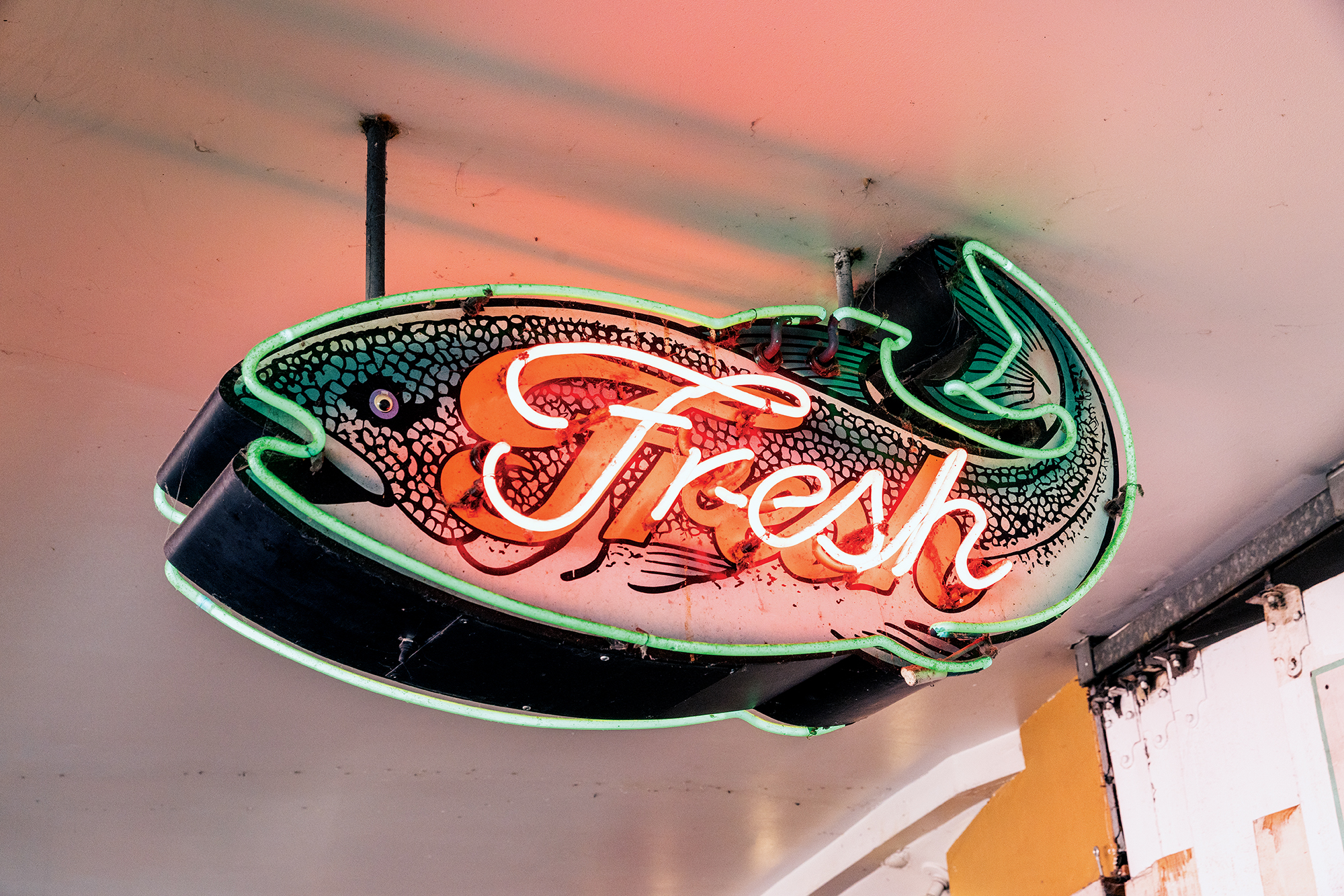
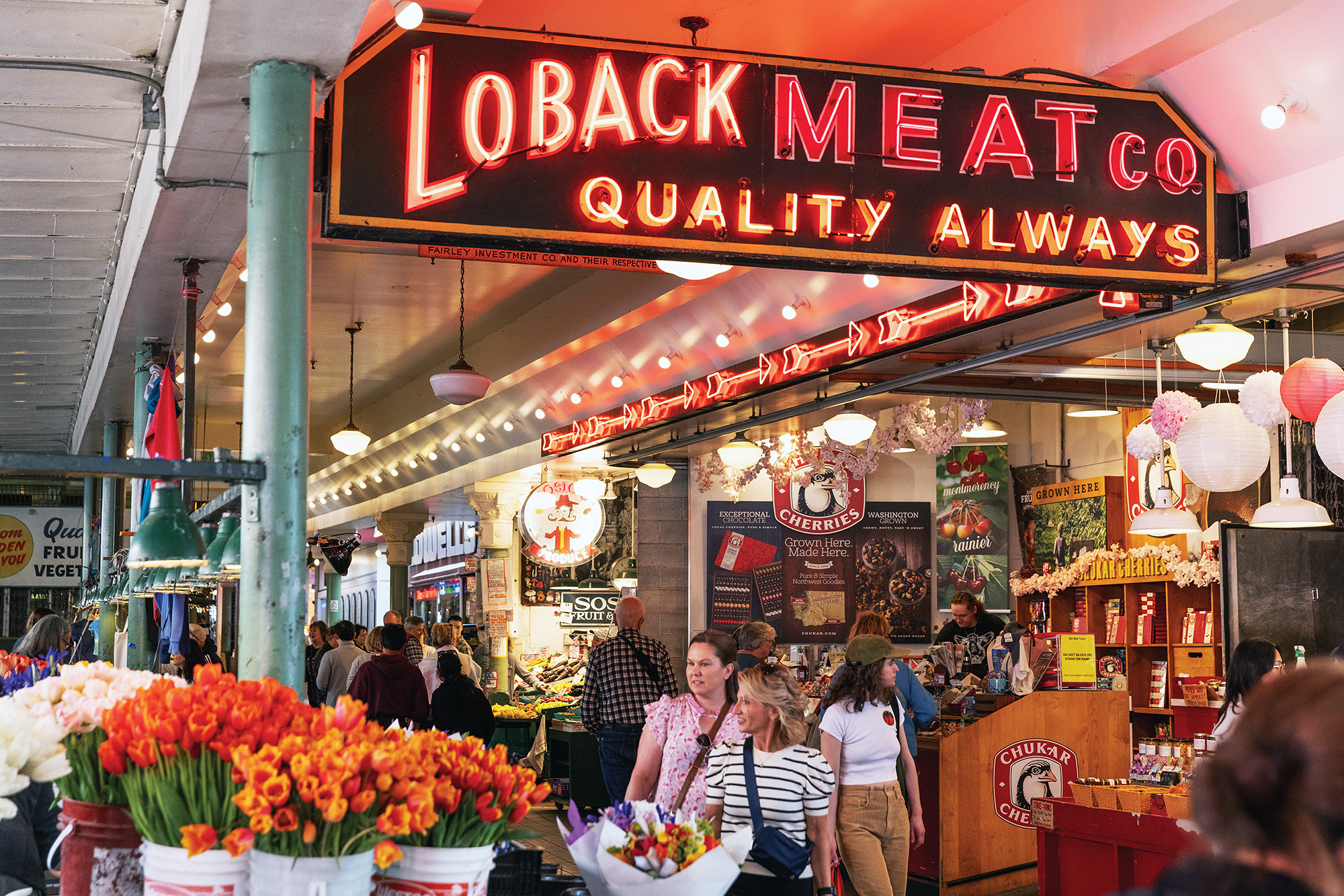

“Orcas!” Bisset pointed. Sure enough, a pod of half a dozen or so individuals charged right at and then past us. Transients on the hunt for seals, most likely. The sun started to set as we made the turn into Elliott Bay and the Seattle skyline that we’d left behind yesterday.
Bisset’s goal to not just sell a boat, but an experience competitive with any and all recreational options was being proven in real time. The Solara S-310 SB joins the ranks of Fluid Motion’s fast-planing, trailerable pocket cruisers as a worthy addition to the cause. I have a feeling John Livingston is having a blast aboard her as I write these words. What better proof of concept is there?
Solara S-310 Sport Bridge Specifications:
LOA: 33’10”
Beam: 10’
Draft: 2’1”
Fuel: 200 gal.
Water: 41 gal.
Power: 2/300-hp Yamaha
This article originally appeared in the October 2025 issue of Power & Motoryacht magazine.