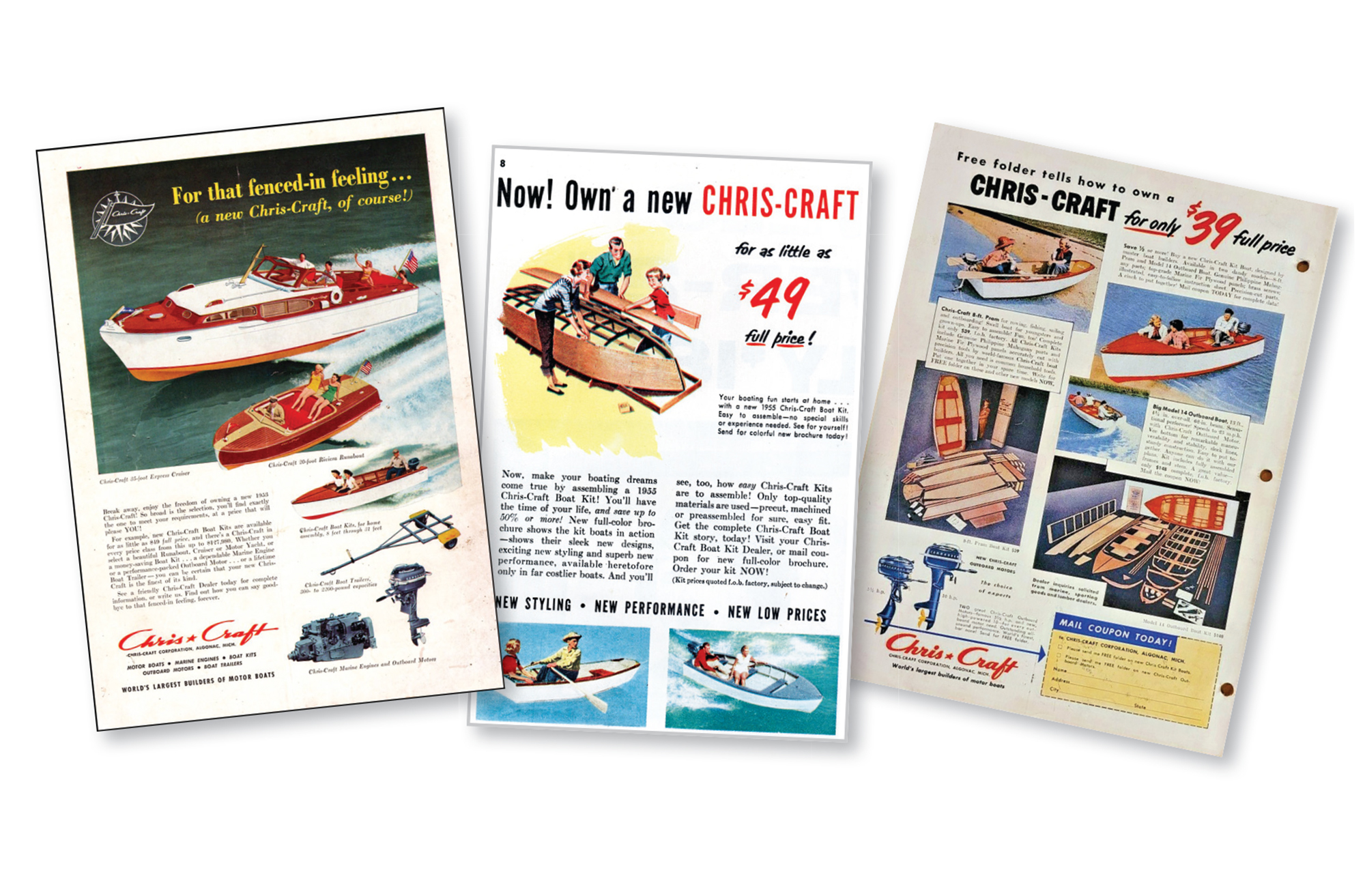
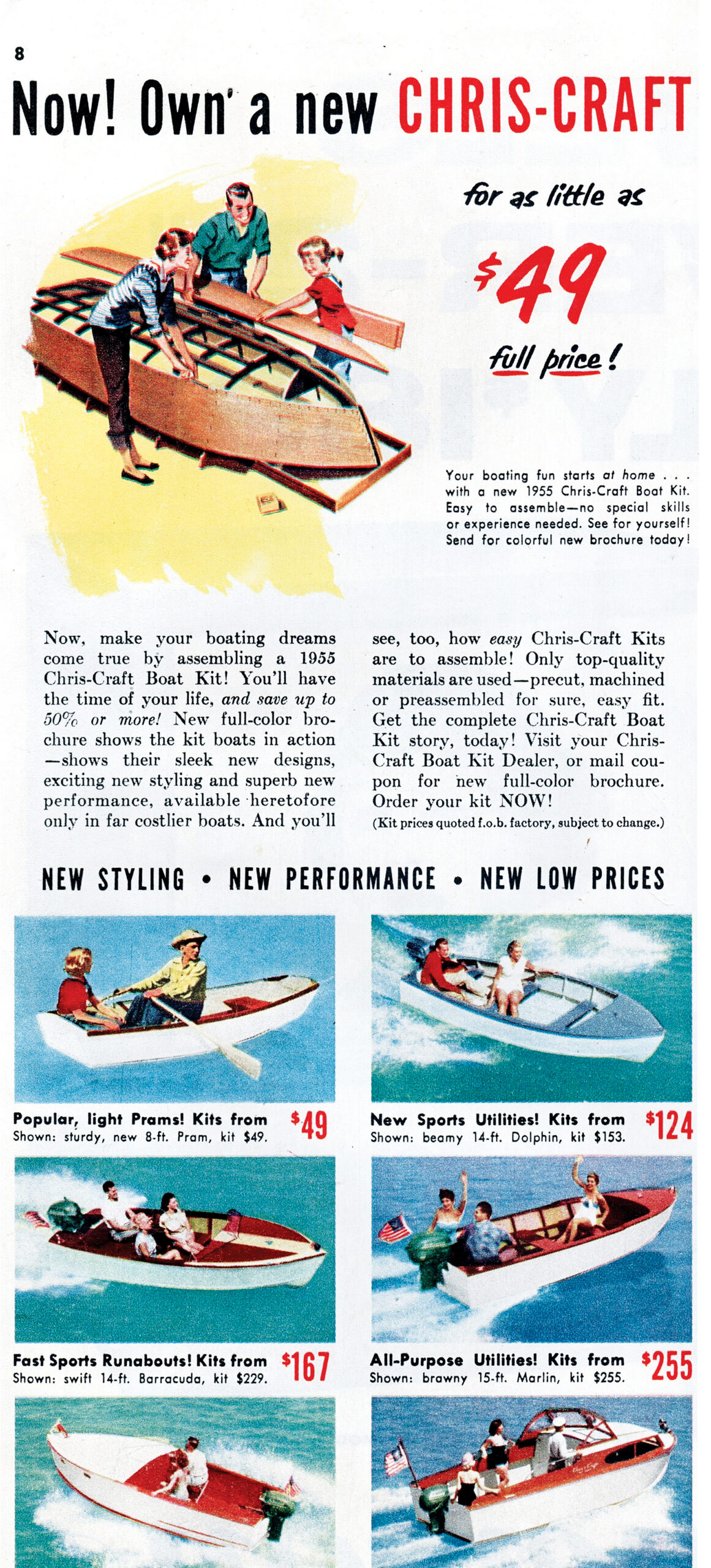
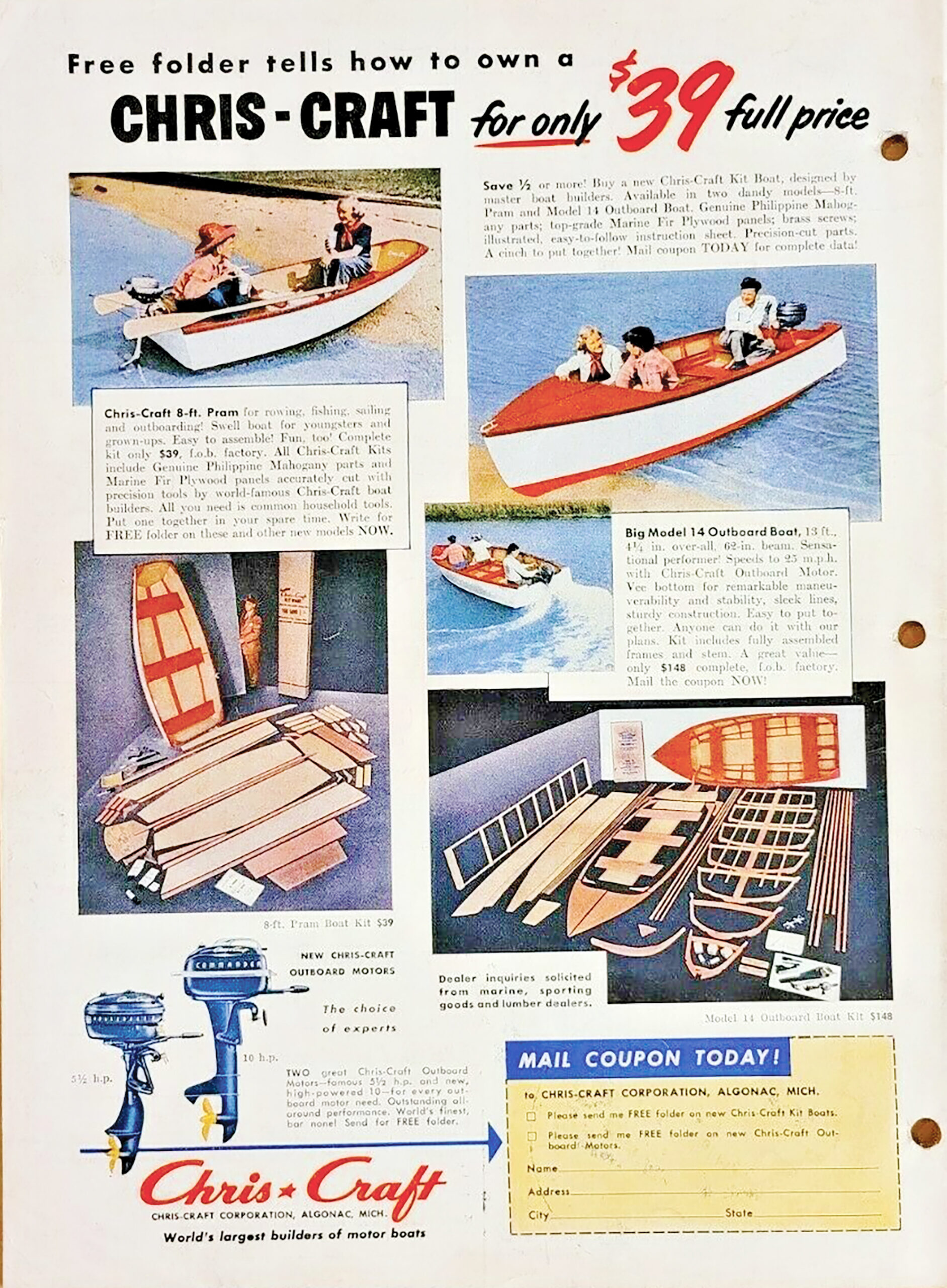
If you wanted a Chris-Craft back in 1950, you were buying a vessel made of wood. But then, as now, the boats weren’t cheap. What if it had to be a Chris-Craft, but you lacked the funds? Well, starting in 1950, you and the family could Chris-craftsman one from a kit. According to James Shotwell, who’s pretty much the guru of these kit boats, Chris Craft started the project as a way to reuse leftover wood from construction of bigger cruisers. Kit boats as a genre weren’t new. What was new post World War II, was quality marine plywood whose adhesives didn’t disintegrate when exposed to seawater. Big ply sheets meant no laying up narrow, leaky planks. Thus, Chris-Craft kits came with a frame of precut wooden ribs and stringers with ply secured via screws and a durable putty. The kits included everything. They weren’t the easiest builds, but, Shotwell said, what young postwar veterans lacked in funds, they made up for with practical skills.
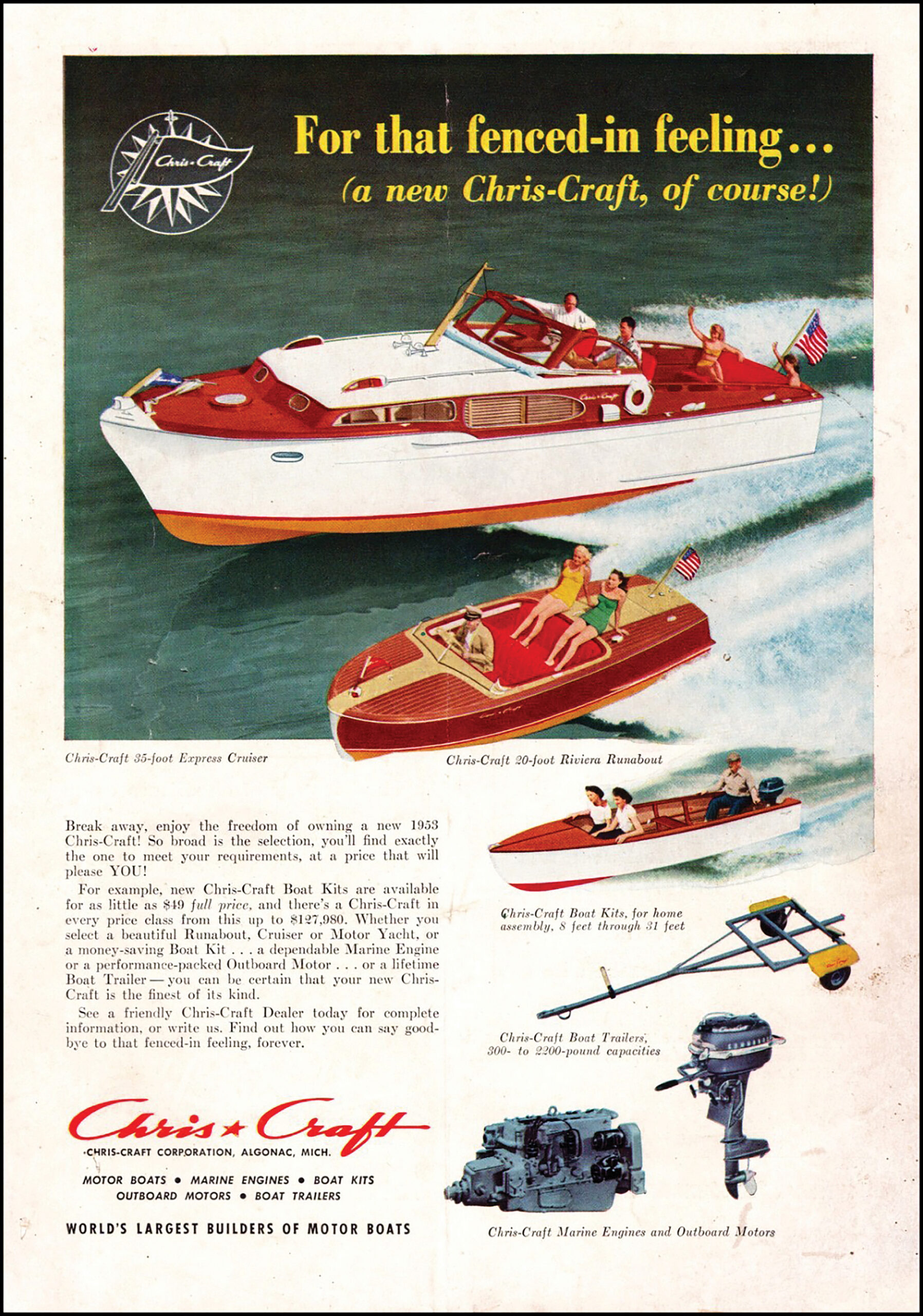
These kits proved so popular that Chris-Craft soon opened a Missouri kit factory. By 1954, a full DIY lineup included a $49 eight-foot pram (with $67 optional sail kit), a $266 16-foot outboard runabout and even a gorgeous $1,995 31-foot express cabin cruiser. During their eight-year run, Chris-Craft sold 93,000 of these kits. By 1958, the self-built market dropped off, so Chris-Craft started assembling the kits themselves, “and that was the start of Cavalier boats,” said Shotwell.
In the early 2000’s, Shotwell dreamed of reproducing these kits. Aided by the grandson of Chris-Craft founder Chris Smith, he tracked down unbuilt kits and reverse engineered ones from actual boats. Launching James Craft boats, his 8 to 16 foot kits were exact Chris-Craft replicas, but epoxies kept them watertight. James Craft attracted a buyer a few years later, but, Shotwell said, the buyer lacked the passion to keep the project afloat. “There’s a lot of talk about getting youth involved in the trades,” he said. “But even 20 years ago, we found it very difficult to get kids interested enough, long enough and with enough devotion to actually complete a project. It’s just a different generation than when these boats were originally bought. Surprisingly enough, most kits were sold to grandparents with the dream of building them with their grandchildren or children. But they ended up building them primarily themselves.”
Today, you’ll still find a few proud kit-build owners on Chris-Craft forums. And you have to wonder: In today’s world, where AI is upending so many “front of screen” fields, where trades are gaining renewed focus, and where a new 16-footer can easily cost $100,000, if there might be a new market for these kits-. Glen-L, a long established company, will sell you plans and full hardware to DIY yourself a boat, but they don’t offer the pre-cut wood. “And Chesapeake Light Craft in Annapolis,” said Shotwell. “They do kayaks, a couple of small boats. But as far as the type of boat that was popular in the 50’s that were the basis for Chris-Craft—to my knowledge there isn’t anyone doing it now.”
Shotwell’s retired, but he still has a few kits on hand. It gets you to thinking…
This article originally appeared in the February 2026 issue of Power & Motoryacht magazine.