
Between Zipwake’s new Pro line in Sweden and Sleipner’s Vector Fins in Norway, Scandinavia is rethinking stabilization technology in a big way.
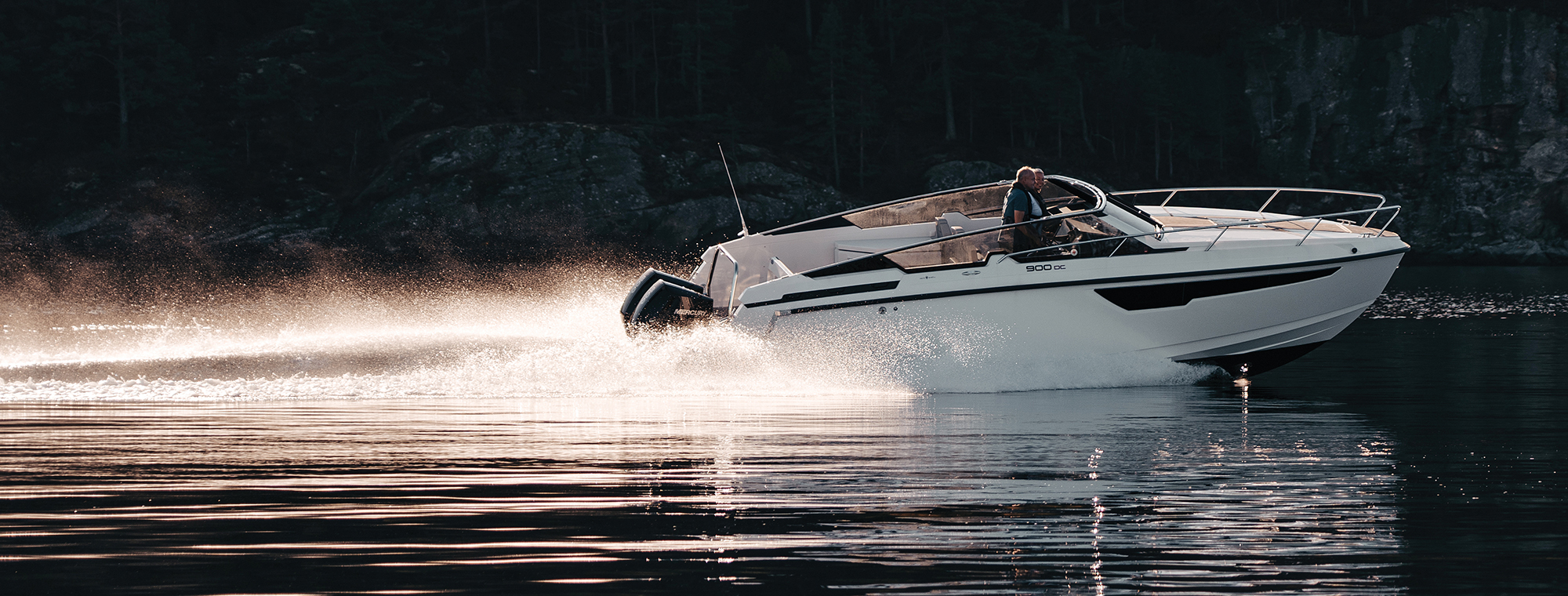
Trim tabs, interceptors, and various vessel stabilization technologies are having a watershed moment. Trim tabs have long stood as the sole addendum to planing hulls for nearly seven decades. Leveling both pitch and list, they make for a faster, more pleasant, safer, and more fuel-efficient ride; they work wonders—when used correctly.
When used incorrectly, things can get wonky, even dangerous in some cases, but mostly, you’ll just slow your boat down, ruin your ride, and burn more fuel. Then there’s the flimsiness aspect. A seasoned boater isn’t likely to damage their trim tabs, but unwitting passengers have been known to use them as boarding steps, and they can be a bit of a nuisance when fishing.
The first trim tabs were simple mechanical apparatuses implemented into German aircraft wings during World War I. These were linked to levers and pulleys and served two basic purposes: balancing control during flight and serving as backup controls for damaged aircraft.
The nautical trim tab came along in 1959, thanks to Bennett Marine, and it was much closer to the hydraulic systems we see today. Becoming a tremendous advantage as planing hulls and larger-horsepower engines came into play, the same basic design has largely remained the same.
Variations have come along, predominantly in the way of active trim tabs, which are programmed and make live adjustments as a boat pitches, rolls, and lists when underway. Interceptors have become some of the most popular systems, which lower the profile, reduce the number of articulating parts, and eliminate hydraulic cylinders. Up until recently, though, those have been much slower—if more resilient and dependable—than your classic metal plates and hydraulics.
Within the last decade, the Zipwake interceptor has made big headway with an almost shockingly slimline and humble blade wedged between a pair of plastic plates. The initial models, designed for boats between about 20 and 60 feet, were programmable to a point. Some more discerning skippers, particularly those adept at operating traditional trim tabs, found them a little sluggish to respond. Others, less technically inclined, found them tremendously helpful.
Now comes the Zipwake Pro. It is almost aesthetically identical to the original model, but five times faster with a reinforced pinion and with active pitch as well as active roll control. I recently found myself in the Swedish summer resort town of Marstrand, slightly skeptical of how well this new Zipwake Pro E Series would improve a ride better than tried-and-true trim tabs. With the town eerily but understandably vacant on a typical North Sea spring where winds oscillated between light and variable to gusts over 30 knots, I felt a damp chill to my marrow, despite being informed that the sub-50-degree-fahrenheit surface temps we were currently experiencing constituted a record “marine heat wave” for the region. Go figure.
Freshened up and leaving the harbor with the more blustery side of that day in our teeth, the twin 440-horsepower Volvo Penta 600s had formidable trouble getting our test boat, a 44-foot Targa tug, out of the hole without the boat’s new Zipwake Pro 600 E series system engaged. The bow swung way up in the air, leaving no view of the horizon and a deep bruise behind us at 12.5 knots, or just under planing speed, for many seconds—an eternity, in fuel-burn speak. Engaging the system from that position and speed, the bow dropped almost immediately, and we were on plane at 15 knots. This registered to me as something a skilled trim tab operator might achieve in similar time, but perhaps not as precisely. I was impressed, however I wasn’t yet sold. The price tag for this system, starting at $3,500, is not easy to stomach when your average pair of hydraulic trim tabs can be purchased and installed for as little as $1,000.
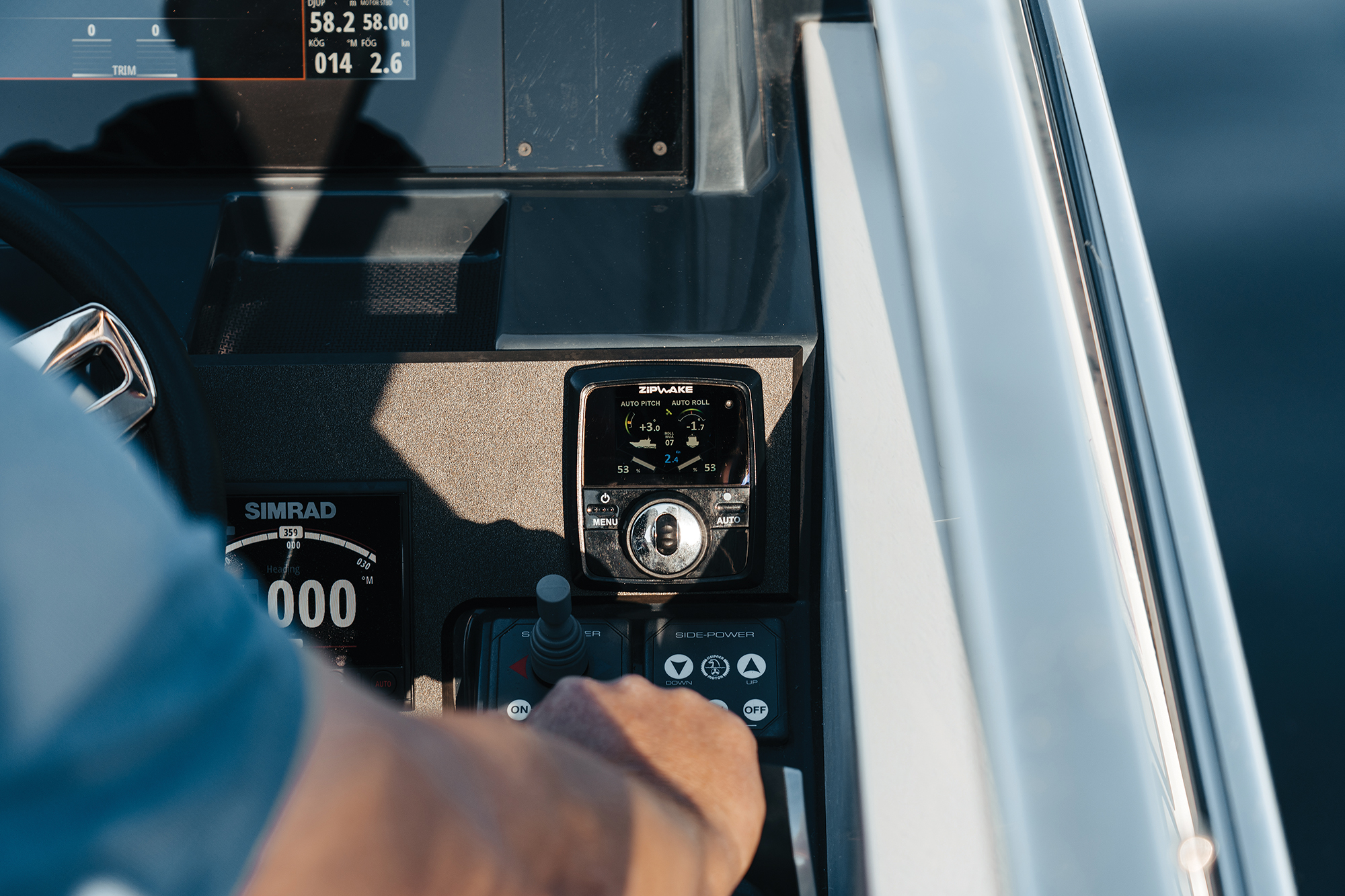
Coming out of the hole with the Zipwake Pro 600 E system (a 600-millimeter pair of interceptors) fired up and the blades set to automatic, we hit a cool 19-knot cruise in no time and never lost sight of the horizon. This, in a broad sense, is what you can expect of expertly maneuvered trim tabs. Where I noticed a major difference was in turning. The 44-foot tug dug in deeper, as if it were pivoting in place. A clear terrine filled with blue soap sat on the dash serving as a level. An otherwise squirrelly, bouncy series of donuts to port gained instant traction with the system engaged, moving the soap from about a 45-degree angle to a negligible one.
There are several different shapes of blades within the Zipwake family, including one rounded hull model, as well as four straight, three tunnel, and four chine hulled models. These still have to be mounted at a distance from a propeller to prevent cavitation, but they can be much more tightly packed than trim tabs—something that’s becoming more and more critical as people are commonly piling up to six outboards onto transoms these days.

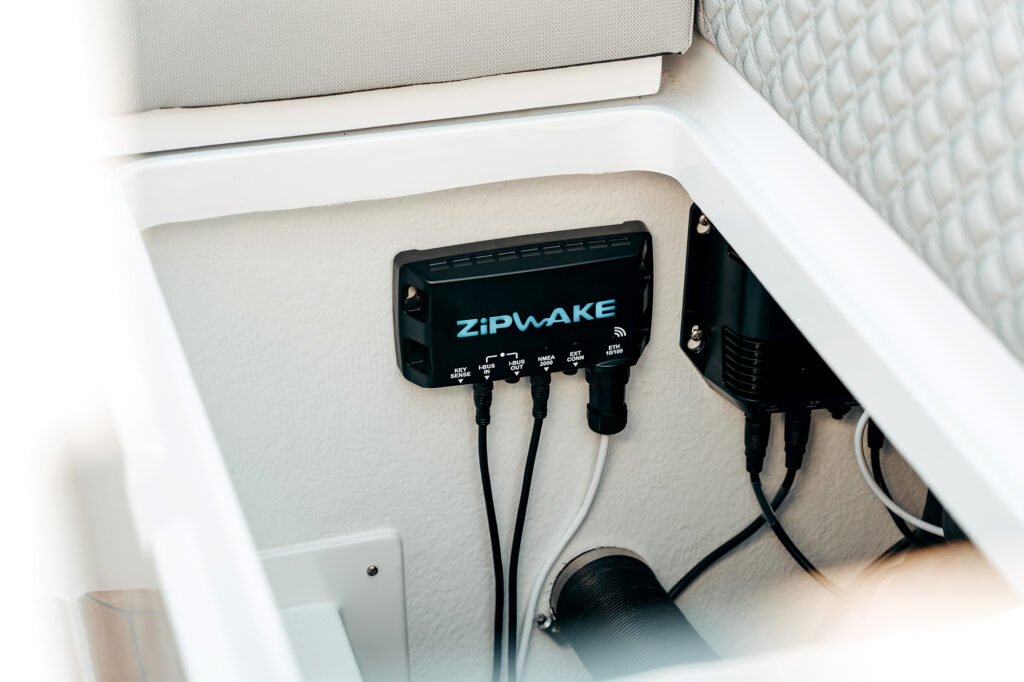
Zipwake’s optional Integrator Module allows you to forego cluttering your console with more panels by configuring controls into your MFD.
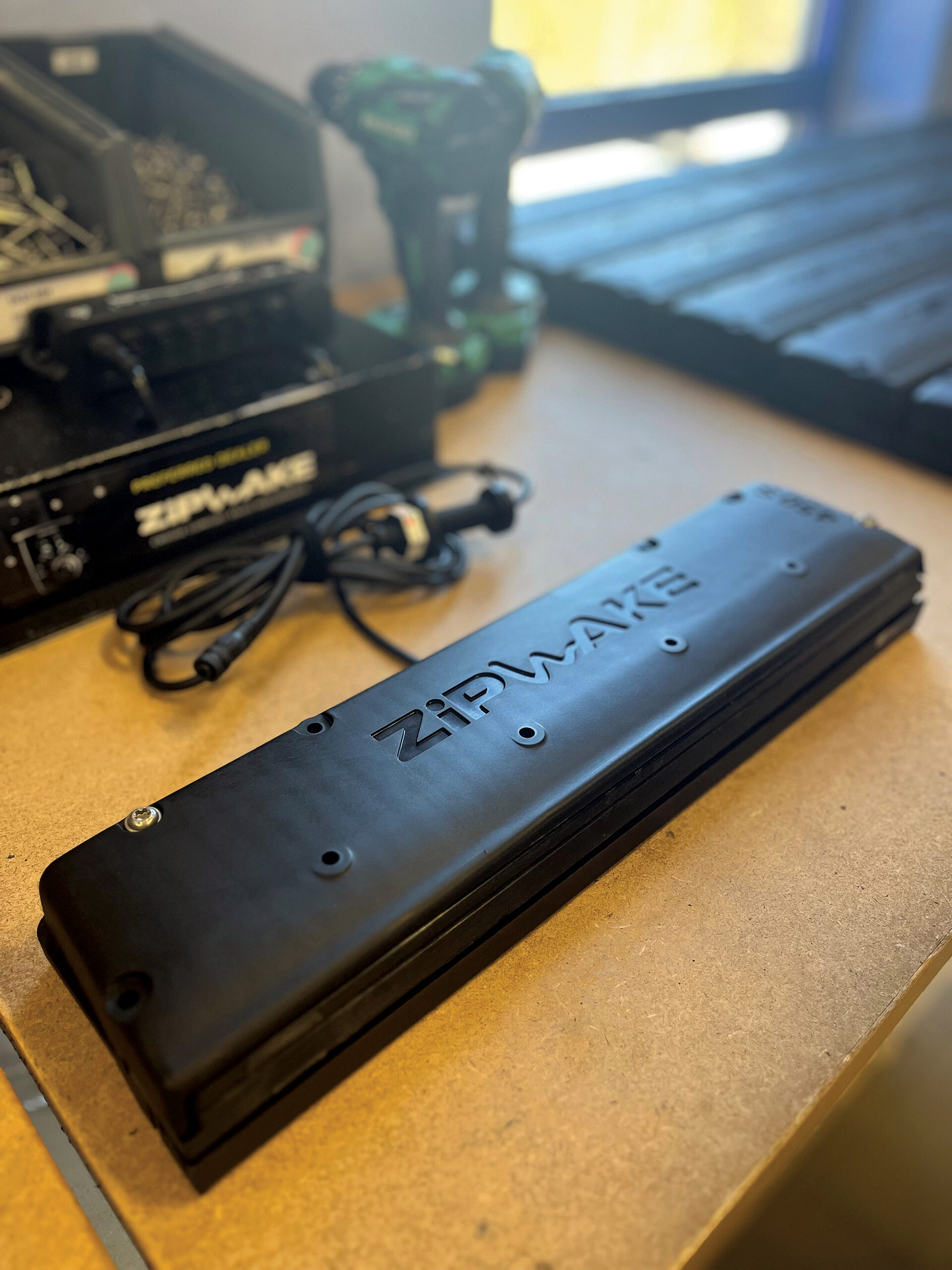
Another positive that I find is that aside from the interceptor itself, there’s no exterior hardware, and there are no pistons or electronics exposed. The blades and the other moving parts (namely just a pinion) are encapsulated within two heavy-duty plastic plates, standing roughly an inch off the transom as opposed to the foot or so trim tabs extend. It certainly makes looking off the transom more pleasant, whether you’re trying to swim and reboard or drop a line. But really, the interceptor a relatively foolproof, automatic answer to very useful but, to many, mystifying, clunky, and easy-to-damage hardware.
If you’ve poked your nose around a boatyard anywhere in the western world within the last handful of years, you’re well aware that Zipwake is far from the only game around. Just as with other interceptor developers, their first endeavors had skeptics—especially from skillful trim tab operators. It’s hard to ignore Seakeeper Ride here, and while the difference between that system and Zipwake’s first model were night and day, it would seem that with Zipwake Pro has caught up—particularly in its slimmer profile.
The question you’re probably left asking is: Should I put Zipwake Pro interceptors on my boat? My immediate answer, with no small degree of snark, would be something along the lines of, “What boat?” Sure, there’s always something else around the corner, but for right now, that something else might just be the Zipwake Pro.
Scandinavian Stabilization
Scandinavia is on a roll with stabilization. And while gyros have blown open the world of stabilization over the last couple of decades, those massive spinning spheres begin losing their effectiveness around the 110-foot LOA mark (unless of course you install multiple units), at which fins tend to be the norm.
While innately more stable, vessels over 110 feet can certainly stand to use a little updated sea-state buffering. That’s where Norwegian-born Sleipner Group, an early two-stroke engine innovator going back to 1908, and a stalwart on the bow thruster market for well over 40 years, seems to have found a solution with its Vector Fins.
Powered by brushless actuators (with motors built in-house that look a bit like drum brakes), the Vector Fins come in various shapes and sizes. Unlike traditional fins that resemble a pair of auxiliary fin keels and are vastly limited in motion, Sleipner’s Vector Fins are curved, looking more like a cetacean’s pectoral fins or a sea turtle’s flippers, or even giant duck feet. You have to imagine that Sleipner took a page out of the animal kingdom’s book.
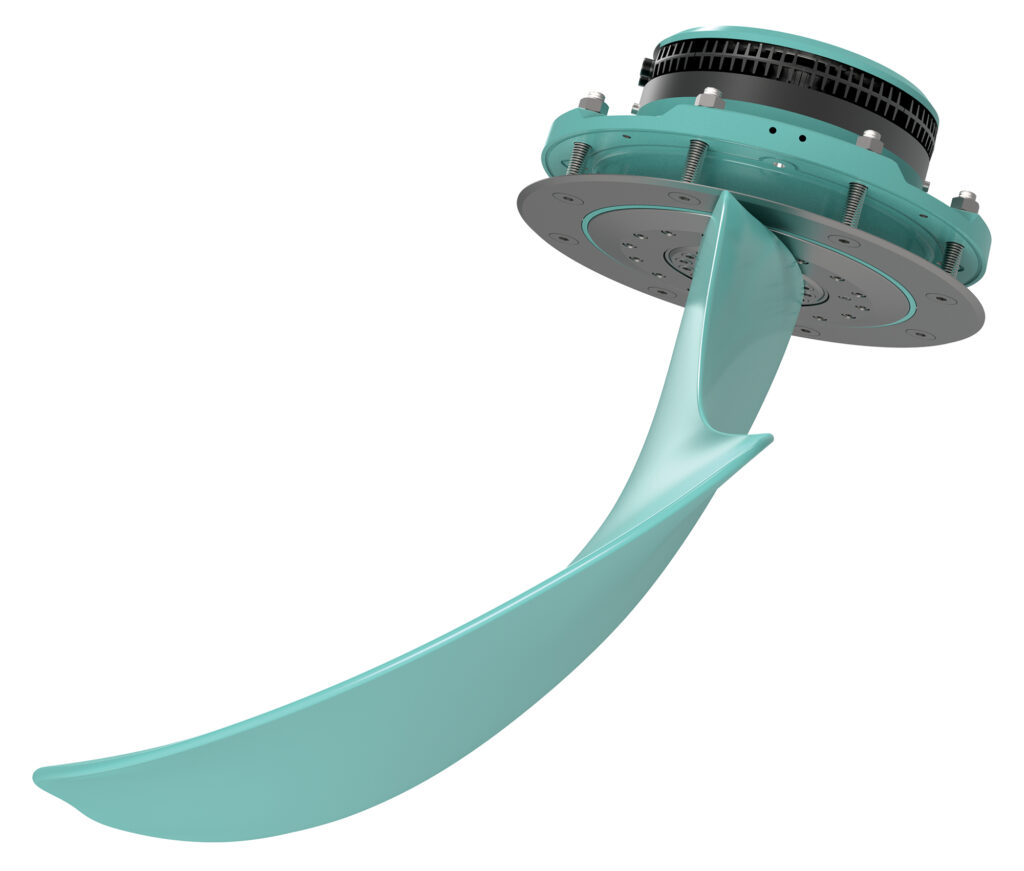
The array of Vector Fins in Sleipner’s catalog is wide, designed not only to accommodate vessels of different sizes, but because there are various shapes and corresponding functions to consider, too. This is where Vector Fins become of particular interest to those with larger boats seeking stabilization at anchor (when trim tabs and interceptors only do so much).
Some models are designed for stability underway, either at planing or displacement speed, and others are meant for mitigating the seas while on the hook, drifting, or idling along. In the middle are more intermediate models that can handle stabilization at idle and underway, like the SPS 40 DC electric stabilizers I tested.
The one thing these large, curved fins do have in common with traditional, straight-edge models, is that you can custom-tailor and strategically place as many four fins along a hull—and no, this is not something you’re likely to want to undertake yourself, no matter how mechanically inclined you are.
Steaming out of Sleipner Group headquarters in Fredrikstad, Norway aboard a custom 20-ton, 56-foot ferry converted into an excursion vessel, the SPS 40 Vector Fins seemed to react to seas more like active trim tabs or the Zipwake Pro interceptors than straight-fin stabilizers.
At first, I found their effects not dissimilar to a gyro. The Vector Fins’ motions are actually informed by a gyro, too, only the gyro is smaller and merely dictates information to the fins, letting them do the work instead. But how could you tell the difference without testing the two systems side by side? It would seem that Sleipner’s team was wise to the likelihood of a marine journalist posing such a question, which is why they installed a Seakeeper 5 on this same vessel.
Drifting abeam to a 2- to 3-foot three-second interval windswell coming across the North Sea, our captain engaged and disengaged the Vector Fins. It was less than 10 seconds before the system was working steadily and I was able to roam the deck with both hands free.
We spent 400 seconds collecting data on our pitching and rolling with the Vector Fins, the Seakeeper 5, both systems combined and no stabilization at all, but I didn’t need any data to discern the difference between the Vector Fins and the Seakeeper. In short, with this boat being well within the size limit of a Seakeeper, each system did its job dutifully to the point where the resulting data was just about nominal. The important distinction to remember, though, is that while there’s overlap between the two systems, the Vector Fins serve large vessels where a single Seakeeper gyro tops out: 115 tons, or somewhere between the 85- and 110-foot range.
Beyond larger boat compatibility, the difference in the Vector Fins’ reaction to seas was curiously palpable, if not clearly better. The Vector Fins somehow seem to react, or rather be already performing the brunt of their duty when, say, a larger wave or set of waves arrives and perhaps don’t have to alter their motion as much as a spinning orb in the middle of the vessel might. Their responsiveness feels as if there was just a split second delay between a wave hitting the hullside and the fins going to work and leveling us out.
While leaning over the side of our ferry-turned-private expedition vessel, I couldn’t help but wonder—despite feeling so naturally fluid and stable—whether these giant fins weren’t prone to snags. What happens when you hit a lobster pot, or debris, or perhaps most regretfully the ground? Entanglements seem like a distinct possibility, and while freeing lines, ghost gear, or some other debris might be relatively easy with a boat hook on some installations, it might require a swim on others—not something you necessarily want to face in open water or aboard a large vessel in heaving seas, where the prospect of being crushed becomes very real. Granted, some rudder and keel designs present worse snagging possibilities.
Just as with boats themselves, there are tradeoffs with these technologies. The nature of your cruising and the waters you ply might dictate a clear answer as to which form of stabilization suits you. The owner of a large, high-speed vessel that makes long hauls, rarely or never intends to navigate inshore shallows and thus keeps hazards at a minimum might opt for the fins. A slower trawler owner might want to keep external hardware and through-hull fittings at a minimum and rely on a gyro. That’s especially true if they’re spending a lot of time in small, shallow coves and on the hook, and/or where stabilization at speed is less of a consideration than simply buffering the seas during a dinner party or a gentle cruise.
This day and age, a number of companies are working to calm the ocean, each with different functions and applications, some vastly varied, others perhaps not so much. Among Zipwake and Sleipner, there’s Seakeeper, Dometic, Quick, Hydrotab, Humphree, and we’re sure to see more. The takeaway, and the upshot of this arms race, is that a little healthy competition provides us options. And we boaters do like to have options.
This article originally appeared in the October 2025 issue of Power & Motoryacht magazine.