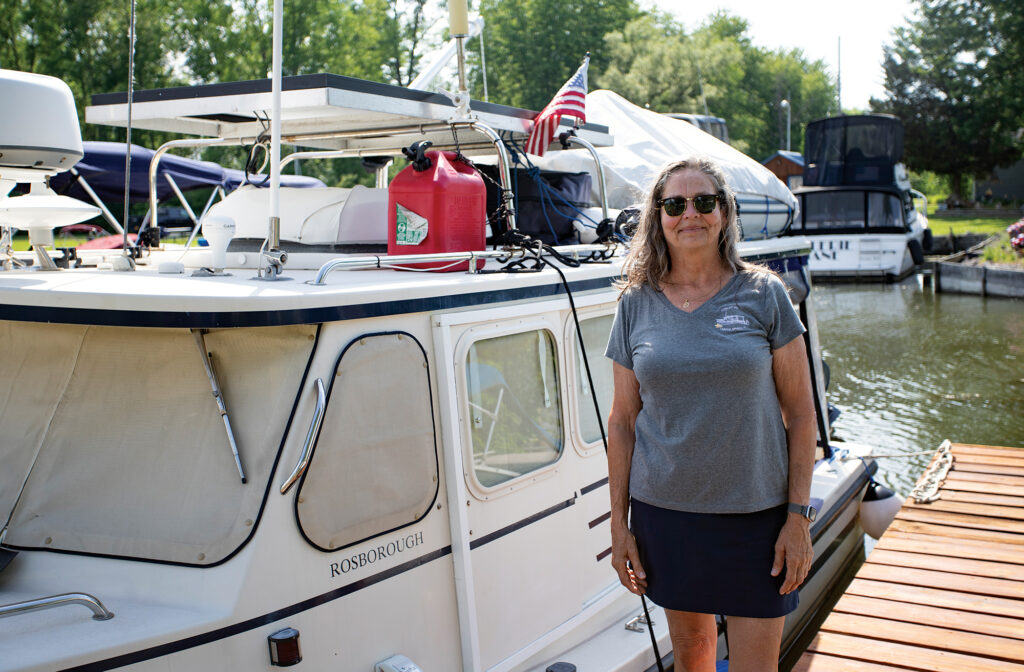
A couple of months back, Dan Harding and I got into a discussion about OPB. You know the old saying: The best boats are always other people’s boats. The implication in that time-honored statement, of course, is that by either going out on someone else’s boat, borrowing someone’s boat, or maybe even partnering up on a boat, you save yourself the hauling, headaches, hassles, and the dollars that come with 100-percent owning, driving, and maintaining your own vessel. But we wondered, is that saying really true? If it’s a weekend outing, and your buddy invites you along to fish, or head out for a day at the sandbar with your families, maybe so. But get deeper into the seaweed, and the waters become far murkier. Dan, for example, has been offered the use of a friend’s relatively small, but high-end yacht when that friend was out of town. I’ve considered lending out my trusty old Hydrasports to a good buddy whose reputation is impeccable and I’m sure will take responsibility for any damage under his watch. My wife and I have also been sort of, unofficially, partnering up with our friend Carolyn on her cool houseboat—helping her with labor and trailering, splitting costs on maintenance items, and even tying off at my dock. In exchange, we’ve been able to take it out for sunset cruises.
But what if the drain plug on Carolyn’s boat leaked, the bilge battery died, and it sank while sitting at my dock? What if my buddy was simply cruising along with my Hydrasports and the engine threw a rod? What if Dan was borrowing his friend’s yacht and he hit a hidden log or someone collided with him—with injuries? These are not unimportant questions. To get some more perspective, I posted a thread on the venerable site The Hull Truth titled: Letting friends use your boat/partnering up on a boat. I was surprised to find that I’d hit a nerve. The thread soon held a boatload of funny, thought-provoking, and, in a few cases, scary responses—perhaps best summed up in one Admiral’s Club member’s answer: In the words of the great Sheriff Beaufort T. Justice, “You can think about it, but don’t do it!”
To get a little more real-world clarity, I made for the nearby offices of Scott Bluestein, a Charleston, SC attorney specializing in maritime law. He was keen to talk, and for the full, enlightening conversation, I hope you’ll find time to give “Other People’s Boats” a listen on the Power & Motoryacht podcast. After pointing out that he wasn’t offering specific legal advice, Bluestein went into points we all should consider.
First off, something that most of us know but don’t necessarily consider: Maritime law is based on ancient rules of navigation and is significantly different from automobile law. In a car collision, thanks to lanes, lights, stopping distances, and speed limits, it’s usually pretty easy to determine fault. But under maritime law, if you—or a friend—are piloting your boat and don’t follow the Inland Rules of Navigation, which most boaters neither know nor are required to know, “then you’re [likely] going to find yourself at fault for causing a collision,” said Bluestein. “Another thing … you are supposed to drive that vessel or run that vessel in a seaman-type manner—so if you’re not using good seamanship practices, then you could be found at fault. What is a good seamanship practice? That’s a vague term. We know that you need to stay out of the way, you need to give signals when you’re passing another vessel, but it’s more of a term of art, and each circumstance or situation calls for different seamanship skills.”
In short, if your friend has an accident on your boat, you could be on the legal hook. You need to look at your boat’s insurance too, Bluestein said. Many policies allow you to let a friend operate your vessel, but if they’re going to be driving it a lot, you should add that person to the policy. Still, even doing that might not keep you off the legal hook.
Say, you let your son use your boat. He hands the controls over to a friend and things go sideways. “More than likely, if you have a boating accident, somebody is going to get hurt very badly, and there will be a claim, and if an insurance company does not want to settle the claim, then you’re in a lawsuit.”
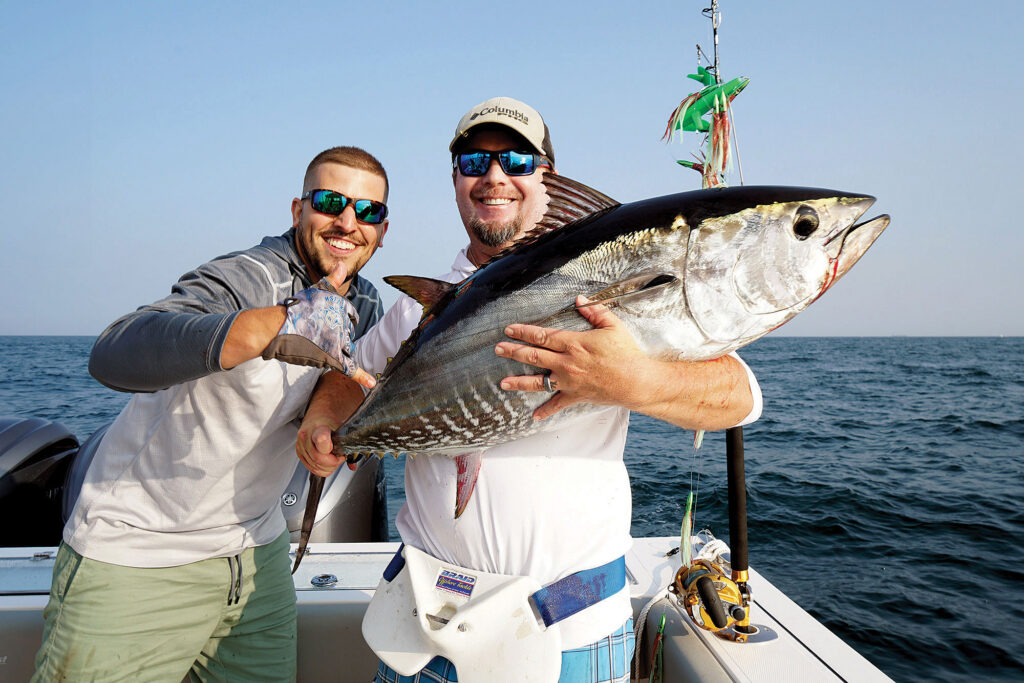
Say too, Bluestein added, that you and your buddy are on your boat, you hand your buddy the controls and there’s an accident. Even with no alcohol involved, “both of you are probably going to get sued, because you’re technically the captain of the boat, and you had a duty as the captain of the boat, to make sure that your boat is being properly operated,” he said. “If this guy is not operating the boat properly, then you should have stepped in and stopped him from doing that.”
“I’ve got a case now where a friend allowed another friend to use the boat, and the friend was operating the boat at over 70 miles per hour,” Bluestein added. “Of course, he does a turn, hits either a wake or a wave. People flip out of the boat, it almost rolls. So, what’s going on within that friendship? I can’t answer it, but I think I have a good idea.”
As an added point, Bluestein said, if you own a larger vessel, you need to be very clear on the “warranties” or conditions on your policy, such as whether a licensed captain must be on board during operation—or whether a friend can drive it at all. In one case Bluestein was involved with, an owner let a friend borrow his million-and-a-half-dollar yacht in the Keys. “He knew the local waters,” he said. “But he hit something, the boat sank, and the insurance company said there was no insurance coverage here—because they violated an alleged warranty.”
So, what if you want to partner up with a friend on a boat? There were plenty of responses on The Hull Truth’s threads, and the gist was: If you partner up, don’t do it with an expensive boat. If you do partner on an expensive boat, form an LLC and clearly lay out the expectations and responsibilities via a lawyer. But several simply said “Don’t do it,” citing that friendships and even family relationships could be ruined by myriad unforeseen circumstances. “I’ve seen partnerships work and I’ve seen them not work,” said Bluestein. “I always tell people, ‘Have somebody who knows what they’re doing, draw it up, and try to cover as many scenarios as you can: How are we going to pay the insurance? How are we going to pay for dockage, for repairs? When are we going to have repairs done? When are we going to do maintenance?’ What are you going to do if you got one friend who loves everything perfect on the boat and you got another who couldn’t care less? You’ve got to kind of spell that out in agreement. Sometimes somebody will not have money and can’t afford to pay for something. What are you going to do on taxes? Who are you going to have as owners of the vessel?”
If a partner needs out due to financial difficulties or family emergencies, plan for that too. “And I’ve had cases where one friend thought the other friend knew what they were doing,” Bluestein added. “And then when the one friend was on the vessel, he saw the other operate that vessel at a too-high speed. My friend decided [it was] time to get out of that partnership.”
“It’s a lot, getting into a partnership,” he continued. “It can be done. Sometimes it makes sense, because you can buy a bigger boat, or you can spread the cost of a boat over several people … I’ve seen partnerships that have lasted, where couples have had boats and they buy one boat and then they sell it and buy another, and it works fine. I’ve seen another where the two wives get in a fight and the partnership’s over and the boat gets sold. I’ve seen it where the husbands get in a fight and, you know, it doesn’t work. I’ve seen it where somebody gets a divorce and you’ve got to sell the boat. So, some scenarios are a lot like getting into a marriage. You got to think about that.”
If you want the “freedom” of an OPB without the hassle or potential legal liability, Bluestein strongly suggested a boat club. Call ahead, a boat’s always ready, it’s well maintained, insured, and the club generally provides good, hassle-free coverage. When you consider the costs and how often you’ll actually use a boat, he said, it can really make a lot of sense. “If you’re that person who just wants to go out on a boat every once in a while, and has friends and family who have come into town, go do it, because they have the clubs all over.”
There’s plenty more to unpack here, but when it comes to OPBs, the bottom line is that there’s probably more to consider than you initially thought. Proceed with caution, or consider the wise words the The Hull Truth veteran commenter “thefuzz” posted: “Partnership? No. I’m already in one as I’m married, don’t need another. Letting a buddy borrow? Sure, not an acquaintance, not a friend, a buddy … someone I trust my life with. Only have a few of those, and they have been on the water with me hundreds of times.”
Solid posts from our The Hull Truth thread:
• Had a partner on my very first boat … NEVER again. Regarding others using it … what does your insurance company/policy say regarding “listed” operators? My policy only lists me so hard NO.
• You have to pick and choose wisely. My friend allows me to use his boat. 2021 240sx Skeeter. I’ve fished and operated boats my whole life. He and I have fished together 100 times. He’s always had the boat. I’ve operated his boat many times with him on board. I’ve covered maintenance, batteries, tires, insurance, cleaned it, and brought it back with a full tank. I’m also aware that something could happen while on the water and we both understand that if it breaks under my use I pay for it.
• Just have to have like-minded buddies with similar finances. Our two-way partnership in a 30 Conch went so well we welcomed a third buddy when we ordered a 39 CV. Hammered every detail out over a couple beers in a contract. Unfortunately, life changes forced me out of the boat before it was completed but I wouldn’t hesitate again in the future with the right friend(s).
• You just have to have buddies that don’t put too much value into “stuff” who are easy to work with. In seven years, we never had a single problem. In reality, most of us don’t have enough time to use a boat as much as it should be used. It just makes sense at 50 percent of the cost.
• One thing I’ve learned when someone approaches me about a partnership is that I have something they want or a means to do something they want to do, that they don’t possess. I have found out that at some point they will take advantage of that and will attempt to screw me over. In business, I have made one agreement to partner with someone once, I basically worked for free in the end because they weren’t honest, hid a lot of stuff and misrepresented themselves. Now, there is no friendship nor professional dealings any longer and never will be again, which was pretty short-sighted on their end. I do things solo now and reap the benefits, it’s no more work for me but pays 3x as much in the end. Boats are expensive investments to be trusting someone else with.
I had a buddy that approached me about using my boat as a charter, wanted to set up an LLC and had a plan. No way, my boat isn’t the best thing at the marina but it’s still nice, I want to keep it that way.
• When I was young and had little money, I partnered with my roommate at the time on a 16-foot Livingston that we used as a dive boat. He took it out one night with friends and it got a little snotty. Rather than drive back to the ramp, he anchored 150 feet offshore, swam in and stayed at a friend’s house. The next day I went to a bakery and while driving past the boatyard I saw my boat so I did a U-turn and stopped in. They had just recovered it off the bottom and were trying to save the motor. He wanted me to split the insurance deductible with him ($1,000). I told him to GF himself, kicked him out of my house and gave him the boat. He was too chicken-shit to tell me himself… Never again.
• I have a boat-sharing fishing partner. We are free to use one another’s boats and we both have keys to both boats. We pretty much do all of the maintenance on both boats together and fish together the majority of the time. It works out extremely well but we think alike and have complete confidence in each other.
• All my friends have boats. If they didn’t, we probably wouldn’t be friends.
• I’d loan out my chainsaw before my boat, and that hasn’t happened in over 50 years.
• To some this topic is synonymous with letting someone use your wife. P.S. insert dog, tools, 57 Chevy, etc.
• A pizza is a great thing to go partners on. If it works out you do it again sometime. Boat—not so much.
This article originally appeared in the December 2025 issue of Power & Motoryacht magazine.