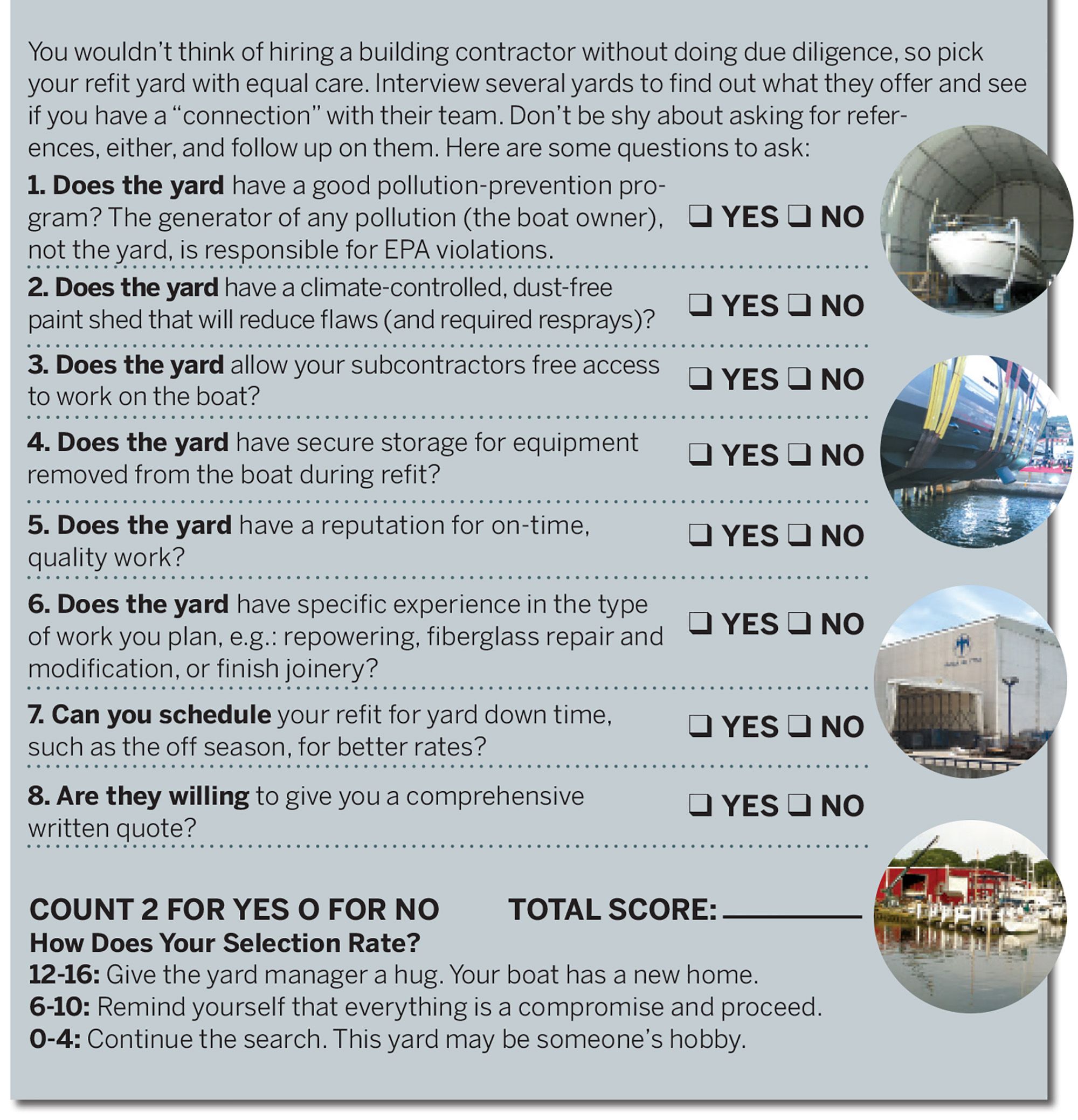

Refit The Right Way
Refits traditionally fall into two categories.
The first features owners who love their yachts and just want to refresh the interiors and/or upgrade the systems to modern standards.
The second consists of those buyers who find they can acquire a used boat and refurbish it for considerably less than buying a new boat.
More recently, there is a third group, made up of folks who would like to buy a new boat, but have decided to upgrade their existing boat so it will serve them for a few years until their finances recover from the economic crunch.
No matter your category, refitting a yacht can prove to be a minefield for the unwary. Proceed with all due caution.
“I’ll tell you the one thing that can be the absolute downfall of any refit project,” says Jeff Montz of SeaBrook Marine in New Orleans (www.seabrookmarine.com). “It’s what I call the ‘Might-As-Wells.’ The as-long-as-we’re-doing-this-we-might-as-well-do-that.”
Montz cringes at the thought of an owner saying those words and, with a well-deserved reputation for 100-plus refits of vessels built by Bertram, Hatteras, Viking, and others (not to mention reviving more than 300 yachts seriously damaged when Katrina whacked Louisiana), SeaBrook Marine has built a reputation for clean and cost-effective refits.

Photo courtesy of Slane Marine
1. If you don’t love your boat, why spend the money on something that doesn’t make your heart jump when you see it at anchor? Move on.
Back to the Refit Guide ➤
Photo courtesy of Hinckley
2. Laugh. Things are going to go wrong. Hey, it’s a boat!
Back to the Refit Guide ➤
Photo courtesy of Hinckley
3.Be flexible, but control the “might-as-wells.” There are times when—with little added cost—you can make another improvement. Go for it. But consider the impact of each added project on your overall budget. It’s startling how several small things can add up quickly.
Back to the Refit Guide ➤

Photo courtesy of Slane Marine
4.Consider the resale value, but in moderation. If you love this boat and plan to keep her for a while, doing a refit to maximize your enjoyment is a fine idea. But if you think that adding a $100,000 refit to a boat worth $200,000 is going to make her worth $300,000, you need a lesson in Reality Math. It would be like adding a $10,000 paint job to an old Ford Pinto. It just makes it a shiny old Ford Pinto, not a Ferrari. Do it because you love the boat, not because you plan to flip it.
Back to the Refit Guide ➤

Photo courtesy of Slane Marine
5. Plan ahead to interface with what exists. Try to use as much of the old boat as possible without getting into major structural projects. Moving a bulkhead an inch or two is just foolish.
Back to the Refit Guide ➤

Photo courtesy of Hinckley
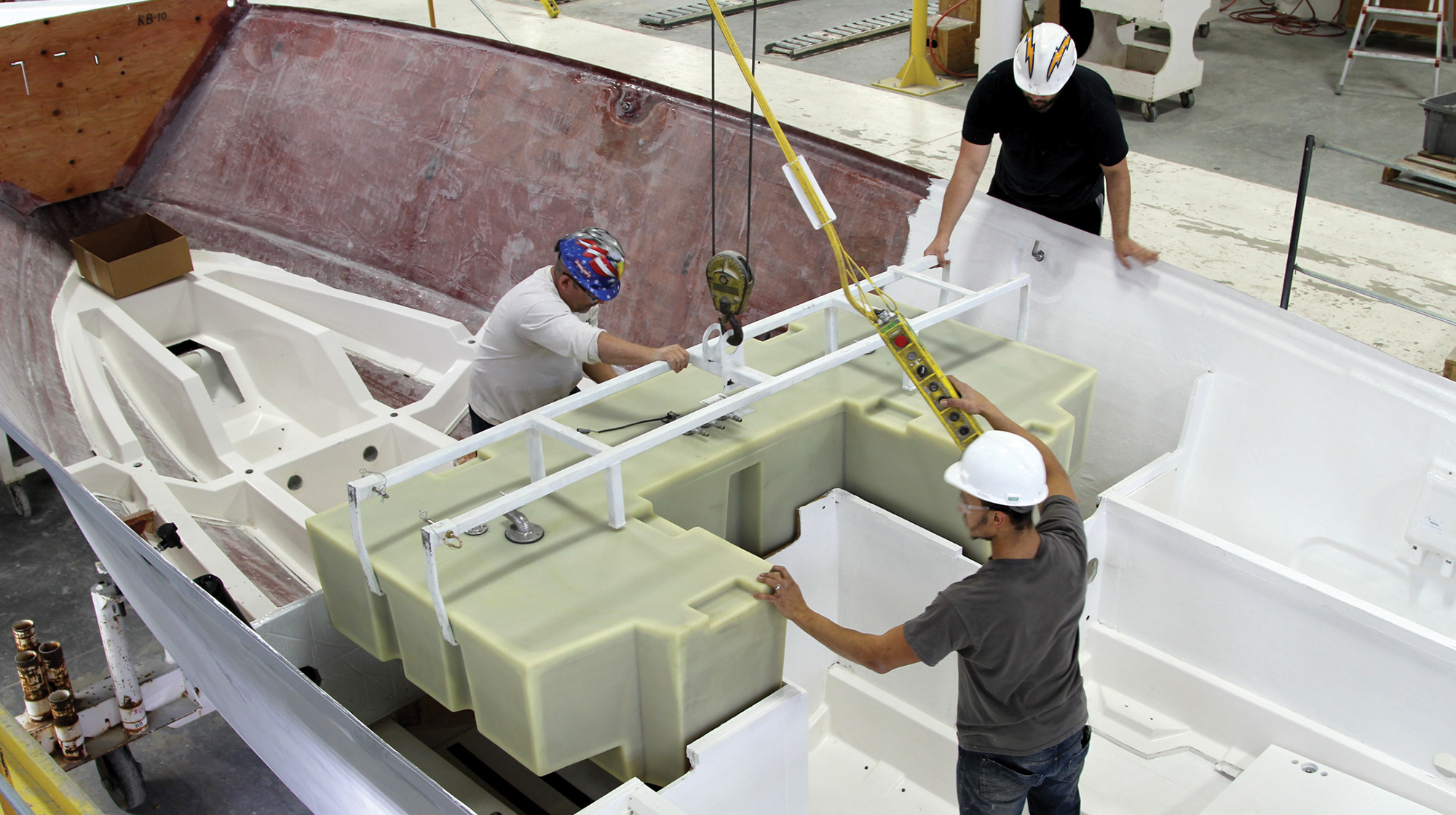
6. Consider the long-term effects first. Adding a fuel or water tank can change the balance of a boat and seriously affect performance and handling.
Back to the Refit Guide ➤

Photo courtesy of Hinckley
7. Expect the unexpected. You never know what you’ll find once you start opening up bulkheads and overheads. Build a little “wiggle room” into your budget.
Back to the Refit Guide ➤

8. Get all the warranties you can, both from the manufacturers of the systems and the refit yard.
Back to the Refit Guide ➤

Photo courtesy of Slane Marine
9. Keep your insurance company in the loop. Find out if the yard is carrying liability on your project. It’s also a good idea to continue your hull and machinery policy during the refit, and update your valuation as the project is progressing.
Back to the Refit Guide ➤

Photo courtesy of Slane Marine
10. Have Fun! Hey, it’s a boat!
Back to the Refit Guide ➤
“I’ll give you the perfect example,” he says, speaking of an owner who just wanted a new headliner in the saloon. “While looking at the project, though, he said those dreaded words, “We might as well change out the lighting, too.”
But many older boats, like this Bertram, have 32-volt wiring, which not only meant all new lights but all new wiring had to be pulled, other systems were affected, new electrical panels added, and the cost skyrocketed. For just that one “Might As Well,” there was a cascading effect on time, money, and effort.
“Every refit client has two lists,” says Tom Slane, son of Hatteras Yachts founder Willis Slane and president of Slane Marine (www.slanemarine.com), a North Carolina company that specializes in Hatteras refits. “One is what he can afford, and the other is what he secretly wants. It doesn’t take much for him to move onto the second list. But it’s something we have to continually warn owners against!”
Karen Lynn Poulos, of Karen Lynn Interiors in Ft. Lauderdale (www.karenlynninteriors.com), has done a number of refits on Ferretti, Sunseeker, Hatteras, and other production yachts, and she has developed five essentials of a successful refit.
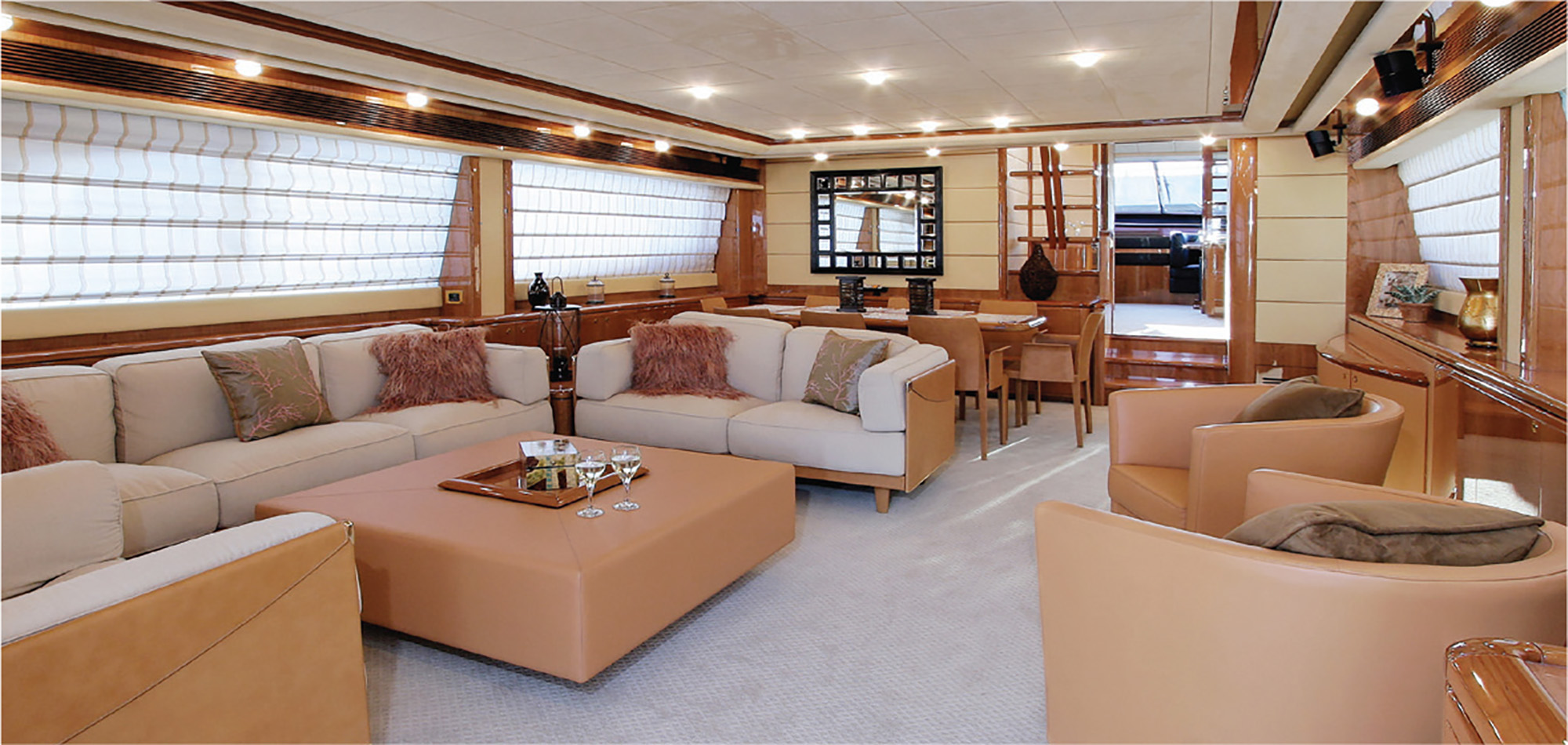
“First is planning and second is setting a realistic budget,” she says, adding, “third is assembling an experienced and quality team, fourth is having regular meetings and updates to keep everyone current, and last is carefully controlling all changes that affect the budget or the schedule.”
Tom Slane has seen the refit world change. “In the ’80s, you could gut a boat and rebuild it with new engines and systems for half the price of a new boat,” he recalls. But the economic realities have changed.
While the cost of labor and equipment for a refit has remained relatively the same, the cost of used boats has fallen. “Back then, we paid $70,000 for a 53 Hatt that had been holed and sunk. Today,” he says wryly, “you can buy a decent one for not too much more than that.”
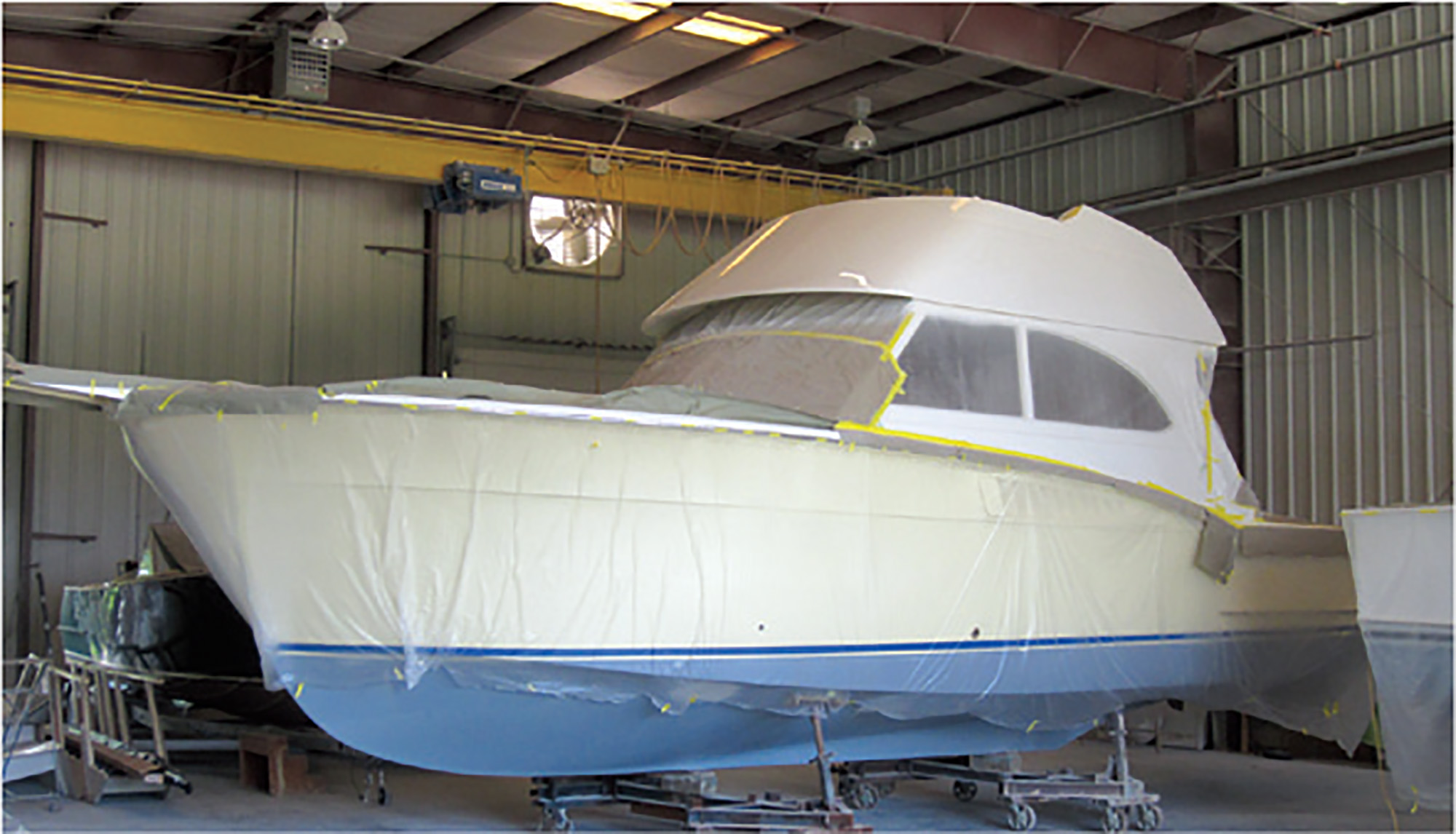
“The interesting thing,” notes Montz, “is that a number of our refits are intended as ‘hold-overs’ for owners who are on the cusp of buying another boat but just can’t swing it right now. But then, with the refit, they fall back in love with their boat. It’s great!”
“Our clients don’t want ‘cookie-cutter’ boats,” says Slane. “They want to update their boat, they like the quality, but they don’t want what everyone else has.”
“One of the most important things in a refit,” according to Slane, “is to have a well-defined handle on the scope of the project beforehand. There can’t be any ambiguity about what is being done, and the little details are very important. If you’re installing new engines, the owner might assume that he is getting new batteries, but the yard might not have included that, thinking the existing ones are fine.”
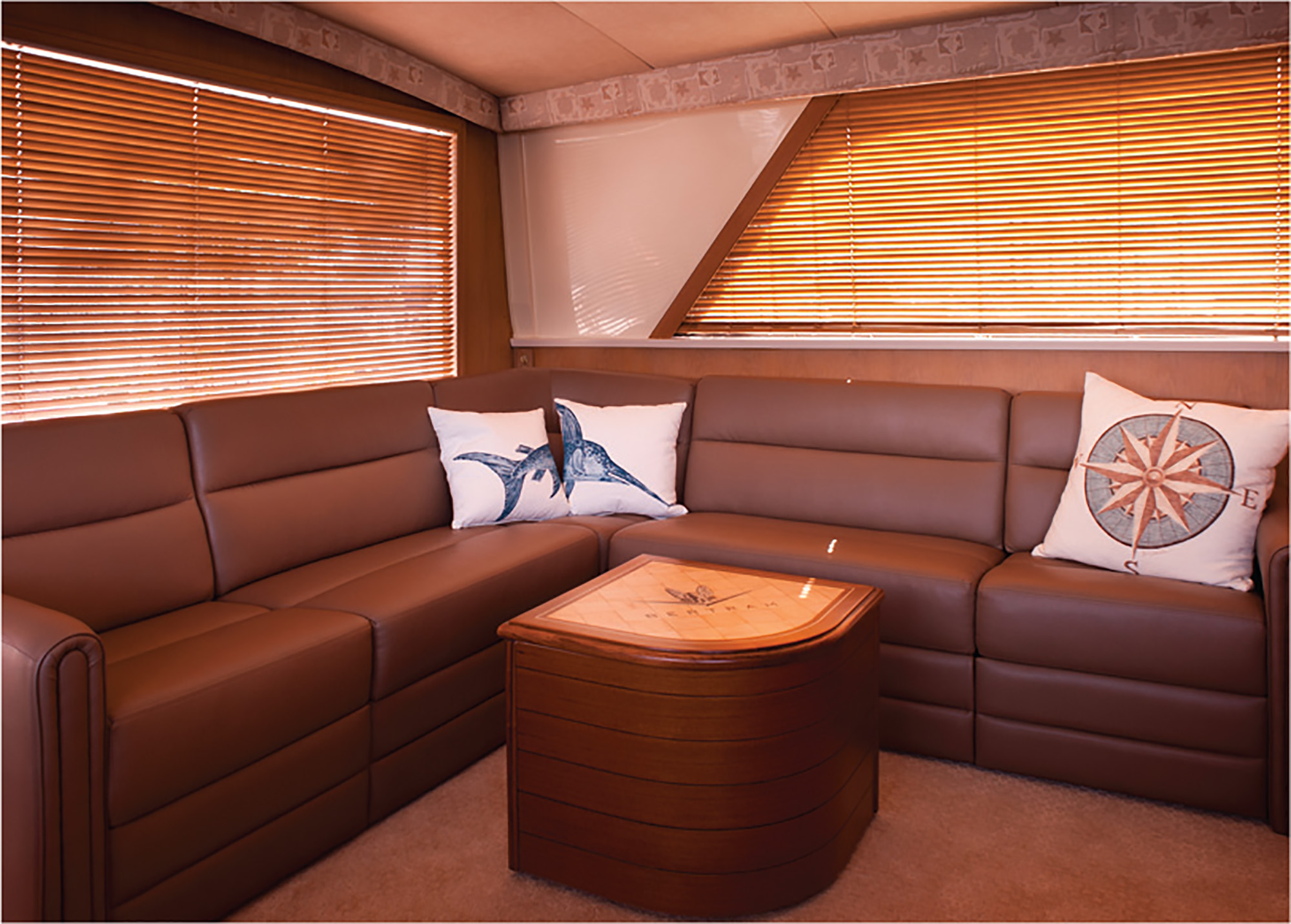
For Karen Lynn, an important facet of a refit is keeping everybody on the same page. “I like having weekly onboard updates between the owner, myself, and the various contractors. That way we all know exactly where we stand.” She mentions a situation where new overhead panels were being installed, but one contractor fell behind on electrical work behind those panels. Because everyone knew about the problem, other projects could be rescheduled to minimize lost time.
Careful planning can keep costs down and still produce a “new boat,” such as the Bertram 54 on which Mike Stennett of Nautical Lumber (www.nauticallumber.com) in Michigan did what he calls a “mild refit.”
The interior was gutted and Stennett—who has built a reputation as the largest source for Boston Whaler restoration woodwork—updated the saloon to the owner’s tastes. This included new cabinetry facades to perfectly match the original bulkheads, a cleverly designed swing-out flatscreen TV that conceals the yacht’s electrical panel, and an electric fireplace. The galley was refreshed with rearranged cabinets, matching locker doors, and Corian counters. The three heads were also renewed to give a newer look with matched ribbon-striped mahogany and Corian counters. New dining tables (with metal Bertram logos inlaid), teak-and-holly soles in the galley and dinette area, and new carpet finished the project. Accomplished for “well under $50,000,” says Stennett. The owner finished the refit with a new couch and upholstery. Done while the boat was hauled for the winter at Jefferson Beach Marina, the project took less than four months from start to finish.
So there you have the essence of good refits, as seen by the experts. Plan it carefully, establish a realistic budget, and don’t be lured by all the opportunities that present themselves along the way.
As one of our experts noted, you’ll fall in love with your boat all over again!
Score Your Refit Yard