If there’s one thing that you, as the hopeful buyer of an ocean-going vessel should probably consider, it is that there are bona fide reasons for buying an Australian-built boat. See, despite boasting over 40,000 miles of coastline, this “Sunburned Country” lacks anything as extensive as our Intracoastal Waterway. Want to make the 500-plus-mile run from Sydney up to the Gold Coast, or down to Melbourne? You’re not only trekking through the winds and swells of the stormy Southern Ocean; your ability to duck into protected waters for a repair or to dodge a storm is also seriously limited.
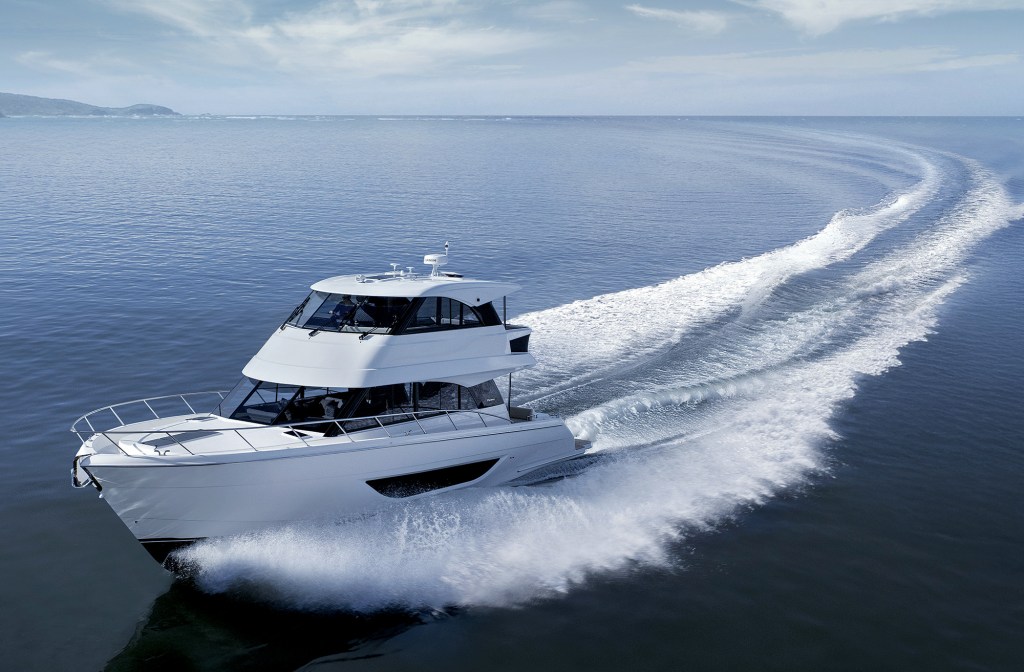
Because they’re familiar with the real-life stakes of heavy water, Australian builders like Maritimo excel at bluewater boats that won’t fail when the going gets rough. Their newest and smallest build, the M50, looks to be no exception. After a day bounding through the sort of real-world conditions your Power & Motoryacht crew always hopes for on a test drive, I can confidently report that I’d feel comfortable piloting the Seakeeper Ride-equipped M50 on a rough passage to Bimini, a run up the Inside Passage, or passing Wollongong atop a big 17-second swell.
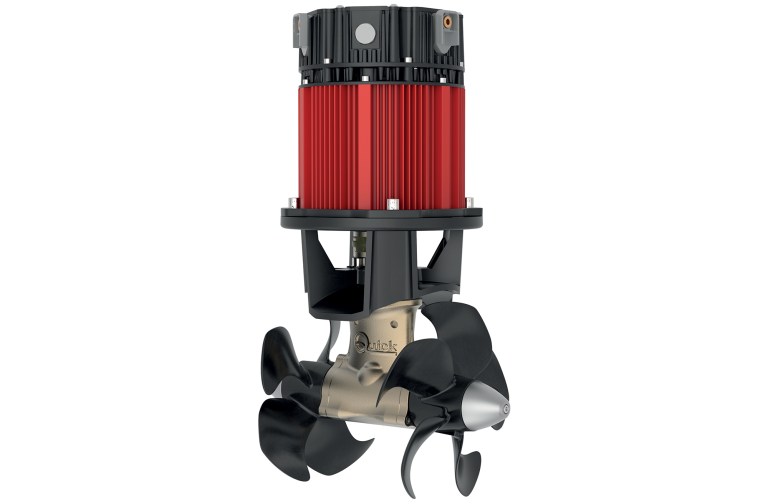
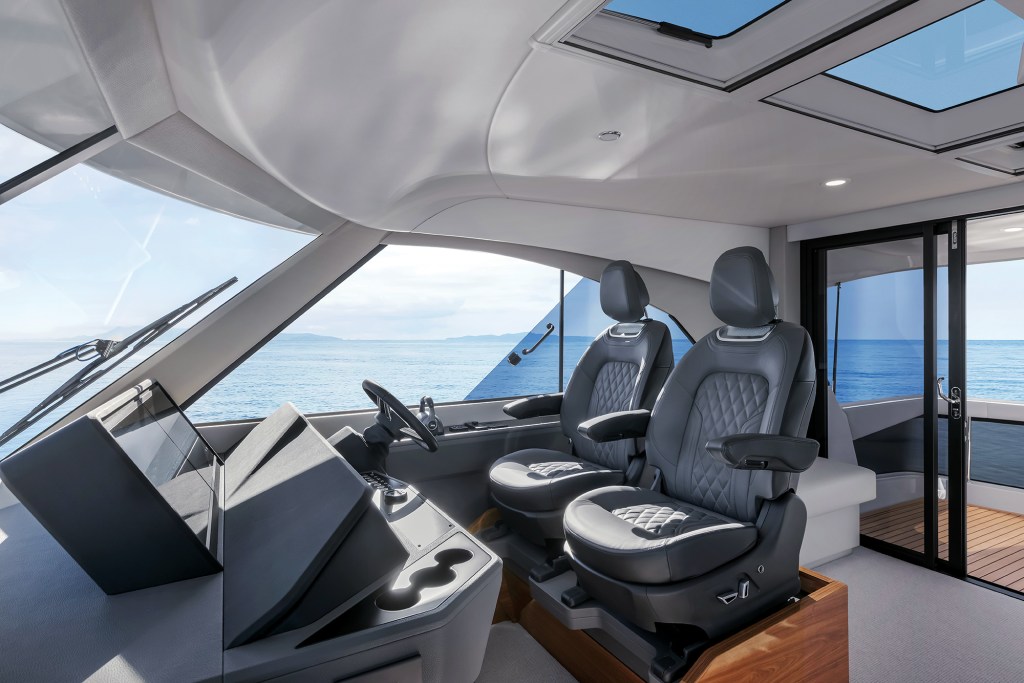
I met Maritimo’s South Florida rep and longtime Captain Tom Jagucki on a blazing Ft. Lauderdale morning that promised stout winds off the Gulf Stream. I’ve toured plenty of Maritimos, but this would be my first proper trial. Cruising up the New River towards the ocean in the yacht’s expansive enclosed flybridge, Jagucki reported that he’d spent the previous night running up from Freeport, Bahamas, on one of the yacht’s two outrageously comfortable automotive helm seats amidst the same seas we’d soon encounter. Passing megayacht after megayacht, through a winding stretch called “The Wiggles,” he showed off its impressive close-quarters maneuverability and functional helm setup—three 19-inch Garmins, manual switches in case those screens blink out, a joystick for bow and stern thrusters, and an ergonomically-placed binnacle for the twin shaft-driven, 800-horsepower Volvo Penta D13s.
You can also find this video–and hundreds of our other reviews–here ▶
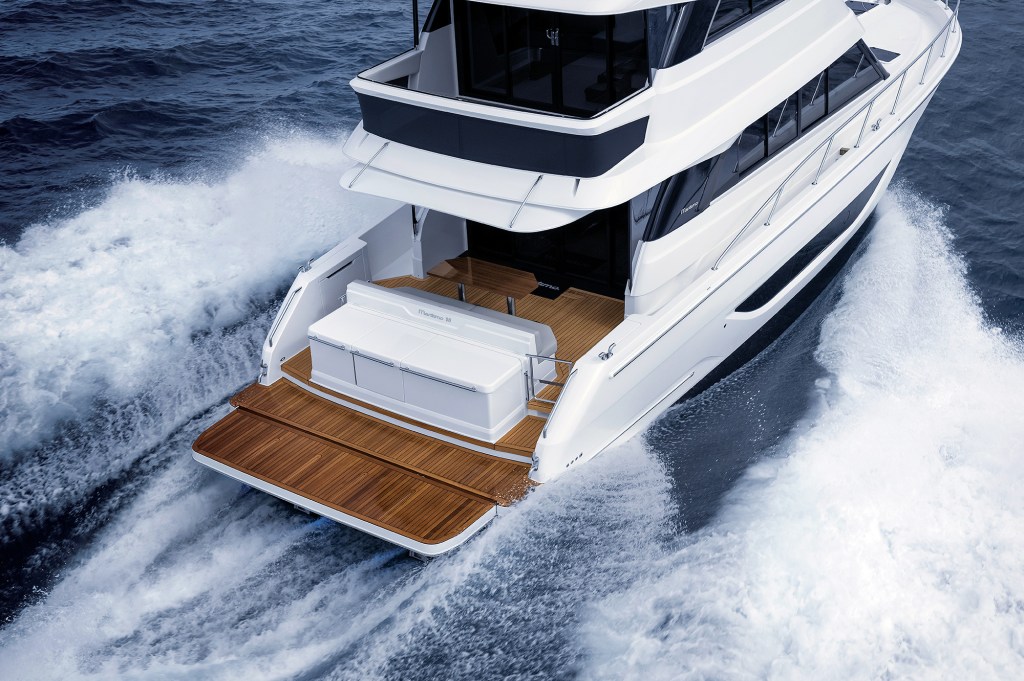
Jagucki half-jokingly called this Maritimo’s “entry-level” yacht. It’s the smallest in a fleet with models up to 75 feet, but little here is “entry-level.” To begin with, she’s pretty. Though the enclosed flybridge—with overhangs to starboard and port to create even more living space—surely puts plenty of weight up top, she doesn’t look top-heavy. Huge reverse-raked windshields above and below give a sleek but muscular look and shed water easily. Gleaming railings are set at a useful height and the walkways are built to channel any water that comes over the bow right off the stern.
Boarding at that stern, a wide swim platform not only lowers into the ocean but folds up vertically to shorten the boat by 3 feet for tighter slips—also creating a man-overboard-preventing wall. Set between the cooler and Kenyon grill at the transom is a wide door and hatch for a lazarette that offers easy access to pumps and running gear and should swallow dive equipment, standup-boards, and other water gear.
Just up a pair of stairs and through dual locking gates, the rear cockpit is shaded by the flybridge and offers a forward-facing bench seat and a table that should seat four or five across—stern-facing chairs will add more. That forward-facing lounge folds upwards for an even bigger entry into the lazarette. And speaking of big entries, the hatch for the engine-room access is built wide enough to easily install a Seakeeper or remove the genset. Maritimo thoughtfully placed the primary fuel tank under the master berth and made the wing fuel tanks easily removable for even better access to the already-accessible D13s.
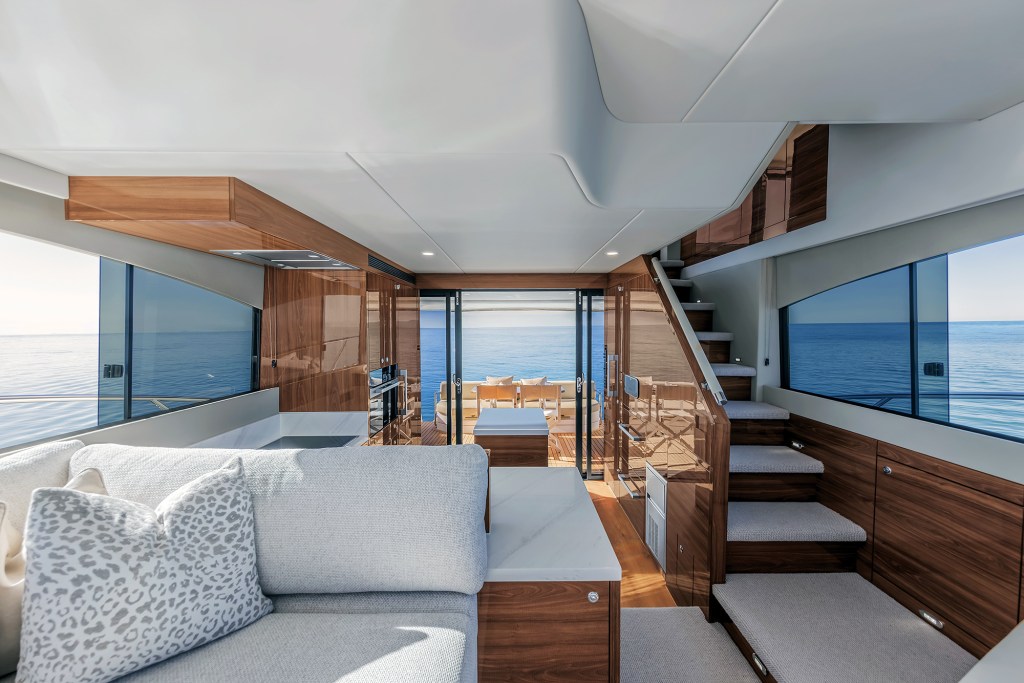
The galley/salon sits on the same level as the cockpit. It’s reached through a set of solidly built sliding doors that create a vast open space or seal the yacht hermetically. Dual-locking walnut cabinetry is deeply glossed and hides a full-size fridge/freezer to starboard and a huge pantry to port—along with the requisite dishwasher, Miele cooktop, and an icemaker. Amidst it all sits a perfectly positioned island for more storage and food prep. Throughout the yacht, not a single cabinet or drawer was even remotely misaligned. Underway, I heard no creaks from any of them.
The open galley flows directly into a huge salon. Though there are no doors, there are huge, manually-sliding glazed windows that bring the outdoors in—and allow a captain to easily communicate outside. The portside holds an L-shaped lounge with big storage bins underneath and a leafed table with seating for five or six. The U-shaped settee across also has plenty of under-seat storage and an easy-to-deploy trundle that creates a double bed. Maritimo built the boat with thick grab rails and grab points where you’ll need them while underway aboard this peppy cruiser.
Down a short companionway, you’ll first reach the portside VIP cabin. The queen-size berth is set at an angle. It can be accessed from either side and splits into a pair of singles with an easy manual slider. I appreciated the individual climate controls in each room—and dual USB plugs at the bedside power ports. Though there are wide, shade-protected overhead windows, there are no side windows in this cabin.
To starboard, an en suite head doubles as a dayhead. The shower and overall space are ample. Just off that head, a full-size washer-dryer is hidden behind cabinetry just before you step down into the full-beam master cabin. With a forward-facing king-size berth amidships and plenty of closet and cabinet space, these are seriously comfortable quarters, thanks particularly to its wide, double-portalled windows and a truly huge head with an oversized shower. A nice touch: There’s an AC vent right at ‘sitting level’ at the toilet—which should make a stop on the throne quite agreeable on a scorcher.
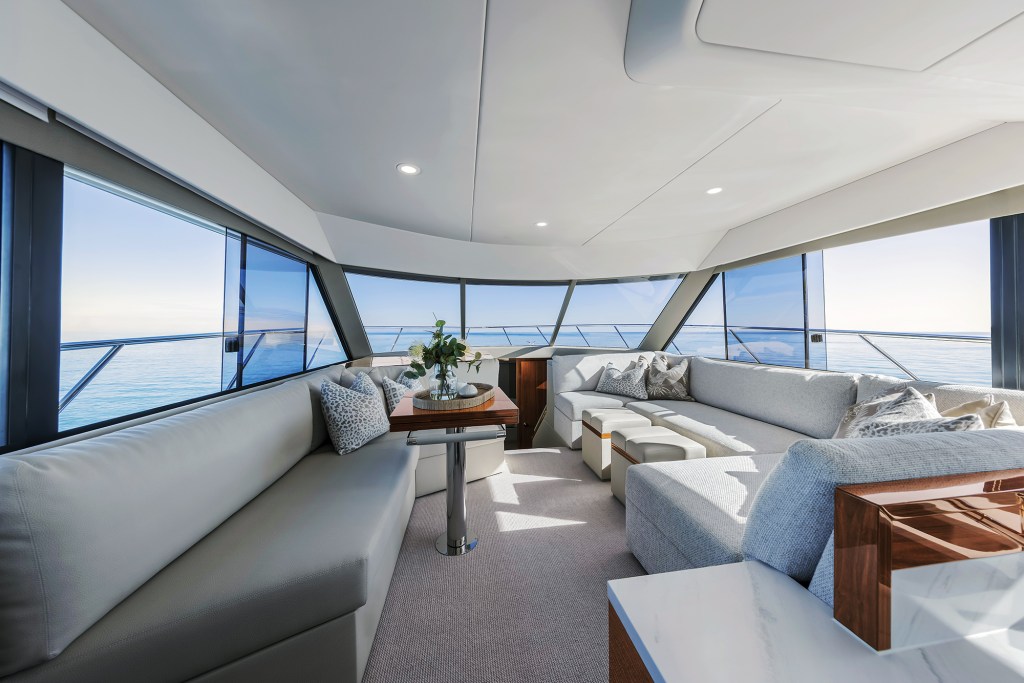
And then, above it all lies the enclosed flybridge. Accessed by sturdy portside stairs, I really appreciated this space. It not only offered huge windows like those in the salon, but an ample and serene rear deck, which would be perfect for watching the world recede in your wake. Inside, the starboard lounge trundles to create yet another double bed, while to port, the reclined settee is the perfect place to watch the world coming at you.
Clearing Port Everglades Inlet, we found a solid 15-knot south wind and plenty of stacked, 2- to 4-foot windswells. We pushed offshore on plane at 20 knots and with the Seakeeper Ride activated, fairly bounded over the seas. Handling was still solid when we switched the Seakeeper off, but there was noticeably more roll. The surprise, though, came turning at speed. The Ride nudges the bow down, giving the sort of bite I’d expect on a 30-foot center console. Were I planning to run where I expected to find deadheads or other obstacles, this could help avert disaster. Even at a 25-knot top end, we turned on a dime and I’d reckon full-circle radius was 100 feet tighter with the Ride engaged. To save a few thousand pounds, this M50 lacked a Seakeeper gyro. The Ride, of course, functions best at higher speeds, so if long miles of low-speed cruising are planned, a gyro might be a worthwhile option.
Reluctantly relinquishing the helm, I came away impressed. Were I looking for a liveaboard cruiser that could easily overnight a pair of friends or grandkids with comfort, efficiency, style, reliable systems—and plenty of safety—I’d put the Down Under-built M50 atop my shopping list.
Maritimo M50 Test Report:
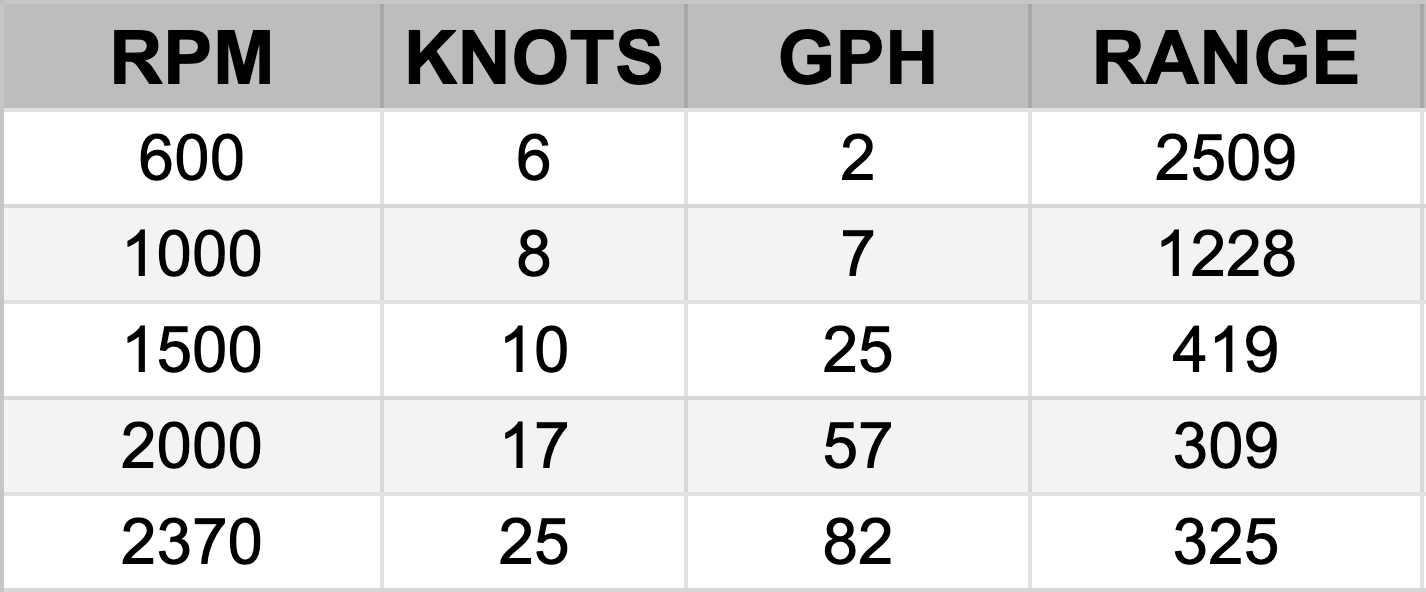
Maritimo M50 Specifications:
LOA: 52’1
Beam: 17’2”
Draft: 4’6”
Displ.: 55,115 lb.
Fuel: 925 gal.
Water: 198 gal.
Power: 2/800-hp Volvo Penta D13 800.
This article originally appeared in the October 2026 issue of Power & Motoryacht magazine.