
This day and age, you’ve got to admire a boat—particularly a center console—that possesses every ounce of capability its size allows yet resists the urge to exaggerate.
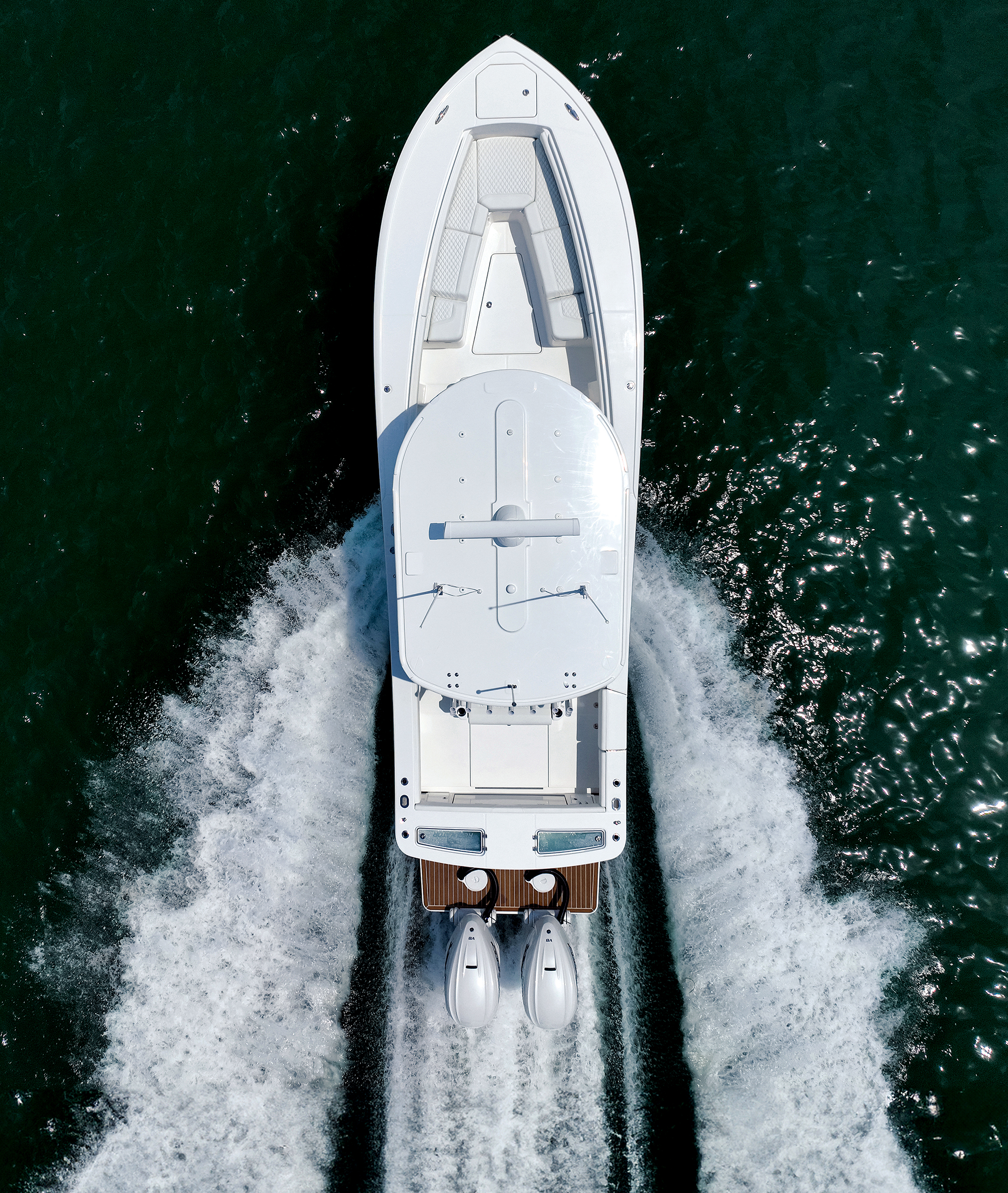
Regulator’s new 31—31 feet 5 inches overall—isn’t trying to redefine the category or chase the latest trend. Instead, it leans unapologetically into the qualities that made offshore center consoles desirable in the first place: a deep-V hull without steps, a broad 10-foot, 4-inch beam carried well forward, a comparatively narrow transom, and enough displacement (11,140 pounds dry with twin Yamaha 450s) to deliver the kind of soft, dry ride that has long been Regulator’s calling card. In an era when horsepower figures and top-speed claims often dominate the conversation, that feels refreshingly mature for a builder closing in on four decades.
It also continues to baffle me that so many buyers with little interest in fishing have gravitated toward center consoles. They are undeniably fast, remarkably seaworthy, and wonderfully versatile, yes. Compared with bowriders—or, dare I mention pontoons—they’re built to travel rather than simply float. And compared with cabin boats, they’re more efficient and, generally speaking, a lot less work.
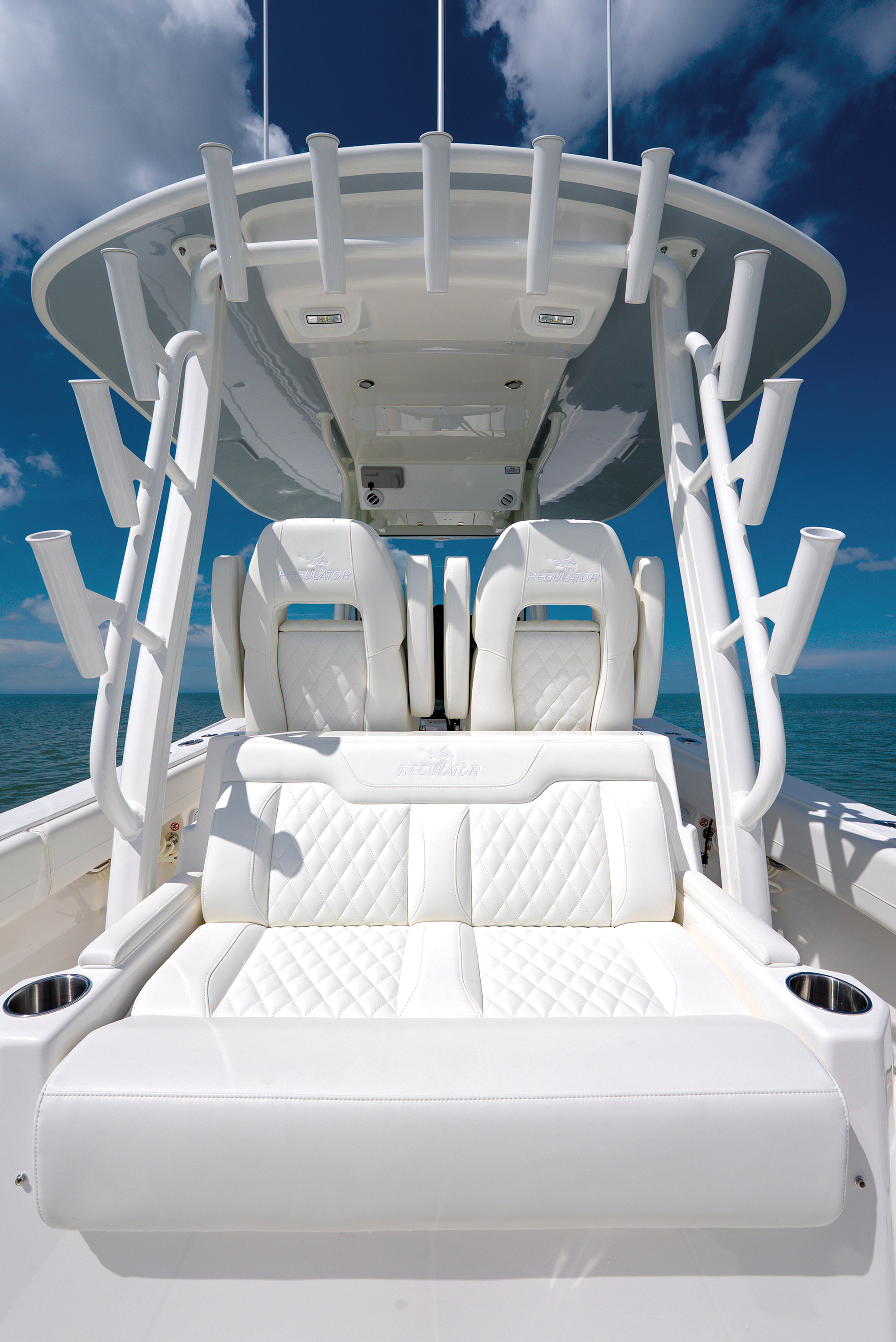
Still, no boat checks every box, and center consoles ask their owners to make compromises. Even boats stretching well beyond 30 feet often devote more square footage to gear storage than to seating. Hardtops provide welcome relief from the sun but rarely enough shade for a full afternoon aboard. Cabin accommodations are limited or nonexistent, enclosed spaces are few, and overnight capability is generally an afterthought. And yet, families continue to buy them. The Regulator 31 goes a long way toward explaining why. This is a boat that embraces its fishing DNA while making thoughtful accommodations for everyone else who climbs aboard. Those accommodations are subtle but important.
Take the bow. Cushions now attach magnetically instead of with traditional snaps—a seemingly small change that quickly proves itself. The deck remains uncluttered, the cushions fit tightly, and there’s none of the fiddling with corroded hardware that inevitably accompanies snap-in upholstery after a few seasons in saltwater. It’s the sort of improvement owners appreciate long after the showroom shine fades.
Recessed cupholders are tucked beneath the forward backrests, keeping drinks shaded instead of baking in direct sunlight. Adjacent storage cubbies offer convenient places to stash phones, sunglasses, or sunscreen while remaining out of the way of rods and casting space. These aren’t revolutionary features, but they demonstrate that someone spent time thinking about how people will actually use this boat.
The same philosophy extends forward to the anchor locker. Regulator has long favored oversized windlass compartments, and the 31 continues that tradition. The locker is unusually spacious, well-lit, and easy to access, with dedicated controls located at the bow. Freshwater washdown plumbing makes cleaning muddy ground tackle straightforward, and the generous opening provides plenty of room for maintenance rather than forcing owners to work through cramped access panels.
It’s difficult to overstate how much those practical touches matter after a long day offshore. That said, fishing remains the centerpiece. Large insulated fishboxes occupy the sole, while lockable in-deck rod storage keeps expensive tackle secure and protected. Massive piano hinges support the compartment lids without binding, and additional service access beneath the deck makes maintenance less of an ordeal than it often becomes on heavily equipped offshore boats.
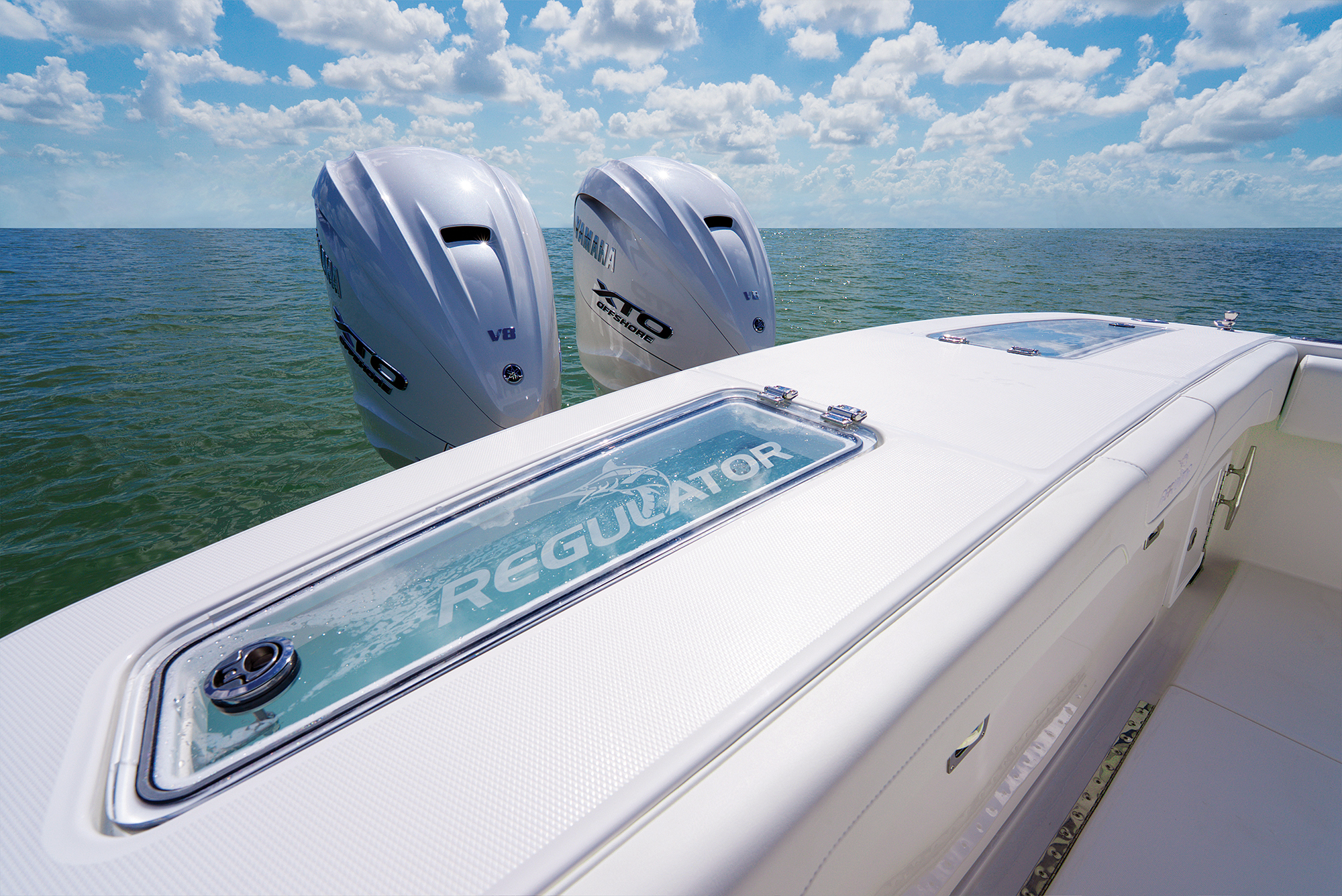
Likewise, access to the optional Seakeeper installation appears well-considered. Rather than burying major components beneath layers of fiberglass and cabinetry, Regulator has made serviceability a design priority. Owners may never appreciate it during the first season, but technicians certainly will five years from now.
Inside the console, the emphasis shifts from fishability to livability. The head compartment is surprisingly generous for a boat this size, avoiding the claustrophobic feel common aboard many center consoles in this range. Vertical rod storage for six outfits within the console makes good use of already thoughtful headroom and an outsized vanity (for a 31-foot center console, anyhow) while keeping equipment secure and protected from the elements.
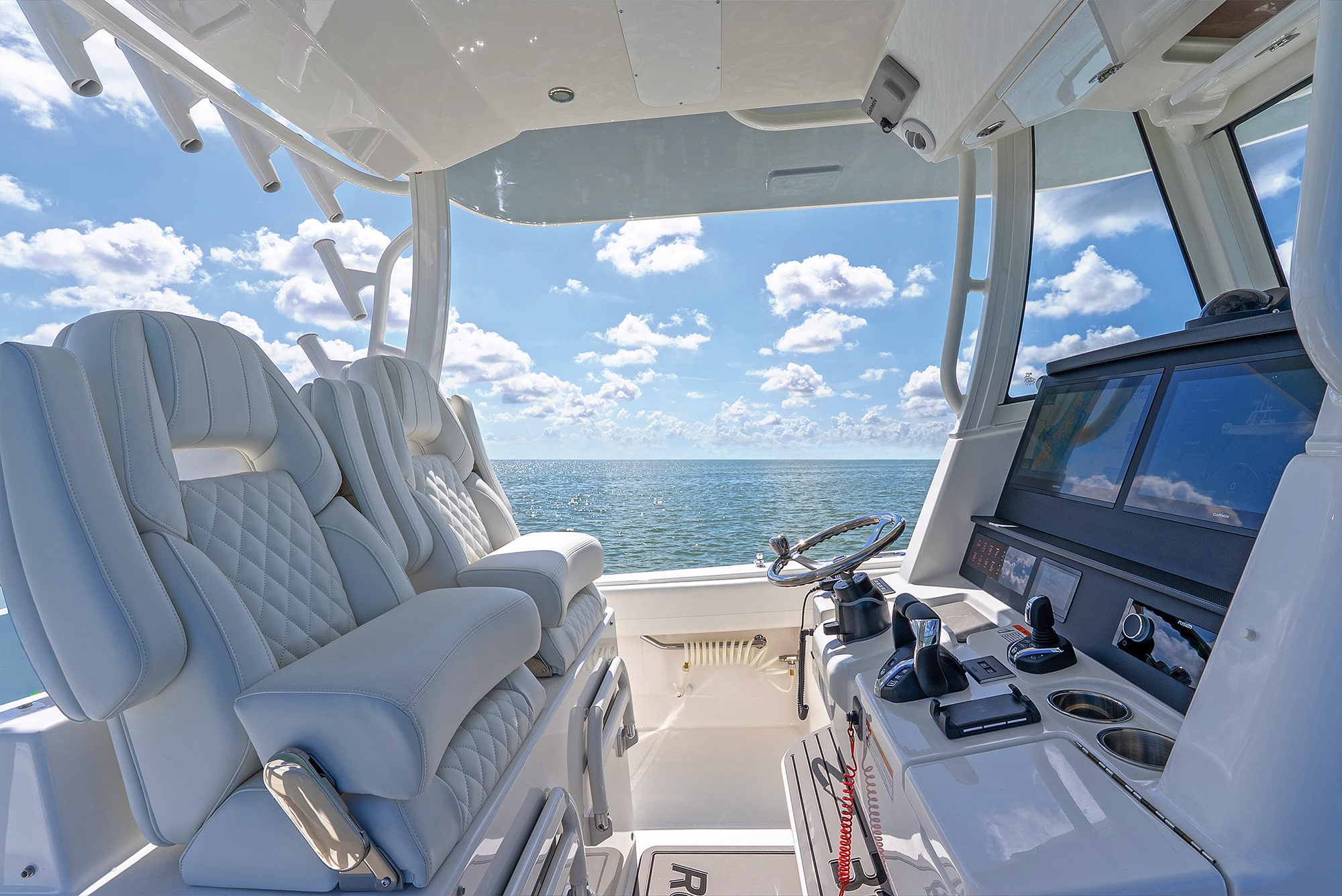
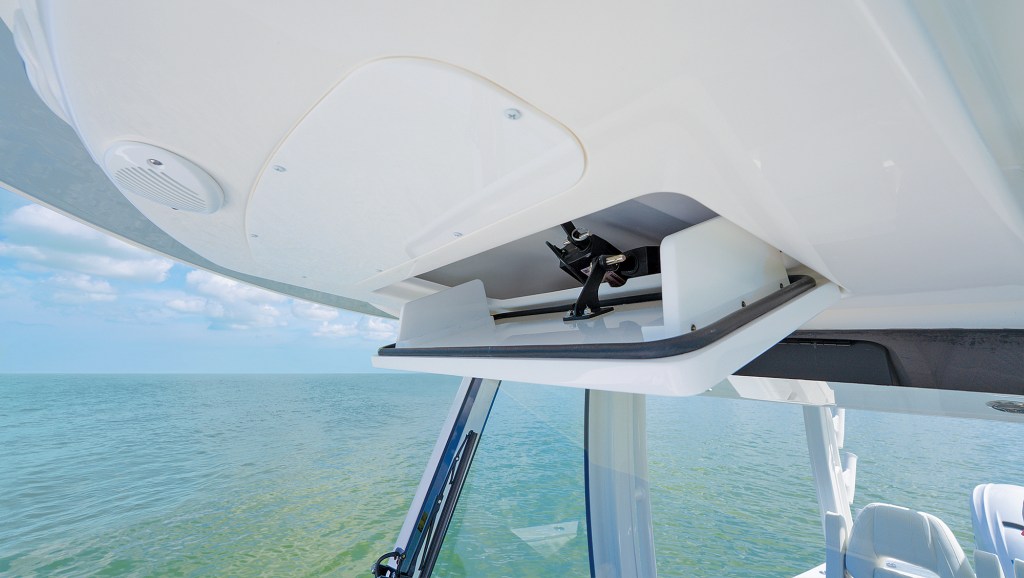
At the helm, refinement continues. One of the more noticeable updates is the redesigned windshield. Previous versions incorporated an opening vent directly within the glass. The new arrangement, first developed aboard the company’s larger models, instead utilizes a forward-opening vent and directional forced-air vents above and beneath the windshield. Together, they produce significantly better airflow while preserving uninterrupted visibility ahead—a meaningful improvement during long summer runs without requiring the driver to choose between ventilation and sightlines. It’s one of those engineering solutions that seems obvious once you’ve experienced it.
Elsewhere, thoughtful updates abound. A redesigned electric switch panel modernizes the helm while simplifying operation. Lithium house batteries reduce weight and improve efficiency while remaining compatible with Yamaha’s charging requirements through separate starting batteries. None of these changes generate dramatic marketing headlines, but together they elevate the ownership experience.
The 31’s innovations are quiet. And perhaps that’s the Regulator 31’s greatest strength. Better airflow. Easier maintenance. Cleaner upholstery installation. Smarter storage. Individually, these changes aren’t earth-shattering. Taken together, they create something noticeably more polished.
Performance follows much the same philosophy. On a nearly breathless summer morning out of Thunder Marine in St. Petersburg, Florida, I took the new 31 for a Gulf run down to Shell Key—and a quick little dip.
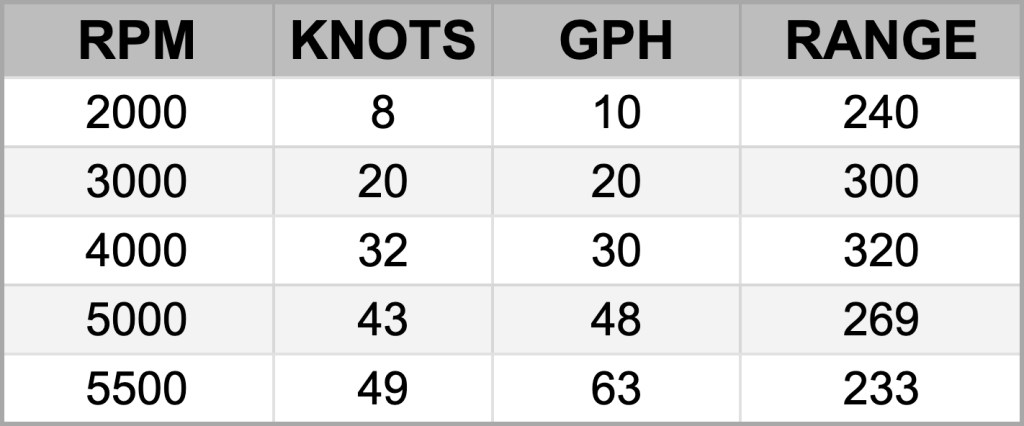
“Put her hard over,” said Thunder Marine Sales Associate Joe McGeehan, who was my chaperone on this outing. Sitting right around 35 knots, I had my reservations, with or without much surface texture. She made a tight circle of wash little larger than a boat-length. No chine-walking, and as steady as if she were on rails or foils. There’s something to old-school boat design where weight, a large bow, and straight lines speak volumes. I made myself dizzy over to port and starboard a couple of times and cleared 50 knots with a WOT.
You can also find this video–and hundreds of our other reviews–here ▶
Rather than chasing spectacular top-end numbers through stepped hulls or increasingly aggressive running surfaces, Regulator’s traditional deep-V inspires confidence when conditions deteriorate—and really, does every center console need to break 50 knots? The payoff here is less drama crossing an inlet, fewer surprises running offshore, and the sort of predictable handling that encourages owners to keep going when others decide to turn around.
There are undoubtedly faster center consoles in this class. There are probably flashier ones, too, depending upon who you ask. But very few combine offshore capability, family usability, and long-term ownership considerations with such quiet confidence. Which brings us back to the question every modern center console inevitably faces: Is it a fishing boat trying to accommodate families? Or is it a family boat that happens to fish? The Regulator 31 never really answers. Instead, it politely suggests the question itself may be outdated.
The Regulator 31 doesn’t reinvent the offshore center console. It doesn’t need to. By refining the details that matter most while remaining faithful to the qualities that built the brand’s reputation in the first place, it accomplishes something arguably more difficult.
Regulator 31 Test Report:
Regulator 31 Specifications:
LOA: 31’5”
Beam: 10’4”
Draft: 2’3”
Displ.: 11,140 lb.
Fuel: 300 gal.
Water: 35 gal.
Power: 2/450-hp Yamaha
This article originally appeared in the November 2026 issue of Power & Motoryacht magazine.