The Pacific Wild
Cruising the Channel Islands aboard a trusty Fleming 65 proved to be quite an adventure; and one where Mother Nature had her say.
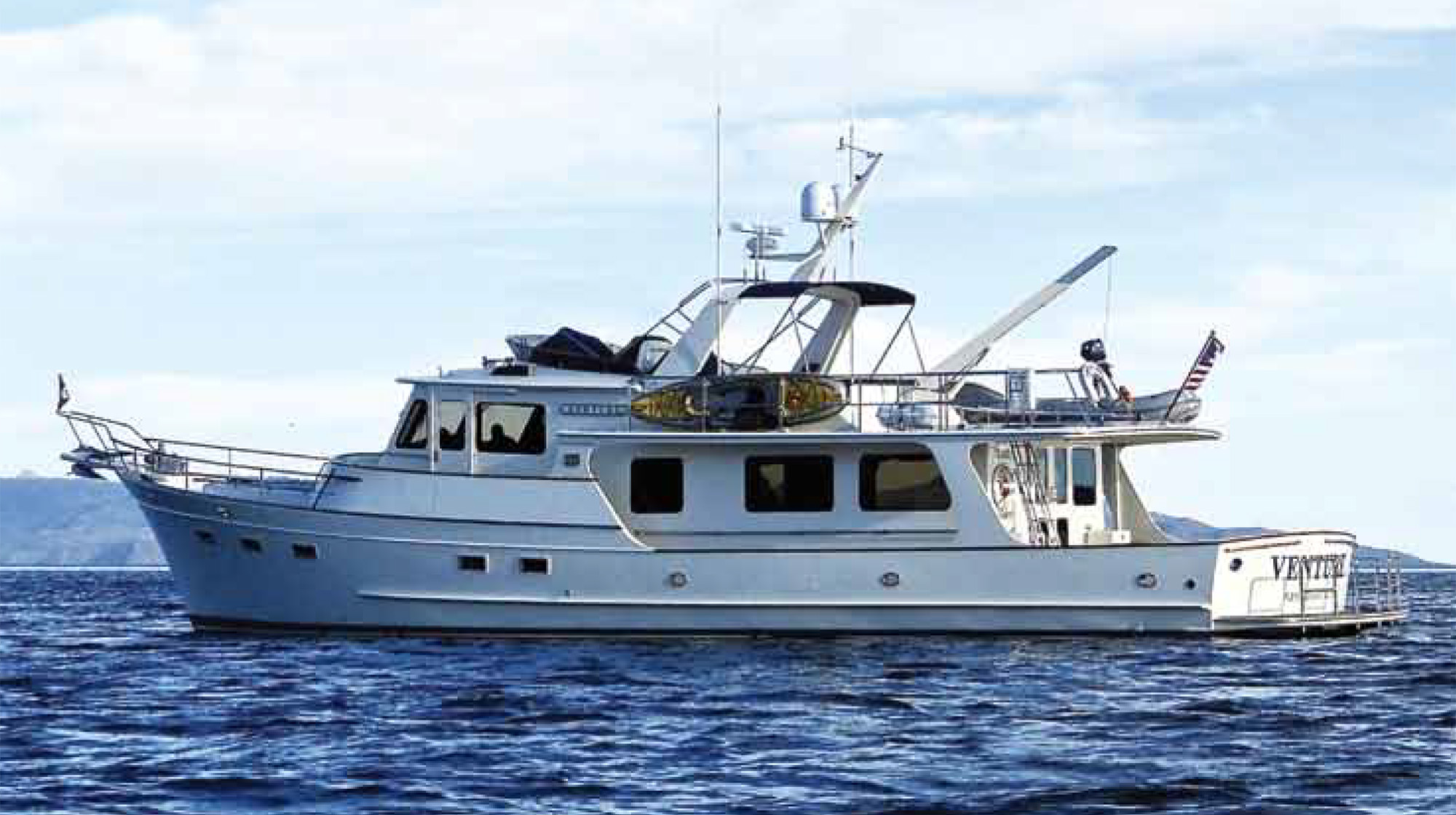
It was half an hour after midnight, zero dark thirty, when the rumblings of the big 800-horsepower MAN diesels woke me up. I threw on my clothes and ran into Tony Fleming, the owner of our Fleming 65 Venture and the founder Fleming Yachts, on the way up to the pilothouse, where Chris Conklin, the captain, had just fired up the engines. Christine Edwards, the mate, was just behind us.
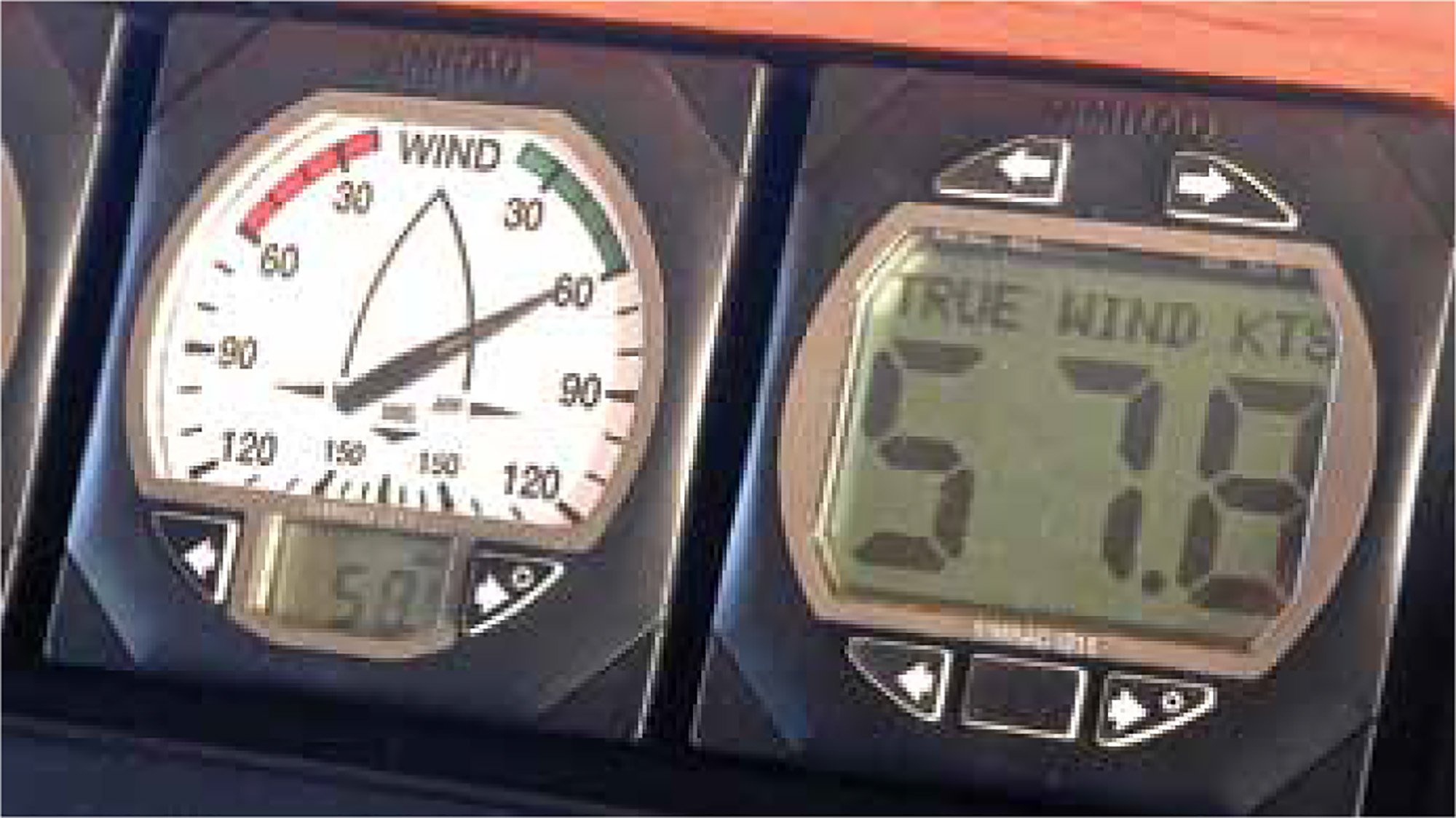
Outside, the wind was howling—no, shrieking—as the Simrad wind gauge at the helm danced spastically between 50 and 60 knots, and it was pitch black outside except for the almost iridescent white foam that was blowing horizontally off the top of the waves. When we had anchored here in Forney’s Cove late the previous afternoon, we’d thought we would be protected in the lee of Santa Cruz Island, one of the famed Channel Islands off the Southern California coast. Indeed, Forney’s had seemed like a pocket of calm as we let out 300 feet of chain in only 17 feet of water. The weather forecast had warned of a dreaded Santa Ana wind blowing dry air in a fury off the mountains, but we thought it was headed farther south. Still, this was early December, and the wind was going to be cold; there was already snow on the hills behind Ventura, where we had started our cruise. After dinner, Conklin set the anchor alarm and then stretched out on the sofa in the saloon while the three of us went below to our respective cabins; if the anchor dragged, he would start the engines and we should come running.
In the dark pilothouse, Fleming took the helm while the three of us went out to pick up the anchor. On deck, a gust of wind knocked me against the railing; this was serious stuff. As the chain rattled in Conklin grabbed a machete-sized knife, bent far out over the pulpit and hacked away at clumps of kelp that came up with it. Kelp shrapnel kept flying back and hitting Edwards and me in the face at 60 knots. At last the big Ultra anchor came up, wrapped in a ball of kelp; Conklin hacked away until the anchor was back on board. Fleming turned on the FLIR thermal-imaging camera, which helped us find a kelp-free zone in the cove, and we dropped the hook again and hoped for the best.
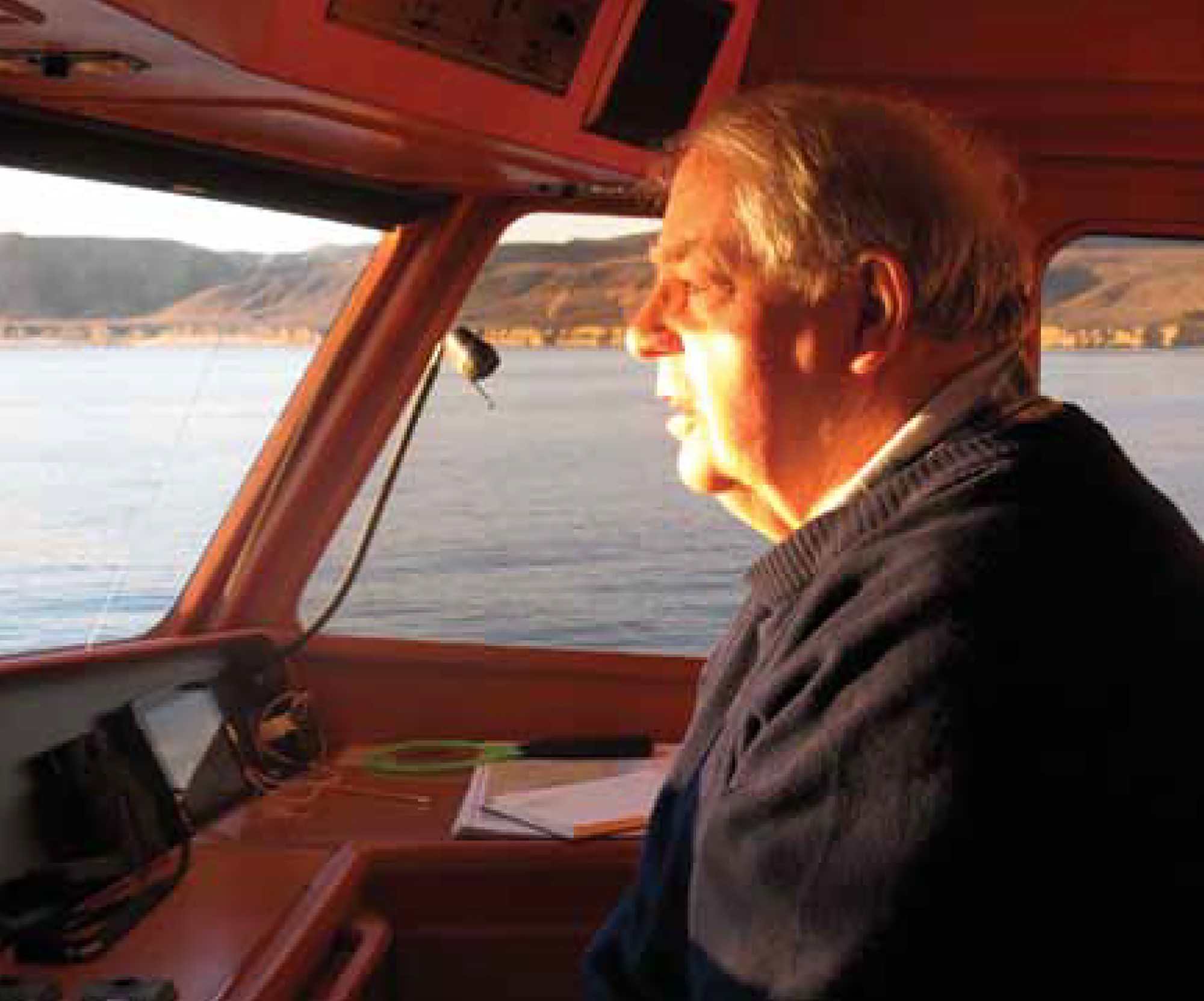
After dawn, the thin, red track line on the Nobeltec cartography displayed a tangled zigzag where the Santa Ana had blown Venture back and forth, but the anchor had held. A few hours later however, with the wind still howling about 60 knots, it seemed that we were getting closer to the rocks off our port quarter. In the morning light, the beach in front of us had taken on an odd otherworldly golden glow; the water was a cold steely gray with angry waves and flying foam. We were alone in the cove until a little fishing boat seeking protection came in, looking half submerged, spray flying. The chartplotter registered 1.2 knots SOG as Venture swung back and forth, the big TRAC stabilizers working overtime.
But now picking up the hook seemed problematic. The chain tightened and became almost vertical—and stuck. Fleming tried to horse the bow around with the engines and thruster, but the wind was too strong. The stresses at work were enormous; the bridle line broke on the starboard side. Finally the big 132-pound Ultra came up and we could see the problem; the shank was bent about 90 degrees. It must have been stuck under a rock. (To its credit, Ultra sent Fleming a new anchor after our trip.) As Venture swung free, we took a big wave over the bow, and the three of us were soaked to the skin. Back in the pilothouse Fleming shook his head. “That was the worst night at anchor I’ve ever spent in my life,” he said.
It was all hands on deck trying to get the anchor back aboard in 60-knot winds.
Read about Cruising the Channel Islands ➤
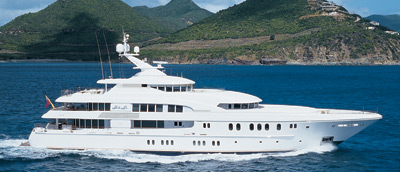
The Fleming 65 is a suitably salty looking vessel for the conditions.
Read about Cruising the Channel Islands ➤
How those seals got way up there the author may never know.